
Where the Frontier Meets the Featherbed: A Journey Through America's Most Soulful Park Lodges
From floating cabins on alpine lakes to stone fireplaces that dwarf the room, these properties prove that wilderness and comfort need not be strangers
CG
22 Jun 2026 · 5 MIN READ · UPDATED 17 AUG 2026
The Case for Staying Put
There is a particular quality to waking inside a national park that no day trip can replicate. The light arrives differently - softer, more patient - and the air carries scents you cannot bottle: pine resin, wet stone, the faint mineral tang of a thermal spring. At Global Chic Voyage, we have long believed that the most profound encounters with landscape happen not during the rushed golden hour, but in the slow, unwitnessed hours when most visitors are still miles away, stuck in traffic or hunting for parking.
The lodges and retreats we return to year after year understand this. They are not merely places to sleep between hikes. They are thoughtfully positioned thresholds between civilization and wild country, designed to let you linger in that liminal space where comfort does not erase adventure, but frames it. Some were built more than a century ago, their massive timber frames and stone hearths conceived as acts of architectural deference to the peaks and canyons beyond the windows. Others are new, yet equally reverent, offering minimalist desert casitas or treehouses suspended among the ridgelines of ancient mountains.
What follows is not an exhaustive catalog, but a curated collection of the properties that have moved us most - places where the setting and the structure are in genuine conversation, where luxury is measured not in thread count alone, but in proximity to something larger than ourselves.
Monuments in Timber and Stone
Some lodges feel less like hotels and more like cathedrals. Old Faithful Inn in Yellowstone, which opened in 1904, remains one of the finest examples of what came to be known as parkitecture - a design philosophy that sought harmony between built form and natural surroundings. The lobby is anchored by an eighty-five-foot stone fireplace, a vertical landscape unto itself, and the entire structure is fashioned from lodgepole pine harvested nearby. Rooms on the east side offer views of the geyser that lends the inn its name, a geological clock that erupts with near-perfect regularity. The inn operates only from May through October; winter visitors must settle for the adjacent Snow Lodge, a worthy if less storied alternative.
In Yosemite Valley, The Ahwahnee stands as another monument to early twentieth-century ambition. Completed in 1927, the property required five thousand tons of stone, a thousand tons of steel, and thirty thousand feet of lumber, all hauled through mountain passes before modern roads existed. The architecture blends Art Deco geometry with Native American motifs, and the turquoise-painted shutters frame views of Yosemite Falls, Half Dome, and Glacier Point. Unlike many historic park lodges, The Ahwahnee remains open year-round, allowing guests to experience the valley blanketed in snow or ablaze with autumn color.
Crater Lake Lodge in Oregon occupies an even more dramatic perch: the rim of a collapsed volcano filled with what is often called the bluest water in North America. The lodge, which operates only from May to October, offers rustic interiors - wooden beams, a massive stone fireplace - but the real luxury is geographical. Step outside and the caldera sprawls below, a sapphire disk ringed by cliffs and silence.
Where Water Shapes the Stay
Not all park lodges cling to cliffsides or nestle in meadows. Some float. Ross Lake Resort, tucked into the remote North Cascades of Washington, consists of fifteen cabins that rest directly on the surface of Ross Lake. Think of them as the national park answer to overwater bungalows, minus the palm trees and plus the scent of Douglas fir. Each cabin comes equipped with a kitchen, bathroom, electricity, and hot water, but no cell service - a feature, not a bug. The lake reflects the surrounding peaks with such clarity that the mountains seem to exist twice, once above and once below.
Kalaloch Lodge, also in Washington but within Olympic National Park, takes a different aquatic approach. It sits between towering pines and the driftwood-strewn beaches of the Pacific, close enough to Kalaloch Beach that the sound of surf becomes the ambient soundtrack. The property is rustic in the best sense, charming without pretense, and serves as an ideal base for exploring the park's coastal stretches, where tide pools teem and sea stacks rise like sentinels from the fog.
In Montana, Many Glacier Hotel occupies the edge of Swiftcurrent Lake in the northeastern corner of Glacier National Park, an area sometimes called the Switzerland of North America for its alpine clarity and jagged peaks. The five-story chalet offers neither televisions nor air conditioning, which might sound like deprivation until you realize the views render both irrelevant. Activities include boat cruises, horseback riding, and tours aboard the park's iconic Red Buses, vintage vehicles that have become as much a part of the Glacier experience as the glaciers themselves.
The New Guard: Minimalism Meets Wilderness
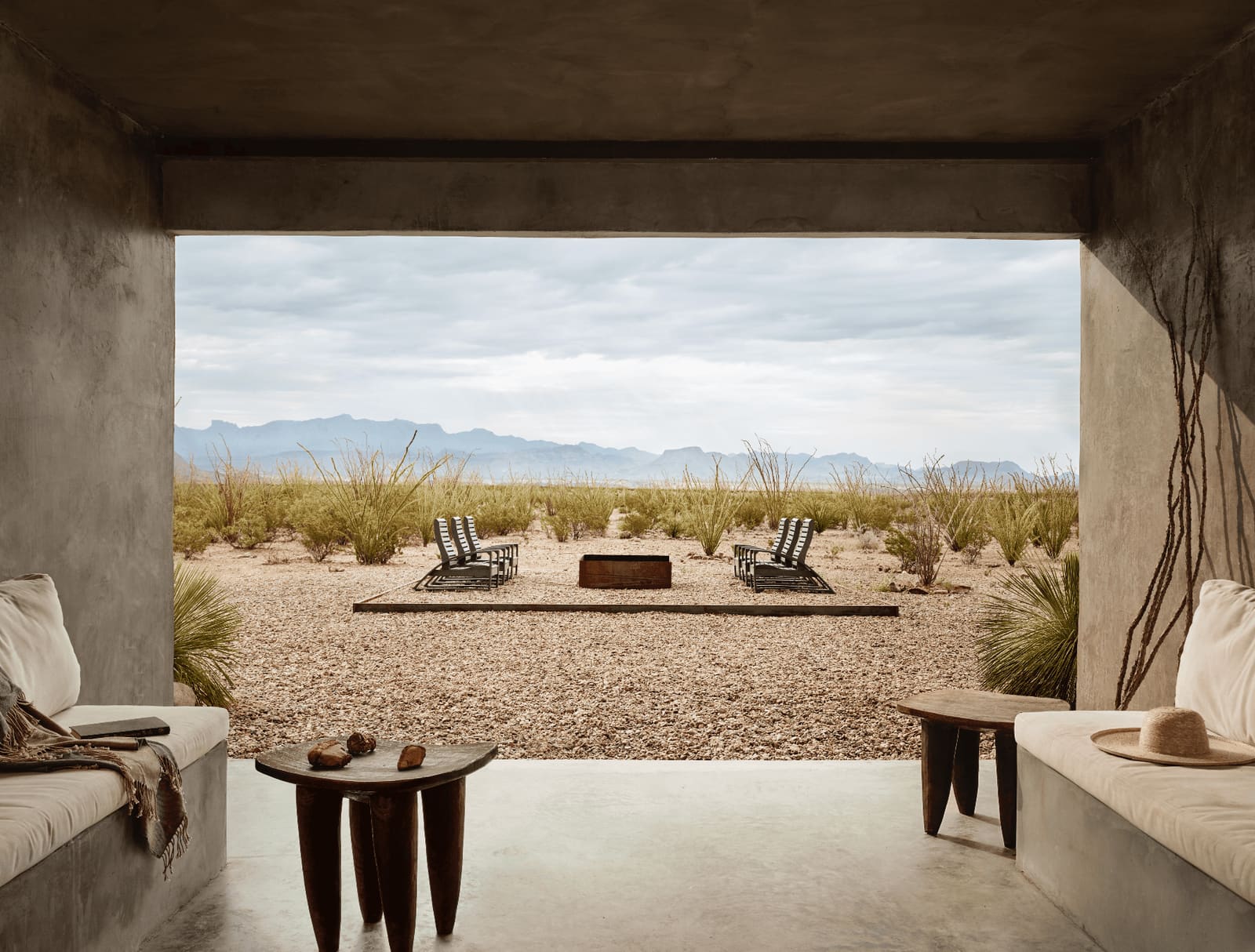
While the grand lodges carry the weight of history, a newer generation of properties has emerged with a different aesthetic vocabulary - one that favors clean lines, natural materials, and a quieter kind of luxury. Willow House, located six miles from Big Bend National Park in the high desert of West Texas, exemplifies this shift. The retreat comprises twelve casitas, each designed with a nod to the stark concrete installations of Marfa artist Donald Judd. Large windows frame unobstructed views of the Chisos Mountain Range, and the absence of shared walls ensures solitude. A communal kitchen and open-air firepit offer opportunities for socializing, but the real draw is the night sky. Big Bend is renowned for its stargazing, and Willow House delivers darkness so complete that the Milky Way casts shadows.
In Tennessee, just beyond the boundary of Great Smoky Mountains National Park, Blackberry Mountain takes the luxury lodge concept and elevates it to something closer to a wellness retreat. Opened in early 2019 as a sibling property to the celebrated Blackberry Farm, the resort offers more than forty freestanding accommodations, including treehouses, stone cottages, and multi-bedroom homes, all with views of the Smokies. The spa, named Nest, takes a holistic approach rooted in natural rhythms, and amenities include Egyptian cotton bedding, Bose smart speakers, and soaking tubs. Breakfast and dinner are included in the room rate, and the on-site restaurants reflect a farm-to-table ethos that feels both indulgent and grounded.
Under Canvas, a brand with glamping outposts near a dozen national parks, has refined the art of the upscale tent. Their Bryce Canyon location, which opened in the summer of 2022, sits about fifteen minutes from the park entrance and offers a middle path for travelers who want proximity to the hoodoo-filled amphitheaters Bryce is famous for, but who are not willing to forfeit hot water or a proper bed. The tents are spacious, well-appointed, and designed to let the landscape do the heavy lifting.
Proximity as Privilege
What sets these properties apart is not simply their design or their amenities, but their location. Zion Lodge, the only accommodation actually within the boundaries of Zion National Park, offers standard hotel rooms, forty cabins with private porches, and suites with sitting rooms. But the real privilege is waking beneath the towering sandstone cliffs, close enough to hear the canyon wrens and watch the light move across the rock faces as the sun climbs.
At El Tovar, perched just twenty feet from the Grand Canyon's South Rim, proximity becomes almost vertiginous. Built in 1905, the Swiss chalet-style structure incorporates Native American motifs and hand-built furniture designed by architect Charles Whittlesey. The hotel was declared a National Historic Landmark in 1987 and has hosted guests ranging from Bill Clinton to Elizabeth Taylor to Paul McCartney, who reportedly had to be asked to keep his piano playing to a reasonable volume during his stay.
In Hawaii, Volcano House occupies an equally dramatic position near the summit of Kilauea, overlooking Halemaʻumaʻu Crater. The hotel offers daily tours, bike rentals, and a restaurant serving Hawaiian cuisine, but the central experience is geological: the chance to sleep within sight of an active volcano, to feel the earth's restlessness as a constant, humbling presence.
The Rituals of Arrival
The Asticou Hotel on Mount Desert Island in Maine sits just a five-minute drive from the entrance to Acadia National Park, close enough to make the park feel like an extension of the property. The historic nineteenth-century inn features a heated pool and a dining program that emphasizes sea-to-table ingredients, reflecting the coastal setting. While most visitors to Acadia base themselves in Bar Harbor, those who choose Asticou find themselves in a quieter pocket of the island, where the rhythms of arrival and departure feel less hurried.
What these properties share, beyond their beauty or their proximity to protected land, is an understanding that the journey inward - into a park, into wilderness, into a different cadence of time - requires a kind of architecture that supports rather than distracts. They are places designed for lingering, for watching weather move across a valley, for returning from a hike not to a generic room but to a space that feels like part of the landscape itself.
At Global Chic Voyage, we have spent enough nights in enough parks to know that the tent and the five-star lodge can coexist without contradiction. The question is not whether you prefer down pillows or a sleeping bag, but whether the place you choose to rest honors the landscape that surrounds it. The lodges and retreats gathered here - from the floating cabins of Ross Lake to the desert minimalism of Willow House - pass that test. They are not escapes from the wild, but invitations to enter it more fully, to wake within it, to let it shape not just the day's itinerary but the quality of your attention.
Because in the end, that is what the best park lodges offer: not simply a bed with a view, but a way of seeing that lingers long after checkout.
Spot something wrong? Email editors@globalchicvoyage.com. We log every correction publicly.
RELATED
SEE ALL →
1 Jul 2026 / 5 min
8 Aug 2026 / 5 min
7 Jul 2026 / 5 min
2 Jul 2026 / 5 min