
Where Tuscan Hills Meet Modern Sanctuary
A new generation of estates and retreats is redefining luxury hospitality in one of Italy's most storied landscapes.
SI
7 Jul 2026 · 5 MIN READ · UPDATED 17 AUG 2026
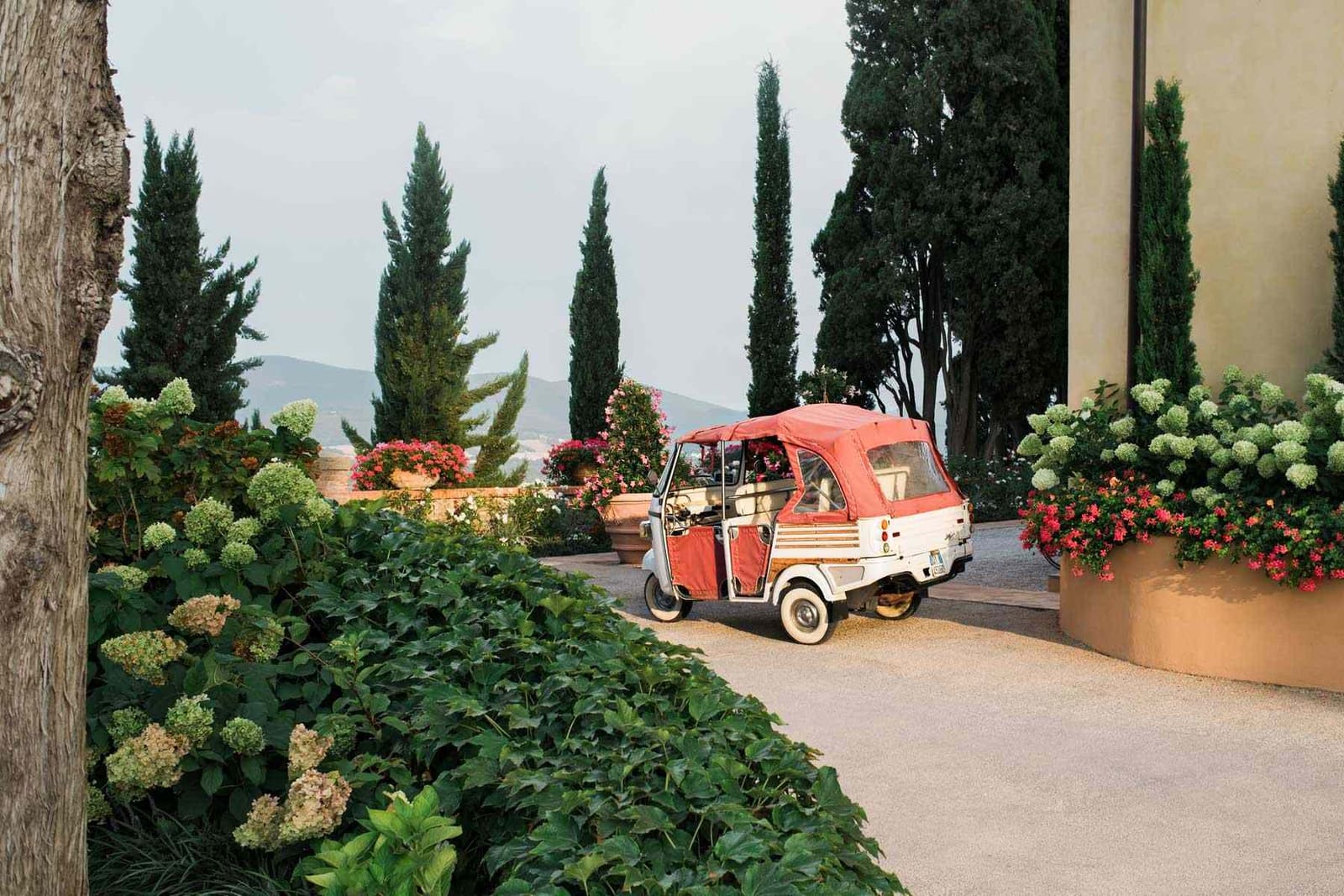
A Landscape in Quiet Transformation
There is a particular quality to late afternoon light in Tuscany, the way it catches the edge of a cypress row and turns distant hills into watercolor washes. For years, travelers have chased this light, drawn to a countryside that feels both ancient and immediate. But what they find when they arrive has begun to shift. The old stone farmhouses still stand, the vineyards still roll toward the horizon, yet the way visitors inhabit this landscape is changing.
At Global Chic Voyage, we've watched as a new cohort of properties has taken root across the region, each interpreting luxury through a lens that privileges intimacy over scale, craftsmanship over ostentation. These are not the grand hotels that anchor Florence or Siena, but rather estates and villas that occupy the spaces between, places where the architecture converses with the land rather than dominating it.
The Philosophy of Place
The most compelling of these properties share a common thread: they understand that luxury in rural Italy is not about importing urban amenities wholesale, but about distilling what makes this corner of the world singular. That means rooms where terracotta meets contemporary textiles, where a freestanding tub overlooks olive groves, where breakfast arrives with fruit picked that morning from trees you can see from your window.
Several recently opened estates have embraced restoration practices that honor original structures while introducing modern comforts with a light hand. Exposed beams remain, centuries-old stone walls stand untouched, but underfloor heating, carefully integrated lighting, and bathrooms finished in travertine and hand-glazed tile elevate the experience beyond rustic nostalgia. The effect is one of temporal layering, history made habitable without being sanitized.
Beyond the Villa Walls
What distinguishes the strongest properties is their relationship to the surrounding territory. Many have reimagined the traditional agriturismo model, maintaining working vineyards or olive groves and inviting guests into the rhythms of agricultural life. This is not performance or theme-park authenticity, but rather an acknowledgment that the land itself is part of the offering.
Some estates employ resident agronomists who lead walks through biodynamic gardens, explaining soil composition and heirloom varietals. Others have built wine cellars that double as tasting rooms, designed by architects sensitive to the interplay between built and natural environments. The goal is immersion, a sense that staying here means entering a working landscape rather than simply viewing it.
The kitchen gardens many of these properties cultivate have become central to their identities. Chefs trained in Michelin-starred kitchens now work with produce harvested hours before service, creating menus that reflect not just Tuscan tradition but the specific terroir of a single hillside. At the best tables, you taste the minerality of the soil, the particular microclimate that shapes a tomato or a fig.
Design as Dialogue
Inside, the design language varies, but a consistent sensibility emerges. There is an appetite for local craft, for objects that carry the mark of human hands. Linen woven in nearby workshops, ceramics thrown by artisans in hill towns, furniture built by carpenters whose families have worked this wood for generations. These are not decorative gestures but foundational choices, ways of anchoring a property in its cultural context.
Several designers working in the region have developed a signature approach: they strip interiors back to essential materials, then introduce color and pattern sparingly, often through textiles or a single piece of contemporary art. The result feels both pared down and warm, spaces that breathe rather than announce. Large windows and open floor plans dissolve the boundary between interior and exterior, so that the landscape becomes a constant presence, not a postcard view framed and hung.
The Wellness Dimension
Spas and wellness facilities have become standard, but here too, the approach reflects a regional ethos. Treatments often incorporate local ingredients: olive oil from the estate, honey from nearby hives, herbs grown on-site. Massage techniques draw from both Italian tradition and global practices, creating hybrid therapies that feel specific to place rather than imported wholesale from Bali or the Maldives.
Pools, increasingly, are designed as natural or bio-filtered systems, blending into the landscape rather than imposing geometric forms onto it. Some properties have introduced thermal elements, small plunge pools fed by natural springs, or saunas built into converted outbuildings. The emphasis is on restoration, on creating spaces where the body can recalibrate after months of urban intensity.
A Question of Scale
What makes these properties particularly appealing is their size, or rather, their deliberate rejection of the mega-resort model. Most accommodate fewer than thirty guests, some as few as ten. This scale allows for a level of personalization that larger hotels cannot match. Staff remember your name, your preferences, the conversation you had yesterday about hiking routes or pottery studios.
This intimacy extends to communal spaces. Many estates have abandoned formal reception desks in favor of living rooms where check-in happens over espresso, where evening aperitivi unfold around a shared table. The atmosphere is that of a private home, albeit one with impeccable service and beds made with linen that feels like silk.
The Broader Shift
The emergence of these properties reflects broader changes in how travelers, particularly those seeking luxury experiences, conceive of a meaningful stay. There is a hunger for depth over breadth, for experiences that engage the senses and the intellect, that offer not just comfort but context. Tuscany, with its density of history, craft, and agricultural tradition, provides fertile ground for this approach.
These estates also represent a model of rural revitalization. By restoring historic structures and employing local artisans, sourcing from regional producers and collaborating with nearby wineries, they create economic ecosystems that extend beyond the property line. Tourism becomes a mechanism not for extracting value but for sustaining and celebrating existing culture.
Looking Forward
As more properties adopt this philosophy, the challenge will be maintaining authenticity as the model scales. The risk is that what begins as genuine engagement with place and tradition becomes a curated aesthetic, a set of signifiers divorced from their origins. The properties that will endure are those that remain rooted in their communities, that continue to evolve in conversation with the land and the people who work it.
For travelers, the proliferation of these refined retreats means greater choice, more opportunities to find a property that aligns with their particular vision of what a Tuscan sojourn should feel like. Whether that means a villa with a resident chef, a restored monastery with a library of rare books, or a working farm where you can join the olive harvest, the options now extend well beyond the conventional hotel stay.
The Tuscan landscape has always possessed a kind of gravitational pull, a quality that makes people want to linger, to settle into its rhythms. What these new properties offer is a way to do exactly that, to move through the countryside not as tourists ticking off sights but as temporary inhabitants, attuned to the light, the seasons, the particular magic of a place that has captivated travelers for centuries.
Photo: Federico Ciamei
Spot something wrong? Email editors@globalchicvoyage.com. We log every correction publicly.
RELATED
SEE ALL →
17 Jun 2026 / 5 min
30 Jul 2026 / 5 min
22 Jun 2026 / 5 min
12 Jun 2026 / 5 min