
The High Desert Silence of Great Basin National Park
In Nevada's most remote corner, a 77,000-acre sanctuary offers marble caverns, alpine summits, and some of the darkest skies left in North America.
SI
23 Jun 2026 · 5 MIN READ · UPDATED 17 AUG 2026
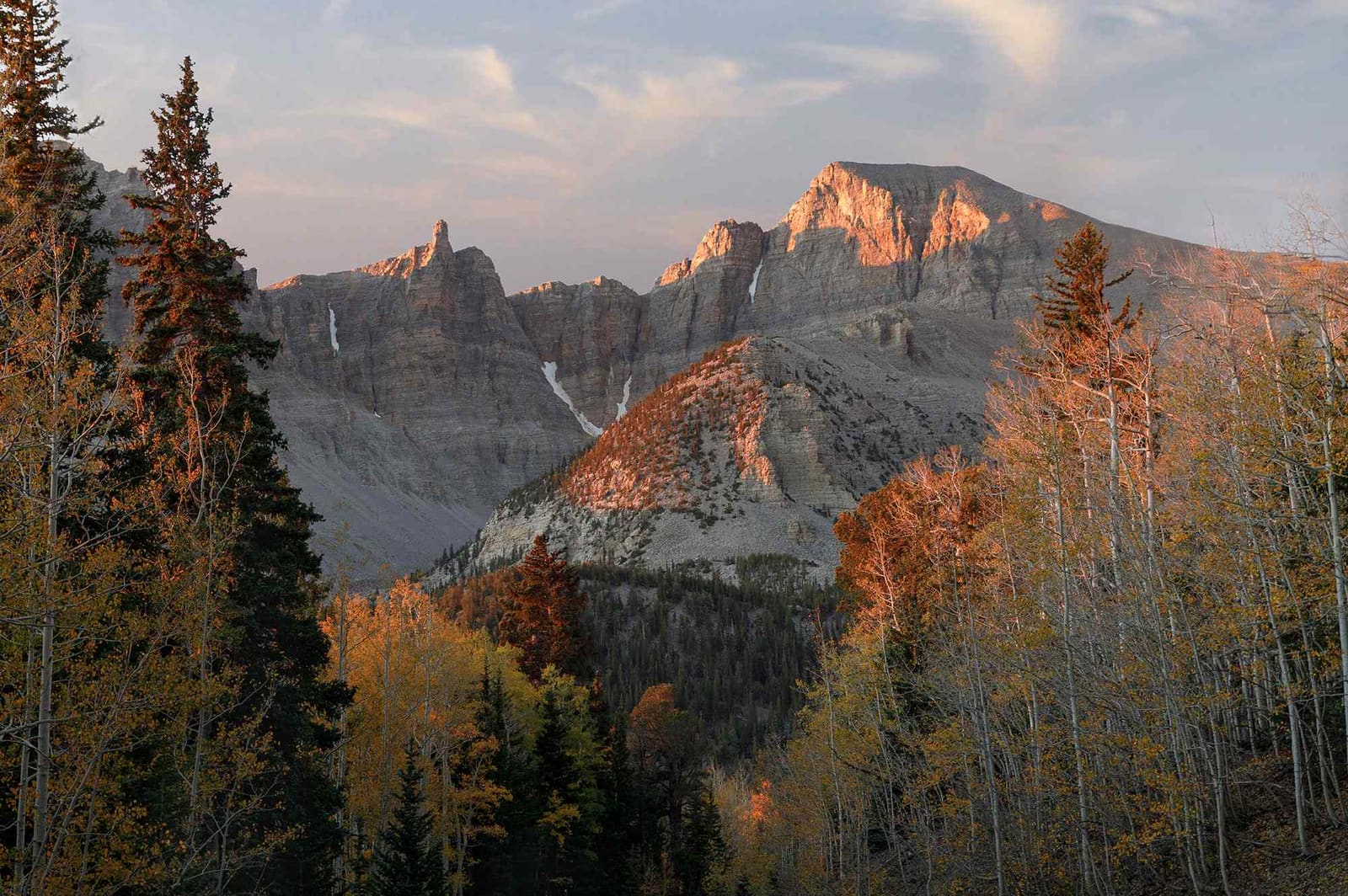
A Landscape Forgotten by Time
There is a particular quality to the light in eastern Nevada, where the Great Basin opens like a bowl beneath the Snake Range. It arrives unfiltered, without the softening haze of coastal humidity or thedusty veil of cities. At Great Basin National Park, this clarity becomes almost confrontational - the kind that makes you squint even as you lean into it, hungry for detail.
The park spans roughly 77,000 acres, yet remains one of the least visited units in the National Park system. At Global Chic Voyage, we've watched travelers chase the marquee names - Yosemite, Zion, Yellowstone - while Great Basin sits in quiet counterpoint, its bristlecone pines older than the pyramids, its caves carved from limestone turned to marble by geologic pressure no human timeline can fathom. It is not a place that announces itself. It is a place that waits.
The Geology of Patience
Great Basin's cave system winds beneath Wheeler Peak, the park's signature summit. Lehman Caves, the most accessible network, formed over millions of years as acidic groundwater dissolved ancient carbonate rock, leaving behind chambers decorated with rare shield formations, helictites that defy gravity, and stalactites grown at the pace of a fingernail. The marble that lines these passages began as ocean sediment, compressed and transformed long before the Basin and Range province began its slow-motion stretch.
To walk through Lehman Caves is to move through a record of patience. The formations grow in increments measured by centuries, each drip of mineral-laden water adding a microscopic layer. Park rangers lead guided tours that thread through rooms named for their contents: the Lodge Room, the Gothic Palace, the Grand Palace. The language is aspirational, almost Victorian, but the structures themselves resist metaphor. They are what they are - calcium carbonate, time, and the absence of light.
Above ground, the landscape tells a different story of endurance. The bristlecone pines that cling to the upper elevations of Wheeler Peak are among the oldest living organisms on Earth, some specimens exceeding 3,000 years. They grow in krummholz, twisted by wind and sculpted by ice, their wood so dense and resinous that it resists decay for millennia after death. To stand among them is to recalibrate your sense of what longevity means.
The Roads That Climb
Great Basin is a park of vertical relief. The valley floor begins near 6,000 feet; Wheeler Peak Scenic Drive ascends to over 10,000 feet in twelve winding miles. The road is open seasonally - snow closes the upper sections from autumn through late spring - and rewards the climb with overlooks that frame the basin below in layers of purple and ochre, the alkali flats shimmering like water.
We've driven this route in early summer, when snowmelt still pools in the high meadows and the aspen groves are just beginning to leaf out. The air thins as you climb, and the vegetation shifts in bands: sagebrush gives way to mountain mahogany, then to Douglas fir and limber pine, and finally to the bristlecones at tree line. Each ecological zone is a function of elevation, moisture, and exposure, a living lesson in how terrain dictates life.
The summit trail from the end of the scenic drive is a strenuous four-mile round trip, gaining nearly 3,000 feet to the 13,065-foot peak. It is not a casual walk. But the summit offers a panorama that stretches across the basin-and-range topography of Nevada and into Utah - a corrugated landscape of parallel mountain ranges and intervening valleys, the signature geography of the Great Basin.
The Architecture of Darkness
Great Basin National Park holds one of the rarest resources in the modern world: darkness. The International Dark-Sky Association has certified it as an International Dark Sky Park, a designation that recognizes both the quality of its night skies and the park's commitment to minimizing light pollution. On moonless nights, the Milky Way casts shadows. The Andromeda Galaxy is visible to the naked eye. Meteors streak with such frequency that you stop counting.
The park offers ranger-led astronomy programs during summer months, and a seasonal "star train" experience that combines evening talks with telescope viewing. But the real spectacle requires nothing more than a clear night and the willingness to let your eyes adjust. After twenty minutes in the dark, the sky reveals itself in layers: first the familiar constellations, then the fainter stars, then the diffuse glow of the galactic plane, and finally the subtle variations in darkness that mark nebulae and star clusters.
This kind of darkness is increasingly difficult to find. Light pollution from Las Vegas, over 250 miles to the south, creates a faint dome on the horizon, but the park's remoteness and the surrounding uninhabited land preserve a sky that would have been commonplace a century ago and is now extraordinary.
The Ecosystems That Stack
Great Basin's ecosystems are arranged vertically, each altitude hosting distinct communities of plants and animals adapted to specific conditions. The lower valleys, dominated by sagebrush and rabbitbrush, are home to pronghorn antelope, jackrabbits, and burrowing owls. Higher up, in the mixed conifer forests, mule deer browse among the Douglas fir, and mountain lions move through terrain too rugged for casual hikers.
At the highest elevations, where the bristlecones grow, life becomes sparse but tenacious. Pikas - small, rabbit-like mammals - live among the talus slopes, gathering grasses to dry for winter. Clark's nutcrackers cache pine seeds in the rocky soil, inadvertently planting the next generation of trees. The alpine zone is a world of extremes: intense solar radiation, freezing nights even in summer, and winds that sculpt everything they touch.
Water, scarce throughout the Great Basin, becomes a defining factor. The park contains a handful of permanent streams fed by snowmelt, and these ribbons of moisture support cottonwood groves and aspen stands that glow gold in autumn. But much of the basin is characterized by internal drainage - water that never reaches the sea, instead pooling in ephemeral lakes or sinking into the ground.
The Preparation Required
Great Basin National Park is not a place that forgives improvisation. The nearest services - gas, groceries, significant medical facilities - are an hour or more away in the small towns of Ely or Delta, Utah. The park itself offers a single campground with running water, a small visitor center, and little else. Cell service is nonexistent in most areas. The roads, while paved, climb steeply and are not maintained in winter.
This remoteness is both the park's challenge and its appeal. It filters out the casual visitor, the unprepared, those looking for amenities rather than encounter. What remains is a self-selecting group: hikers willing to carry sufficient water, photographers chasing the quality of light, astronomers seeking darkness, and those who find value in landscapes that do not accommodate.
At Global Chic Voyage, we've observed that the parks which demand the most - in preparation, in physical effort, in tolerance for solitude - often reward in proportion. Great Basin asks you to plan, to carry extra layers, to check road conditions, to inform someone of your itinerary. In return, it offers a version of the American West that has largely vanished elsewhere: vast, quiet, and indifferent to human schedules.
The Return to Scale
To visit Great Basin is to recalibrate your sense of time and scale. The bristlecone pines measure their lives in millennia. The caves form at a pace invisible to human perception. The mountains themselves are young in geologic terms, still rising as the Earth's crust stretches and thins across the Basin and Range province.
This is not a park of dramatic waterfalls or iconic vistas that photograph well on a smartphone. It is a park of subtlety and accumulation, where the rewards are proportional to attention paid. The best moments come not from the overlooks, but from the quiet observations: the way lichen patterns stone, the architecture of a bristlecone's grain, the cold weight of air at 13,000 feet.
We return to places like Great Basin not because they have changed, but because we have. Each visit offers a different angle, a shifted perspective, a reminder that the world contains spaces that operate on timescales far beyond our own. In an era of constant connectivity and manufactured experience, there is something profoundly grounding about a landscape that simply exists, indifferent to interpretation, waiting only for those willing to meet it on its own terms.
The park will still be here long after our visits are forgotten - the caves deepening grain by grain, the bristlecones adding another ring, the stars wheeling overhead in the darkness we are slowly learning to preserve.
Spot something wrong? Email editors@globalchicvoyage.com. We log every correction publicly.
RELATED
SEE ALL →
13 Jul 2026 / 5 min
30 Jul 2026 / 5 min
29 Jul 2026 / 5 min
22 Jun 2026 / 5 min