
Twenty-Six Places Join the World Heritage List This Season
From a subtropical swamp refuge in the American South to an architect's luminous Finnish legacy, this year's inscriptions offer journeys both wild and contemplative.
SI
29 Jul 2026 · 5 MIN READ · UPDATED 17 AUG 2026
A Swamp That Remembers
There is something almost primordial about gliding through water the color of strong tea, beneath cypress trees whose limbs trail Spanish moss like memory. The Okefenokee Wildlife Refuge, now recognized by UNESCO, sprawls across more than 400,000 acres straddling the Florida-Georgia border, a subtropical peatland ecosystem of which less than three percent remains intact across the southeastern United States. According to UNESCO, this vast wetland shelters 856 plant species, 48 mammal species, 238 bird species, and countless amphibians and reptiles, including the American alligator that has become synonymous with these dark waters.
At Global Chic Voyage, we've long believed that the most profound travel experiences are those that ask us to slow down, to observe rather than consume. Okefenokee demands exactly that patience. Sandhill cranes lift from the shallows at dawn. River otters trace invisible paths through the reeds. Red-shouldered hawks circle overhead, their calls echoing across a landscape that holds deep spiritual significance for the Muscogee (Creek) Nation and other Indigenous peoples whose ancestral lands encompass this refuge.
Visitors can paddle kayaks or canoes into the heart of the swamp, following trails that wind through wilderness where the boundary between water and land dissolves into something more fluid, more ancient. Guided boat tours offer another lens, one that brings the refuge's intricate ecology into sharper focus.
The Blue and White Grammar of Tunisia
Perched on a promontory above the Mediterranean, the village of Sidi Bou Said reads like a poem written in cobalt and chalk. Founded before the sixteenth century as a sanctuary town centered on the mausoleum of a Sufi saint, the village evolved over centuries into a haven for artists and writers, yet it never abandoned its religious origins or its architectural vocabulary.
What makes Sidi Bou Said remarkable is not merely its beauty, though the whitewashed walls and brilliant blue shutters certainly arrest the eye. Rather, it is the coherence of the place, the way every doorway, every painted tile, every wrought-iron grille seems to speak the same visual language. UNESCO has deemed it an exceptional example of traditional Tunisian village architecture, a designation that recognizes how thoroughly the settlement has preserved its historical character even as it welcomed twentieth-century visitors seeking light, color, and creative inspiration.
The village sits just twelve miles north of Tunis, close enough for a leisurely day trip yet worlds away in temperament. Cafés spill onto narrow streets. Small shops display the work of local artisans. Bougainvillea cascades from balconies, and everywhere there is that interplay of brilliant white and saturated blue, a palette borrowed from sea and sky.
Fortresses in the Pyrenean Foothills
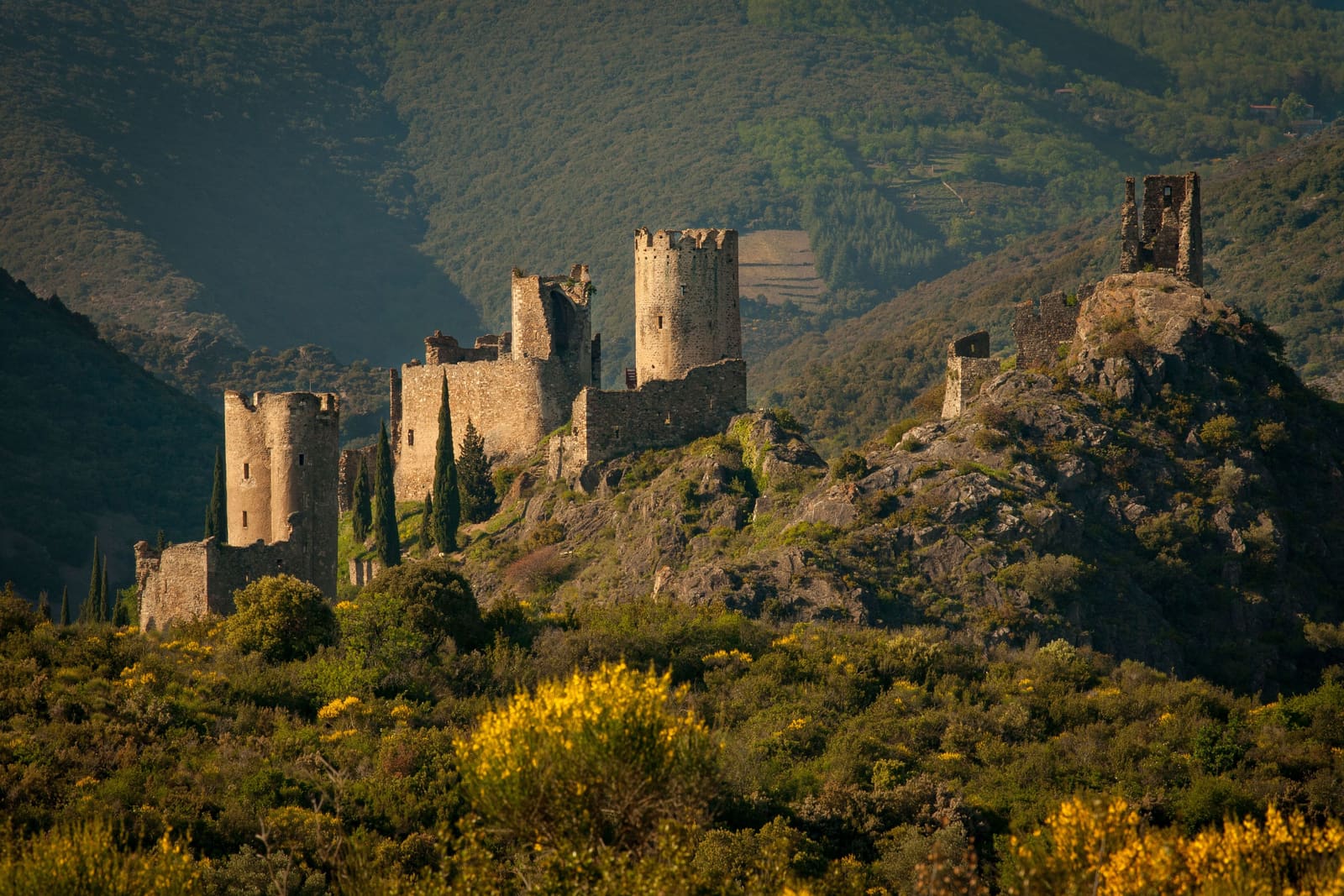
Carcassonne's medieval fortifications rise from the landscape of southwestern France like something conjured from collective imagination, yet they are thoroughly, stubbornly real. The castle and its surrounding fortresses, now inscribed with World Heritage status, date to the thirteenth century, when they served as the region's military and administrative heart.
The site is defined by its double concentric ramparts, an ambitious defensive system built into the rugged terrain of the Pyrenees foothills. These walls once encircled the entire medieval village, creating a fortified enclave that controlled strategic routes and projected power across the surrounding countryside. Today, travelers can walk those ramparts, explore chambers that once housed nobility, and stand in courtyards where centuries of footsteps have worn the stone smooth.
What strikes us most about Carcassonne is the scale of ambition it represents. This was not a single castle but an entire military landscape, a system designed to protect, control, and endure. That it has done so for more than seven hundred years speaks to the skill of its builders and the durability of their vision.
Light, Wood, and Nordic Restraint
To understand the work of Alvar Aalto is to understand a particular kind of spatial generosity, one that privileges light, natural materials, and the integration of landscape into the experience of architecture. UNESCO's recognition of Aalto's legacy, including contributions from his collaborators Aino and Elissa Aalto, encompasses thirteen buildings scattered across Finland, each one a study in what the organization describes as organic and Modern Movement design principles.
In Helsinki alone, five of these works await exploration. The architect's home and studio, the House of Culture, the Social Insurance Institution Main Office, Finlandia Hall, each reveals a different facet of Aalto's aesthetic. His spaces are not cold or austere, despite their minimalist lines. Instead, they breathe. Wood surfaces warm the interiors. Windows frame views with care. Original furniture and lighting fixtures, many designed by Aalto himself, remain in place, offering insight into how he conceived of architecture as a total environment.
Beyond the capital, the Säynätsalo Town Hall in Jyväskylä and the Church of Three Crosses in Imatra demonstrate Aalto's range, his ability to adapt his vocabulary to different functions and contexts while maintaining a coherent design philosophy. The Alvar Aalto Foundation offers guided tours that trace the evolution of his thinking across decades and across Finland's varied landscapes.
A Season of Inscriptions
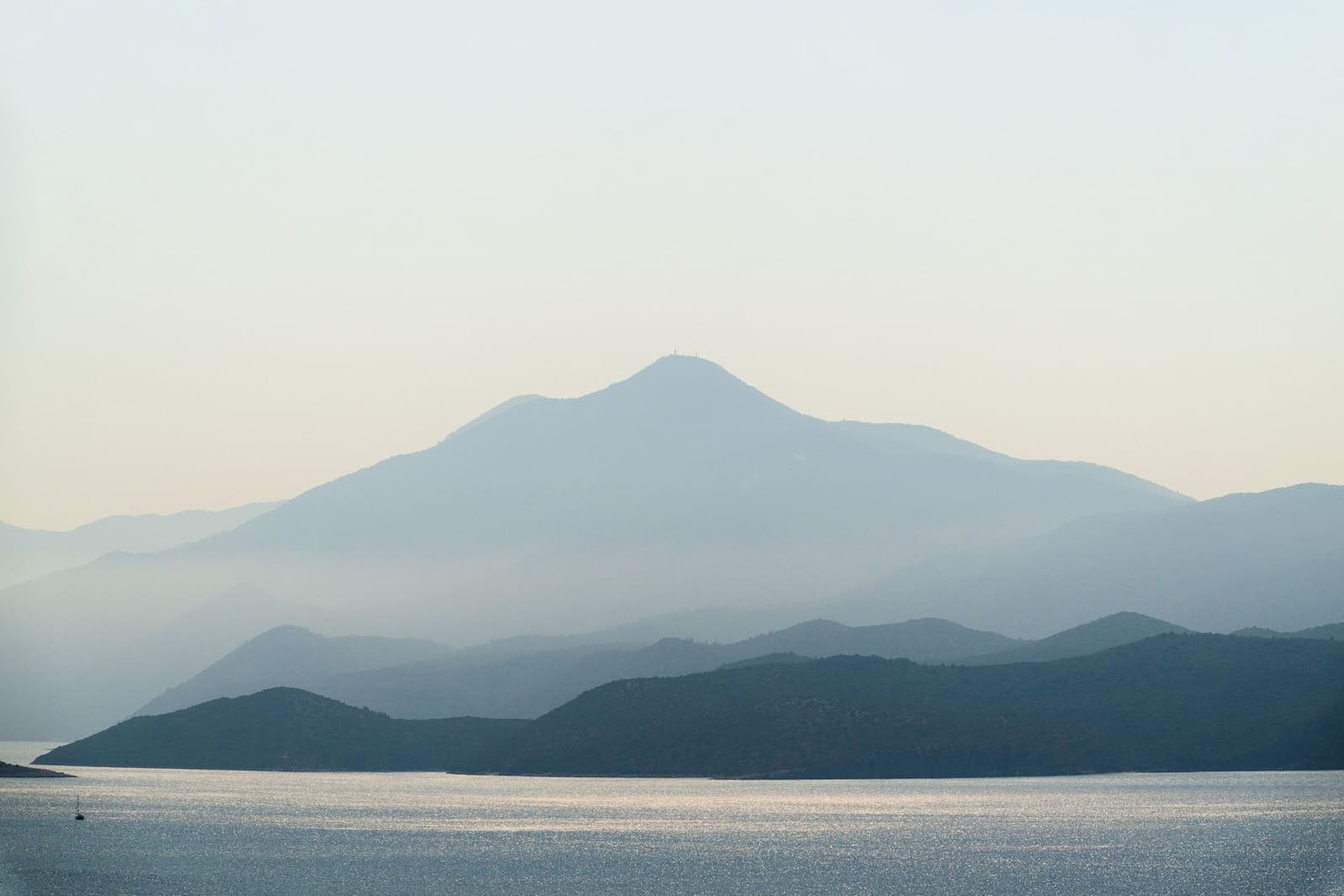
The remaining twenty-two sites added to the World Heritage List this season reflect the breadth of what UNESCO seeks to preserve: Jordan's Aqaba Marine Reserve and the United Arab Emirates' Wadi Wurayah biosphere reserve protect fragile ecosystems. Lebanon's Mont Amel Castles and Palestine's town of Sebastia anchor histories that stretch back millennia. Korea's Getbol tidal flats and Denmark's bony fish fossils of the Western Limfjord capture natural processes unfolding over geological time.
China's Jingdezhen Handicraft Porcelain Industry Sites and India's Ancient Buddhist Site of Sarnath speak to craft traditions and spiritual practices that have shaped entire civilizations. Iran's Alamūt Castle, Japan's Ancient Capitals of Asuka and Fujiwara, Kazakhstan's Rock Mosques of Mangystau, Mongolia's Cemetery Complexes of the Xiongnu Nobility, Thailand's Wat Phra Mahathat Woramahawihan Buddhist Temple, and Uzbekistan's Modernist Architecture in Tashkent each tell stories of power, faith, innovation, and memory.
Italy's condominio-style theaters and Brazil's Amazonia Theaters reveal how performance spaces can become community anchors. São Tomé and Príncipe's colonial agriculture sites confront complex histories of exploitation and production. Greece's Mount Olympus and Poland's Gdynia Modernist city center round out a list that spans continents, centuries, and scales.
Why We Return to These Lists
Each year, UNESCO's World Heritage Committee gathers to evaluate proposals, weighing criteria that range from natural beauty to cultural significance, from architectural innovation to ecological fragility. The resulting list is never merely a catalog of attractions. It is, instead, an argument about what deserves protection, what merits our attention, what stories we choose to preserve for generations not yet born.
At Global Chic Voyage, we've watched these inscriptions closely over the years, not because they tell us where to travel next, but because they reveal how we understand our relationship to place, to history, to the natural world. The swamps of Okefenokee and the ramparts of Carcassonne, the blue-trimmed houses of Sidi Bou Said and the luminous halls designed by Alvar Aalto, all ask us to see differently, to move through space with greater awareness, to recognize that some places hold meaning beyond their utility or beauty.
The act of inscription does not freeze these sites in amber. Villages continue to live, ecosystems continue to evolve, buildings continue to serve their communities. What changes is the commitment to stewardship, the acknowledgment that these places belong not to a single nation or generation but to a longer, shared story.
As travel resumes its rhythms in this season, these twenty-six new inscriptions offer waypoints for journeys that go deeper than itinerary or checklist. They are invitations to witness, to learn, to stand in the presence of something older or wilder or more carefully made than what we encounter in daily life. And in that witnessing, perhaps, we find our own place within the intricate, fragile, enduring web of human and natural heritage.
Credit: AMPM
Spot something wrong? Email editors@globalchicvoyage.com. We log every correction publicly.
RELATED
SEE ALL →
31 Jul 2026 / 5 min
28 Jul 2026 / 5 min
23 Jul 2026 / 5 min
22 Jul 2026 / 5 min