
Learning Portuguese Cooking in a Manor House Kitchen
At a private estate in rural Portugal, culinary retreats pair travelers with celebrated chefs for an intimate immersion in regional cooking traditions.
SI
31 Jul 2026 · 5 MIN READ · UPDATED 17 AUG 2026
A Kitchen With History
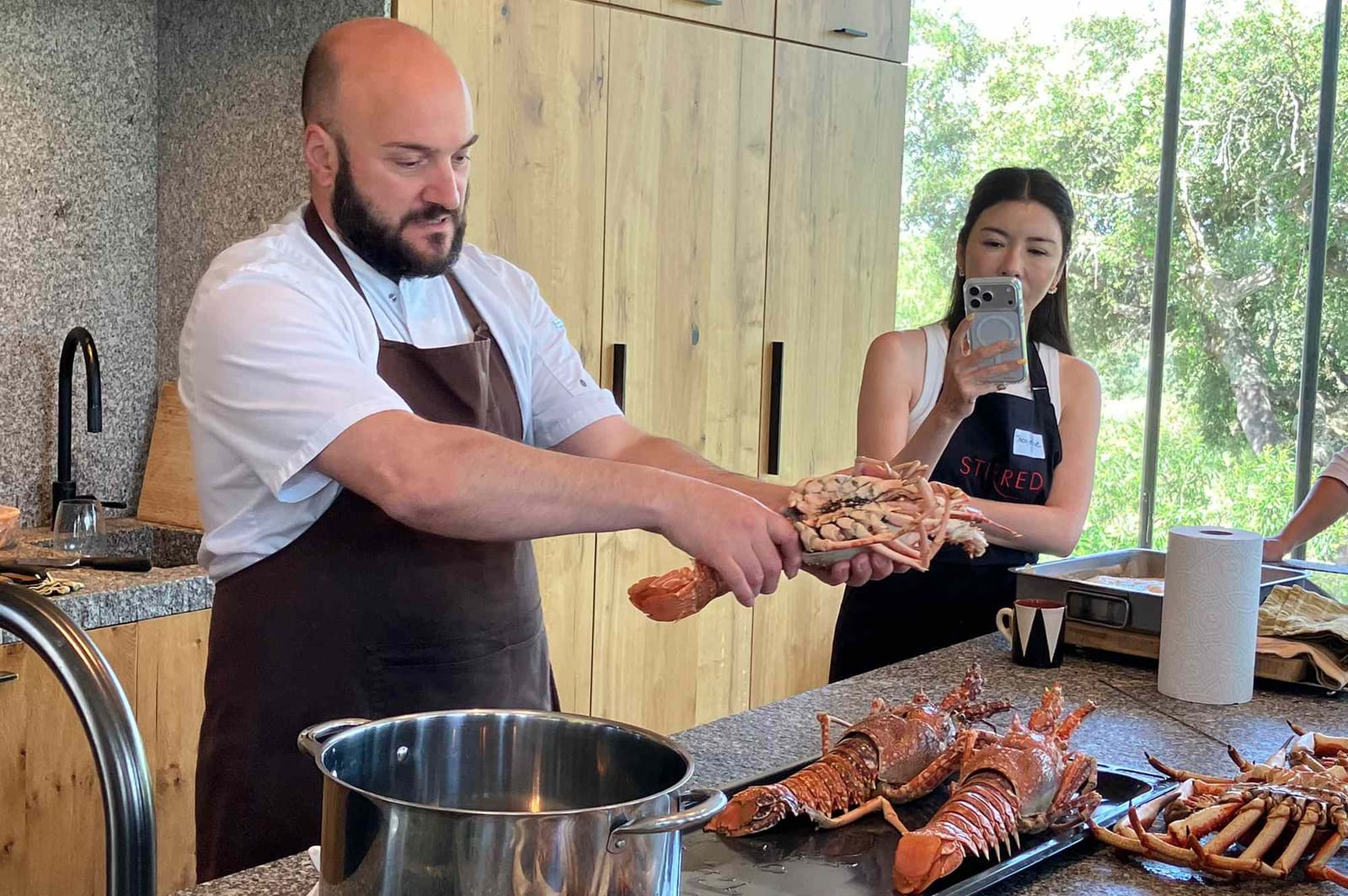
The marble counter was cool beneath my palms, worn smooth by decades of bread dough and salt cod. Outside the tall windows of the manor house kitchen, olive groves sloped toward the Douro Valley, their silver-green branches catching the morning light. Across from me, a chef whose Lisbon restaurant had earned acclaim across Europe was filleting a whole sea bream with the kind of unhurried precision that comes only from repetition. This was not a demonstration. We would cook together, side by side, for the next four hours.
At Global Chic Voyage, we've watched culinary travel evolve from market tours and cooking classes into something more layered, more personal. The retreats emerging across Portugal represent a quieter branch of this evolution, one that favors depth over spectacle. These are not celebrity chef showcases or luxury resort add-ons. They are private, small-scale immersions held in country estates and renovated quintas, where travelers spend several days learning regional cooking from chefs who have built reputations not on television but in the kitchens of acclaimed restaurants.
The Appeal of Proximity
What distinguishes these experiences is proximity, both physical and temporal. Participants work at the same prep station as the chef, not in a tiered classroom arrangement. The pace is deliberate. A morning might be devoted entirely to preparing a single dish: bacalhau à Brás, perhaps, or arroz de marisco. The chef demonstrates a technique, then watches as you attempt it, offering adjustments in real time. There is no rush to produce a finished plate for a photograph. The goal is fluency, not performance.
The settings matter as much as the instruction. Many of these retreats take place in private estates that double as working farms or vineyards. Ingredients come from the property itself or from nearby producers with whom the estate has long-standing relationships. This is not romanticized farm-to-table rhetoric. It is simply how rural Portuguese households have always cooked, and the retreats lean into that continuity. You pick herbs from the garden before breakfast. You learn to judge the ripeness of a tomato by weight and scent, not by color alone.
Beyond Technique
The chefs who lead these retreats tend to share a particular profile. They are accomplished, but not yet household names. Many have worked in Michelin-starred kitchens abroad before returning to Portugal to open smaller, more personal restaurants. They are interested in teaching, but only in a format that allows for genuine exchange. The retreats attract a certain kind of traveler as well: those who cook regularly at home, who understand the difference between a recipe and a method, and who are willing to spend a week focused on a single cuisine rather than sampling widely.
Meals are communal. Everyone eats what the group has prepared, sitting at a long table in the estate's dining room or on a terrace overlooking the valley. Wine comes from the property or a neighboring quinta. Conversation drifts from cooking to agriculture to the economic challenges facing rural Portugal. The chef is not a distant authority but a fellow diner, and the exchange of knowledge flows in multiple directions.
The Portuguese Culinary Landscape
Portugal's culinary identity has long been overshadowed by its Iberian neighbor, but the country's cooking traditions are distinct and varied. Coastal regions favor seafood prepared simply, with olive oil, garlic, and coriander. The interior relies on pork, game, and mountain cheeses. The influence of Portugal's former colonies appears in the use of cinnamon, cloves, and piri piri. These retreats do not attempt to survey the entire landscape. Instead, they focus on a specific region, often the one surrounding the estate, and explore its ingredients and techniques in detail.
This regional specificity is part of the appeal. You are not learning "Portuguese cooking" in the abstract. You are learning how one chef, working in one valley, interprets the traditions passed down through generations in that place. The dishes you prepare have local names and local variations. The chef might mention how the same dish is made differently two villages over, or how a technique was adapted from a grandmother's method.
What You Take Home
The question we hear most often about culinary retreats is whether the experience translates once you return home. Can you replicate what you've learned in your own kitchen, with your own ingredients? The answer depends on what you consider replicable. You will not be able to source the same anchovies or the same olive oil. But you will understand how to judge quality in the ingredients you can find. You will know how to build flavor in layers rather than all at once. You will have internalized the rhythm of a dish, the sequence of steps that cannot be rushed.
These retreats are not about collecting recipes. They are about developing a relationship with a cuisine, one built on repetition and observation. The chefs who lead them understand that mastery comes slowly, and that a few days of focused work can shift how you approach cooking long after you've left the estate.
The Future of Culinary Travel
As culinary tourism continues to expand, the risk of commodification grows. Cooking classes become assembly lines. Market tours become photo opportunities. The retreats taking shape in rural Portugal offer a counterpoint, a model that prioritizes depth and intimacy over scale. They are expensive, yes, and they serve a narrow audience. But they also represent a way forward for culinary travel that respects both the traveler's intelligence and the integrity of the cuisine being taught.
We expect to see this model replicated in other regions where culinary traditions are strong and where rural estates are seeking new sources of revenue. The key will be maintaining the smallness, the slowness, the sense that you are being invited into a working kitchen rather than entertained in a culinary theater. The best of these experiences leave you with the feeling that you have been taught something real, by someone who cares deeply about the work and who trusts you enough to let you try.
Credit: Lucy Gillmore
Spot something wrong? Email editors@globalchicvoyage.com. We log every correction publicly.
RELATED
SEE ALL →
8 Aug 2026 / 5 min
31 Jul 2026 / 5 min
30 Jul 2026 / 5 min
27 Jul 2026 / 5 min