
Where Florence Still Feeds Its Own
Beyond the centro storico's tourist-menu din, a new generation of chefs is building something quieter and truer in the city's forgotten edges.
SI
30 Jul 2026 · 5 MIN READ · UPDATED 17 AUG 2026
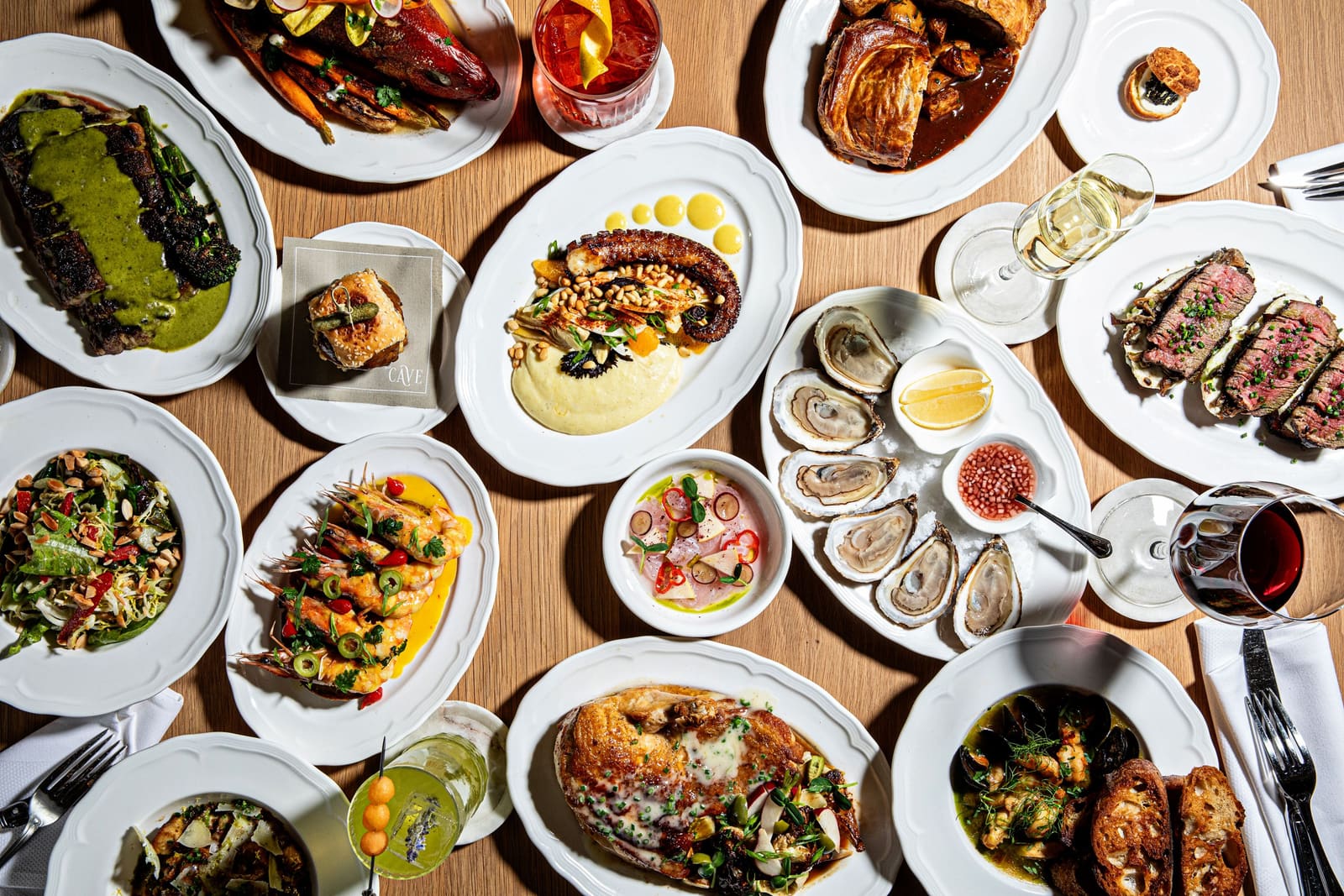
The Feast Beyond the Guidebook
There is a particular kind of loneliness that descends on the Piazza della Signoria around eight in the evening. The crowds thin, the tour groups dissolve, and what remains is the echo of a city that has learned to perform itself. Menus appear in five languages. The bistecca arrives overcooked. The waiter smiles with the weariness of someone who has explained the difference between carbonara and cacio e pepe a thousand times this month alone.
At Global Chic Voyage, we have watched Florence wrestle with its own magnetism for years, the centro storico buckling under the weight of its beauty. But lately, we have noticed something else: a quiet exodus of ambition toward the city's margins, where rents are lower, clientele more discerning, and the pressure to perform "Tuscan authenticity" gives way to something more honest.
This is not the Florence of frescoed ceilings and white-tablecloth formality, though that world persists and occasionally astonishes. This is the Florence of young chefs who trained at Nobu and returned home to open eight-table sushi counters in residential quarters. Of rooftop restaurants that serve milanese di vitello without apology, because sometimes the best Italian food is simply Italian food, cooked well. Of wine bars where the oldest bottle dates to the 1950s and nobody feels the need to translate the list.
The city's dining landscape has splintered, and in that fracture lies opportunity.
The Periphery Speaks
Gavinana, a neighborhood that most visitors never see, is home to one of the city's most compelling recent openings. Ambar Kitchen operates on the logic of scarcity: eight courses, a rotating menu, and a chef who sources locally with the discipline of someone who learned precision in London. The white tuna carpaccio arrives with asparagus and a Nikkei dressing that bridges Peru and Japan without fanfare. A steamed bao cradles seared eggplant and mint in teriyaki, the sweetness cut by red cabbage. The sushi is impeccable, the Thai black curry built around skate wing so tender it barely holds its shape.
What strikes us is not the fusion itself but the confidence behind it. There is no hedging, no disclaimer that this is "Japanese-inspired Tuscan cuisine." It is simply good food, prepared by someone who understands that technique transcends geography. The wasabi is imported; everything else, down to the noodles and sauces, is made in-house. The dining room seats fewer than twenty. Reservations, especially for dinner, book out days in advance.
San Jacopino, west of the Santa Maria Novella station, tells a similar story. For years it was the kind of neighborhood tourists passed through on their way to somewhere else. Now it hums with the energy of chefs who chose affordability over proximity to the Duomo. Sevi Ristorante serves miso-lacquered sea bass with yakitori, a pairing that would feel gimmicky in less capable hands. Here it reads as clear-eyed pragmatism: the chef knows what works, and is unburdened by the need to prove anything to anyone but the neighbors.
Tradition, Rethought
Not every notable opening has fled the center. Locale Firenze, tucked into the centro storico, is the work of Simone Caponnetto, a Florence-born chef whose cooking feels like an argument for what fine dining can be when it refuses to abandon its roots. His menus are built on Tuscan produce and local tradition, but the execution is contemporary in the best sense, technically rigorous without tipping into showmanship.
A recent four-course tasting menu included zucchini prepared three ways, open lobster ravioli with lardo and saffron, turbot with summer truffle, and pigeon cooked to a precise pink with radicchio and more truffle. The wine list runs to hundreds of bottles; the sommelier is the kind of person who listens before suggesting. Tasting menus begin around one hundred and thirty-seven dollars, a price point that signals ambition without the Michelin star to justify it yet. We suspect that will change.
At Saporium, in San Niccolò, chef Ariel Hagen has built something closer to theater. The dining room gleams with mirrors and crystal chandeliers, a 1950s fantasy of elegance. The open kitchen allows diners to watch Hagen finish each dish with the kind of precision that borders on choreography. Everything is organic, seasonal, and sourced from Tuscan farms, much of it from Borgo Santo Pietro, one of the region's most luxurious estates. The vegetarian tasting menu, in particular, makes a case for haute cuisine without animal protein, each course vivid enough to silence the skeptics.
The Arno as Stage
Santo Spirito, on the south bank of the Arno, has long been a neighborhood that rewards wandering. Osteria Belguardo anchors a terrace with views across the river to Palazzo Corsini, the sort of prospect that makes you forget, briefly, that you are eating tagliatelle alla buttera and roast suckling pig in a city where such dishes have become almost too familiar. The cocktail bar, helmed by mixologist Alessia di Bartolomea, turns out a Marchesa made with gin, gentian liqueur, and iris vermouth, a drink that tastes like Florence without resorting to Chianti.
The ethos here is refreshingly unambitious: these are the dishes you want to eat, prepared properly, priced reasonably. Hand-cut beef tartare. Fried zucchini flowers. Spaghetti with clams. Grilled spring chicken. There is no attempt to reinvent the wheel, only a quiet insistence that the wheel still turns if you grease it properly.
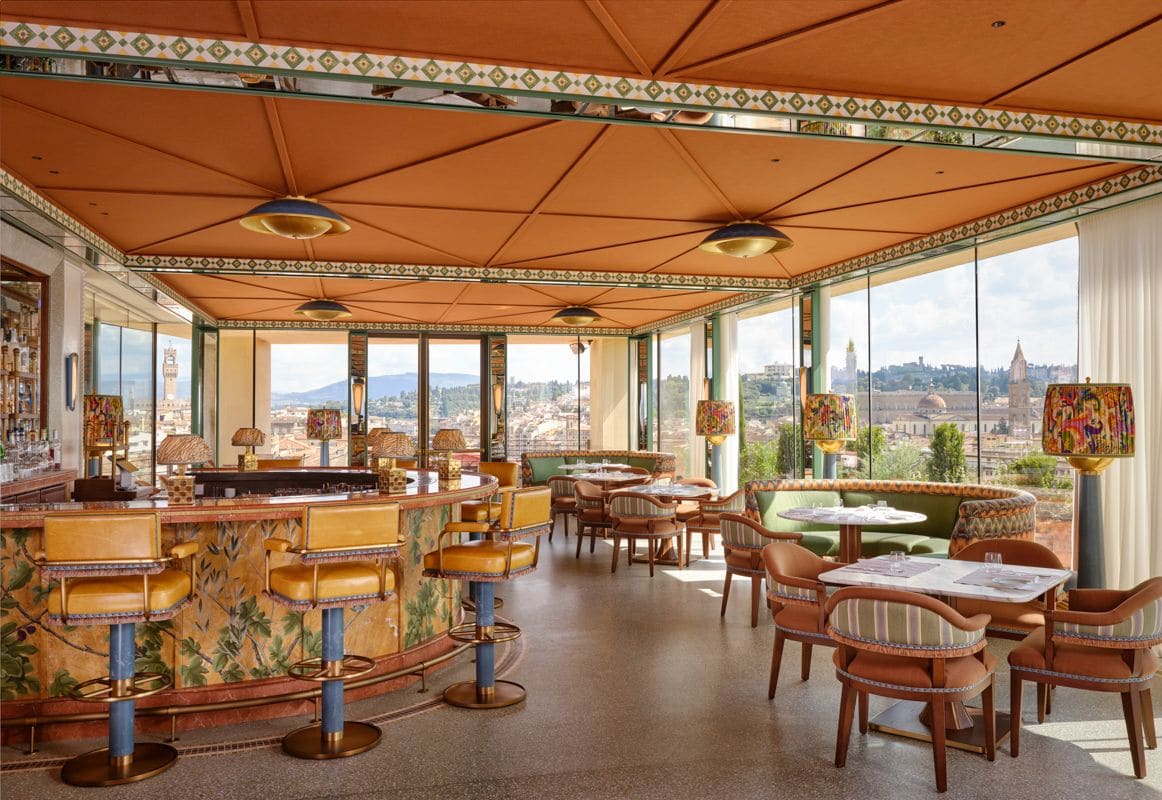
Higher up, literally and figuratively, Cosimo Rooftop Restaurant and Bar commands the sixth floor above the river near Santa Maria Novella. The 360-degree views take in the Duomo, the hills, the Arno snaking west toward Pisa. The menu spans regions, Tuscan and otherwise, a calculated gamble that pays off because the execution is clean and the setting does half the work. Yellowfin tuna tartare with guacamole and ponzu. Grilled octopus. Tagliatelle with ragù. Oven-baked sea bass with tomato, caper, and olive. A milanese large enough for two, topped with tomato and lime salsa that cuts the richness.
It is expensive, as rooftop restaurants in Florence tend to be, but the food justifies the altitude.
The Wine Bar as Archive
In the Oltrarno, Enoteca Pitti Gola e Cantina operates as both wine bar and historical document. The list is vast and meticulously curated, centered on reds from Tuscany and Piemonte, with bottles reaching back to the 1950s. This is not a place for casual sipping; it is a place for people who know what they are looking for and are willing to pay for it.
The food is designed to complement rather than compete: chicken liver terrine with vin santo reduction, anchovy fillets with smoked butter, prosciutto crudo with truffled gorgonzola, seasonal pastas like spaghetti with wild boar or nettle-and-taleggio risotto. The dining room seats twelve at most, six tables inside and a terrace that doubles capacity in summer. It is intimate by necessity, the kind of space that rewards planning and punishes spontaneity.
The Price of Staying
Florence has always been expensive, but the last few years have tightened the screws. It is difficult to find a three-course meal in even a neighborhood trattoria for less than forty-five dollars, and that is before wine. The rise of fine dining options, complete with multi-course degustazione menus and wine pairings that start around eighty dollars, has created a two-tier system: the tourist-facing restaurants that churn out mediocre food at inflated prices, and the chef-driven projects that demand both commitment and cash.
Reservations, even at simple places, are often necessary days in advance, especially for dinner. The city's dining infrastructure has not kept pace with demand, and the result is a landscape where spontaneity is a luxury few can afford.
What Remains
Regina Bistecca, north of the Duomo, is worth mentioning not because it reinvents the bistecca alla Fiorentina but because it treats the dish with the reverence it deserves. The space once housed a 140-year-old antiquarian bookshop, and the current owners have preserved the lofty vaulted ceilings, dark gray walls, and gallery that runs along the upper level. The steak is priced by weight, and diners can choose the breed, from generic European cuts to the prized Chianina. The meat is brought to the table raw for approval, served very rare, and presented with a bone-handled knife. It is theater, but the kind rooted in craft rather than spectacle.
What we return to, in the end, is the question of whom a city feeds. Florence has spent decades feeding the world, and the strain shows in the centro storico's fraying edges. But in Gavinana, in San Jacopino, in the quiet corners of Santo Spirito, a different conversation is unfolding. These are the places where chefs cook for their neighbors first and visitors second, where the menu does not require translation, where the food tastes like something other than nostalgia.
The feast, it turns out, is still movable. You just have to know where to look.
Credit: Matthew Shaw
Spot something wrong? Email editors@globalchicvoyage.com. We log every correction publicly.
RELATED
SEE ALL →
27 Jul 2026 / 5 min
15 Jul 2026 / 5 min
7 Aug 2026 / 5 min
29 Jul 2026 / 5 min