
San Diego's Culinary Neighborhoods: A Wanderer's Map
From coastal hideaways to urban wine bars, the California port city has quietly assembled a dining scene as layered as its topography.
SI
27 Jul 2026 · 5 MIN READ · UPDATED 17 AUG 2026
A City of Microclimates and Microplates
There is a particular light that falls over San Diego in late afternoon, when the marine layer has burned off and the hills glow amber against the Pacific. It is the same light that illuminates a plate of crudo at a coastal counter, or catches the rim of a wine glass in a dim Little Italy enoteca. At Global Chic Voyage, we have watched this city evolve from a sleepy naval port into one of the West Coast's most compelling dining destinations, not through flashy openings or celebrity chefs, but through a quiet accumulation of serious talent and a deep respect for proximity to both ocean and border.
San Diego's culinary identity is written in geography. The city sprawls across canyons and mesas, each neighborhood a distinct microclimate with its own rhythm and flavor vocabulary. To eat well here is to move through these pockets with intention, understanding that a meal in La Jolla will feel nothing like one in Barrio Logan, that the breweries of North Park answer to different gods than the wine bars of Hillcrest. This is not a city that announces itself. It requires a certain willingness to wander.
The Coastal Arc: Where the Pacific Dictates the Menu
Begin, as we often do, at the water's edge. The string of beach communities that runs from La Jolla south to Coronado has long been the domain of seafood and sunset views, but in recent years the cooking has grown more thoughtful, less reliant on the crutch of scenery. La Jolla, once synonymous with white tablecloths and expense accounts, now harbors a handful of chef-driven spots where the fish is treated with the kind of reverence you might find in a Tokyo standing bar or a Basque fishing village.
The best of these places share a philosophy: let the ingredient speak, intervene only when necessary. Yellowtail caught that morning, barely kissed with citrus and salt. Uni spooned directly from the shell, still tasting of cold water. This is not minimalism for its own sake, but rather a recognition that when you are this close to the source, elaboration becomes distraction.
Further south, Coronado maintains its old-world resort charm, though even here change is perceptible. The island's dining scene, once dominated by hotel restaurants trading on location, has begun to welcome smaller, more personal projects. Wine bars with serious lists. Cafés that source their beans with the same care a chef might apply to fish. The conversation is shifting from where you eat to what you are eating, and why.
Little Italy: The Neighborhood That Grew Up
If the coast belongs to the ocean, Little Italy belongs to wine and fire. This compact grid of streets, wedged between downtown and the harbor, has become the city's most concentrated dining district, a place where you can eat Italian one night, Japanese the next, and drink natural wine at a dozen different counters in between.
The neighborhood's Italian roots remain visible in its red-sauce landmarks and espresso bars, but the culinary landscape has diversified in ways that feel organic rather than forced. Little Italy today is less a theme and more a state of mind, a place where chefs and sommeliers have clustered not because of any ethnic mandate but because the rents were once reasonable and the energy was right. That energy has since become electric.
Walk these blocks on a Friday evening and you will find every table full, every bar stool claimed. There is a Michelin-starred restaurant here, its kitchen visible through floor-to-ceiling glass, the kind of place where a single bite of pasta can recalibrate your understanding of what wheat and water can become. Around the corner, a wine bar serves small plates designed to make you drink more, which is precisely the point. Another block over, a brewery pours IPAs so aggressively hopped they taste like biting into a pine tree.
What unites these disparate establishments is a certain seriousness of purpose. These are not casual ventures. The wine lists run deep, the beer menus rotate constantly, the kitchens close when they run out rather than compromise. It is a neighborhood that has, in the span of a decade, learned to trust its own taste.
North Park and South Park: The Craft Corridor
To understand San Diego's relationship with beer, you must venture inland, into the neighborhoods where the craft brewing movement first took root and continues to flourish. North Park, in particular, has become synonymous with hops and innovation, a place where breweries occupy former auto shops and corner stores, their tap lists reading like experimental poetry.
The beer culture here is not about volume or machismo, but about constant iteration and refinement. Small-batch sours aged in wine barrels. Hazy IPAs that taste of mango and guava. Stouts so thick and dark they could double as dessert. The brewers in these neighborhoods are tinkerers and perfectionists, and their customers have been educated to expect nothing less.
But North Park is more than its breweries. The dining scene here has matured alongside the beer, with restaurants that understand the value of a well-made burger, a properly griddled taco, a bowl of ramen that tastes like someone's grandmother made the broth. This is comfort food elevated by technique and care, the kind of cooking that does not need to announce its intentions because the flavors do that work.
South Park, just to the southeast, offers a quieter, slightly more polished version of the same ethos. The restaurants here tend toward the intimate, the wine-focused, the ingredient-driven. It is a neighborhood for long dinners and second bottles, for conversations that stretch past midnight.
East Village and the Gaslamp: Downtown's Split Personality
Downtown San Diego presents two faces to the diner. The Gaslamp Quarter, the city's historic heart and perpetual party zone, is a tangle of sports bars, nightclubs, and restaurants that cater to conventioneers and bachelor parties. There are good meals to be found here, but they require excavation, a willingness to look past the neon and the noise.
East Village, by contrast, has emerged as downtown's culinary conscience. This is where the Padres play, where the tech workers live in glass towers, and where a handful of ambitious restaurants have planted flags. The dining here skews modern and international, with influences drawn from across the Pacific Rim. You will find Filipino flavors, Vietnamese technique, Japanese precision, all filtered through a California sensibility that prioritizes freshness and seasonality.
The neighborhood also harbors some of the city's most interesting cocktail bars, places where the bartenders treat spirits with the same reverence that chefs apply to produce. The drinks are balanced, the atmospheres moody, the music better than it needs to be. These are rooms designed for lingering, for letting the evening unfold without agenda.
Barrio Logan and Beyond: The Border as Muse
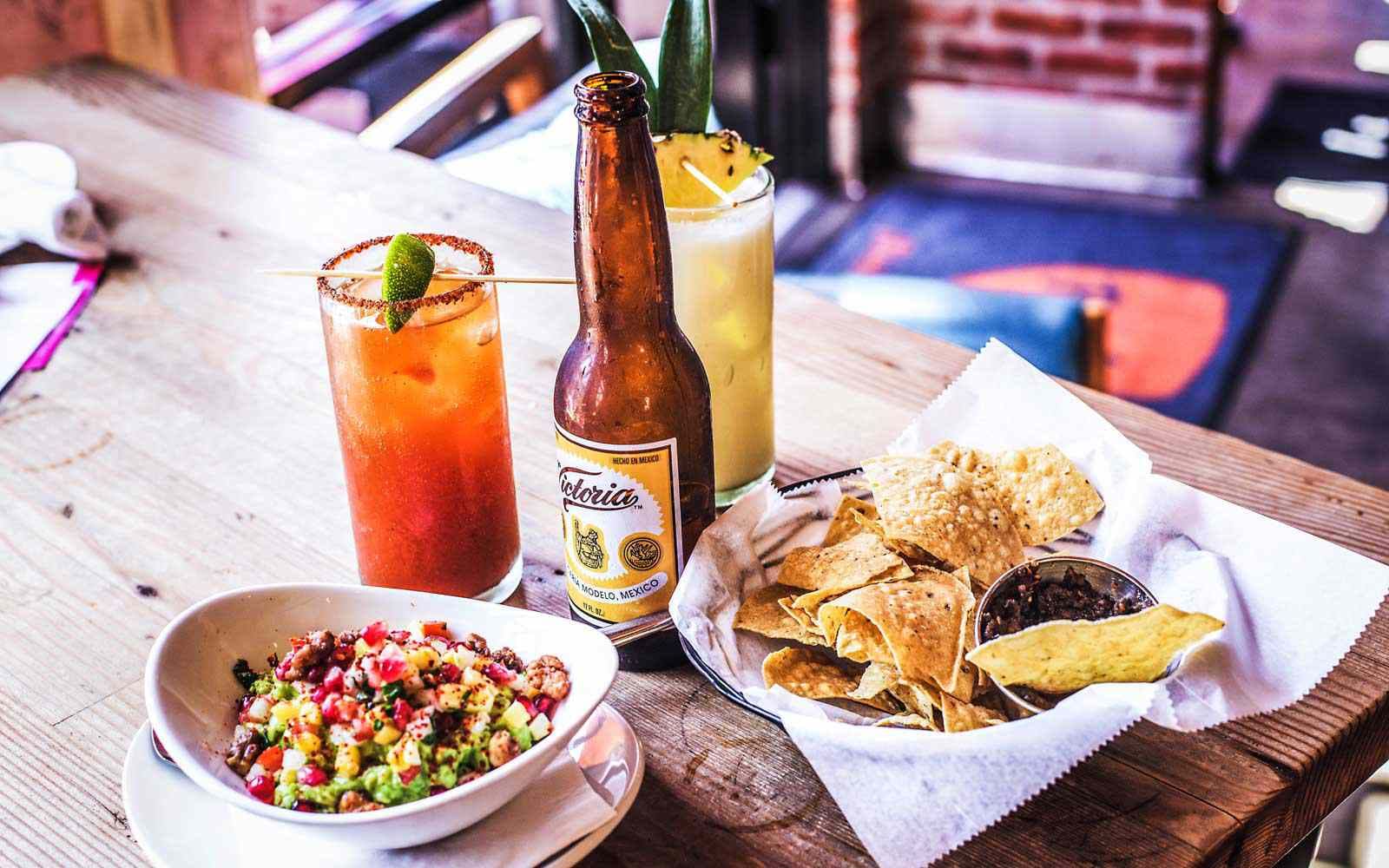
No exploration of San Diego's dining landscape can ignore its proximity to Tijuana, or the ways in which Mexican culinary traditions have shaped and continue to shape the city's food culture. Barrio Logan, the historic heart of San Diego's Chicano community, is where this influence is most visible and most vibrant.
The neighborhood's restaurants and taquerías serve as both preservation and innovation, honoring tradition while pushing boundaries. You will find tacos here that taste exactly as they should, their fillings simple and perfect, their tortillas made by hand that morning. You will also find chefs who are reimagining Mexican cuisine through a contemporary lens, using local produce and modern techniques to create dishes that feel both rooted and new.
This is cooking with a point of view, informed by history and family and a deep knowledge of flavor. It is also, increasingly, cooking that is gaining recognition beyond the neighborhood, as the broader dining community begins to understand what locals have always known: that some of the most exciting food in San Diego is happening in places that do not look like much from the outside.
The Michelin Question
San Diego recently joined the Michelin Guide's roster of rated cities, a designation that brought both validation and scrutiny. The starred restaurants here tend toward the ambitious and the expensive, places where tasting menus unfold over three hours and wine pairings are measured in ounces and dollars.
These are temples to technique, kitchens where every element on the plate has been considered and reconsidered, where the progression of courses follows a narrative logic. They represent one vision of what fine dining can be in a city that has, for most of its history, resisted such formality.
Whether Michelin stars matter in a place like San Diego is a question worth asking. The city's dining culture has always been more democratic, more casual, more interested in the quality of a fish taco than the precision of a foam. The arrival of the guide has not changed that fundamental character, but it has created space for a different kind of ambition, a recognition that serious cooking can happen here, too.
What Remains
At its best, San Diego's dining scene feels like a conversation between land and sea, between tradition and innovation, between the casual and the considered. It is a city that has learned to trust its ingredients, to let the proximity to ocean and farm and border dictate the menu. The chefs and winemakers and brewers who have made this place home understand that they are working with abundance, and that their job is not to obscure but to clarify.
For the traveler, this means seeking out the neighborhoods where this philosophy is most alive. It means eating fish at the coast, drinking wine in Little Italy, exploring the breweries of North Park, and crossing into Barrio Logan for tacos that taste like memory. It means understanding that San Diego does not announce itself, but rewards those willing to look.
We return to this city often, drawn by that particular light and the promise of a meal that tastes like place. The dining landscape continues to evolve, new voices entering the conversation, but the underlying character remains. This is a city that knows what it has, and is learning, slowly, to articulate it.
Credit: Marion Botella / San Diego Tourism Authority
Spot something wrong? Email editors@globalchicvoyage.com. We log every correction publicly.
RELATED
SEE ALL →
30 Jul 2026 / 5 min
22 Jul 2026 / 5 min
9 May 2026 / 5 min
7 Aug 2026 / 5 min