
Four New Asia-Pacific Hotels That Understand Where Travelers Want to Be
From a heritage-meets-modern tower in Penang to a railway-adjacent debut in Hiroshima, this season's openings privilege location over spectacle—and deliver the amenities that make extended stays feel effortless.
ML
12 Jun 2026 · 5 MIN READ · UPDATED 17 AUG 2026
The Quiet Shift in What a Hotel Room Needs to Do
We've been watching a particular species of hotel multiply across Asia-Pacific this year—properties that don't announce themselves with signature restaurants or celebrity architects, but with washing machines. Kitchenettes. EV charging bays. The infrastructure of a longer, messier, more domestic kind of travel. Four recent openings—spanning Malaysia, Japan, China, and Australia—make the case that location and liveability now matter more than lobby drama, and that the most considered hospitality gesture in 2026 might be a self-service laundrette.
At Global Chic Voyage, we've long argued that the future of urban hotels lies not in trying to be destinations themselves, but in becoming efficient, pleasant portals to the cities they serve. These four properties—none of them flashy, all of them shrewd—seem to have internalized that logic.
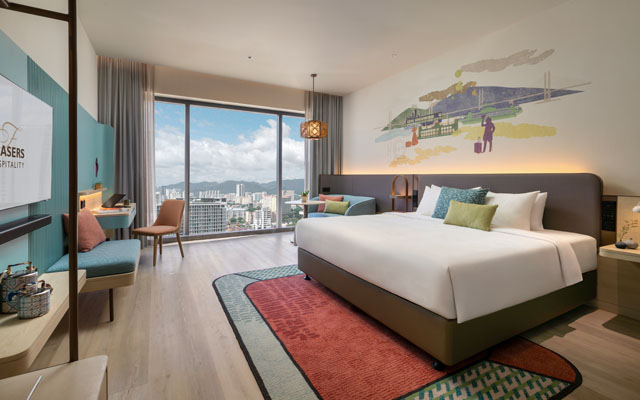
Capri by Fraser, Penang—Where Heritage Meets the Practicalities of a Three-Week Stay
George Town has never lacked for boutique guesthouses tucked into shophouses, but what it hasn't had until now is a full-service property that respects both the UNESCO streetscape and the needs of the digital nomad who plans to stay a month. Capri by Fraser, which opened on Jalan Magazine in early June, threads that needle by grafting a 22-storey tower onto a restored heritage shophouse—a move that feels less like compromise and more like acknowledgment that travelers in 2026 want both: the texture of old Penang and the reliability of a proper gym.
The property offers 248 units, a mix of hotel rooms and residences, many with kitchenettes. There's a pool, a jacuzzi, a yoga room, meeting spaces, and—crucially—a laundrette. Palm House handles food and drink; The Den functions as coworking lounge. The hotel allows pets and has installed EV charging stations, two signals that it's designing for the traveler who arrives with a car, a dog, and a Zoom schedule.
What makes the project interesting is not any single amenity but the sum of small decisions that suggest the operators understand how people actually use a base in George Town. You're not here to spend all day by the pool. You're here because you want to walk to the clan jetties at dawn, eat char koay teow on Lebuh Chulia at lunch, and return to a room where you can rinse out a shirt and answer emails in air-conditioning. Capri by Fraser is betting that this traveler—mobile, semi-resident, equipped with a laptop and a long to-do list—is now the norm, not the exception.
Mercure Tokyu Stay Hiroshima—The First Accor in a City That Has Waited Long Enough
Hiroshima has been undersupplied with internationally flagged hotels for years, a curious gap given its status as a major domestic and international destination. Mercure Tokyu Stay Hiroshima, which opened in Hatchobori this month, is Accor's inaugural property in the city—a 182-room hotel two minutes on foot from Hatchobori Station, which puts the tram network and the rest of central Hiroshima within easy reach.
The facilities are what you'd expect from a mid-tier business hotel: coworking lounge, meeting rooms, fitness centre. What's more telling is the attention to local sourcing in the food and beverage program—bread from Hiroshima bakery Aloft, coffee from Mount Coffee. It's a small gesture, but one that signals the operators are thinking about guests who will be here for a week, not a night, and who will notice if the breakfast croissant tastes like it came from a central commissary in Osaka.
Hatchobori is not the most romantic district in Hiroshima, but it is central, walkable, and connected—qualities that matter more than atmosphere when you're shuttling between meetings and memorial sites. The Mercure is not trying to be a destination. It's trying to be a reliable, comfortable tool for navigating the city, which is exactly what Hiroshima has needed.
Radisson Blu Shanghai Eastern Hub—Betting on Pudong's Next Infrastructure Wave
Shanghai's hotel market has always been a bet on which district will matter next. Radisson Blu Hotel Shanghai Eastern Hub, with 445 rooms in Pudong, is a wager on the future Shanghai East Railway Station, which will eventually connect the city to the national high-speed rail network and, more importantly, to Pudong International Airport in under 20 minutes.
The property, which opened in late May, has the full suite of business-hotel infrastructure: all-day dining, Chinese restaurant with private rooms, executive lounge, temperature-controlled pool, fitness centre, and more than 6,700 square metres of meeting space, including a conference hall and theatre. It's positioned for the MICE market, the corporate traveler, the regional sales director who needs a ballroom and a car to the airport at 5 a.m.
What makes the project notable is less the facilities—which are competent but unremarkable—and more the timing. The hotel is opening before the railway station is complete, a classic Shanghai move: build the infrastructure, then wait for the city to catch up. Pudong has been playing this game for three decades, and it usually works. In five years, this stretch of eastern Pudong may be as central as Lujiazui; the Radisson Blu is betting it will be, and has priced its rooms accordingly.
Avani Mooloolaba—The Sunshine Coast Finally Gets a Rooftop Pool with a View
Mooloolaba has always punched below its weight in the Australian beach-resort hierarchy, overshadowed by the Gold Coast to the south and Noosa to the north. Avani Mooloolaba Beach Hotel, which opened on the esplanade in early June, is a 180-room attempt to give the town a property that can compete with its better-known neighbors.
The headline feature is the rooftop pool and terrace, which offers unobstructed views over the Pacific—a rare asset on the Sunshine Coast, where most beachfront development is low-rise and most pools are at ground level. Sully's Rooftop handles food and drink; the Lobby Bar serves as a more casual option. There's a spa, a fitness centre, and a dedicated experience host to arrange surf lessons, coastal hikes, and boat trips.
The hotel is a 15-minute drive from Sunshine Coast Airport, which has added direct flights to Auckland, Denpasar, and Singapore in the past two years—a connectivity upgrade that makes Mooloolaba viable as a first or last stop on a longer Asia-Pacific itinerary, not just a weekend escape from Brisbane. Avani is clearly betting that the combination of new air links and a property with genuine resort amenities will pull a different kind of traveler to Mooloolaba: international visitors, multi-generational families, the kind of guest who wants a beach town with less noise than the Gold Coast and better dining than Noosa can offer on a weeknight in June.
Why These Four Hotels Matter More Than Their Flags Suggest
None of these properties will win design awards. None of them are trying to. What they represent, instead, is a recalibration of what a hotel is supposed to deliver in 2026: not fantasy, but function; not spectacle, but access. Kitchenettes, because travelers are staying longer and eating out less. Coworking lounges, because the office is wherever the Wi-Fi is reliable. EV chargers, because the rental car is electric and the nearest public charger is twenty minutes away.
At Global Chic Voyage, we've written for years about the blurring line between hotels and apartments, between business travel and bleisure, between a three-night city break and a three-week remote-work stint. These four openings—pragmatic, unhyped, equipped with washing machines—are evidence that the industry has internalized that shift. The most interesting hotels opening in Asia-Pacific right now are not the ones with the most dramatic lobbies. They're the ones that have thought hardest about what happens after you check in.
And they're the ones, we suspect, that will still be full in five years, long after the Instagram-famous openings of 2026 have cycled through their first round of renovations.
Spot something wrong? Email editors@globalchicvoyage.com. We log every correction publicly.
RELATED
SEE ALL →
12 Jun 2026 / 5 min

8 Aug 2026 / 5 min
8 Aug 2026 / 5 min
8 Aug 2026 / 5 min