The Crockery Test: Why Great Hotels Begin With What's Underneath
In an age of borrowed authenticity, a handful of properties are rediscovering what it means to be truly of a place - one locally made plate at a time.
SI
8 Aug 2026 · 5 MIN READ · UPDATED 17 AUG 2026
The Ritual of the Flip
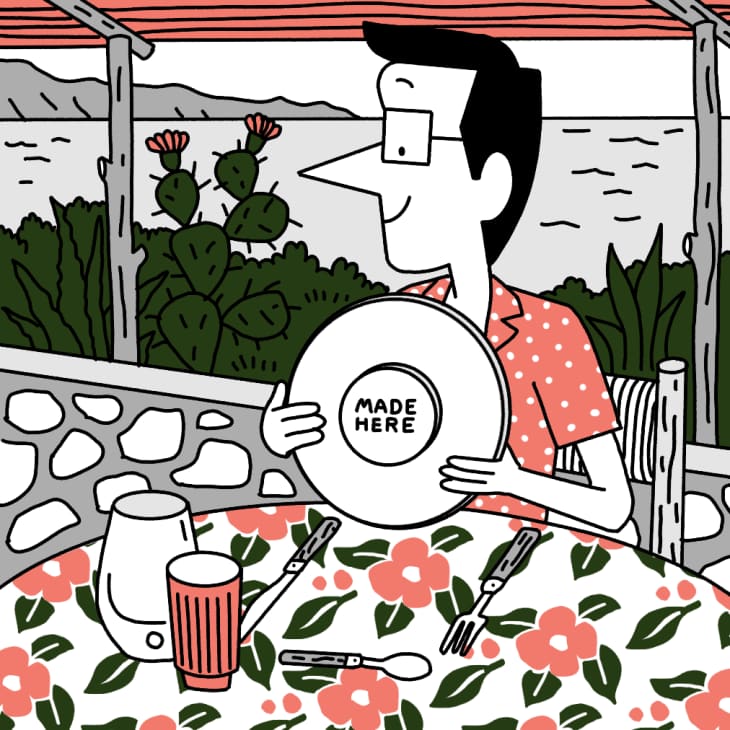
There is a small gesture that separates the curious traveler from the passive one: the flip. Turn over the dinner plate at your hotel restaurant. Check the base of the water glass. Read the label sewn into the bath towel. At Global Chic Voyage, we've watched this ritual become a kind of litmus test, a quiet audit of whether a property's claims about authenticity hold up under scrutiny. Because in an era when every brand speaks the language of provenance and place, the details underneath often tell a different story.
The impulse is not about snobbery. It's about coherence. When a hotel promises an immersive regional experience, when it positions itself as deeply rooted in its locale, guests arrive with expectations calibrated accordingly. They want to wake in a room that could exist nowhere else, where the materiality and craft reflect the latitude and longitude outside the window. Yet too often, the promise dissolves at first inspection. The plate is Italian, the glassware Slovakian, the pepper mill German. The story falls apart in your hands.
The Tension Between Efficiency and Identity
Hotel groups face a structural dilemma. Centralized procurement is faster, cheaper, more predictable. A single supplier can equip an entire portfolio with uniform tableware, linens, furnishings. The spreadsheet logic is unassailable. But this approach flattens regional distinction, turning properties into interchangeable nodes in a branded network. A room in Milan feels indistinguishable from one in Minnesota, save for the view beyond the curtains.
The rhetoric has shifted. Brands now speak fluently about delivering sense of place, about honoring local culture, about creating experiences rather than accommodations. Yet the operational habits persist. The same plates, the same towels, sometimes even the same art, circulate through properties separated by continents. Guests notice. The gap between the marketing language and the lived reality widens with every flip of the crockery.
What makes this tension particularly acute is that the solution exists. It simply requires patience, investment, and a willingness to complicate the supply chain. It demands that hoteliers ask not what is easiest, but what is truest.
A Mallorca Manifesto
Consider the Terreno Barrio Hotel in Palma, which opened its doors this year with a different set of priorities. Hotelier Lydia Piñero approached the project not as a transaction but as a series of creative conversations, enlisting friends, designers, and the architecture practice Ohlab, led by Jaime Oliver and Paloma Hernaiz. The brief was clear: build a hotel that was genuinely of Mallorca, one that benefited its neighbors and reflected the island's craft traditions.
Ohlab bypassed the usual contract furniture suppliers and instead commissioned island makers to produce as much as possible locally. The process was neither fast nor simple. Some businesses had to rescale their operations to meet the hotel's needs. But the result is a property where every fiber carries intention. Sitting at the rooftop bar, drinking wine from Mallorcan vineyards, eating olives grown on the island, you sense a quiet manifesto unfolding. This is what it looks like when a hotel trusts its place enough to let it speak.
The Terreno also thought beyond its guests. Co-working spaces and an outdoor gym now serve the surrounding community, embedding the hotel into the neighborhood's daily life. This is hospitality as participation, not extraction. It's a model that acknowledges a hotel's footprint extends beyond occupancy rates and revenue per available room.
Art as Anchor
Across the island, the new Mandarin Oriental resort at Punta Negra offers another approach to the same challenge. A global brand with deep roots in Hong Kong, Mandarin Oriental could have relied on a formulaic mix of local gestures and imported polish. Instead, the group hired art advisor and curator Paloma Fernández-Iriondo to commission works exclusively from artists based in or born in Spain, many of whom draw on the Balearic Islands' history as a cultural crossroads.
Fernández-Iriondo did not work from a catalog. She drove around Mallorca, knocking on studio doors, seeking out artists without gallery representation. The resulting collection includes pieces like Fran Aniorte's tiled Balearic Constellation, works that carry narrative weight while fitting naturally into the rhythm of a Mediterranean resort. This is curation as discovery, not decoration. It's a labor-intensive process that requires time, taste, and a willingness to take risks on emerging voices.
What both properties share is a refusal of the easy path. They accept that authenticity cannot be purchased wholesale or shipped in bulk. It must be assembled slowly, through relationships, through commissioning, through a deliberate choice to complicate the logistics in service of something more coherent.
The Weight of Stories
The question is not whether Italian ceramicists should be put out of business. Craft traditions cross borders, and quality materials come from many places. But when a hotel tells an elaborate story about its connection to place, that story must be able to withstand scrutiny. If the narrative is built on borrowed materials and imported aesthetics, guests will notice. The plate flippers always do.
This matters because hotels are, in many ways, the first interpreter of a destination. They frame the experience, set the tone, establish expectations. A property that claims to embody its location while filling its rooms with generic objects is not simply guilty of false advertising. It's a missed opportunity to participate in and support the local economy, to elevate regional makers, to offer guests something they cannot find elsewhere.
The trend toward authenticity in hospitality is real, but it requires more than marketing language. It demands operational commitment. It means working with smaller suppliers, longer lead times, higher costs. It means accepting that every property in a portfolio might look and feel different, because they are rooted in different soils.
What We Return To
At Global Chic Voyage, the hotels we've returned to this year are the ones that pass the flip test. Not because every object is locally made, but because the ones that matter are chosen with care, and because the overall composition reflects a genuine engagement with place. These are properties where the design tells a story that holds together, where the details reinforce rather than contradict the larger ambition.
The future of hotel design, we believe, lies in this direction. Not in grand gestures or headline-grabbing architecture alone, but in the quiet accumulation of thoughtful choices. In the decision to commission a local artisan rather than order from a catalogue. In the patience to seek out emerging artists rather than rely on a pre-approved art consultant. In the recognition that a hotel is not a sealed environment but a participant in the life of its place.
This is the work that guests may never fully see, but they will feel. It's in the weight of the plate, the texture of the linen, the provenance of the wine. It's in the knowledge that someone cared enough to make it difficult, to resist the path of least resistance, to build something that could not exist anywhere else. That is the definition of luxury we're watching evolve: not opulence for its own sake, but coherence, integrity, and a deep respect for the specificity of place.
The crockery test is simple. The work to pass it is not. But for the hotels willing to do that work, the reward is a kind of authenticity that cannot be faked or franchised. It's the difference between a room and a place, between a stay and an experience, between a brand and a belief.
Credit: GBP
Spot something wrong? Email editors@globalchicvoyage.com. We log every correction publicly.
RELATED
SEE ALL →
20 May 2026 / 5 min
16 Apr 2026 / 5 min
31 Mar 2026 / 5 min
26 Mar 2026 / 5 min