
Finding Grace in the Floating City: A Slow Return to Venice
Beyond the crowds and clichés, the lagoon still holds its secrets for those willing to look beyond the postcards.
SI
22 Jun 2026 · 5 MIN READ · UPDATED 17 AUG 2026
The Temptation to Write Off La Serenissima
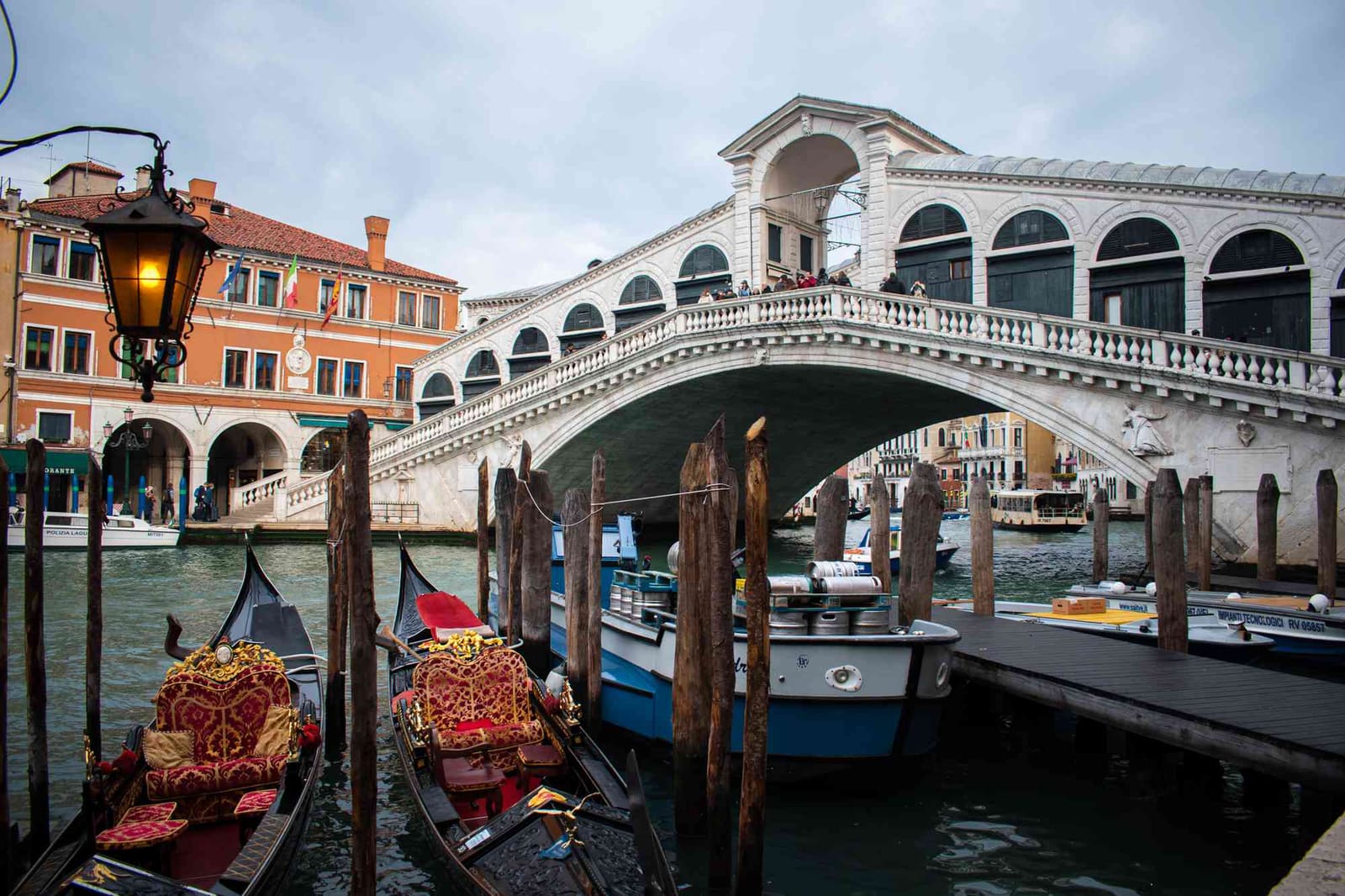
There is a certain kind of traveller who has lately developed the habit of dismissing Venice with a wave of the hand. Too crowded, they say. Overrun. A theme park version of itself. At Global Chic Voyage, we have watched this narrative harden into conventional wisdom, repeated so often it has become easier to nod along than to question whether the city on the lagoon might still have something to teach us about beauty, resilience, and the art of looking more carefully.
The truth is more complicated, as truth tends to be. Yes, the Rialto Bridge groans under the weight of selfie sticks on summer afternoons. Yes, the alleyways near San Marco can feel like a procession rather than a promenade. But to reduce Venice to its most photographed corners is to mistake the frame for the painting, the menu for the meal. It is to forget that cities, like people, contain multitudes, and that the most rewarding encounters often happen just beyond the well-trodden path.
We returned to Venice this spring with a simple premise: to move slowly, to eat well, and to sleep in places that understand the difference between luxury and mere expense. What we found was a city that still holds its secrets close, that still rewards patience with magic, and that refuses to be diminished by the very popularity that threatens to overwhelm it.
The Luxury of Slowing Down
The best way to experience Venice now is to resist the itinerary. This is not a city to be conquered in forty-eight hours, ticking off monuments like items on a shopping list. It is a place that reveals itself in layers, in the quality of light on water at dusk, in the way a narrow calle suddenly opens onto a sun-drenched campo where old men play cards and children chase pigeons.
We have come to believe that the hotels you choose in Venice matter more than in almost any other city. Not because of thread count or minibar selections, but because they set the tone for how you will move through the days. The properties we have returned to over the years share a common quality: they understand that luxury in Venice means offering a retreat from the crowds, a sense of being let in on something precious, a feeling of temporary belonging.
The palazzos along the Grand Canal that have been converted into intimate hotels offer this in spades. Rooms with frescoed ceilings and Murano chandeliers, terraces where breakfast arrives on silver trays, concierges who know which bacari still serve honest cicchetti and which mask shops are run by actual artisans rather than importers of Chinese reproductions. These are not hotels that shout; they whisper.
But luxury in Venice is not confined to five-star properties. We have stayed in small guesthouses in Cannaregio where the hosts greet you by name after a single night, where the morning coffee is made with care, and where the location means you can slip out at dawn and have entire stretches of the city to yourself. This, too, is a kind of richness, perhaps the most valuable kind.
Hidden Tables and Honest Cooking
The dining question in Venice requires its own navigation. The restaurants clustered around the major tourist sites often serve food that tastes like resignation, as if the sheer volume of passing trade has worn away any ambition beyond getting plates to tables. But venture into the residential quarters, into Dorsoduro or Castello or the far reaches of Cannaregio, and you will find trattorias and osterias where Venetians still eat, where the menu changes with the season and the catch, where the wine list favours small producers from the Veneto hills.
We have learned to look for certain signs: handwritten menus, a preponderance of locals, the absence of photographs on the wall. A good Venetian restaurant does not need to advertise. It simply exists, sustained by neighbourhood loyalty and the kind of word-of-mouth recommendation that does not make it onto review aggregator sites.
The traditional dishes of the lagoon, when prepared with respect, tell stories about this place that guidebooks cannot. Sarde in saor, with its sweet-and-sour interplay of sardines, onions, pine nuts, and raisins, speaks to Venice's history as a trading empire, to the need to preserve fish in the days before refrigeration, to the influence of the East on Western palates. Risi e bisi, the spring risotto of rice and peas, is peasant food elevated to art, a reminder that Italian cooking at its best is about coaxing maximum flavour from minimal ingredients.
We have sat in dining rooms with exposed beams and mismatched chairs, where the owner's mother is in the kitchen and the owner's son is pouring wine, and felt the kind of contentment that comes from being exactly where you should be. These meals are not about innovation or Instagram moments. They are about continuity, about recipes passed down, about the stubborn insistence that good food and good hospitality still matter.
Beyond the Grand Canal
The geography of Venice rewards curiosity. The main tourist routes follow a predictable pattern from the train station to the Rialto to San Marco, with occasional detours to the Accademia or the Guggenheim. But the city is an archipelago of islands, each with its own character, and the outer neighbourhoods remain largely undiscovered by the daytrippers who arrive on cruise ships and depart before sunset.
Giudecca, the long island across the water from Dorsodoro, feels like a different city entirely. Wider streets, fewer crowds, a workaday atmosphere punctuated by moments of surprising beauty. The eastern end of Castello, beyond the Arsenale, gives way to parks and gardens, to washing hanging from windows, to the rhythms of ordinary life. Even on the main islands, there are churches and squares that see a fraction of the traffic that San Marco endures, places where you can sit and read and watch the light change without being jostled by tour groups.
We have come to think of these quieter corners not as secondary attractions but as the real Venice, the one that persists beneath and around and in spite of the tourist economy. It is the city of the vegetable boats that moor at neighborhood landings, of the elderly women who pause to gossip on bridges, of the cats that sun themselves on ancient stone steps. This Venice requires no ticket, no reservation, no guided tour. It simply asks that you pay attention.
The Light on Water
There is something about the quality of light in Venice that defies adequate description. It has to do with the water, of course, with the way the lagoon reflects and refracts, with the absence of cars and the presence of sky. It changes throughout the day, from the soft pastels of dawn to the golden blaze of late afternoon to the blue hour when the street lamps begin to glow and the city seems to float between worlds.
The painters who have tried to capture Venice, from Canaletto to Turner to Sargent, understood that this light is part of what makes the city otherworldly, that it softens edges and heightens colours and creates an atmosphere that exists nowhere else. It is one reason why photographs of Venice so often disappoint, why the place resists reduction to images, why you have to be there, standing on a bridge or sitting at a canal-side table, to understand what all the fuss has been about for the past thousand years.
We have watched this light from hotel terraces and restaurant windows, from vaporetto decks and quiet quaysides, and it never grows old. It is free, democratic, available to anyone who takes the time to notice. In a city where so much has been commodified, where entrance fees and reservation systems and timed tickets govern access to the major sites, the light on water remains a gift, bestowed equally on all.
The Argument for Returning
The case against Venice, as currently formulated, rests on the premise that overtourism has ruined the city, that it has become unlivable for residents and unpleasant for visitors, that it is a cautionary tale about what happens when a place becomes too popular for its own good. There is truth in this critique. The statistics are sobering: a resident population that has dwindled to barely fifty thousand, a tourism influx that numbers in the tens of millions annually, a housing market warped by Airbnb and investment properties, a fragile infrastructure straining under pressures it was never designed to bear.
But to concede these points is not to concede that Venice should be written off, that it is no longer worth visiting, that the responsible choice is to stay away. Cities are not museum pieces to be preserved in amber. They are living organisms, constantly adapting, constantly negotiating between past and present, between locals and visitors, between preservation and change. Venice has been navigating these tensions for centuries, long before the term overtourism entered the lexicon.
The travellers who dismiss Venice today often do so from a position of privilege, having already visited, having already collected their memories and photographs. For those who have not yet been, the city still offers experiences that cannot be replicated elsewhere, moments of beauty and strangeness and historical vertigo that justify the journey. The question is not whether to go, but how to go, how to move through the city with awareness and respect, how to seek out the places and people that still embody what makes Venice extraordinary.
A Slower, More Attentive Path
What we have learned from our repeated returns to Venice is that the city rewards a particular kind of travel. Not the frantic, box-checking kind that tries to see everything in a weekend. Not the luxury-consumption kind that equates spending with experience. But the slow, attentive kind that values quality over quantity, depth over breadth, connection over collection.
This means staying longer if you can, choosing accommodations that root you in a neighbourhood rather than just providing a bed, eating where locals eat, walking the back streets, learning a few phrases of Italian, visiting the smaller churches and lesser-known museums, taking the vaporetto to the outer islands, sitting in parks, watching the city go about its business. It means resisting the pressure to perform your visit on social media, to reduce Venice to a series of backdrops for self-presentation. It means being present, being patient, being open to surprise.
The hotels that facilitate this kind of travel are not necessarily the most expensive or the most famous. They are the ones that understand their role as intermediaries between guest and city, that offer guidance without prescription, that create spaces of calm and beauty where you can retreat and recharge between explorations. The restaurants that nourish this kind of travel are the neighbourhood places that cook with integrity, that welcome strangers without pandering to them, that trust their own traditions.
Venice is tricky, yes. It asks more of its visitors now than it did a generation ago, when the crowds were thinner and the problems less acute. But it still has much to offer those willing to meet it halfway, to look beyond the headlines and the Instagram clichés, to seek out the hidden dining rooms and quiet canals and moments of unexpected grace that persist in the floating city. At Global Chic Voyage, we believe it is worth the effort, worth the patience, worth the slower, more attentive path. The lagoon still holds its secrets. You simply have to be willing to look.
Spot something wrong? Email editors@globalchicvoyage.com. We log every correction publicly.
RELATED
SEE ALL →
21 Jul 2026 / 5 min
17 Jun 2026 / 5 min
29 Jul 2026 / 5 min
23 Jul 2026 / 5 min