The Seat That Moves Itself: Emirates Rethinks the In-Between
Electric controls, privacy dividers, and a cradle recline bring a first-class sensibility to the cabin's most overlooked row.
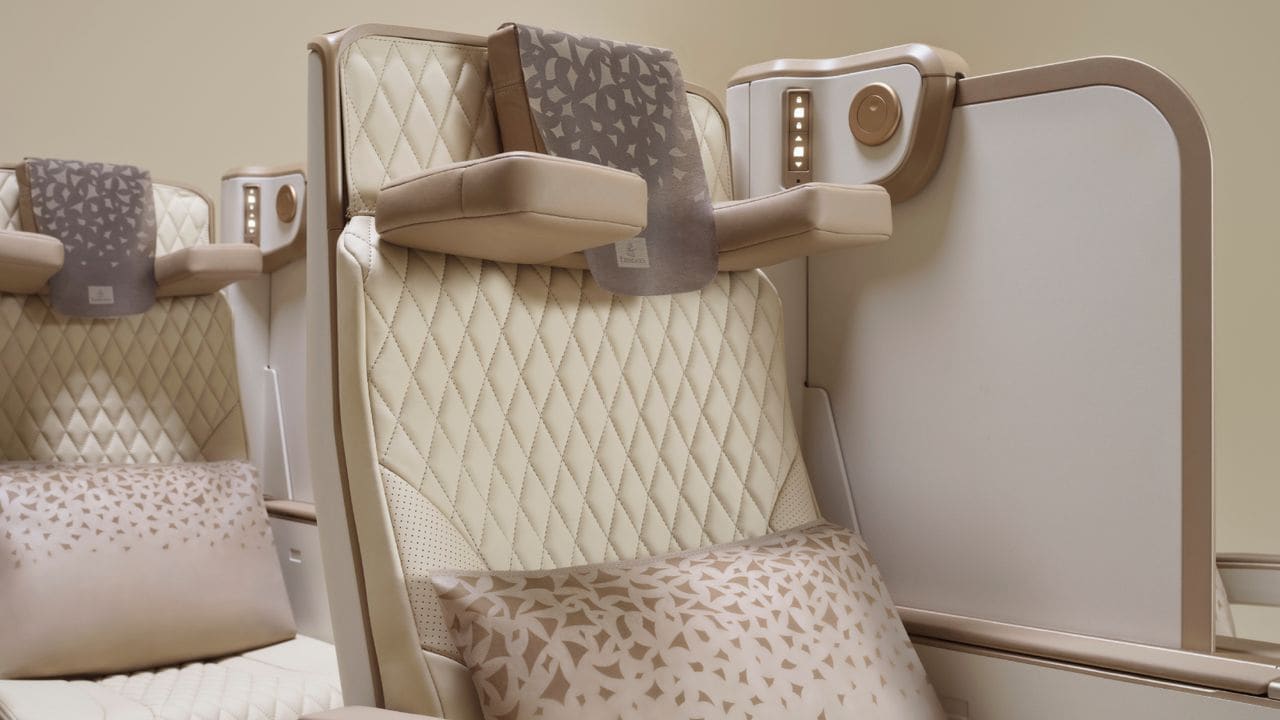
The Cabin No One Designed For
There is a particular melancholy to the middle seat, a truth recognised by anyone who has spent eleven hours wedged between strangers at 38,000 feet. Premium economy occupies a similar emotional terrain: better than the alternative, not quite good enough to feel like luxury. It is the compromise class, the upgrade with a shrug. But Emirates has recently introduced a seat that treats this overlooked cabin not as an afterthought but as an engineering opportunity, one that reclines, adjusts, and even creates privacy at the touch of a button.
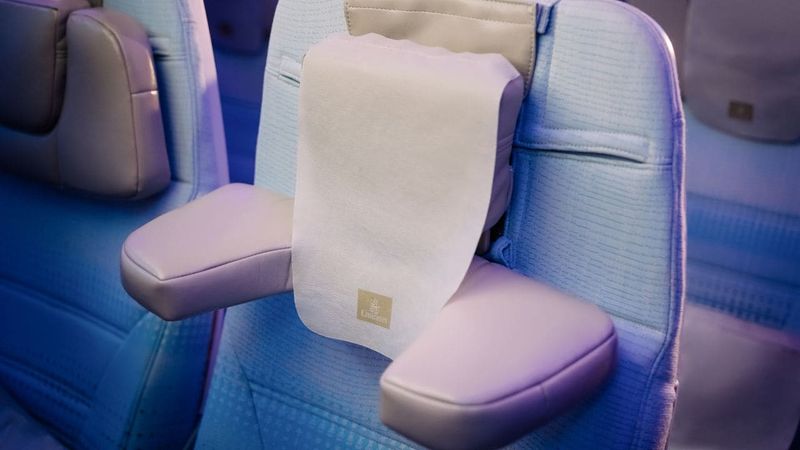
The carrier has fitted its A350 aircraft with a 28-seat Premium Economy cabin arranged in a 2-3-2 configuration. Each seat measures 20 inches across and offers up to 39 inches of pitch, generous by most standards but unremarkable on its own. What distinguishes the design is the integrated electric control unit, a feature Emirates describes as a first for the cabin class. Press a button and the seat lowers into a cradle position, tilting backwards without crowding the knees of the person behind. Press another and a divider rises into place, forming a semi-private cocoon for work, meals, or sleep.
It is a small gesture with significant implications. The ability to adjust one's immediate environment, to shape the contours of comfort rather than accept them passively, has long been the preserve of business class. Bringing that agency to a lower tier suggests a shift in how airlines think about the passenger experience, or at least how they talk about it.
What Electric Really Means
The seat's electric controls extend beyond recline. A lounge mode tilts the backrest and extends the legrest in concert, while a dedicated meal mode raises the seat upright and adjusts the tray table height. The tray itself includes a phone holder that props up a device at eye level, turning it into a second screen during meals or entertainment. A wireless charging pad sits flush with the armrest, joined by a USB-C port.
Above the headrest, Safran Seats' U-Dream system offers adjustable leather wings that cradle the neck and head, a design borrowed from long-haul business cabins. A leather footrest deploys manually to ease circulation on extended flights. The entertainment screen spans 13.3 inches and supports 4K HDR playback, while newly delivered A350s add side-facing exterior cameras to the existing downward and forward views. The result is a window seat perspective from any position in the cabin, a feature that feels more like theatre than utility but succeeds on those terms.
The Aesthetics of Restraint
Emirates has dressed the cabin in materials that nod to its business class without mimicking it outright. Meals arrive on Royal Doulton china, accompanied by linen napkins and stainless-steel cutlery from Robert Welch. The menus themselves are developed by the airline's culinary team and vary by region, though specifics depend on route and departure time. Chandon Vintage Brut 2021, an Australian sparkling wine, is reserved exclusively for Premium Economy passengers across the network.
The amenity kits, produced in collaboration with United for Wildlife, are made from bio-based materials including a cactus-derived leather alternative. Four designs depict endangered species and their habitats, a choice that leans into sustainability without overplaying it. Inside are Aveda skincare products, socks, an eye mask, earplugs, and a dental kit. The kits are reusable, a practical detail that doubles as environmental messaging.
What emerges is an aesthetic of deliberate restraint. The cabin does not try to pass itself off as business class, nor does it settle for the bare minimum. It occupies a space defined by thoughtful increments: better materials, more control, a slightly more generous sense of space. Whether that constitutes luxury or simply a more palatable version of economy depends largely on expectations.
The Calculus of Comfort
Emirates launched its Premium Economy product in 2022 and has since rolled it out across every market served by its A350 fleet. The cabin has collected accolades including Best Premium Economy Class at the Business Traveller Middle East Awards in 2024 and 2025, and Airline with the Best Premium Economy Class at the 2025 ULTRAs. Awards of this nature are difficult to parse, as they often reflect brand loyalty as much as product quality, but they suggest the cabin has resonated with at least a segment of the travelling public.
The real test, though, is not whether the seat wins trophies but whether it redefines what passengers expect from the class. For years, premium economy has been sold as a marginal upgrade, worth the extra cost only if the alternative is unbearable. Emirates' electric seat raises the floor. It introduces features, privacy dividers and motorised recline among them, that were once exclusive to higher cabins and asks whether the middle tier can become something more than a consolation prize.
The answer will depend on how other carriers respond. If electric controls and privacy dividers become standard, the class will evolve into something genuinely distinct. If they remain outliers, Emirates' seat will be remembered as an interesting experiment, admired but not widely imitated.
The Seat That Knows Its Place
There is a tension at the heart of premium economy, a class that exists because airlines need to fill the space between two extremes. It is not aspirational in the way business class is, nor is it the democratising force of economy. It is pragmatic, transactional, defined by what it is not. Emirates' electric seat does not resolve that tension, but it does make it more comfortable to live with.
The divider that rises at the press of a button, the cradle recline that respects the passenger behind, the wireless charging pad flush with the armrest: these are not revolutionary gestures, but they are considered ones. They suggest that even the in-between can be designed with care, that the middle seat need not always feel like a compromise. Whether that care extends beyond Emirates' A350 fleet, whether it becomes the norm rather than the exception, remains to be seen. For now, it is enough that someone thought to ask the question.