Where the Lion City Earned Its Stars
Singapore's 2026 Michelin roster weaves hawker heritage with fine-dining ambition, tracing the threads that hold a city's culinary identity together.
A City That Eats With Purpose
There is a moment, late on a Friday evening in the Duo Galleria, when the service at Seroja slows just enough for you to notice the way candlelight catches the glaze on a bowl of braised beef cheeks. The dish arrives with a rice ball bobbing in village chicken broth, steam rising in soft plumes, and you realize you are tasting something more than dinner. You are tasting the Malay archipelago's fishing villages, the artisans who still cure sambal by hand, the farmers who grow wild basil in soil their grandparents tended. Chef Kevin Wong has built his kitchen around these relationships, and in 2026 the Michelin guide rewarded that vision with a second star and a Green Star for sustainability.
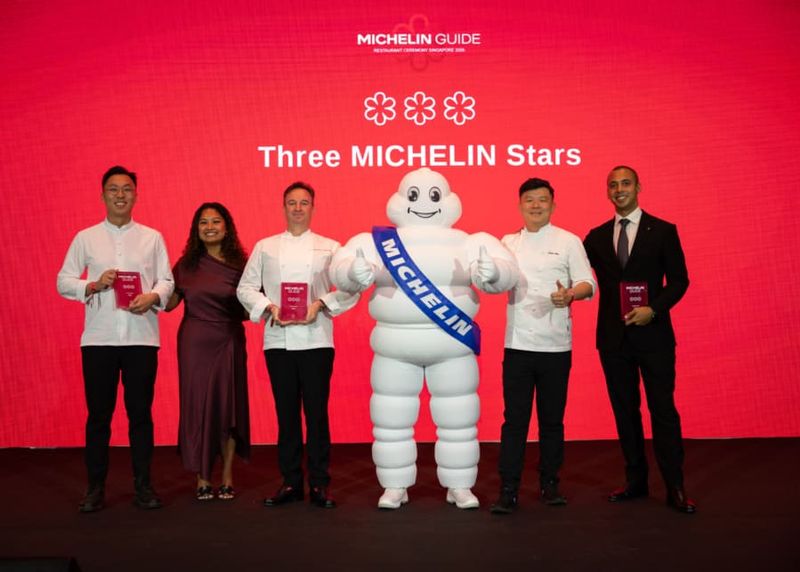
At Global Chic Voyage, we have watched Singapore's dining scene evolve not in leaps but in layers. The 2026 Michelin selection now counts 45 establishments, up from 42 the previous year, and the additions tell a story about where ambition meets memory. Six newcomers joined the one-star ranks, including Loca Niru, Tenshima, Jin Ting Wan, Cherry Garden by Chef Fei, and Sushi Kimura+, while 1887 by Andre debuted directly at two stars. Yong Fu climbed from Bib Gourmand to one star, and Seroja ascended to two. The roster now holds three three-starred temples, nine two-starred kitchens, and 33 one-star destinations. Two Green Stars recognize restaurants pushing sustainability beyond marketing copy into daily practice.
The question is not whether Singapore deserves its Michelin density. The question is what happens when a city this young, this driven, this unabashedly ambitious decides that food is the language through which it will speak to the world.
The Newcomers Who Redrew the Map
Loca Niru occupies the second floor of the House of Tan Yeok Nee, Singapore's last surviving Teochew grand mansion. The building itself is a national monument, its colonnades and courtyards restored with the kind of reverence usually reserved for European chateaux. Chef Shusuke Kubota works within this historical envelope, layering Japanese ingredients and French technique over Southeast Asian produce. The 36-seat dining room feels hushed, almost liturgical, and the tasting menu unfolds like a conversation conducted in whispers. Hassun, isaki, maguro arrive in sequence, each course a small argument for restraint in an era of maximalist plating. The menu is priced at $298 per person, with sake pairings at $148 and wine at $188.
What Loca Niru understands, and what many of its peers are still learning, is that luxury in 2026 is not about volume. It is about knowing when to stop talking.
The Climb From Good to Great
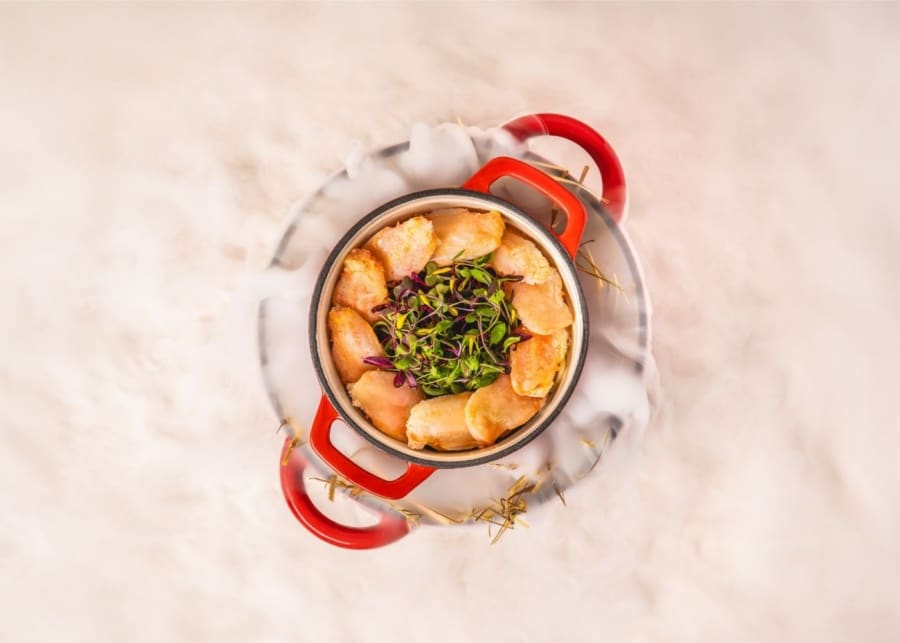
Seroja's promotion to two stars came with a Green Star, a pairing that underscores how sustainability and excellence no longer occupy separate lanes. Chef Kevin Wong sources from fishermen who still dive for grouper off the coasts of Bintan, from farmers who grow turmeric in plots smaller than most Singapore apartments. The menu changes with the seasons and the catch, but the through line is a deep respect for Malay culinary tradition, the kind that does not flatten regional differences into a single "Southeast Asian" aesthetic. The braised beef tripe and cheeks arrive with a rice ball that soaks up the village chicken broth, a dish that tastes like someone's grandmother's kitchen if that grandmother had trained at a Michelin-starred brigade. Wild basil sorbet closes the meal, a palate cleanser that doubles as a thesis statement. Lunch sets begin at $218 per person, dinner at $288.
The Green Star is not window dressing. Seroja works directly with suppliers to reduce waste, composts kitchen scraps, and sources proteins from fisheries that adhere to seasonal quotas. In a city where land is finite and imports are the norm, this kind of commitment requires logistical choreography that most diners will never see.
The Quiet Mastery of Omakase
Omakase at Stevens occupies a low-rise building on a residential street, the kind of location that signals confidence rather than foot traffic. Chef Kazuki Arimoto is young, but his hands move with the economy of someone twice his age. The five-course menu starts at $238, the eight-course at $333, and every plate reflects the seasonal intelligence that separates competent sushi from transcendent sushi. The rice is warm, the fish cold, the interval between courses calibrated to let flavors fade before the next arrives. Service is attentive without performance, the kind of hospitality that anticipates needs before you articulate them.
What keeps regulars returning is not novelty but consistency, the knowledge that the same care will be applied to the twentieth visit as to the first. In an industry that often mistakes theatrics for technique, Omakase at Stevens is a reminder that excellence can be quiet.
The Edomae Tradition, Adapted
Sushi Sakuta, now holding two stars, operates with a precision that extends beyond the cutting board. Chef Sakuta began his training at 18, and the decades since have been spent refining not just knife skills but every variable that shapes the dining experience. The interior lighting shifts throughout the evening to match the progression of the meal. The sake program is curated to complement the day's fish, which varies based on what the market yields. Edomae-style preparation allows for this kind of flexibility, treating each ingredient as a starting point rather than a fixed recipe. Dining menus begin at $350, and reservations are secured weeks in advance.
The restaurant seats a small number of guests, a deliberate choice that allows chef Sakuta to adjust seasoning and timing in real time. This is not the kind of sushi you photograph and post. This is the kind you remember in fragments, the texture of toro, the way vinegar brightens rice, the silence between bites.
Sustainability as Craft, Not Slogan
Restaurant Fiz earned its Green Star by treating sustainability as a technical challenge rather than a moral posture. Chef-owner Hafizzul Hashim sources ingredients the way his grandmother did, hunting down野菜 in nature, working with farmers who still use ancient methods, fishing in waters where stocks are managed rather than mined. The menu blends these ingredients with modern technique, creating dishes that honor Malay culinary heritage without resorting to nostalgia. Lunch sets start at $88, dinner from $198, and a la carte options begin at $10.
The restaurant composts waste, conserves energy through passive cooling and LED lighting, and supports local communities by sourcing from small-scale producers. These practices are not advertised with the fervor of a marketing campaign. They are embedded in the kitchen's daily operations, visible only to those who know where to look.
The East-West Dialogue
Meta, holding two stars since its 2015 opening, remains a study in cultural synthesis. Chef Sun Kim balances his Korean heritage with Japanese culinary training and Western technique, a juggling act that could easily collapse into confusion. Instead, the fixed-course menu reads like a conversation between traditions, each dish asking what happens when ingredients cross borders. Lunch sets are priced at $248 per person, dinner from $288, and the wine list favors small producers over trophy labels.
The dining room is intimate, seating arranged to encourage interaction between kitchen and guests. This proximity is not accidental. Chef Kim wants diners to see the process, to understand that fusion is not a shortcut but a discipline that requires fluency in multiple languages.
The Botanic Gardens' Hidden Gem
Pangium sits within the Singapore Botanic Gardens, a location that could easily lean on scenery rather than substance. Chef-owner Malcolm Lee, who also helms Candlenut, has instead built a menu that treats Straits cuisine with the rigor usually reserved for French haute cuisine. The tasting menus rotate regularly, spotlighting Peranakan flavors that range from fiery to floral. Set menus begin at $138 per person, and the dining room overlooks greenery that feels a world away from the city's concrete density.
What makes Pangium compelling is its refusal to simplify. Straits cuisine is a product of trade routes, colonial histories, and intermarriage, a culinary tradition born from complexity. Lee's kitchen honors that complexity, presenting dishes that require multiple readings, layers of flavor that reveal themselves slowly.
The Hawker Stall That Defied Odds
Hill Street Tai Hwa Pork Noodle has held its Michelin star since the guide's early Singapore editions, a hawker stall that charges $8 for a bowl of bak chor mee and still draws queues that stretch down Crawford Lane. Opened in 1932, the stall has remained in family hands, the recipe unchanged, the technique honed over decades. The noodles arrive springy, the pork tender, the chili paste balanced between heat and sweetness.
The star has brought fame and higher prices than typical hawker fare, but the fundamentals remain. This is not food that aspires to fine dining. This is food that reminds you why fine dining exists in the first place, to elevate the everyday into something worth remembering.
The Daily-Changing Canvas
Willow operates on Hongkong Street with a menu that shifts daily, built around whatever produce arrives at peak ripeness. The kitchen draws techniques from around the world, applying them with a lightness that never overshadows the ingredients. Lunch sets start at $98 per person, dinner from $258, and the dining room is deliberately unadorned, a blank canvas that lets the food command attention.
What distinguishes Willow is its willingness to let ingredients dictate direction. There is no signature dish, no anchor that guests can count on from visit to visit. This approach requires confidence, the belief that execution matters more than branding.
The Sichuan Legacy Transplanted
Shisen Hanten by Chen Kentaro represents a third-generation culinary legacy, the Japanese Sichuan restaurant group's first overseas outpost. Chef Chen Kentaro learned his craft in Sichuan province, then adapted it for a global audience without diluting the cuisine's fundamental boldness. The menu navigates seven flavors according to Shisen Hanten: sour, spicy, hot, sweet, bitter, aromatic, salty. Set menus begin at $188 per person, with a chef's table seasonal menu at $288.
The signature mapo tofu arrives with soft cubes simmered in fermented black bean sauce aged three years in Chengdu's Pidu district, topped with peppercorns that numb the tongue. Foie gras chawanmushi with crab roe soup bridges Japanese and Chinese technique, while Coconut Fantasy, an almond pudding topped with bird's nest and served in a young coconut, closes the meal with unexpected delicacy.
The Broader Canvas
Cloudstreet, on Amoy Street, holds two stars for its ingredient-driven menus that marry disparate influences into coherent narratives. The dining room is intimate, seating arranged to allow conversation between chefs and guests. The wine list honors both renowned estates and independent winemakers, a curatorial approach that mirrors the kitchen's philosophy. Lunch sets begin at $248 per person, eight-course dinners at $398.
The restaurant's name comes from an Australian novel, but its sensibility is unmistakably Singaporean, a place built by immigrants who brought their cuisines and learned to share them. Cloudstreet's menu is that history made edible, a reminder that the best food often comes from collisions rather than purity.
What the Stars Reveal
Singapore's 2026 Michelin landscape is not a ranking. It is a portrait of a city that has decided excellence is non-negotiable, whether that excellence arrives in a hawker stall or a restored mansion. The guide's expansion reflects not grade inflation but a dining culture that has deepened, diversified, and learned to trust its own voice. The Green Stars, still rare, signal a shift from sustainability as talking point to sustainability as operational standard.
At Global Chic Voyage, we return to these kitchens not because a guide told us to, but because they represent something larger than individual ambition. They are the threads that hold a city's identity together, the places where heritage and innovation sit down at the same table and figure out how to talk to each other. The stars are a byproduct of that conversation, not the reason it began.