Where the Sand Meets Solitude: Finding Mexico's Last Quiet Shores
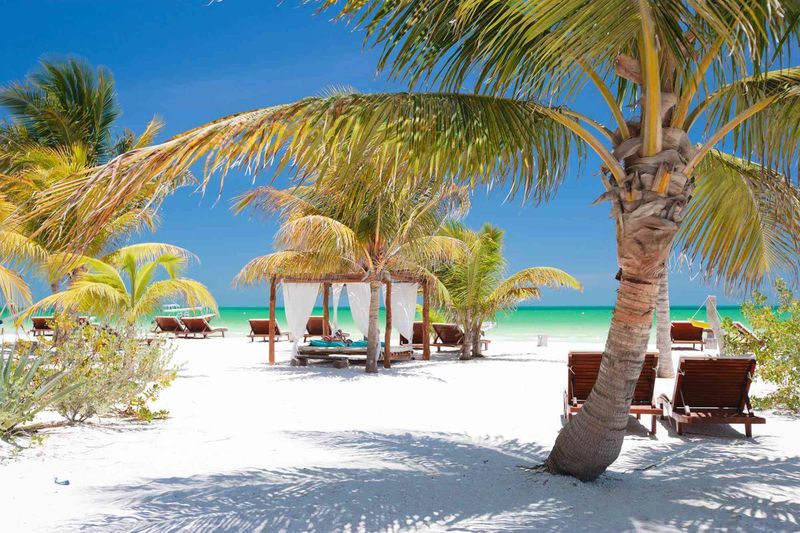
Beyond the resort corridors and spring-break crowds lie beach hideaways built for disappearance - twelve bungalows that remember what travel used to feel like.
The Architecture of Absence
There is a particular quality to morning light on a beach where you are, for all practical purposes, alone. It arrives slower, unfiltered by the geometric shadows of high-rise hotels or the visual noise of umbrella grids. In certain corners of Mexico's coastline - corners that have resisted both the impulse to overdevelop and the Instagram gold rush - this kind of light still exists. And so do the bungalows built to hold it.
At Global Chic Voyage, we've watched the concept of "secluded" stretch thin over the past decade, applied to properties that sit a ten-minute golf-cart ride from all-inclusive buffets or require reservations for their "private" beaches. True seclusion, the kind that resets your internal clock and makes you forget which day of the week it is, has become rarer. Which is precisely why we went looking for it again.
What we found were not resorts in miniature but something closer to inhabited driftwood: small-footprint bungalows where design bows to landscape, where the gulf or the Pacific dictates the day's rhythm, and where the absence of neighbors is not a marketing claim but a geographic fact. These are places built for people who understand that luxury, at a certain threshold, is measured not in thread count but in the distance between you and the nearest crowd.
Palapa and Patience: The Vernacular of Coastal Calm
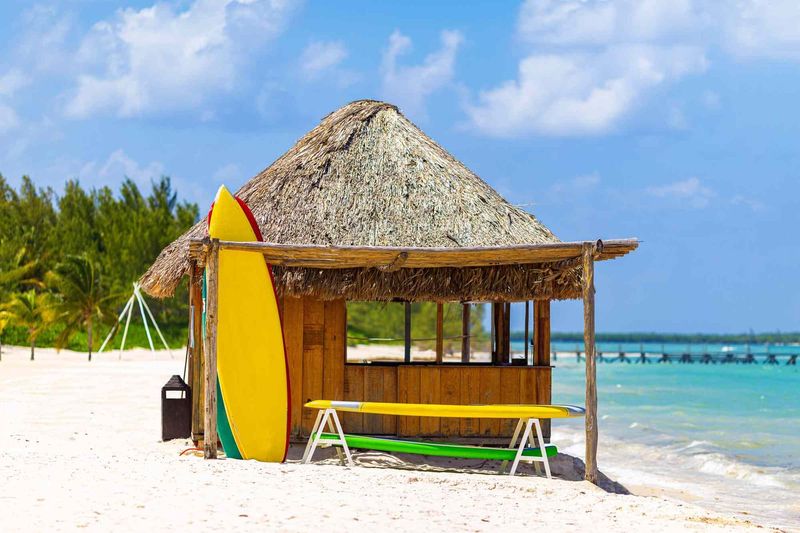
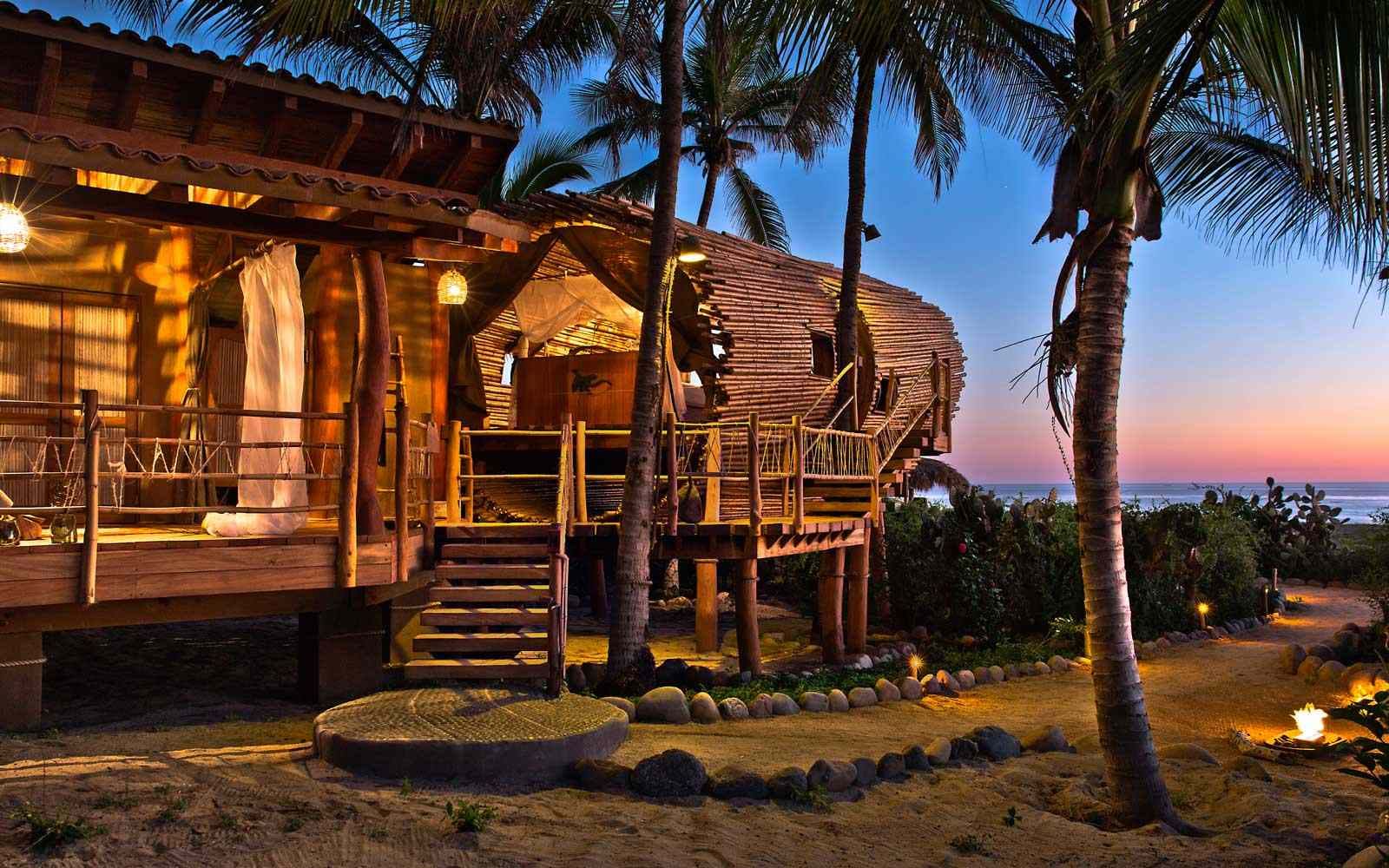
The bungalows we've returned to this year share a design language rooted in place. Palapa roofs, woven from palm thatch, breathe in the heat and exhale it at dusk. Walls, when they exist at all, tend toward local hardwoods or whitewashed adobe, materials that age gracefully under salt air and do not fight the elements. Floors are often packed earth, polished concrete, or reclaimed tile - surfaces that welcome bare feet and sandy towels without complaint.
This is architecture that does not announce itself. It sits low to the ground, tucked into dunes or perched above tide pools, designed to be discovered rather than displayed. The interiors are spare but never spartan: a four-poster bed draped in linen mosquito netting, a hammock strung between posts, a ceramic jug of filtered water on a rough-hewn table. The aesthetic is less curated minimalism and more functional poetry, the kind that emerges when you strip away everything that does not directly contribute to rest.
Several of these properties are family-run, passed down through generations who knew the coastline before it had a tourism economy. The knowledge embedded in their construction - where to site a structure to catch the breeze, how to angle a roof to shed hurricane rain, which trees to leave standing for shade - is the kind you cannot learn from a design blog. It is vernacular wisdom, and it shows.
The Oaxacan Coast: Where the Sierra Madre Meets the Surf
The southern Pacific coast of Oaxaca remains one of Mexico's least penetrated stretches of shoreline, in part because the Sierra Madre del Sur runs so close to the water that road access is still limited. The bungalows here tend to cluster in fishing villages that have only recently, and cautiously, opened their doors to travelers. Zipolite, Mazunte, and the smaller enclaves around Puerto Escondido are not undiscovered - backpackers have known about them for decades - but they have resisted the large-scale resort model that transformed Cancún and Cabo.
What defines the Oaxacan bungalow experience is a kind of radical simplicity. Many operate off-grid, relying on solar panels and rainwater catchment. Meals are often communal, prepared by the family who owns the property, featuring fish caught that morning and vegetables from nearby plots. The pace is governed by the tides and the light; there is no entertainment program, no concierge, no Wi-Fi strong enough to stream video. You read, you swim, you walk the beach at low tide looking for shells, and you are surprised by how much that is enough.
The cultural context here matters. Oaxaca has a long tradition of communal land ownership and indigenous stewardship, and many of these coastal properties are extensions of that ethos. Staying in them feels less like a transaction and more like a temporary inclusion in a way of life that predates tourism and will, with luck, outlast it.
The Baja Peninsula: Desert Meeting Ocean, Quietly
Baja California's coast offers a different flavor of seclusion, one shaped by desert rather than jungle. The landscape is stark, almost lunar in places: cardon cacti the height of telephone poles, arroyos carved by flash floods, and the kind of silence that makes you aware of your own breathing. The bungalows here are often built from local stone and reclaimed materials, their color palettes drawn from the surrounding palette of ochre, sand, and dusty green.
The Sea of Cortez side of the peninsula, particularly the stretches north of La Paz and around Bahía de los Ángeles, remains largely undeveloped. The waters here are calmer than the Pacific side, turquoise and clear, teeming with marine life. Jacques Cousteau called the Sea of Cortez "the world's aquarium," and it still holds that title in places where you can snorkel from your bungalow's front step and see rays gliding over eel grass, schools of sergeant majors flashing in the shallows.
The bungalows in this region often cater to a particular kind of traveler: the kayaker, the birder, the diver, the person who finds entertainment in watching a pod of dolphins at sunrise. They are not polished in the boutique-hotel sense. They are functional, comfortable, and above all, unobtrusive. The luxury here is access - to empty beaches, to marine reserves, to star fields so dense you can see the Milky Way's structure with the naked eye.
The Caribbean Side: Tulum's Quieter Neighbors
The Riviera Maya has become synonymous with overbuilding and overcrowding, but pockets of the Caribbean coast still offer genuine retreat. South of Tulum, past the beach club gauntlet, lie stretches of coastline accessible only by rough dirt roads. The bungalows here are often eco-lodges in the truest sense: composting toilets, solar showers, open-air sleeping platforms where you fall asleep to the sound of waves and wake to the calls of motmots and toucans.
These properties tend to emphasize conservation. Several sit within or adjacent to protected biosphere reserves, and their operations are designed to minimize impact. Guests are encouraged to participate in beach cleanups, turtle monitoring, and reef restoration projects. The experience is immersive in a way that high-end eco-resorts sometimes only gesture toward; here, you are not observing sustainability from a distance but living inside it, however briefly.
The cultural geography of this coast is also distinct. The Maya presence remains strong, and many of the bungalow operators are Maya families who have chosen to engage with tourism on their own terms. Meals might include traditional dishes like cochinita pibil or pescado tikin xic, prepared in underground ovens. Guides, if you choose to hire them, can take you to cenotes known only to locals, or explain the medicinal uses of plants growing along the trails. The exchange feels reciprocal rather than extractive.
The Practical Geometry of Disconnection
Getting to these bungalows often requires effort. Flights into regional airports, followed by long drives on unpaved roads, or boat transfers from fishing docks. Cell service is intermittent at best. Credit cards are not always accepted. These frictions are not bugs; they are features. They select for a certain traveler and filter out the rest.
We have noticed, over years of returning to places like these, that the logistical barriers function as a kind of self-regulation. The properties remain small because access is limited. The beaches stay empty because reaching them requires commitment. The communities retain agency because mass tourism has not yet arrived with the capital and political pressure that tend to displace local control.
This is not to romanticize inconvenience. These bungalows are not for everyone. Families with very young children, travelers with mobility limitations, or those who need reliable connectivity for work will find them challenging. But for those who can meet the places on their own terms, the rewards are substantial.
What We Carry Back
The value of a stay in these bungalows is not easily photographed. It does not fit into a carousel post or a highlights reel. It accumulates slowly: in the way your shoulders drop on the second day, in the conversations you have over simple meals, in the realization that you have not checked the time in hours and do not care.
We have found that the most enduring travel memories are often the least eventful. A morning spent watching pelicans dive. An afternoon reading in a hammock while rain drums on the palapa roof. An evening walk along the tide line, collecting pieces of driftwood bleached white by salt and sun. These are not experiences that require superlatives. They require only presence, and a willingness to let the place set the terms.
Mexico's secluded beach bungalows offer something increasingly rare in the travel landscape: the chance to be genuinely unreachable, at least for a while. They are reminders that the best luxury is often the simplest - space, quiet, time unstructured by obligation. In an era of hyper-connectivity and algorithmic itineraries, that kind of escape is not just idyllic. It is necessary.