Where the City Dissolves Into Sky: A Rooftop Pilgrimage Through Singapore
Beyond the vantage point, these elevated spaces offer a peculiar alchemy of light, air, and human ritual that changes how we inhabit the metropolis
The Ritual of Ascent
There is something quietly ceremonial about leaving street level behind. The elevator doors close, the floor numbers tick upward, and somewhere between the fifteenth and thirtieth story, the noise of the city begins to feel distant, theoretical. When the doors open again, you step into a different vocabulary of space: wind instead of air conditioning, horizon instead of walls, sky instead of ceiling.
At Global Chic Voyage, we've watched Singapore's rooftop culture mature over the past decade, evolving from novelty venues trading solely on altitude into sophisticated destinations where the view is merely one element in a carefully orchestrated experience. The city's vertical drinking culture now encompasses everything from intimate heritage-building perches to multi-storey entertainment complexes that blur the line between restaurant, nightclub, and urban theater.
What distinguishes the island's best elevated venues is not simply height, but rather how thoughtfully they frame the act of being suspended between earth and atmosphere. Some cultivate intimacy despite their exposure; others amplify the drama of scale. The most memorable understand that a rooftop bar is fundamentally about transition: from day to evening, from work to leisure, from the self that navigates crowded sidewalks to the one that can afford to simply watch the city breathe.
Waterfront Ceremonies
The Marina Bay corridor has become Singapore's most concentrated landscape of elevated hospitality, and for good reason. The waterfront's architectural density creates a kind of three-dimensional theater where buildings regard one another across water and sky.
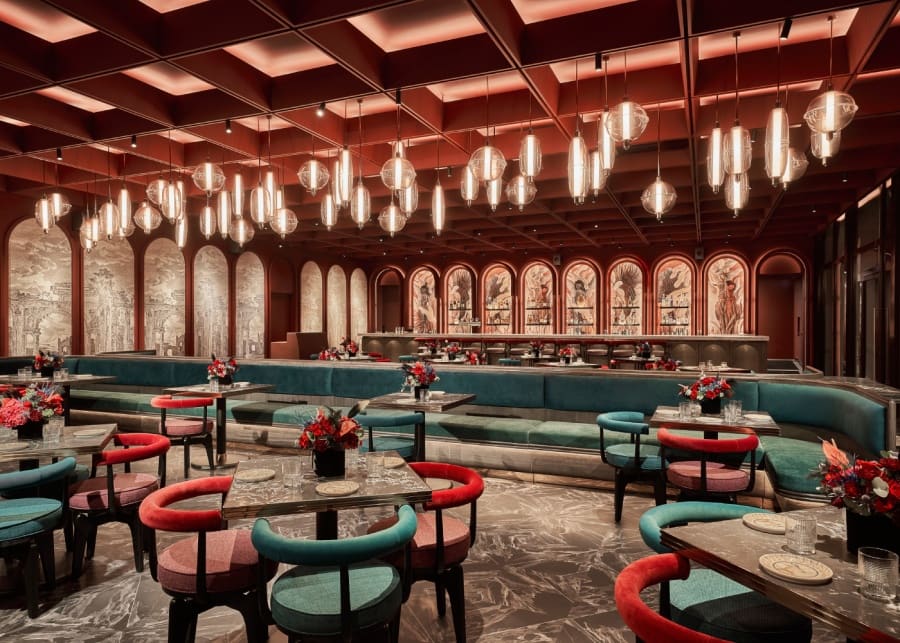
Baia, positioned on the fourth level of Esplanade Mall, occupies an unusual middle ground. Neither truly towering nor merely elevated, it demonstrates that the rooftop experience need not depend on extreme altitude. The outdoor patio overlooks the Marina Bay waterfront, creating sightlines that feel curated rather than simply high. The interior leans into jewel tones and plush textures, a deliberate contrast to the stark modernism visible through the windows. Small plates like duck samosas and cod fish sliders nod to fusion without overcomplicating, while the wagyu skirt steak offers something more substantial for those treating the venue as dinner rather than preamble.
The timing matters here. Arriving before a performance at the Esplanade transforms Baia into a threshold space, a place to calibrate mood before entering the concert hall. Post-show, it becomes somewhere to let adrenaline settle, to discuss what you've just witnessed while the bay glitters indifferently beyond.
Heritage Altitude
Not all of Singapore's rooftop culture unfolds in glass towers. Some of the most compelling venues crown heritage shophouses and boutique hotels, spaces where the bones of the building inform the character of what happens at its summit.
Lumina by White Shades, atop a shophouse on Boon Tat Street, demonstrates how sheltered terraces can preserve the rooftop experience even when weather turns uncooperative. Portable coolers combat the equatorial heat, while the venue's willingness to craft bespoke cocktails speaks to a hospitality philosophy that values conversation over efficiency. The Sunset Hour promotion, offering draught beer and highballs at accessible prices between 5pm and 7pm daily, acknowledges that not every rooftop visit needs to be an occasion. Sometimes the ritual is simply leaving the office early enough to watch the light change.
Similarly, Abriza crowns a boutique hotel with a deliberately low-key energy. The absence of vertiginous height becomes an asset, creating a neighborhood hangout that happens to be on a rooftop rather than a destination defined primarily by its elevation. Spicy fish tacos and smoked duck pizza anchor the menu in comfort rather than aspiration, while the presence of a dance floor suggests that the evening might evolve in unexpected directions.
The Theater of 360 Degrees
Certain rooftop venues position themselves as total sensory environments, places where food, beverage, music, and view combine into something closer to performance than simple hospitality.
SUSHISAMBA Singapore, occupying the 52nd floor of Capital Tower, orchestrates this complexity with particular ambition. The 360-degree panoramic views provide a constantly shifting backdrop, while the fusion of Japanese, Brazilian, and Peruvian cuisines creates a menu that refuses geographic simplicity. Early in the week, the venue operates as a relatively subdued dining room. By Thursday, live DJs and roving samba dancers transform the energy entirely. The hidden SAMBAROOM speakeasy, open on Friday and Saturday nights, adds yet another layer, a space within a space where the party intensifies away from the main floor.
What makes such venues work is their willingness to embrace theatricality without tipping into parody. The presence of percussionists and dancers could easily feel forced, but when integrated into a broader commitment to spectacle, they become part of the vocabulary of the space. You're not just dining fifty-two floors above the street; you're participating in a carefully choreographed urban ritual.
Mr. Stork, perched on the 39th floor of Andaz Singapore, takes a different approach to the 360-degree experience. Teepee tents scattered across the terrace create semi-private zones within the larger space, offering both prospect and refuge. The cocktails draw inspiration from garden settings, an unexpected reference point at this altitude. The result is a venue that feels simultaneously exposed and sheltered, urban and vaguely tropical, a combination that disorients in productive ways.
River and Street Perspectives
The Singapore River corridor offers a different kind of rooftop geography, where the view encompasses not just skyline but also the river's sinuous path through the city's historic commercial heart.
Southbridge, overlooking Boat Quay from the fifth level, has built its identity around oysters paired with booze. The signature molluscs arrive with ponzu and yuzu sauce or bulldog sauce spiked with togarashi, preparations that demonstrate how a focused menu can be more memorable than comprehensive variety. Smoked pork tacos and octopus karaage fill out the offerings, but the oysters remain the gravitational center. For date nights, the combination of river views and food that requires a certain casual intimacy creates an atmosphere that feels considered without being overly formal.
Fry Rooftop Bistro & Bar, tucked into Club Street's quieter stretch, cultivates intimacy through scale rather than spectacle. The views encompass city skyline, but the venue's smaller footprint creates a neighborhood tavern atmosphere that happens to unfold several stories up. Nanru pork belly and smoked duck platters anchor the menu in satisfying richness, while cocktails like Lavender Bliss and Flora Dew suggest a bar program that values flavor complexity over Instagram aesthetics.
Theme as Framework
A handful of Singapore's rooftop venues embrace overt theming, using narrative or historical reference as an organizing principle for design and menu.
Las Palmas Rooftop Bar, on the 33rd level of Courtyard Marriott Singapore, commits fully to 1960s Palm Springs glamour. Vibrant colors, terrazzo finishes, and period-appropriate decor create an environment that telegraphs its intentions immediately. The cocktail menu draws on stories, films, and iconic locations from the era, transforming each drink into a small piece of historical cosplay. Tokyo Cowboy and Poker Stars aren't just beverages; they're invitations to inhabit a particular aesthetic sensibility, even if only for the duration of a visit.
Such theming could easily become kitsch, but when executed with attention to detail and a genuine affection for the source material, it offers something valuable: a clear framework for the experience. You know what you're walking into, and the venue delivers on its promise without apology.
Day-to-Night Transformations
Some rooftop venues resist singular definition, instead offering multiple experiences depending on time of day and day of week.
1-Altitude Coast operates as day club, pool deck, bistro, and nightclub depending on when you arrive. Morning and afternoon bring Mediterranean-Latin fusion cuisine and poolside lounging. As sunset approaches, resident DJs shift the energy from tropical house toward more energetic dance rhythms. Private cabanas allow groups to curate their own microenvironments within the larger space, while Asian-fusion bites like signature chicken wings and satay platters keep the menu accessible and shareable.
This kind of programmatic flexibility reflects a broader shift in how rooftop venues conceive of their role. Rather than offering a single, static experience, they become platforms for multiple forms of urban leisure, spaces that adapt to the rhythms of the day and the desires of different constituencies.
Moon Rooftop Bar & Lounge embraces celestial theming while maintaining operational flexibility. The moon-inspired interior provides visual coherence, while a menu spanning Japanese, Italian, and Thai influences refuses culinary orthodoxy. The extensive spirits list, including top-shelf options and premium champagnes, positions the venue for both casual drinks and more celebratory occasions. Late-night service extending to midnight accommodates those for whom the rooftop ritual begins only after dinner elsewhere.
The Architecture of Gathering
At their best, Singapore's rooftop venues function as urban living rooms, semi-public spaces where the city's residents can gather, celebrate, and simply exist outside the confines of home and office.
Barouv, crowning Scarlet Hotel, explicitly positions itself as a venue for occasions: romantic dinners, group celebrations, milestone events. The presence of both open-air terrace and indoor pavilion provides weather insurance, acknowledging the practical reality that tropical climates don't always cooperate with al fresco plans. Ribeye steak and fries anchor the menu in familiar comfort, while cocktails like Caipirinha nod to the bar's willingness to look beyond Singapore's borders for inspiration.
What unites these diverse venues is their recognition that a rooftop is not simply a location but a condition, a particular relationship to gravity, perspective, and urban density. The view matters, certainly, but so does the quality of the furniture, the attentiveness of service, the thought given to how music and conversation balance in shared space.
The Alchemy of Elevation
Standing on a rooftop as evening settles over Singapore, watching office towers blink on floor by floor, the city reveals itself as a vertical phenomenon. What looks from the street like a dense, horizontal sprawl becomes from above a layered, complex organism, breathing and pulsing with ten thousand individual rhythms.
The rooftop bars we return to understand this transformation. They don't simply capitalize on height; they frame it, contextualize it, make it meaningful through design, cuisine, and hospitality. They create conditions under which being suspended thirty or forty or fifty floors above the street becomes not just tolerable but desirable, even necessary.
In a city where land is precious and density unavoidable, the rooftop represents a kind of spatial luxury, a place where horizontal sprawl gives way to carefully curated emptiness. These venues don't solve Singapore's space constraints, but they offer temporary reprieve, moments when the pressure of proximity lifts and you can see, quite literally, beyond the immediate.
The ritual of ascent continues, night after night, as residents and visitors alike seek these elevated sanctuaries. What they find there varies: romance, celebration, solitude, community, spectacle, or simple relief from the street-level grind. But the fundamental appeal remains constant. For a few hours, suspended between earth and sky, the city becomes something you observe rather than something that presses in from all sides. The horizon opens. The wind moves freely. And the metropolis, for once, feels almost spacious.