When Longevity Becomes Something You Can Touch
In a ballroom off Canning Walk, cryotherapy meets sound healing and a room full of questions about whether any of it matters.

A Treatment, Then a Reckoning
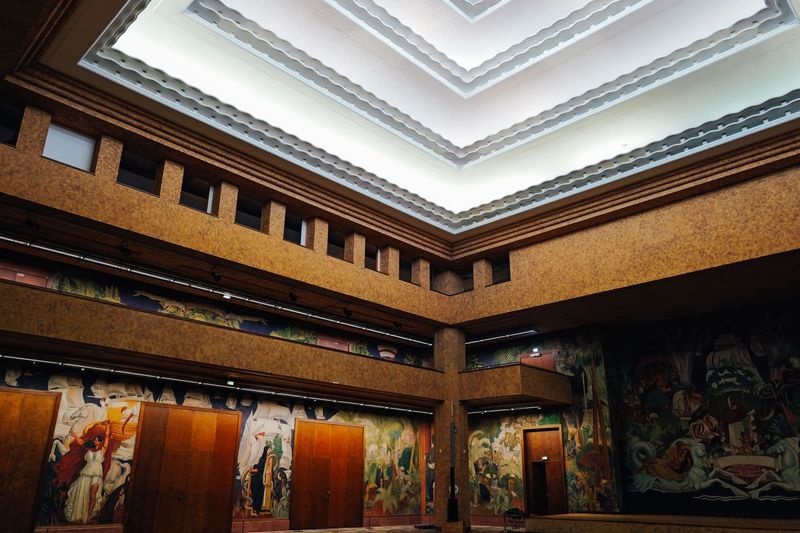
The junior ballroom at Mett Singapore will host an unusual convergence on 21 October 2026: compression boots beside platters of whole food, cryochambers alongside questions about value. The evening, organised in partnership between wellness platform HoneyGlow and The Longevity Suite Singapore, proposes a format that feels less like seminar and more like empirical inquiry. Guests will spend the first half-hour moving between five treatment stations, red light therapy and neuroacoustic sound healing among them, before settling in to hear two physicians and a food entrepreneur discuss whether the promise of extended healthspan is worth the price tag, the protocols, or the cold.
It is a structure designed to reverse the usual order. Experience first. Interpretation after. The treatments will pause at half past six for a panel discussion featuring Dr Cheryl Kam of Matrē, Dr Neil Forrest (medical adviser to The Longevity Suite Singapore), Jacinda Yee of plant-based kitchen Eywa, and a speaker from HSBC. Together, they will address longevity not as aspiration but as decision, examining medical intervention, everyday nourishment, and the financial architecture required to plan for a life measured in decades beyond what previous generations expected.
What the Lounge Offers
Between six o'clock and half past, and again from half seven to eight, five treatment modalities will run on a free-flow basis in what organisers are calling the Longevity Lounge. Compression Boot Recovery applies sequential air compression over ten minutes. Local Cryo and Cryo Fast Recovery combine targeted cold exposure with connective tissue massage. Red Light Therapy delivers near-infrared wavelengths through portable accessories, also over ten minutes. Neuroacoustic Soundhealing uses frequency to encourage parasympathetic response. The Longevity Suite AI Wellness Assessment scans selected biometric markers in under two minutes.
None require advance booking. Guests move between stations as availability allows, a format that privileges curiosity over commitment. The experiences frame themselves not as prescriptions but as data points, opportunities to register sensation before weighing efficacy.
For those willing to commit further, VIP ticket holders may book a fifteen-minute Cryosuite Total Body session between four o'clock and six, before the main programme begins. The chamber operates at temperatures between minus eighty-five and minus ninety-five degrees Celsius. Medical and safety waivers apply, and participation is subject to clearance by The Longevity Suite. The experience, valued at one hundred and fifty dollars, is exclusive to the eighty-eight-dollar VIP tier.
The Panel and the Question It Poses
At half past six, the treatment stations will close and the room will reorient around a single question: what is actually worth spending on? The panel will not advocate for optimisation as virtue. Instead, it will examine where emerging wellness treatments might reasonably fit within a broader routine, and where the pursuit of marginal gains tips into excess.
Dr Kam and Dr Forrest bring clinical perspectives shaped by functional medicine and longevity advisory work. Yee introduces the counterpoint of whole food and everyday nourishment, a reminder that longevity is not exclusively a matter of interventions purchased but also of patterns sustained. The HSBC representative will address the financial dimension, the long arithmetic of planning for a healthspan that may extend well into one's nineties.
The discussion will be followed by an audience question session. It is here that the evening's structure reveals its intent. Guests will have already moved through compression, cold, light, and sound. They will have felt the bite of targeted cryo, the warmth of infrared, the drone of neuroacoustic frequency. When they ask whether cryotherapy justifies its cost, or whether red light therapy deserves a place in their routine, the question will not be abstract. It will be embodied.
A Format That Privileges Encounter
The event is open to all genders and designed for anyone curious about biohacking, recovery protocols, or the longevity sector's rapid expansion. General admission is sixty-eight dollars per person, with a duo ticket priced at one hundred and thirty dollars for two. Both tiers include access to all five Longevity Lounge experiences, the panel discussion, audience Q&A, light bites from Eywa and The Plattering Co., non-alcoholic drinks, and networking before and after the talk.
Registration opens at six o'clock, allowing guests to settle in, sample the food, and begin circulating through the treatment stations before the panel convenes. After the discussion concludes at half past seven, the Longevity Lounge reopens for a final half-hour, alongside informal networking until the event closes at eight.
The format resists the conference model. There are no keynote addresses, no breakout sessions, no branded lanyards. Instead, the evening offers proximity, the chance to try several modalities in quick succession and then hear medical professionals place them within a wider context. It is a structure that acknowledges ambivalence, the sense that longevity treatments occupy a space somewhere between clinical intervention and lifestyle accessory, and that clarity requires both touch and interrogation.
What Longevity Looks Like When It Leaves the Clinic
The longevity sector has moved with remarkable speed from niche biohacking circles into mainstream wellness vocabulary. Cryotherapy, once the domain of elite athletes and recovery clinics, now appears in shopping districts. Red light therapy devices are sold online, marketed for skin health, muscle recovery, and circadian regulation. AI wellness assessments promise comprehensive biometric snapshots in minutes. Neuroacoustic sound healing draws on frequency research and ancient practice in equal measure.
What remains less clear is how to evaluate these treatments, not in isolation but as part of a coherent approach to health. The evening at Mett Singapore proposes one answer: try them, then ask. The Longevity Lounge functions as a kind of sampler, a low-commitment introduction to modalities that might otherwise require membership, consultation, or significant upfront investment. The panel that follows provides the interpretive layer, a chance to hear clinicians and practitioners discuss where these treatments fit, what they can reasonably deliver, and where the conversation about longevity risks becoming more aspiration than evidence.
It is a question that extends beyond the treatments themselves. Longevity, as a field, sits at the intersection of medicine, wellness, commerce, and hope. It promises not merely to extend life but to improve its quality, to compress morbidity and expand vitality. Yet it also operates within a market, and markets have their own logics. The panel's inclusion of a financial services representative signals an acknowledgement that planning for a longer life carries economic implications, questions about savings, healthcare costs, and the allocation of resources across decades.
An Evening That Asks More Than It Sells
The event's tone is deliberate. It does not position longevity treatments as essential, nor does it dismiss them as frivolous. Instead, it offers a framework for evaluation, a space where guests can form their own impressions and then hear informed perspectives on what those impressions might mean. The treatments are accessible, the discussion honest, the format designed to accommodate scepticism as much as enthusiasm.
For those who have followed the longevity conversation from a distance, the evening offers a point of entry. For those already immersed in recovery protocols and biohacking routines, it provides an opportunity to step back and reassess. And for those simply curious, it delivers what curiosity requires: experience, context, and the chance to ask what comes next.
The junior ballroom at Mett Singapore, on the evening of 21 October, will be neither clinic nor spa nor seminar. It will be a room where longevity becomes tactile, where treatments can be tried and questions can be voiced, where the distance between promise and practice narrows to the width of a conversation. What guests do with that encounter, whether they leave convinced or unconvinced, committed or merely informed, will be theirs to decide. The evening offers the materials. The reckoning belongs to the room.