When Volcano Ash Opens the Door to Mediterranean Serendipity
A last-minute invitation aboard a friend's charter yacht turns three unplanned days into a study of pleasure deferred and finally claimed.
The Invitation Nobody Planned
The afternoon heat in Mallorca carries the scent of salt and rosemary, and the conversation on the terrace is easy. Two friends from California are about to embark on their annual summer ritual: a week aboard a forty-metre sailing yacht, the kind with sails that matter, not the sort of floating hotel where ice sculptures melt by the sundeck. They charter the same vessel each year, invite the same circle, and this time the guest list has suffered an act of God. Mount Etna, that ancient showman off the Sicilian coast, has sent a plume of ash high enough to shut down Catania Airport. Two Italian guests are grounded. Two berths sit empty.
"So why don't you come for a night?"
The question hangs in the air like an unexpected gift. There are already commitments, a dinner reservation at a beach club the following evening with people who matter. But the other half is already performing something that might charitably be called a dance, and the decision is made before reason can intervene. The fact that he once spent twelve hours on a Greek ferry communing with a supermarket carrier bag seems suddenly irrelevant.
The Teak Commandments
Port Adriano at nine in the morning is all polished hardware and quiet efficiency. The yacht, sleek and white against the blue, hosts a crew of six who move with the unhurried precision of people who know their domain. The captain gathers the newcomers and delivers the house rules with the solemnity of a man who has seen what ignorance can do to a deck.
No shoes. No oily sunscreen sprays. Swim if you must, but shower at the stern before you step back aboard, because salt and feet and teak form an unholy trinity. The wood underfoot is beautiful, honey-coloured, warm, and apparently more precious than the guests themselves. It becomes clear within the first hour that life afloat is governed not by wind and wave but by the condition of the teak.
The hosts, call them H and M, have turned preparation into an art form invisible in its execution. Menus planned weeks earlier. Wines they love, delivered to the boat in advance. Entertainment that unfolds without announcement. It is the sort of hospitality that looks like ease but rests on architectural foresight.
The Geography of Slowing Down
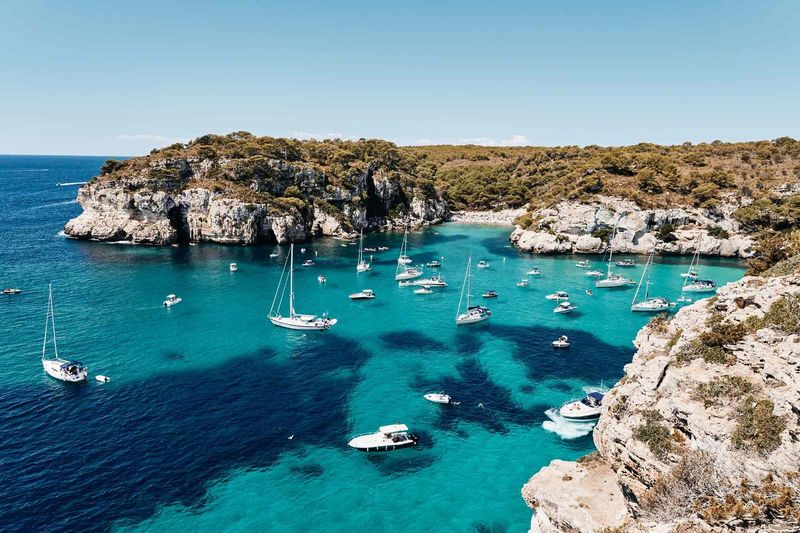
The yacht slips out of port and begins the slow arc around Mallorca's coast. The island, so familiar from shore, reveals a different self from the water: coves that have no road access, cliffs that rise like theatre curtains, stretches of coastline where the only witnesses are gulls and the occasional fisherman. By late afternoon the boat turns east toward Menorca, and the crossing takes on the quality of a passage between worlds.
As the light softens, the neighbouring cliffs seem drawn in charcoal, their edges blurred by distance and the particular quality of Mediterranean dusk. Above, stars emerge not in a rush but one by one, as if checking that the audience is ready. The anchor drops. The engine cuts. The silence that follows is not empty but full, the kind of quiet that makes you aware of your own breathing.
Then the news arrives: Catania Airport remains closed. Mount Etna, benevolent in its chaos, has bought another day. The invitation is extended. The answer is obvious.
The Physics of Jumping In
Three days unfold with the particular texture of time unscheduled. Conversations that begin over breakfast extend through lunch and into the afternoon, picking up threads dropped hours earlier, doubling back to laughter that needs no context. There is a rhythm to life aboard that has nothing to do with clocks: the sun dictates when to swim, hunger dictates when to eat, and fatigue, when it arrives, is honest.
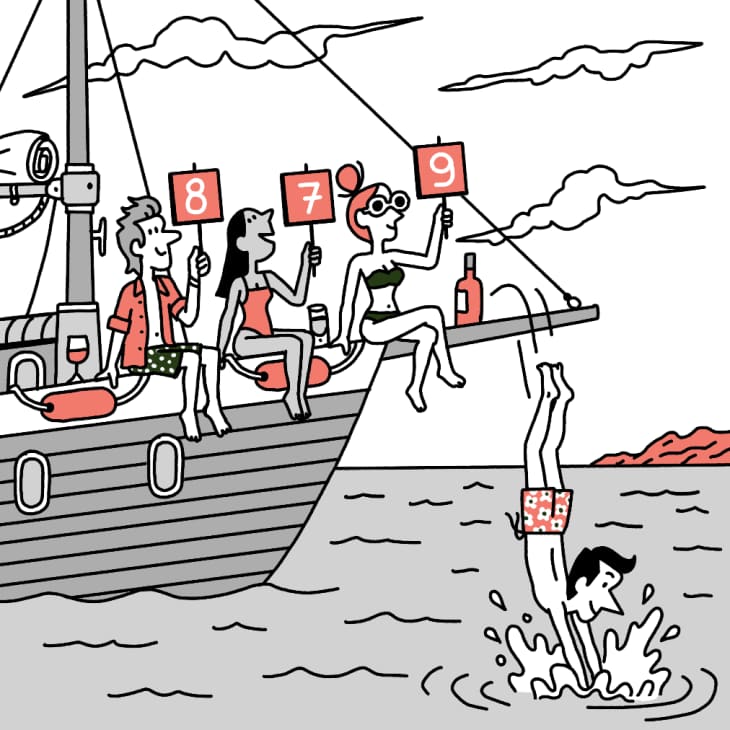
M, who has done this enough times to know what matters, encourages the jump. Not metaphorically. Literally: stand at the edge of the boat, look down into water so dark it seems to have no bottom, and step off. The first time is pure vertigo. The water is cooler than expected, and the salt stings the eyes, and the surface, when you break back through it, feels like a small victory.
There is something in the repetition that becomes compulsive. Climb back aboard, walk to the edge, jump again. Each time the hesitation shortens. Each time the dark water feels a little less unknown. M offers diving lessons, the sort of patient instruction that has no agenda beyond the doing of the thing. Tom Daley can sleep soundly, but the form improves, and the act itself becomes a small, private thrill.
The Sweetness of the Wait
Childhood carries its own economies of desire. A friend's family took holidays that seemed, to young eyes, impossibly glamorous: villas with pools, ski chalets, beaches where the sand was white and the water impossibly clear. The envy was sharp and specific. But a father's voice, gentle and certain, offered a different frame. "When you get to do these things one day they will feel very special. It's okay to wait."
The tender that carries passengers from yacht to shore in Mahón's harbour is small and efficient, and the crossing takes only minutes. The town rises in tiers from the waterfront, its buildings the colour of old bone in the morning light. Standing on the dock, saltwater still drying on skin, the memory of that childhood conversation returns with unexpected weight.
The three days were not planned. They were not earned through careful saving or strategic manoeuvring. They arrived as accident, a confluence of volcanic activity and someone else's cancelled plans. And yet they carried the particular sweetness of things long deferred. Every moment felt outsized, every detail worth holding. The stars over Menorca. The shock of cold water. The way the yacht heeled slightly when the wind caught the sails just so. The quiet after dinner when conversation gave way to the sound of rigging and water against the hull.
What Etna Teaches
Volcanoes care nothing for human schedules. They erupt according to geologic time, indifferent to airport timetables and charter itineraries. Mount Etna, in its ancient and ongoing tantrum, closed an airport and stranded two guests and opened a door that would not otherwise have appeared. Serendipity is often written off as luck, but it requires a degree of readiness: the ability to say yes when the script changes, to abandon the dinner reservation, to pack quickly and trust that the unknown will yield something worth the disruption.
Gratitude, when it arrives, is layered. For the hosts who extended the invitation and absorbed two extra guests into their carefully planned week. For the captain who tolerated salty feet on his precious teak. For the father who, years earlier, offered a child a way to think about waiting that turned deprivation into deferred pleasure. And yes, for the volcano, indifferent and magnificent, whose ash plume became the unlikely architect of three days that will sit, bright and particular, in memory for years to come.
The tender reaches the dock. The yacht, white and sleek, swings gently at anchor in the harbour. Soon it will sail on without its accidental guests, continuing the route planned months ago. But the door it opened remains, a reminder that the best journeys are often the ones we never see coming, and that sometimes the universe, in the form of an erupting mountain half a sea away, knows exactly what it's doing.