When the Ocean Becomes Address
A quiet revolution is unfolding at marinas from the Mediterranean to the Gulf: families are abandoning shore-side estates to live year-round aboard private vessels, reshaping both naval architecture and the meaning of home.
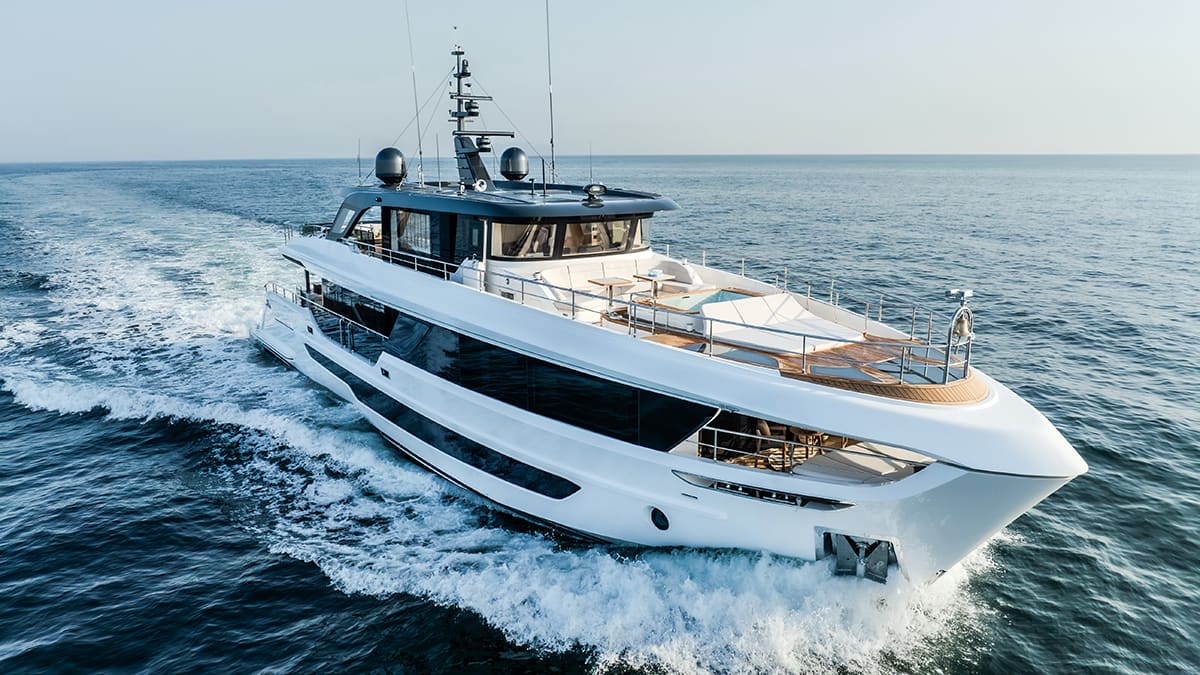
A New Geography of Belonging
There is a particular kind of morning ritual unfolding in marinas across Turkey, Monaco, and the Arabian Gulf. Coffee brewed in a galley that rocks gently with the tide. Sunrise watched from a deck that happens to be parked, this month, in a different country than last. Wardrobes large enough to hold an entire season's wardrobe, infrared saunas tucked into former guest quarters, and ovens calibrated specifically for high-altitude cake baking at sea.
At Global Chic Voyage, we've watched the language around private yachting shift over the past half-decade. What was once described as a leisure asset or floating status symbol is increasingly referred to in the vocabulary of domesticity: residence, primary home, family headquarters. The pandemic accelerated a trend that had been simmering quietly among a subset of ultra-high-net-worth individuals, those who discovered that the most valuable luxury was not a bigger house but the ability to move it.
One family we encountered during research now spends the majority of their year aboard a 112-foot vessel, rotating between marinas as work and whim dictate. The patriarch, who runs a multinational enterprise entirely online, describes the setup as liberating rather than limiting. "Everything is organized remotely," he explains. "I don't need a physical office. That flexibility makes this lifestyle possible." His children attend virtual schooling from the salon; his spouse manages the household from a navigation station outfitted with dual monitors and satellite uplink.
This is not a sabbatical or gap-year adventure. This is ordinary life, transposed onto water.
The Architecture of Permanence
The implications for yacht design have been profound. Naval architects and shipyards are no longer sketching vessels optimized for weekend escapes or summer cruising seasons. They are engineering floating homes, and the distinction is more than semantic.
According to Erwin Bamps, CEO of Gulf Craft, the Middle East's largest boat builder, the new generation of clients arrives with requests that would have seemed eccentric a decade ago. They want stabilization systems so advanced that a wine glass remains undisturbed in rough seas. Hybrid propulsion systems that allow the generators to fall silent at anchor. Expanded wardrobe space, not for a week's worth of resort wear, but for an entire year's rotation of climates and occasions. Display niches for art collections. Larger refrigeration units. Rubbish-management systems capable of handling the detritus a family of four generates over a month at sea.
"They don't want to smell fumes, they don't want to hear the generator or engine, they don't want to feel the movement of waves," Bamps notes. "They want big windows, air conditioning, internet, and streaming services. They don't actually want to buy a boat; they want to buy real estate on the water."
One owner of a 100-foot terrace-style yacht replaced an entire guest cabin with an infrared sauna, a modification that has become essential during cooler months spent cruising the Turkish coast. Another client insisted on rethinking the galley's convection oven after discovering her baked goods weren't rising properly at sea, a problem traced to airflow and humidity differentials that don't exist in land-based kitchens.
Even small additions compound in unexpected ways. A high-powered blender, a microwave, an espresso machine with a built-in grinder, each draws power. Generators grow in capacity, but hulls do not, forcing engineers into exercises of spatial ingenuity. Where does the additional generator fit? How do you route new electrical conduits through a vessel already dense with systems? How do you increase fresh-water tankage without compromising fuel range?
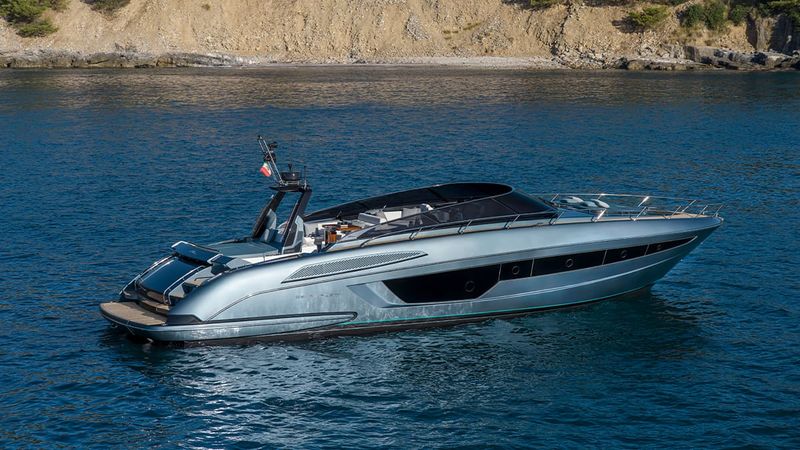
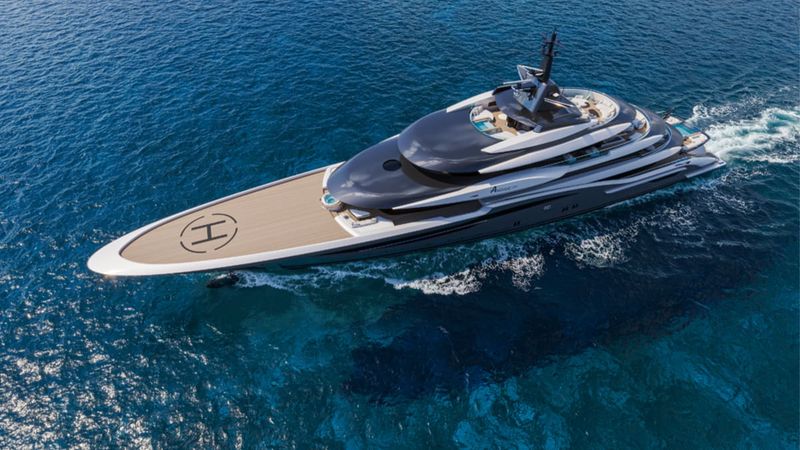
The result is a class of semi-custom and fully bespoke vessels that blur the line between yacht and villa. At the high end, consider the 364-foot vessel built by Oceanco for billionaire game developer Gabe Newell, who has lived at sea full-time since the early pandemic years. The ship features a basketball court, dive center, and research facilities. It is less a yacht than a floating campus, a self-contained world that happens to move.
The Practicalities of Drift
Living aboard, of course, is not simply a matter of upgraded appliances and stabilization technology. It demands a recalibration of daily habits and a comfort with variables that shore-based life eliminates.
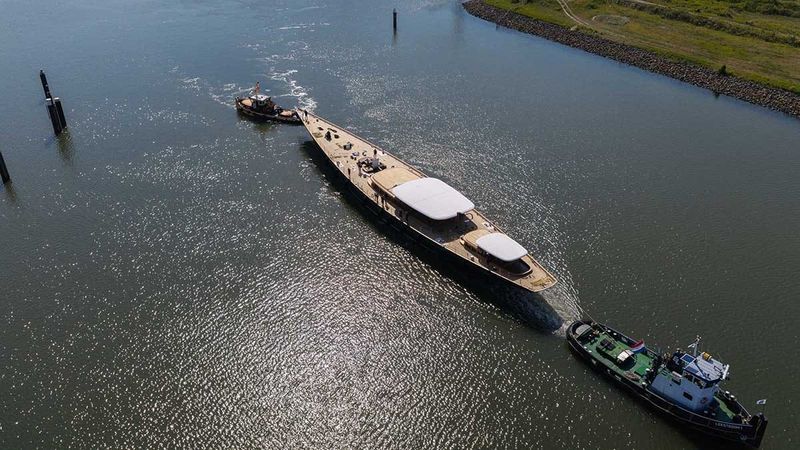
One sailor currently circumnavigating aboard a custom 595-foot sailing yacht as part of a sixteen-month rally describes the mental load. "When you're at anchor, you're constantly aware of factors such as anchor drag, swing room, nearby boats, and changing weather conditions," he says. "Add energy and water management, ongoing maintenance, and general safety, and there's certainly more to think about."
Provisioning becomes an exercise in foresight and flexibility. You cannot always have the exact meal you're craving; ingredients depend on what was available at the last port or what remains in the freezer. Laundry is done in compact machines with limited capacity, or sent ashore when docked. Medical care requires advance planning. Schooling, socializing, even the rhythms of friendship shift when your address changes every few weeks.
And yet, every owner we spoke with describes these inconveniences as trivial when measured against the rewards. Waking to the sound of water against the hull. Watching the sky change color from a deck that is, legally and literally, home. The ability to decide, on a Tuesday morning, that next month will be spent in a different country, and then simply casting off the lines.
"A house has its advantages," one owner reflects, "but a yacht offers something a house never can: your home travels with you. If you decide you'd rather live in another country, you simply move."
The Infrastructure That Enables Escape
None of this would be feasible without recent advances in connectivity and propulsion. Satellite internet service, particularly systems like Starlink, has dissolved the geographic constraints that once tethered business owners and remote workers to terrestrial offices. Reliable bandwidth means Zoom calls from the Aegean, file transfers from the Maldives, and the ability to toggle between work mode and total disconnection depending on the day's priorities.
Modern marine engineering has also extended range and efficiency. Hybrid systems allow vessels to cruise silently on electric power in harbors and conservation zones, switching to diesel for open-water passages. Fuel consumption per nautical mile has dropped, putting previously remote anchorages within practical reach. Solar arrays and advanced battery banks reduce reliance on generators, making extended off-grid living not only possible but comfortable.
The pandemic, which drove so many initial purchases, revealed something deeper than a desire to escape lockdowns. It surfaced a latent appetite for autonomy, for the ability to control not just one's schedule but one's horizon line. Many who bought vessels during that period as a temporary refuge discovered they preferred the temporary to the permanent.
A Shift in What Wealth Buys
What we are witnessing is not simply a niche trend among a handful of eccentric billionaires. It is a redefinition of what it means to own a primary residence when untethered from a fixed location. For a certain class of globally mobile individuals, those whose work and wealth allow geographic flexibility, the question is no longer where to live but how to live.
Bamps, who has spent more than twenty years in the yachting industry, is confident enough in the trajectory that he recently hired two former real estate agents to sell yachts using the language and tactics of residential property. He expects the vessels his yard builds to function less as vacation toys and more as floating estates, complete with the customization, personalization, and emotional investment that homeownership entails.
"I think yachts will take up a lot more space in people's lives," he says, "and that is amazing for the industry."
At Global Chic Voyage, we see this as part of a broader shift in luxury travel and lifestyle, one that privileges experience and autonomy over accumulation and display. The homes we return to, the places we choose to wake up in, are no longer fixed points on a map but vessels that carry us between them. The ocean, it turns out, makes an excellent address, provided you are willing to learn its language and live by its rhythms.