When September Arrives in Singapore With Lanterns and Sake
As the city enters its ninth month, quiet gardens glow with folklore, cafés pour natural wines beside vinyl soundtracks, and Mid-Autumn traditions find new expression between gallery walls and Science Centre telescopes.
When Light Becomes Storytelling
At Gardens by the Bay, eight lantern installations reinterpret the Mid-Autumn Festival through the eyes of Singapore illustrator Lim Sau Hoong. Her character Fenbao travels with a canine companion named Ah Ken, a figure called Pineapple Boy, and Bee Nini, a time-travelling computer bee from an unspecified future. The installations occupy Golden Garden, Supertree Grove, and Bayfront Plaza from mid-September onward, turning traditional moon-gazing into a walk through illuminated narrative. This approach to festival design reflects a broader shift in how cultural celebrations are staged in the city: less about replicating inherited forms, more about translating their emotional architecture into contemporary visual language.
Meanwhile, VivoCity presents Sanrio Characters Moonlit Garden, where Hello Kitty, Cinnamoroll, Kuromi, and others appear as oversized lantern sculptures. The installation runs through late September and includes carnival games, a miniature train, and scheduled character appearances. It is earnest, commercial, and unapologetically aimed at families and collectors. Both approaches coexist in Singapore's September calendar, one rooted in local creative authorship, the other in licensed intellectual property.
Fragrance as Spatial Experience
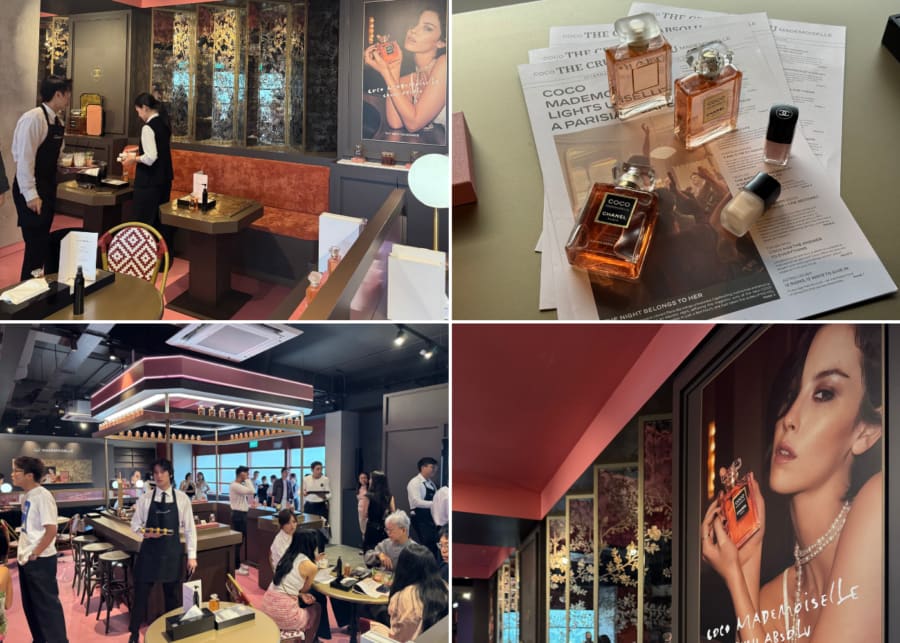
Chanel has transformed a corner of New Bahru's Alma House into a Parisian café to launch Coco Mademoiselle Crush Absolu. The pop-up, open until mid-September, offers olfactory discovery sessions, scented hand massages, bespoke makeup consultations, and a signature drink. Visitors leave with a scented keepsake. The space is designed to be photographed, which is to say it understands its audience: luxury consumers who value experience as currency and Instagram as ledger.
This model of immersive retail has become standard in Singapore, where physical space is expensive and brand activations must justify their footprint. The pop-up is free to enter, but its true cost is measured in attention and social amplification. It is a form of marketing that feels like hospitality, and it works precisely because the line between the two has blurred.
Coffee, Catalogued
Another Coffee Festival makes its debut in early September at Guoco Tower Urban Park, gathering 34 specialty roasters from nine countries and regions. The event runs for four days and includes tastings, live art, and conversations with roasters. Attendees purchase a reusable cup and tasting tokens, then move through stalls that range from established local names to international roasters appearing in Singapore for the first time.
The festival format has become a reliable vehicle for niche food and beverage culture in the city. It compresses discovery, education, and commerce into a single weekend, offering both casual drinkers and devoted enthusiasts a reason to attend. The ticket price starts at just over twenty dollars, positioning the event as accessible rather than exclusive. That accessibility matters in a city where specialty coffee has long been associated with expatriate enclaves and expensive café fit-outs.
Theatre Without a Stage
Sinners: Live, inspired by Ryan Coogler's film, unfolds across two simultaneous worlds at The Southern Depot in early September. One is a blues-filled juke joint set in 1932 Mississippi Delta; the other is an outdoor gathering steeped in Irish and traditional folk music. There is no conventional stage, no assigned seating. Audience members are encouraged to dress in period attire, silence their phones, and move through the space as the narrative unfolds around them.
This kind of immersive theatre has found a foothold in Singapore, where traditional proscenium productions compete with experiential entertainment that asks for participation rather than observation. The format appeals to younger audiences raised on escape rooms and interactive installations, but it also raises questions about accessibility. Not everyone wants to step into character or navigate a performance without clear boundaries.
Elsewhere in the theatre calendar, The Parting Glass runs at The Blackbird in Gillman Barracks through mid-September. Directed by Samantha Scott-Blackhall, the play follows Jim and Sarah as they revisit a relationship marked by romance and heartbreak. The production addresses men's mental health, with counsellors from Eagles Mediation & Counselling Centre available for post-show discussions. It is intimate, close-up theatre that treats emotional labour as part of the ticket price.
Spanish Appetites
Eat Spain Drink Spain returns for its fourth edition, spanning the first half of September with over 30 food and beverage experiences across Singapore. More than 40 restaurants, grocers, importers, and retailers participate, offering Spanish farmers' markets, tapas Sundays, cooking classes, wine pairings, and special menus. The event has grown steadily since its inception, reflecting both the city's appetite for European culinary traditions and the strength of its Spanish food import networks.
The festival model here is decentralised. Rather than concentrating events in one location, organisers activate venues across the island, from Esquina to Noa to Little Farms. This approach broadens reach but dilutes focus. It also means that the quality of experiences varies widely, depending on which restaurant or retailer you visit.
Sake, Localised
Sake Sake returns in late September with over 100 types of sake and Japanese beverages, including seasonal pours, craft labels, and homebrews. Around 30 percent of the selection has been refreshed from previous editions, according to organisers. This year, Shukuu Izakaya introduces a sake-pairing programme that incorporates local Singaporean flavours for the first time. The shift is subtle but significant, signalling a willingness to adapt Japanese beverage culture to regional taste profiles rather than treating it as a static import.
The event runs for two days at Shukuu Izakaya on Stanley Street, with three-hour free-flow tickets starting at 65 dollars. Festival-only discounts and limited-edition merchandise are available. The format is straightforward: pay a flat fee, drink as much as you like, learn what you can. It is education through immersion, and it works for those who arrive curious rather than simply thirsty.
One Night, One Menu
On a single evening in mid-September, Casa Cicheti in Joo Chiat hosts Bisco Sakaba, a natural wine bistro, for a collaborative dinner. The menu blends French technique with Japanese and Italian influences, featuring dishes such as oyster cream quiche, aged duck breast, and hojicha mousse. Wine pairings span Japanese wines, natural bottles, and ancient sake. Mr Has of Black Cat Brother provides the soundtrack: disco, funk, and world music on vinyl.
These one-night collaborations have become a recurring feature of Singapore's dining scene, offering chefs a chance to experiment outside their usual repertoire and diners a reason to book in advance. The format favours insiders, those who follow the right Instagram accounts and subscribe to the right newsletters. It is not exclusivity by design, but it functions that way.
Ancient Egypt, Reimagined in Blooms
Lilytopia, Gardens by the Bay's first floral display inspired by Ancient Egypt, runs through late September in the Flower Dome. The exhibition recreates the lush gardens that once lined the Nile and surrounded temples and palaces, with fragrant lilies as the central motif. Visitors move through vivid floral arrangements, temple-inspired settings, and Egypt-inspired artefacts. Admission to the Flower Dome is 12 dollars for adults.
The exhibition reflects Gardens by the Bay's ongoing strategy of pairing horticultural displays with cultural or historical themes. It is educational without being didactic, visually rich without overwhelming the senses. For tourists and residents alike, it offers a reason to return to a space that might otherwise feel familiar.
Celestial Viewing, Reconsidered
Science Centre Singapore reframes Mid-Autumn celebrations with Celestial Nights, running from mid to late September. The programme includes a self-guided Celestial Trail, telescope viewings of Saturn, and a Mid-Autumn edition of the Live Digital Planetarium Show. On one evening, Moonbeats: From Gardens to Galaxies adds a silent disco parade and a glowing dance floor to the galleries. Tickets start at 35 dollars.
The event treats the Mid-Autumn Festival not as a static tradition but as an opportunity to connect lunar observation with contemporary science and entertainment. It is an approach that appeals to families seeking alternatives to the usual lantern walks and mooncake tastings, and it positions the Science Centre as a venue for cultural programming, not just STEM education.
Craft, Tasted
First Press Studio by Kirin Ichiban, open until early September at Swee Lee in Clarke Quay, explores the brewery's signature First Press Method through art installations, tastings, and hands-on workshops. Visitors can make a Kumiko coaster or Shibori bandana, create a personalised good fortune charm, or learn the mechanics of the perfect pour before receiving a complimentary glass of Kirin Ichiban. A limited daily pasta-and-beer pairing is available for 25 dollars. Entry is free; workshops start at 15 dollars.
The activation is part brand education, part craft workshop, part tasting room. It is designed to transform casual drinkers into informed consumers, and it does so by offering tangible skills rather than passive consumption. The model works because it respects the visitor's time and curiosity.
Loungewear, Exported
Gelato Pique, a Japanese loungewear brand known for its ultra-soft, dessert-inspired fabrics, opens a pop-up at Lumine Singapore in Raffles City for the month of September. The space features an exclusive 84-piece collection spanning womenswear, menswear, baby and kids' pieces, and pet accessories. Launch weekend includes complimentary Creamier ice cream and photo-friendly installations.
The pop-up is the brand's Singapore debut, a test of demand before committing to a permanent retail presence. It is a familiar strategy in a city where rents are high and consumer tastes shift quickly. For fans of the brand, it removes the need to travel to Tokyo. For the curious, it offers a chance to touch the product before buying online.
Galleries, Open Late
Singapore Gallery Month, which began in mid-August and runs through mid-September, brings together over 100 exhibitions, artist talks, workshops, gallery tours, and collector experiences. The programme includes the return of Gillman Gatherings, Art After Hours at Tanjong Pagar Distripark, and hands-on workshops ranging from collage-making to neighbourhood sound walks. Some events are free; others require tickets.
The initiative is designed to lower the barrier to entry for those who feel alienated by the art world's perceived exclusivity. It works by distributing programming across multiple venues and formats, offering pathways for different levels of engagement. Whether it succeeds depends on how willing galleries are to welcome first-time visitors, not just established collectors.
What Remains
September in Singapore is a month of overlapping festivals, pop-ups, and one-night collaborations. It is a calendar shaped by both tradition and experimentation, where Mid-Autumn lanterns glow beside sake tastings and immersive theatre. The city's cultural programming has become more layered, more willing to reinterpret inherited forms and borrow from global trends. What remains constant is the density of choice, the sheer volume of events competing for attention in a small geography. For residents and visitors alike, the challenge is not finding something to do. It is deciding what to leave out.