The Venice Simplon-Orient-Express Charts a New Course to Monaco
Next May, one of Europe's most storied trains will trace the Mediterranean coast for the first time, bringing Art Deco grandeur to the principality.
A Mediterranean Debut
The midnight blue carriages have crossed mountains, threaded through Alpine passes, connected Venice to London and Paris to Istanbul. But the French Riviera, that sun-struck ribbon of coast where Europe's belle époque still clings to the cliffs, has remained beyond the Venice Simplon-Orient-Express's itinerary - until now. On 10 May 2027, the train will depart Paris for Monaco, marking the first time in its operational history that it will pull into Monaco-Monte-Carlo station. The route will recur annually, woven into the train's schedule as a seasonal offering.
What distinguishes this journey is not merely the destination but the daylight finale: passengers will wake aboard, breakfast in their cabins, and spend the morning watching the Côte d'Azur unspool outside their windows. The train follows the coastline south from Paris, passing the ochre-red cliffs of the Massif de l'Estérel, slipping through Saint-Raphaël, skirting Cannes and Nice before the principality rises into view.
Carriages That Remember the Twenties
Accommodation aboard the Venice Simplon-Orient-Express remains what it has always been: a study in polished wood, marquetry, and the kind of compact elegance that defined interwar European travel. Historic Cabins recall the train's original 1920s configuration, with their fold-down beds and brass fixtures. Suites and Grand Suites offer more space, though still within the narrow geometry of a railway carriage, their design indebted to the Art Deco tradition that shaped the train's aesthetic DNA.
Then there is L'Observatoire, the private carriage conceived in partnership with French artist JR. It functions less as a cabin and more as a self-contained residence on rails: a bedroom, a bathroom with a freestanding tub, a living area, a library, and a concealed tearoom. It is the train's answer to passengers who want solitude without sacrificing movement.
Dinner, Cocktails, and the Rhythm of the Rails
Evening begins in one of two restaurant cars, Étoile du Nord or L'Oriental, where meals are served across multiple courses as the French countryside slips past in the dusk. The menu draws on classical French technique, adapted to the constraints of a moving kitchen. After dinner, passengers drift to Bar Car 3674, where a pianist plays and cocktails are mixed with the gentle sway of the train beneath.
This ritual - the procession from cabin to dining car to bar - is central to the experience. The Venice Simplon-Orient-Express has never been about speed. It is about the interval between departure and arrival, the hours when the world outside becomes a backdrop and the train itself becomes the destination.
Why the Riviera Now
The addition of Monaco to the Venice Simplon-Orient-Express's route map is not arbitrary. The principality has long been synonymous with the kind of mid-century glamour that the train embodies, and the coastal stretch between Nice and Monaco remains one of Europe's most visually arresting. The red cliffs, the azure water, the Belle Époque villas perched above the sea - it is scenery that has been photographed, painted, and filmed for more than a century, yet still manages to feel revelatory when seen from a train window at dawn.
The route also reflects a broader shift in luxury rail travel, which has moved away from the notion of trains as mere transport and towards trains as curated experiences in their own right. The Venice Simplon-Orient-Express has been at the forefront of this shift, treating each journey as a kind of theatre, with passengers as both audience and cast.
The Morning Light on the Côte d'Azur
What sets the Monaco route apart from the train's other itineraries is the timing of the coastal passage. On most journeys, the most dramatic scenery appears at night, visible only as silhouettes or fleeting glimpses. Here, the Mediterranean unfolds in full daylight. Passengers will have finished breakfast, perhaps returned to the observation car or settled into the bar with a second coffee, when the train begins its descent along the Riviera.
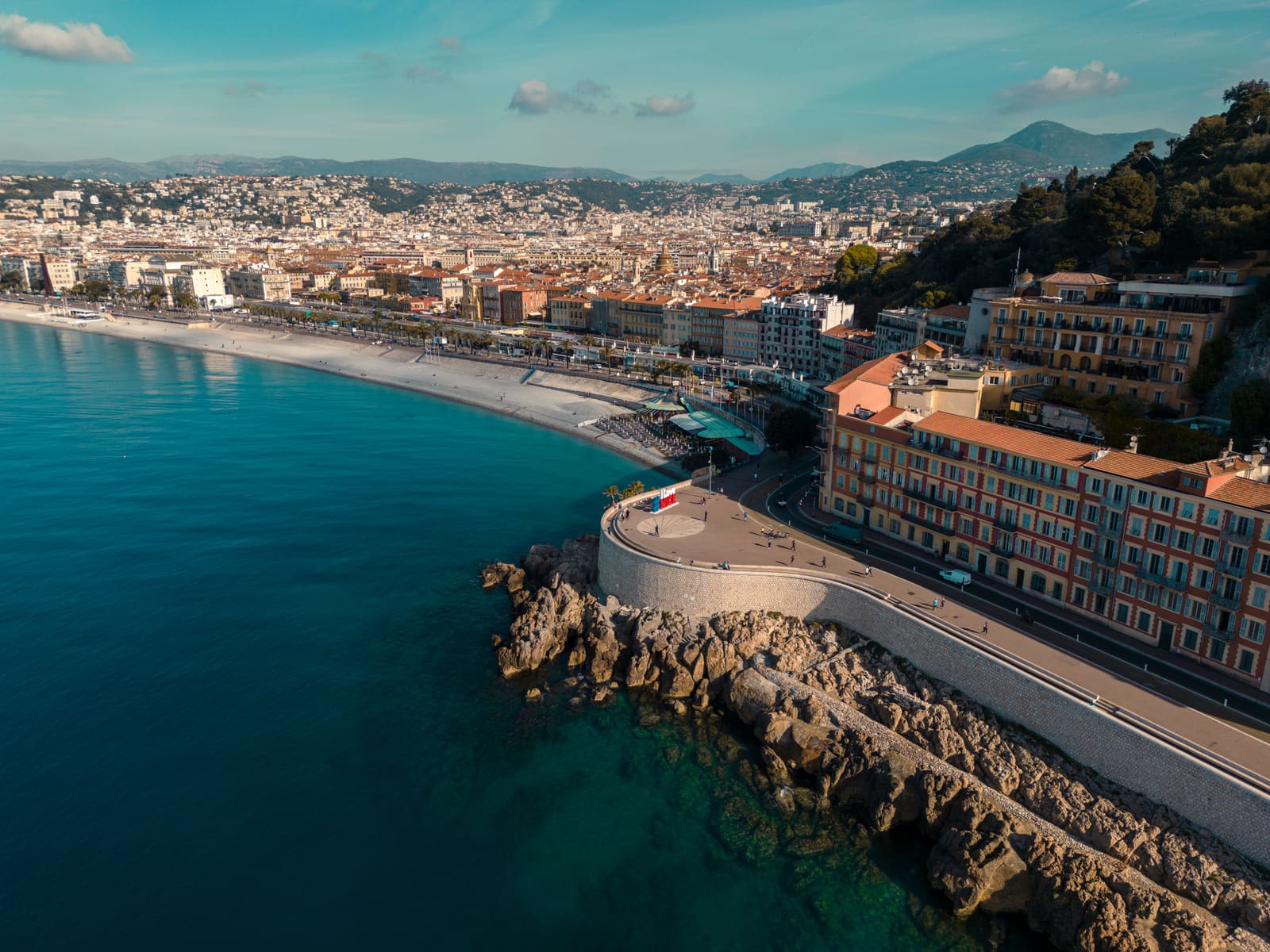
The cliffs of the Massif de l'Estérel, striped in rust and crimson, give way to the white-sand beaches near Saint-Raphaël. The train passes through Cannes, where yachts cluster in the harbour, then Nice, where the Promenade des Anglais curves along the water. Finally, Monaco: compact, vertical, impossibly dense, its buildings stacked against the hillside like a stage set.
A Route That Lingers
The Venice Simplon-Orient-Express has always traded on a particular kind of nostalgia - not for a real past, necessarily, but for a past as it exists in novels, films, and collective imagination. The new Monaco route fits neatly into that mythology, linking the train to a coastline that has served as a backdrop for everything from Fitzgerald novels to Hitchcock films.
Yet the route also speaks to something more pragmatic: the appetite among a certain class of traveller for journeys that feel insulated from the frictions of modern tourism. The train offers a way to experience the Riviera without navigating airports, rental cars, or the summer crowds that descend on Nice and Cannes each year. It is travel as controlled environment, where every detail - from the linen to the lighting - has been considered in advance.
When the train pulls into Monaco-Monte-Carlo station next May, it will do so quietly, without fanfare, as trains do. Passengers will disembark into the principality, blinking in the Mediterranean light, their overnight journey complete. And the train, after a brief pause, will ready itself for the return trip north, carrying a new set of passengers back towards Paris, the cycle beginning again.