A Tuna Fishery Turned Sicilian Refuge on Alcamo's Forgotten Shore
Inside a century-old watchtower where Art Nouveau bones meet moody interiors, and the sea is the only neighbor worth keeping.
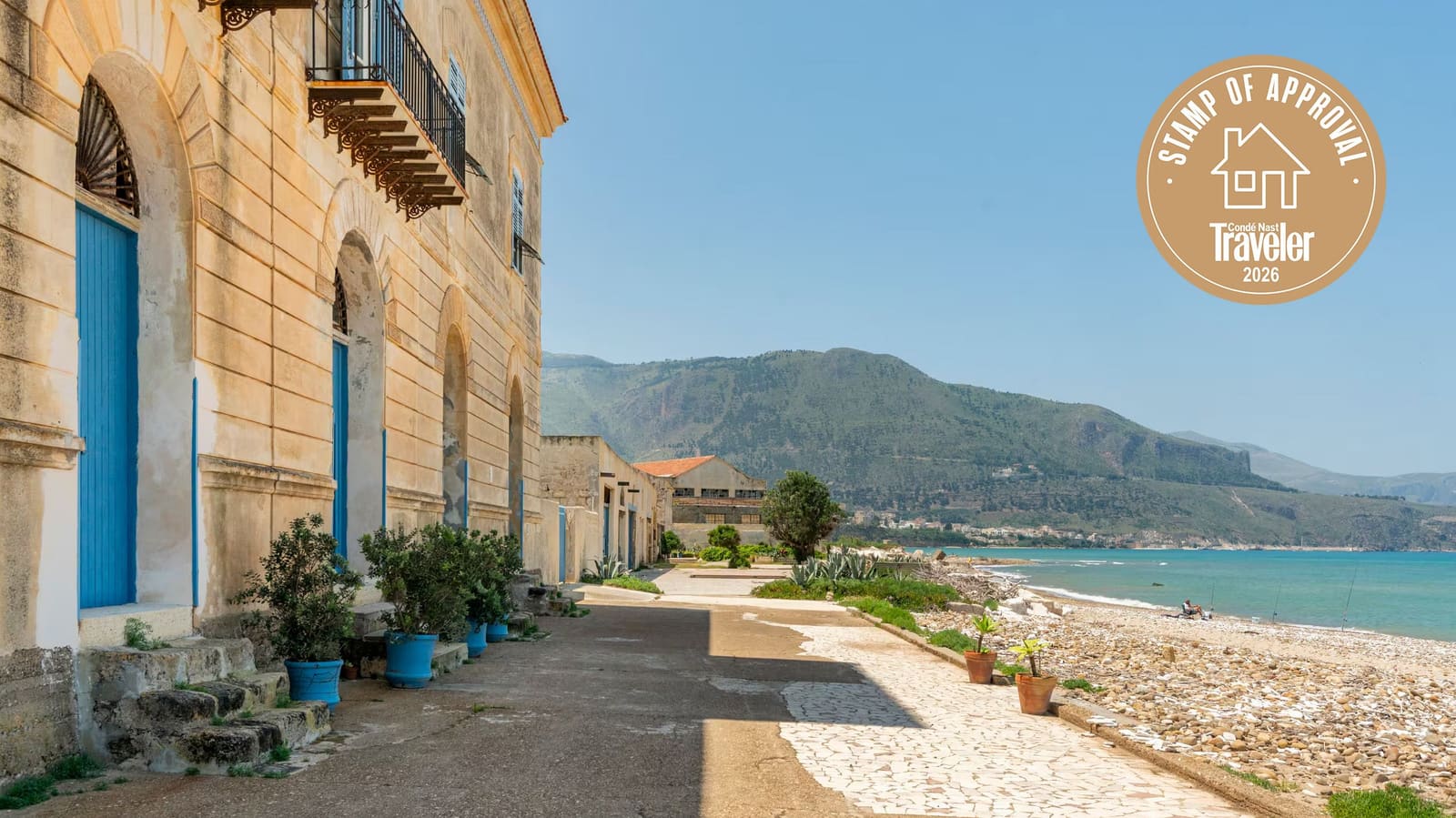
The Golden Stone Sentinel
There is a stretch of sand along Sicily's Alcamo coastline where the only sound is the Mediterranean folding over itself. No parasols in regimented rows, no port-town crowds. Just a structure of golden stone that has watched the water for more than a century, built in 1913 as headquarters for a tuna empire that once ruled these shores.
Tonnara Foderà di Magazzinazzi rises from the beach with the confident posture of a building that knows its worth. Three floors, a watchtower jutting skyward from its center, and shutters painted a shade of blue so contemporary against the terra-cotta roof that the whole composition feels slightly improbable, like a Neapolitan ice cream left out in the sun. The color is deliberate, playful even, a wink across the decades.
Tuna fishing has shaped this coastline for thousands of years. Fishermen's dwellings from the 1600s still cling to the rocks further down. By the late 1800s, a prominent Sicilian family had consolidated the industry, operating multiple factories and fisheries that thrived until the 1960s brought decline. This building served as nerve center and family seat, an Art Nouveau villa with storage facilities, offices, and that working watchtower for tracking boats against the horizon line.
Six generations later, the same family still holds the deed. Rather than let the structure crumble into picturesque ruin, they have renovated it into a guesthouse that walks a careful line between preservation and habitation. Soon it will host weddings, but for now it remains a place where you can sleep inside history without feeling trapped by it.
Not a Hotel, and Proud of It
Palermo airport sits thirty-five minutes away by car, which you will need. The drive deposits you in a beachside parking lot where silence replaces the usual resort-town hum. Walk toward the building through a small garden with wrought-iron furniture, and the absence of lobby or reception desk becomes immediately clear.
Leonardo and Rosa Maria, the husband-and-wife stewards of the property, establish the terms from arrival: this is not a hotel. No daily housekeeping, no breakfast service, no concierge to summon. What they offer instead is authenticity in the form of historic bones, artful details, and the kind of quirks that only emerge when a building has been loved by the same bloodline for a hundred years.
The structure divides into four apartments, each bookable separately or in combination. One spans two bedrooms, another includes a kitchenette, the largest claims a full living room. Guests share common spaces on the first floor: a dining room, lounge, and kitchen that function as the property's heart. The arrangement requires a mental adjustment, trading total privacy for the feeling of inhabiting a private residence where others happen to be staying in the next wing.
Where Velvet Sofas Meet Marble Plinths
The ground floor announces itself with soaring ceilings and flagstone cool underfoot. Climb to the first floor and you find the shared spaces that justify the whole endeavor. The kitchen wears a pink blush, its walls tiled in mauve, vintage dressers crowding the perimeter and bearing the weight of silverware, old milk jugs, wooden cutting boards dark with age and oil. Countertops hold jars of preserved fruit and crates of runner beans still dusty from the garden.
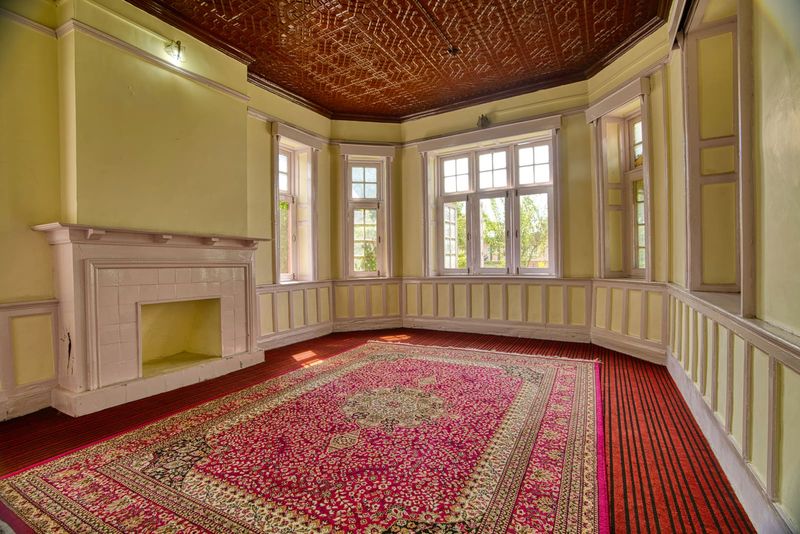
French doors in the living room open directly onto the water. The decor leans into nostalgic romanticism without tipping into kitsch: velvet sofas worn soft in the right places, a miniature sailboat mounted like a trophy, a marble plinth supporting a careful pile of seashells. Every surface has been considered, every object placed with the kind of attention that suggests someone actually lives here part of the year.
The watchtower apartment occupies the building's crown. Reaching it with luggage is a cardiovascular negotiation, but the reward is wind as your primary companion. It whistles through old window panes and gaps in the masonry, a soundtrack you would never choose for everyday life but that feels correct here, especially with waves providing the bassline just below.
A vaulted ceiling holds a red Murano glass light at its apex. Blue paint swirls across architectural details, highlighting a door frame here, an alcove there, as if the decorator decided certain features deserved their own emphasis. The Art Deco headboard plays the same game, setting contemporary shapes and colors against century-old bones.
A small kitchenette and landing provide space for morning coffee, though the setup leans more decorative than functional. One tap refused to cooperate, the cutlery showed rust, the whole arrangement had a ramshackle quality that felt charming until you actually needed to use it. The bathroom sits a floor below, requiring a late-night descent past other guests' doors. Small and windowless, it feels oddly severed from the room it serves, the most dated of the four apartment bathrooms.
The First-Floor Advantage
After two nights in the tower, a shift to one of the first-floor mini-apartments revealed what ease looks like. Two enormous bedrooms connect through tall doorways, each with throw-open windows and light that fills the space like water. Both rooms came furnished with day beds, writing desks, wardrobes, the full domestic catalog, more than necessary for a solo traveler but pleasant in its abundance.
Checkerboard flooring and framed vintage film posters provide visual texture. Mint-green bedside tables anchor the sleeping quarters. The bathroom justifies the whole arrangement: deep red marble tile, a large tub, windows framing the beach. The apartment faces the garden rather than the sea, trading the sound of waves for a different kind of calm, the stillness of a space that holds its breath.
Beyond the Beach
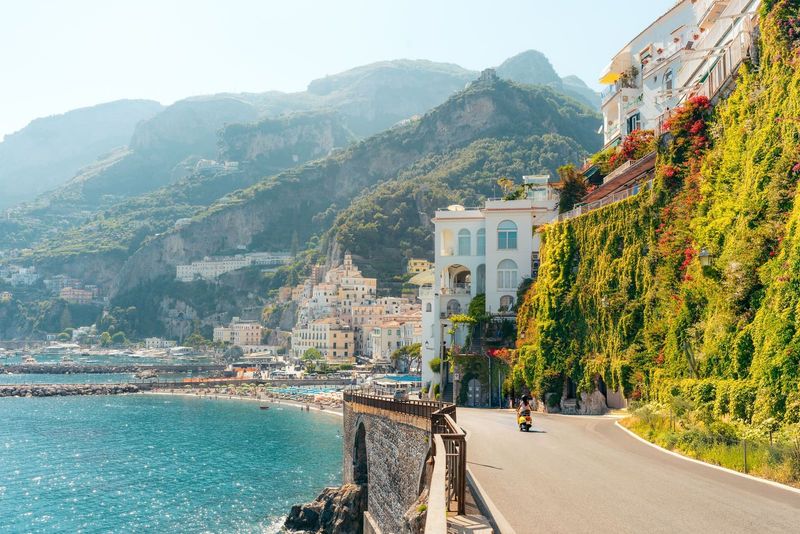
Because this is not a hotel, you become responsible for your own breakfast and entertainment, which means learning the surrounding territory. Castellammare del Golfo sits less than ten minutes away by car, a working town with restaurants, shops, and bars that serve locals first and visitors second. Down by the marina, eateries line the waterfront where you can watch boats tilt and recover over Aperol Spritz. The central artery, Corso Giuseppe Garibaldi, offers cafés serving arancini, small boutiques, more bars. At dusk, pink light fills the streets and fairy lights blink on overhead.
Tonnara di Scopello, another historic tuna fishery, has been converted into a small museum and protected swimming cove. Tickets cost under twenty euros and grant access to both. The museum offers English-language tours several times daily, but most visitors come for the cove itself: impossibly aqua water churning around a craggy coastline, deck chairs arranged at the water's edge, a café serving Campari Spritz and octopus salad. In early May, the site operates well under capacity, but social media has begun its work. Book as far in advance as possible.
The hilltop town of Erice perches 2,464 feet above sea level, reached by a winding mountain road that tests nerves and brake pads in equal measure. At the summit, a medieval fortress more than 2,500 years old anchors a warren of cobblestone streets, ancient churches, gelato shops, and a famous pastry institution. Parking exists at the top, or you can take a cable car if driving feels too Homeric.
Castello di Venere, the Castle of Venus, clings to the cliffside like it grew there. Built in the twelfth century, it commands views that justify the climb. Three to five hours suffices for wandering and lunch, though the wind at that altitude requires a jacket regardless of the season below.
Palermo's city center lies only thirty minutes away, close enough to access but far enough to ignore. The irony settles in quickly: this lonely building on a forgotten beach, remnant of an era when tuna tycoons commanded the coast, sits surrounded by enough attractions to fill a week. Yet once you arrive, the urge to leave diminishes with each sunset.
The Algorithm Has Not Yet Arrived
Everyone claims to want the Italy that exists before discovery, the hidden corner untouched by feeds and filters. The truth is that such places grow rarer each season, their coordinates passed along until they too become destinations rather than secrets.
This watchtower on the Alcamo coast still qualifies, for now. The family-run pizzeria next door will sell you takeaway. The sand accepts your presence without demanding performance. The sky turns purple on its own schedule, indifferent to whether you photograph it.
The building itself offers no apologies for what it is not: not a hotel, not fully private, not equipped for guests who need their hands held. What it provides instead is rarer, a chance to inhabit a structure that has earned its place on this beach through a century of watching the water, of serving a purpose and then finding another, of remaining in the family that built it when selling would have been simpler.
The wind still moves through the watchtower at night. The waves still provide their endless commentary. And for however long this particular slice of Sicily remains off the well-traveled path, the blue shutters will keep winking at anyone who understands the joke.