Tea Diplomacy Finds a Home in East Berlin's Funkhaus
Inside a former GDR broadcasting centre, one atelier is rewriting the rituals of Japanese gyokuro through cold extraction, modernist restraint, and the quietest kind of ceremony.
The Weight of a Single Leaf
Sunlight falls through tall windows onto Soviet-era timber, illuminating dust motes and the faint ghost of radio waves that once travelled through these walls. This is Funkhaus, the GDR's former broadcasting nerve centre in East Berlin, a brutalist monument designed by Franz Ehrlich in the 1950s. Within its 230 square metres of minimally altered interior, a new kind of transmission is underway: the pouring of gyokuro, Japan's most diplomatic tea, into long-stemmed German wine glasses.
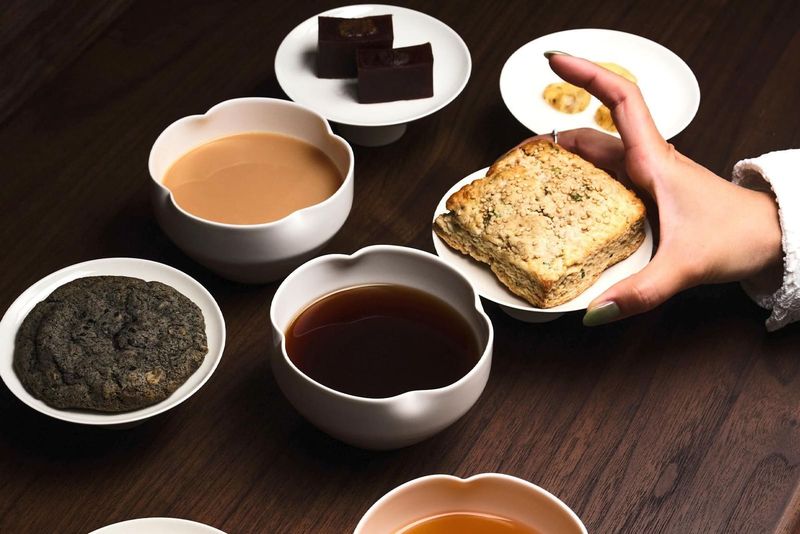
Mahmoud Abdelhafez, founder of Circadian, has spent years perfecting an 18-hour cold extraction process that renders this shade-grown green tea in its purest form. No sweeteners, no carbonation, no shortcuts. The result is a beverage once reserved for imperial poetry readings and state banquets, now available to Berlin's gallerists, tastemakers, and those seeking an alcohol-free ritual with the gravity of wine.
When world leaders gathered at the 2019 G20 Osaka summit, gyokuro was served during the formal reception. The choice was deliberate: this is a tea that speaks of ambition, patience, and respect. Developed in early 19th-century Japan as a response to China's celebrated tea heritage, gyokuro grows in darkness beneath four layers of textile, each one gradually blocking the sun. The shading process concentrates chlorophyll and amino acids, producing a brew of singular complexity. It is a tea that refuses shortcuts, and Abdelhafez has built his practice around that refusal.
A Table That Divides and Unites
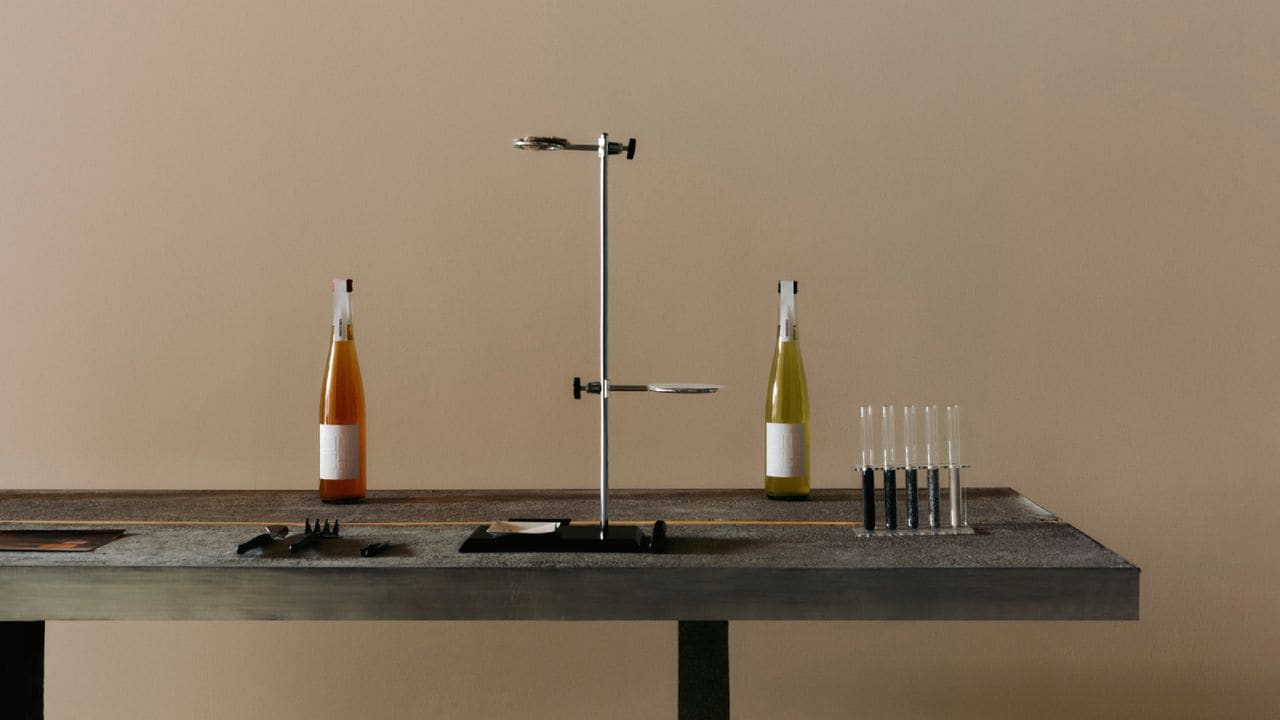
At the centre of the atelier stands a poured-concrete table, crafted by a Swiss maker in a north Berlin workshop. Its heft is undeniable: a sculptural pedestal supports a thick top, bisected by embedded LED light strips that mark a deliberate separation. On one side, five oak and rattan chairs inspired by Pierre Jeanneret's Chandigarh designs; on the other, the serving side, where Abdelhafez and his team orchestrate the ceremony.
Traditional tea ceremonies position a lead guest at the head of the table, a hierarchy written into seating. Abdelhafez has rejected that structure. His table invites groups of up to five to sit as equals, sharing an intimate, guided experience. The gesture is small but significant, a quiet democratisation of ritual.
The teas are poured into glassware by German brand Zieher, vessels more commonly associated with Riesling than sencha. "We are borrowing from the sake tradition, with a nod to wine-drinking principles," Abdelhafez explains. "Gyokuro is not highly aromatic; it is a controlled aroma. The closed glass shape concentrates it. As with wine, the long stem maintains the cool temperature."
Preservation Through Minimal Intervention
Funkhaus comes with conditions. Long-term tenants must preserve the building's architectural essence, a requirement enforced by conservators who insist on retaining the original eggshell-blue painted concrete pillars and beams at the rear. Abdelhafez took on the space as a singular shell, void of division, and his response was to interfere as little as possible.
Partition walls were introduced only where regulation demanded them, creating a production space that houses specialist brewing equipment. Bespoke pressurised tanks, adapted from cider-making processes by Norwegian company Brewtools, sit on original 1950s floor tiles above a new drainage system. The contrast is intentional: old and new converging without pretence.
"I think the most prominent note on designing the space has been not messing with what was already here," Abdelhafez says. "We have retained the same look and feel, without interfering too much with the original shell, designing the interior to fit."
The front third of the atelier serves ceremonial purposes. The mid-section functions as an open kitchen and office for the Circadian team, designed with equal intent. Copper tiles and sinks in the kitchen and bathroom acknowledge the metal's antimicrobial properties. The black finish framing the kitchen extends across the ceiling, a choice rooted in tea auction practice. "Black is the equaliser of all teas," Abdelhafez notes. "In a busy tea auction market, all teas are usually lined up on black plates. Farmers, buyers, and sellers can instantly see impurities against black."
Geometry, Restraint, and the Art of Not Filling Space
Decorative elements are sparse: a handful of plants, a few abstract works by Swiss artist Tanja Schaub hung with restraint. Abdelhafez cites the influence of Swiss geometry on his vision, a design approach rooted in the precision and grid-focused graphic style that emerged in the 1950s, the same decade Funkhaus was constructed. The alignment is more than coincidental; it is a deliberate conversation between eras, between the rigor of Bauhaus-trained Ehrlich and the clean lines of mid-century Swiss design.
Minimalism, when hollow, becomes a brand exercise. Here, it reads as conviction. The atelier's austerity amplifies rather than obscures the labour behind each glass of gyokuro. The 18-hour cold extraction process is invisible to guests, but its discipline is palpable in every sip.
The Ritual Reimagined
Circadian produces several expressions of cold-brewed gyokuro, each named for its dominant sensory note: Ocean Umami, Cocoa Finish. The names are descriptive, not poetic, a choice that reflects Abdelhafez's commitment to precision over romance. This is tea as craft, not as lifestyle accessory.
Berlin's alcohol-free movement has found a willing participant in Circadian, though Abdelhafez's project extends beyond trend. Gyokuro, with its ceremonial weight and painstaking production, offers an alternative ritual for those seeking something more deliberate than a glass of wine, more considered than a cup of coffee. The atelier provides the space, the ceremony, the architecture of attention.
Where History Holds Still
Funkhaus itself is a palimpsest. Built as the broadcasting centre for the German Democratic Republic, it carried the voice of a state that no longer exists. Today, its rooms house artists, studios, event spaces, and now, a tea atelier that looks both east and west. The eggshell-blue pillars remain, as do the original floors, bearing the scuffs and stains of decades.
Abdelhafez has not tried to erase that history. Instead, he has placed his own ritual within it, allowing the tension between old and new to remain unresolved. The result is a space that feels neither nostalgic nor aggressively contemporary, but instead occupied by multiple timelines at once.
The gyokuro served here travelled a long path: from 19th-century Japan's ambition to rival Chinese tea mastery, through imperial courts and diplomatic receptions, into the cold extraction tanks of a Berlin atelier housed in a brutalist monument to a vanished state. It is a journey measured in patience, in the slow accumulation of meaning, in the decision to grow something beautiful in darkness and wait for it to reveal itself in light.