When Medicine Meets the Table: Inside Singapore's Apothecary-Inspired Korean Kitchen
At Sam Sam Sam, ginseng chicken soup is prescribed, not simply served - a collaboration between chefs and traditional Korean medicine practitioners reimagining wellness dining.
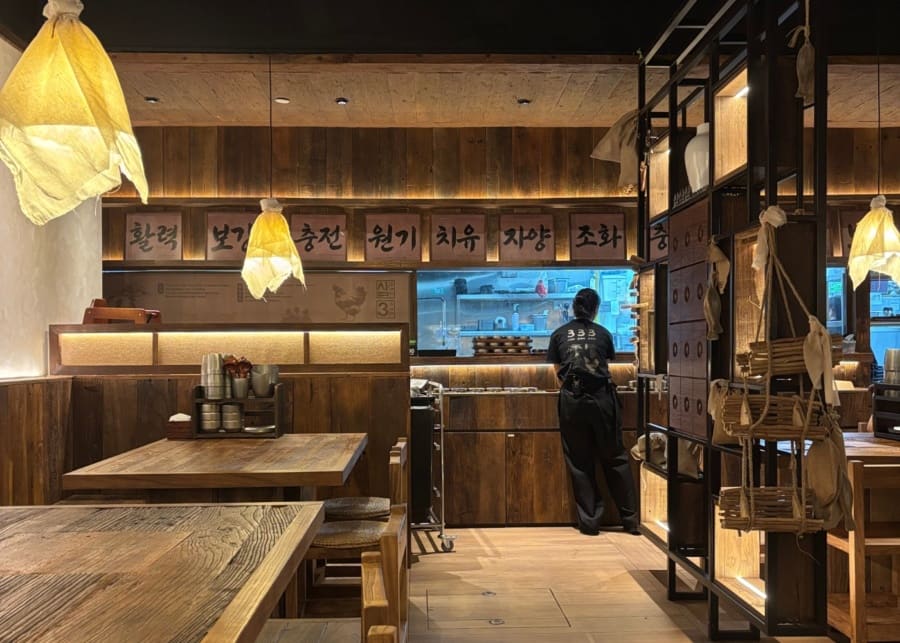
The Apothecary That Serves Dinner
Step into the second floor of Velocity at Novena Square and time folds backward forty years. Multi-drawer medicine chests line the walls. Dried botanicals hang in clusters. Handwritten labels identify herbs in careful script. The setting evokes a Seoul apothecary from the 1980s, when healers dispensed remedies measured in grams and prescribed by season.
Sam Sam Sam occupies this deliberately anachronistic space, a restaurant where the boundary between kitchen and clinic blurs. The concept positions itself as Singapore's first Korean wellness dining establishment, built on a premise uncommon in the city's crowded Korean food landscape: every bowl of samgyetang is formulated in partnership with licensed traditional Korean medicine doctors.
The collaboration spans multiple medical disciplines. Practitioners specializing in internal medicine, cardiovascular health, neuropsychiatry, and other fields contributed to menu development. Each soup variant addresses specific conditions or wellness goals, backed by botanical knowledge rooted in centuries of Korean medicinal practice.
A Diagnostic Chart Before You Order
Ordering begins with an unusual step. A wellness diagnostic chart helps diners match their current state to a corresponding soup. Digestive discomfort points toward the Vitality Tonic. Stress and mental fog suggest the Thermal Detox. Poor circulation calls for a different formulation entirely.
The approach treats food as intervention. Samgyetang, long regarded as restorative in Korean culture, receives clinical precision here. Ingredients arrive from Korea: ginseng from specific growing regions, jujube selected for potency, aged black garlic from Uiseong chosen for its antioxidant concentration.
The Vitality Tonic samgyetang serves as the entry point for first-time visitors. Priced at twenty-nine dollars, the bowl holds tender young chicken, Korean ginseng, jujube, garlic, and glutinous rice. The broth carries pronounced herbal bitterness, a quality that distinguishes it from milder versions found elsewhere. The taste profile leans medicinal - intentionally so. Savory depth mingles with the sharp, earthy notes of concentrated botanicals.
The Immunity Black variant, priced at thirty-two dollars, shifts the flavor architecture. Naturally aged black garlic from Uiseong drives the profile, contributing mellow sweetness and umami layers. The robust broth targets sluggishness and weakened immunity, packed with nutrients meant to bolster vitality. Each spoonful delivers richness without heaviness, a balance achieved through ingredient selection and technique.
Portions prove generous. The chicken in both soups arrives whole and substantial, offering clear value for diners tracking protein intake or simply seeking a filling meal.
Beyond the Prescription Bowls
Samgyetang anchors the menu, but supporting dishes reveal unexpected strength. The spicy jang kalguksu, a knife-cut noodle soup priced at twenty-seven dollars, stands out for its hand-pulled noodles. Chewy and springy, the noodles hold their texture against a bold, spice-forward broth designed to warm the body from within. The dish taps into the same comfort territory as Chinese ban mian, with Korean heat and a medicinal undercurrent.
Side dishes veer from convention. Fried fresh ginseng, offered at eighteen dollars, presents three whole ginseng roots in golden batter, served alongside honey and bean powder. The preparation softens ginseng's inherent bitterness, making the root more approachable for diners unaccustomed to its sharp flavor. It remains an acquired taste, but the execution demonstrates culinary creativity applied to an ingredient rarely deep-fried.
The kimchi pancake, priced at twelve dollars, delivers expected satisfaction: crunchy exterior, moist interior, balanced tang. But the market-style tofu and kimchi, also twelve dollars, surprises with its simplicity. Warm tofu blocks drizzled with sesame oil pair with savory stir-fried kimchi. The minimalism allows each component to speak clearly. The stir-frying process transforms the kimchi, mellowing acidity while concentrating umami.
Retro Seoul, Modern Novena
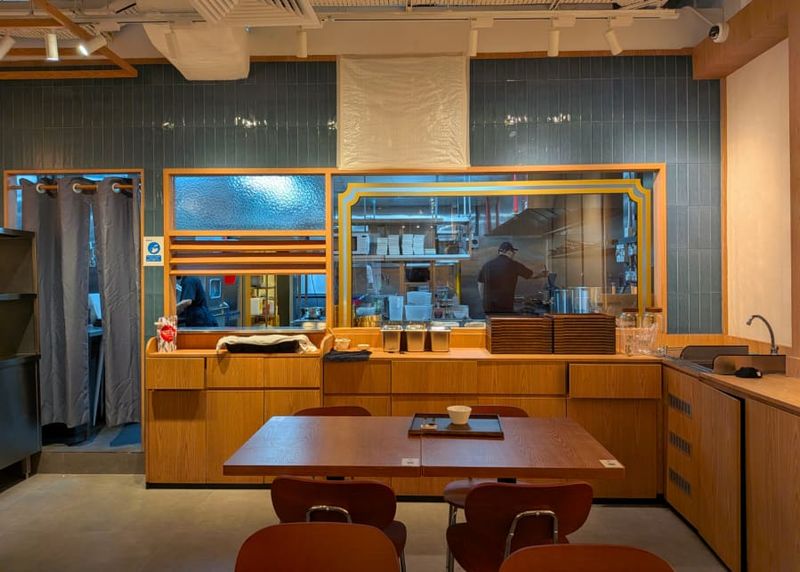
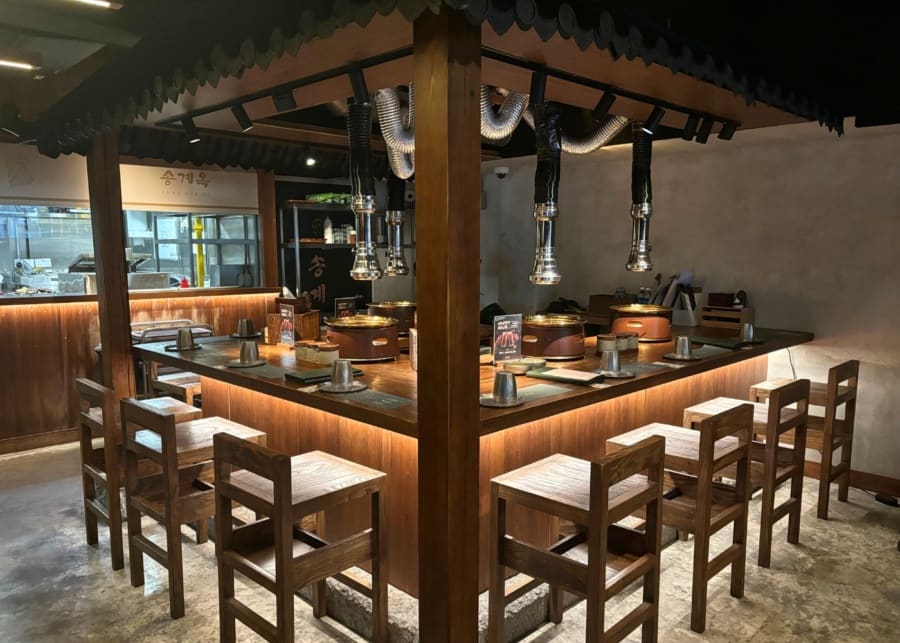
The interior design, executed by the same group behind other Korean concepts in Singapore, commits fully to its 1980s Seoul inspiration. The aesthetic recalls a period when traditional medicine shops were neighborhood fixtures, spaces where practitioners ground herbs by hand and dispensed remedies wrapped in paper packets.
This nostalgia serves function as well as form. The apothecary setting reinforces the restaurant's wellness positioning, creating visual continuity between historical medicinal practice and contemporary dining. The environment suggests that what arrives at the table carries intention beyond flavor.
Sam Sam Sam operates under Initia Group, which has deployed similar atmospheric design strategies across its portfolio. Each venue - whether evoking cave architecture or traditional hanok structures - uses space to transport diners beyond Singapore's urban grid.
Wellness as Culinary Strategy
The collaboration with traditional Korean medicine practitioners distinguishes Sam Sam Sam from the wave of Korean restaurants that have opened across Singapore in recent years. While many establishments offer samgyetang, few anchor their entire concept in medically informed formulation.
The approach raises questions about how dining culture intersects with wellness trends. As consumers increasingly seek functional foods - ingredients and dishes positioned to deliver health benefits beyond basic nutrition - restaurants face pressure to substantiate claims. Sam Sam Sam addresses this by involving licensed practitioners in menu development, lending credibility to its wellness positioning.
The model also reflects broader shifts in how Asian culinary traditions are presented in contemporary settings. Traditional Korean medicine, like Chinese medicine and Ayurveda, operates on principles that view food and medicine as overlapping categories. Ingredients are understood to possess specific properties - warming or cooling, drying or moistening - that affect bodily balance. Sam Sam Sam translates these principles into accessible dining, offering a pathway for diners unfamiliar with traditional medicine to engage with its logic through taste.
Pricing sits in the mid-tier range. Main dishes start at twenty-one dollars, sides from twelve, with a set for two available at eighty-eight dollars. Drinks begin at four dollars. The restaurant operates on a walk-in basis without advance reservations, and while not halal-certified, prepares dishes without pork, beef, or lard to meet Muslim-friendly standards.
The Comfort of Intention
Skepticism toward wellness-focused dining concepts is easy to muster. Marketing language around health benefits often outpaces substantiation. Yet the experience at Sam Sam Sam hinges less on measurable health outcomes than on the comfort derived from intentional eating.
Each bowl arrives heavy with chicken, rich with broth, and layered with ingredients selected for purpose. Whether the black garlic genuinely boosts immunity or the ginseng meaningfully restores vitality may remain unknowable within a single meal. But the ritual of matching symptoms to soup, of consuming food designed with care toward a specific end, offers its own form of nourishment.
The restaurant occupies a space between indulgence and restraint. The soups satisfy hunger without excess heaviness. The sides offer variety without overwhelming the palate. The setting invites lingering without demanding it.
In a dining landscape crowded with Korean fried chicken joints, barbecue houses, and casual eateries, Sam Sam Sam carves out territory through specificity. It asks diners to consider not just what they eat, but why - and whether the kitchen's answers align with their own needs. The apothecary drawers remain closed, decorative rather than functional, but the message holds: here, every ingredient has been chosen, every bowl composed, with your well-being in mind.