A Korean Table Built on Memory and Quiet Devotion
In a pocket of Singapore's Amoy Street, Kimpson's Table transforms home-cooked Hansang traditions into a permanent haven for those who crave comfort over spectacle.
The Long Road from Home Kitchen to Amoy Street
There is something deeply personal about a restaurant born in a home kitchen. Chef Patrick Kim began preparing Hansang-style meals from his own stove in 2025, following recipes handed down through two generations of women in his family. What started as a delivery service quietly grew into a three-month residency at an incubation space in Clarke Quay Central earlier this year, and by mid-2026, Kimpson's Table opened its doors on Amoy Street, a neighborhood better known for its colonial shophouses and sleepy afternoon light than for its Korean dining scene.
At Global Chic Voyage, we've watched the city's Korean restaurant landscape shift and consolidate, with Tanjong Pagar cementing itself as the de facto hub for everything from charcoal grills to late-night fried chicken. Amoy Street, by contrast, remains quieter, a little more residential in spirit despite its proximity to the central business district. Chef Patrick chose the location deliberately, drawn to the area's blend of heritage architecture and contemporary dining energy, a setting that mirrors the dual identity of Kimpson's Table itself: rooted in tradition, yet entirely contemporary in execution.
A Space That Feels Like Someone's Grandmother's Dining Room
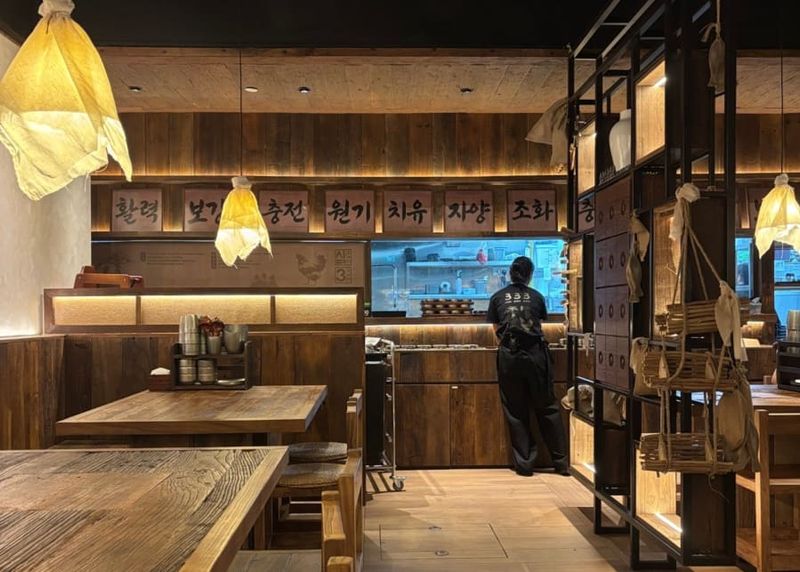
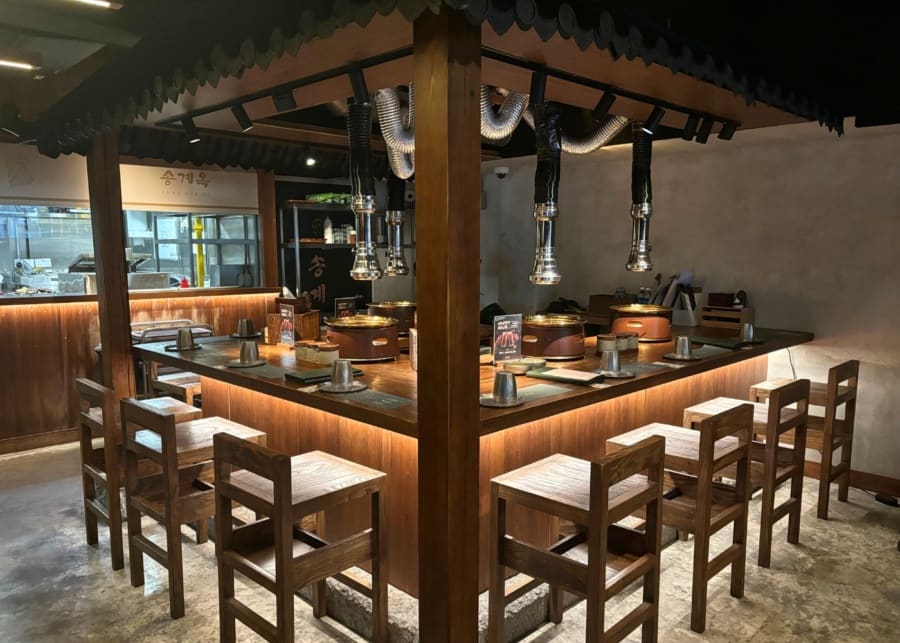
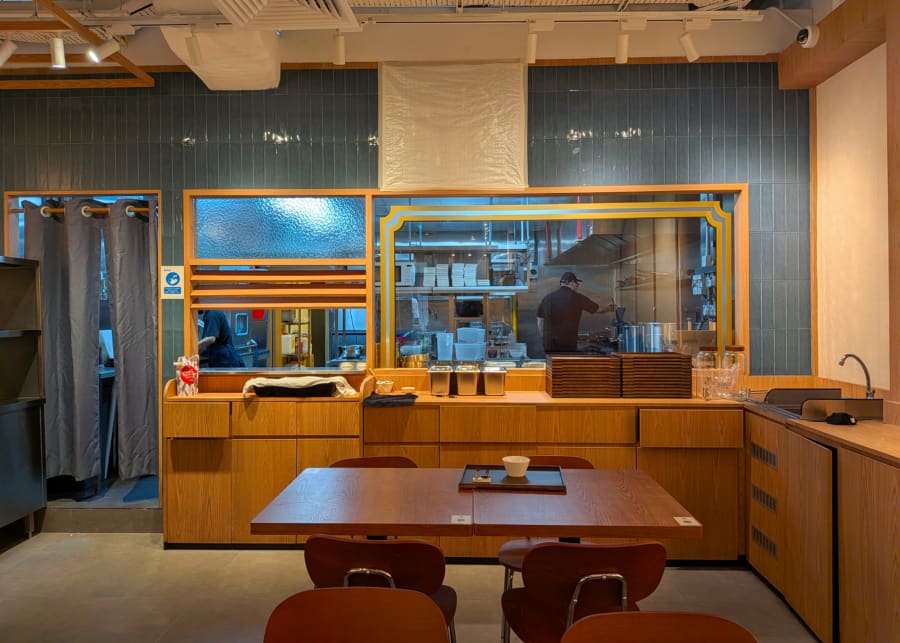
Step inside and the first thing you notice is the wood. Pale timber tables, chairs with clean lines, and shelving that could have been lifted from a mid-century furniture catalogue. Calligraphic banners hang on the walls alongside modest paintings of tigers, hens with chicks, and a single vase overflowing with flowers. There is no soundtrack of K-pop or Seoul street noise, just the gentle clatter of porcelain and the low hum of conversation. It is the kind of space where you can actually hear your dining companion, a rarity in the city's dining scene.
The aesthetic is not designed to impress so much as to welcome. It is homely in the truest sense, unpretentious and warm, the kind of restaurant where you might imagine a grandmother presiding over a pot of broth that has been simmering since dawn.
Samgyetang: The Soul of the Menu
Chef Patrick insists that first-time diners order the samgyetang, a half French chicken submerged in broth that has been coaxed into clarity over five hours of slow simmering. Red dates, garlic, ginseng, and glutinous rice lend the liquid a subtle herbal sweetness, while the chicken itself emerges tender enough to fall apart at the slightest touch of a fork.
We tasted it on a humid afternoon when the air-conditioning felt like a reprieve, but the broth would be just as suited to a rainy evening or a morning when your body demands something restorative. The dish reflects the Hansang philosophy that chef Patrick learned from his mother and grandmother: food as nourishment, not just fuel. It is a meal designed to soothe, to replenish, to make you feel cared for in the most fundamental way.
The chicken itself is impressively meaty, with flesh that retains moisture despite the long cooking time. Each spoonful of broth carries the faint bitterness of ginseng balanced by the natural sweetness of dates, a combination that feels medicinal without being clinical.
Hand-Cut Noodles and the Pull of Spice
For those who prefer their comfort with a little heat, the dak bibim kalguksu offers a different kind of satisfaction. Hand-cut wheat noodles, irregular in shape and pleasingly chewy, are tossed with shredded chicken in a homemade sauce that chef Patrick describes as sweet-spicy. The comparison to Singapore's ban mian is apt: both are humble, unpretentious bowls that rely on the quality of their noodles and the balance of their seasoning.
The sauce clings to each strand, delivering a kick that builds gradually rather than overwhelming the palate. It is the kind of dish that invites you to keep eating even after you've told yourself you're full, the kind of flavor that lingers long after the bowl is empty.
Fried Chicken Without the Fanfare
No Korean meal feels complete without fried chicken, and Kimpson's Table offers four variations. We sampled the yangnyeom and the Bburinkle cheese boneless versions, both freshly fried to order and worth the twenty-minute wait. The coating achieves that elusive combination of crispness and lightness, while the chicken inside remains juicy and well-seasoned.
The Bburinkle cheese version layers a smooth, savory cheese sauce over the fried pieces, adding richness without tipping into heaviness. It is indulgent in the way that fried chicken should be, but not so much that you feel weighed down halfway through.
The Cheese Potato Pancake: A Rosti in Disguise
The cheese potato pancake arrives looking more like a European rosti than a traditional Korean jeon, a generous mound of shredded potato crisped golden and topped with melted cheese. It is a dish that feels like a bridge between cuisines, familiar yet unexpected, and it works precisely because the components are so simple. Good potatoes, good cheese, careful cooking. There is no mystery here, just execution that respects the ingredients.
Why Hansang Matters Now
Hansang-style dining centers on balance: multiple small dishes, clean flavors, low sodium, and an emphasis on seasonal ingredients. It is the antithesis of the heavy, charcoal-grilled meats and soju-soaked nights that dominate much of Singapore's Korean dining scene. At Kimpson's Table, the Hansang sets offer rice, a choice of protein, and traditional homemade banchan, all for under twenty dollars.
This is not a restaurant chasing trends or attempting to reinvent Korean cuisine for a Western palate. It is, instead, a place that trusts in the integrity of home cooking, in recipes that have been refined over generations, in the belief that food can be both simple and profound.
We've seen too many restaurants in Singapore over the past year struggle to find their footing, caught between the pressure to innovate and the difficulty of maintaining quality in an increasingly expensive operating environment. Kimpson's Table succeeds because it knows exactly what it is: a small, family-inspired restaurant that serves food with care and without pretense.
The Question of Authenticity
The term "authentic" gets thrown around carelessly in food writing, often as shorthand for "the chef is from the country the cuisine originates from" or "the ingredients are imported." But authenticity, when it means anything at all, is about connection: to a place, to a tradition, to a way of cooking that has been passed down and adapted over time.
Chef Patrick's connection to Hansang-style cuisine is not performative. It is lived, inherited, and deeply personal. The samgyetang is not just a dish on a menu; it is a recipe his grandmother made, a flavor memory from childhood, a technique that requires patience and attention. That connection is what makes Kimpson's Table feel genuine in a way that many restaurants, no matter how technically proficient, do not.
A Neighborhood Table Worth Finding
Kimpson's Table operates on a walk-in basis, a decision that keeps the experience informal and accessible. The space is small, the menu concise, and the prices refreshingly reasonable for the central business district. This is not a destination restaurant in the conventional sense, not a place you travel across the island for a special occasion. It is, instead, a neighborhood table that happens to serve food worthy of a much longer journey.
We left Amoy Street that afternoon feeling the way you do after a good meal at a friend's home: satisfied, cared for, and already thinking about when we might return. In a dining scene that often prioritizes spectacle over substance, Kimpson's Table offers something quieter and, ultimately, more enduring.