A Riverside Festival That Speaks Hokkien
At Clarke Quay's Fountain Square, two August days become a conversation between Singaporean heritage and the kind of eating that demands loose waistbands.
The Language of Appetite
There's a reason the festival borrows its name from the Hokkien word for eating. "Jiak" isn't polite dining-room vocabulary; it's the verb you use when hunger is immediate, when food is meant to be consumed with enthusiasm rather than ceremony. From the twenty-second through the twenty-third of August, that spirit settles over Clarke Quay's Fountain Square from three in the afternoon until ten at night, and the riverside precinct becomes a two-day meditation on what Singaporean flavour can mean when chefs are given permission to play.
At Global Chic Voyage, we've watched food festivals oscillate between overly precious tasting menus and the sort of hawker-stall nostalgia that refuses to evolve. What interests us about this particular gathering is the way it occupies the middle ground: heritage ingredients and techniques, yes, but filtered through contemporary kitchens that aren't afraid to cross borders or break a few culinary rules in the process.
When Familiar Kitchens Reimagine Themselves
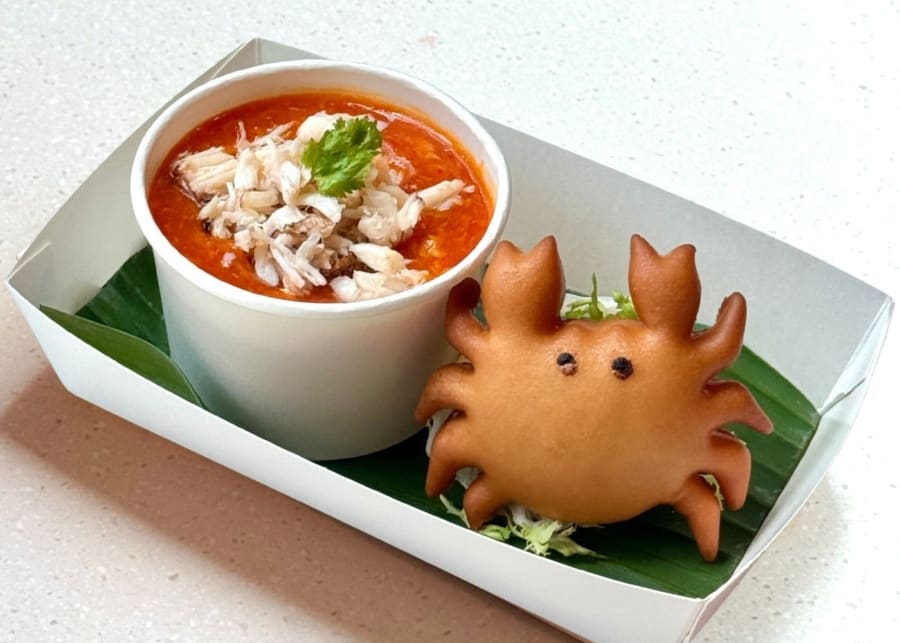
The participating restaurants at CQ are not strangers to the neighbourhood, but for these two days they've been asked to step outside their usual repertoires. Red House Seafood, known for its chilli crab, deconstructs the dish into hand-peeled crab meat paired with the iconic sauce and golden mantou, a format that privileges the sweetness of the shellfish over the drama of cracking claws at the table. It's a quieter version of the original, more suited to standing and grazing than to the communal mess of a full crab dinner.
Mimi offers Peking duck tacos and satay shooters, a pairing that sounds more chaotic on paper than it tastes in practice. The duck taco borrows the structure of a Mexican street food but fills it with the lacquered skin and hoisin sweetness of Beijing, while the satay shooter compresses the entire peanut-sauce-and-charcoal experience into a single mouthful. Wildseed Café, meanwhile, takes the dessert route with a Gula Melaka latte, the Malay palm sugar lending a caramel depth that's less sweet than it is earthy, almost mineral.
Hanjip leans into the Korean-Singaporean overlap with chilli crab tteokbokki and kimchi cheese fries, a combination that makes sense when you consider how both cuisines treat heat and fermentation as foundational flavours. Its sister concept, Home Dawn & Dusk, plates a Singapore laksa linguine that replaces rice noodles with Italian pasta, the coconut curry broth clinging to each strand in a way that feels both foreign and entirely right.
The Festival-Only Dishes Worth the Trip
Korio's kaya sea salt doughnut is the kind of hybrid that could only emerge from a city-state where colonial breakfast culture collided with Southeast Asian pantries. The coconut jam, traditionally spread on toast, becomes a filling here, the sea salt cutting through the sweetness in a way that makes the doughnut feel less like dessert and more like a legitimate snack. The brisket rendang sandwich takes the slow-cooked, spice-heavy beef stew of the Malay kitchen and tucks it into bread, a format that's more portable but no less intense.
Chupitos rolls out a series of local-flavoured shooters that read like a nostalgic tour of Singaporean childhood: Milo, Bandung, Pandan, Paddle Pop. These aren't cocktails in the craft-bartender sense; they're edible memories, each one a concentrated hit of flavour that tastes more like affection than alcohol.
The Independent Voices
Beyond the established restaurant names, a handful of independent and home-based makers have been invited to the table, and their offerings tend toward the more experimental end of the spectrum. Hippopotato brings Swiss-Singaporean rosti to the festival, one version topped with salted egg yolk and chicken, the other with laksa bechamel and prawns. The rosti itself, a crisp potato pancake, becomes a neutral canvas for sauces that would normally coat noodles or rice, and the result is a dish that feels neither fully European nor fully Southeast Asian, but something else entirely.
The East Social's Otah Parker Roll Toast takes the spiced fish cake typically wrapped in banana leaves and steams it inside a soft bun, a format that makes the otah feel more like a filling than a side dish. Outback Haus pairs local-leaning beverages such as an Afterhours Kopi with small bites across a three-course flight, treating Singaporean coffee culture with the same seriousness that wine bars apply to their pairings.
For those inclined toward sweetness, Sweedy offers a Mao Shan Wang mousse cup, the prized durian variety whipped into a texture that's lighter than the fruit itself but no less pungent. It's a dessert that divides rooms, as durian always does, but for those who grew up with the fruit, it's a homecoming in a cup.
Making Things With Your Hands
Between courses, the festival offers a handful of workshops that pull visitors out of pure consumption and into creation. The artists' booth byh runs free sessions, though only fifty slots are available each day and they tend to disappear quickly. Clay Clay Pottery hosts pottery painting on Saturday afternoon, sessions running at four and then again at five-fifteen. Northyeastline leads edible cookie painting workshops across both days, the Saturday evening slots at six-thirty and seven-thirty, the Sunday sessions earlier in the afternoon at four and five.
Entry to the workshops requires a twenty-dollar receipt from any store within CQ or from a festival booth, a threshold low enough to feel accessible but high enough to ensure that participants are already invested in the event. The cookies, once painted, become both souvenir and snack, a rare overlap of craft and consumption.
The Soundtrack and the Scene
Live music anchors the afternoon hours, with performers Syakirah and Roseville trading sets across both days. DJ Val takes over from seven in the evening, and a photobooth operated by Solace Studios ensures that the square remains populated well into the night. The music isn't background noise; it's part of the architecture of the event, shaping the pace at which people move between stalls and the length of time they linger over a plate.
A Festival That Remembers the Dogs
One of the more thoughtful gestures of the festival is its attention to four-legged attendees. Furry Feast Lane hosts a series of vendors who've adapted Singaporean dishes for canine palates. Bailey & Patch Cafe offers pet cai fan, the mixed rice format translated into dog-safe ingredients, along with doggy ice cream. The Pet Provision makes a dog curry puff and satay, miniature versions of the human snacks but formulated without the spices that would upset a dog's stomach.
Providog's Nasi LeBark and Pup Mooncake are festival exclusives, the latter a nod to the upcoming Mid-Autumn Festival but reimagined for pets. Lunavae Pets goes further with Luxe Abalone Pet Siew Mai and an MSW Durian Meaty Mooncake, ingredients that would be extravagant even in a human dish. On Sunday, Lunavae also runs a "Make Your Own Pet Popiah and Ondeh Ondeh Workshop," a session where owners can assemble treats for their dogs, the act of making food becoming a shared ritual between species.
The Practicalities
The festival runs across two afternoons and evenings, entry is free, and the location at Clarke Quay's Fountain Square is accessible by MRT. Cash is recommended, though many vendors will likely accept digital payment. The workshops fill quickly, so arriving early on either day increases the likelihood of securing a spot. The food stalls open at three and close at ten, the evening hours offering cooler temperatures and a different quality of light along the river.
What makes this festival worth attending isn't novelty for its own sake, but rather the way it allows familiar flavours to be seen from new angles. Singaporean cuisine, with its layers of influence from Chinese, Malay, Indian, and Peranakan kitchens, has always been a conversation rather than a monologue. For two days in August, that conversation happens out loud, in public, with the river as backdrop and appetite as the common language.