
When a Grand Slam Champion Builds a Tower: Novak Djokovic and Aman Reimagine Wellness in Miami
A 320-metre waterfront tower in Brickell will house what may be Miami's largest spa, indoor courts, and a longevity programme shaped by three decades of elite competition.
A New Vocabulary for Luxury
The language of luxury hospitality has long revolved around service, design, and discretion. Aman, which has spent nearly four decades perfecting that vocabulary across remote pavilions and urban sanctuaries, is now adding a fourth term: longevity. The hotel group announced this week that it will launch ATMA, a global brand developed in partnership with tennis champion Novak Djokovic, beginning with a 320-metre tower on Miami's Brickell waterfront. The project, scheduled for completion in 2031, will combine residences with what is set to become one of the city's most extensive wellness centres, spanning 120,000 square feet across multiple floors.
The collaboration positions Djokovic not as a celebrity endorsement but as Global Partner, a role that will see him shape the brand's programming around nutrition, racquet sports, and what the group terms "longevity protocols". It is a structure that reflects a broader shift in how wellness is being conceived within high-end hospitality: less as amenity, more as architecture. Where spas were once discrete spaces tucked into basements or garden wings, ATMA proposes an entire building organised around the rhythms of training, recovery, and long-term health.
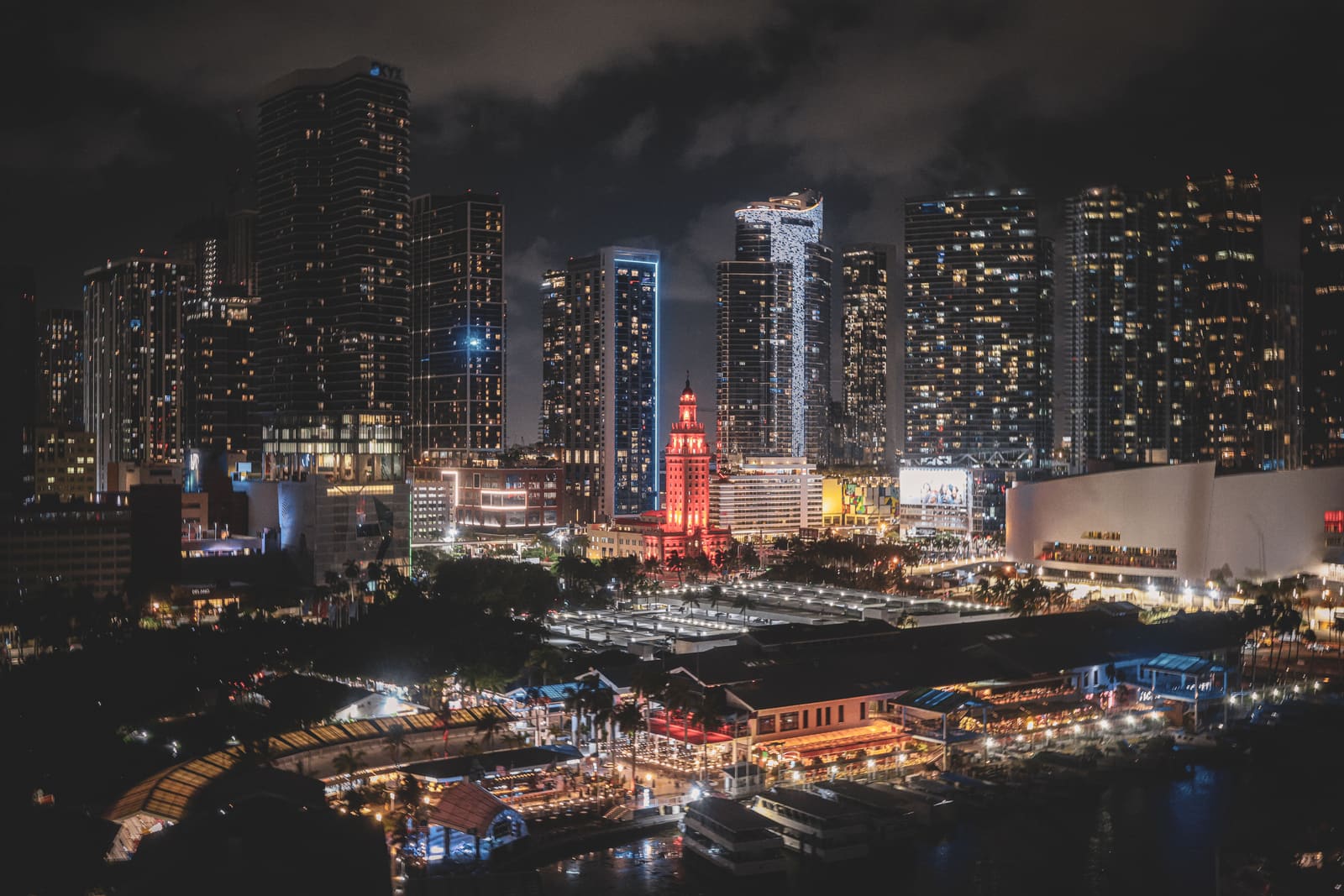
The Site and the Skyline
Brickell, Miami's financial district, has seen a steady accumulation of residential towers over the past two decades, many of them offering waterfront views across Biscayne Bay. The ATMA site, developed by OKO Group and Oak Row Equities, sits along Brickell Bay Drive, adjacent to the five-mile Baywalk that traces the water's edge. The location offers both proximity to the city's commercial core and access to the kind of open horizon that has made Miami a draw for those seeking a particular quality of light and air.
SHoP Architects, the New York-based practice known for sculptural high-rises, has designed the tower with curved balconies and floor-to-ceiling glazing that rises from a landscaped podium. The form is less about vertical drama than about creating a series of outdoor rooms at height, each one oriented towards the bay. It is an approach that aligns with Miami's particular brand of luxury, where the boundary between interior and exterior is kept deliberately porous.
Studio Paolo Ferrari, responsible for the interiors, has worked with organic forms and furniture shaped around human ergonomics. Lighting systems will be calibrated to respond to circadian rhythms, a detail that signals the degree to which the project is being conceived as a tool for optimising daily life rather than simply housing it. The idea is that residents and guests will move through spaces that actively support sleep, recovery, and focus, rather than merely providing a backdrop for those activities.
The Scale of Wellness
The 120,000-square-foot wellness centre is where the project's ambitions become most legible. It will house a high-performance fitness centre, private and group training studios, mobility and conditioning labs, a medical wellness centre, and dedicated recovery spaces. The inclusion of indoor tennis and padel courts speaks to the influence of Djokovic's own training regimen, where racquet sports are not recreational but central to a broader system of movement and conditioning.
This is not the first time a hotel group has incorporated extensive fitness facilities into a residential tower, but the scale here is notable. For context, many luxury hotels allocate between 10,000 and 20,000 square feet to their spa and fitness offerings. ATMA's footprint is six times that at the lower end, a commitment that suggests wellness is not an add-on but the organising principle of the entire development.
The medical wellness centre, in particular, marks a departure from the typical spa model. While details remain limited, the inclusion of such a facility suggests a focus on diagnostics, preventive care, and personalised health programming, areas that have gained traction among those who view wellness as a long-term investment rather than a weekend retreat. It is a model more common in European wellness resorts than in North American urban towers, and its presence here reflects a convergence of those traditions.
The Athlete's Influence
Djokovic's involvement brings a specific set of knowledge to the project, accumulated over a professional career that has spanned more than two decades. His approach to training, nutrition, and recovery has been well-documented, characterised by an attention to detail that extends from diet to sleep to mental conditioning. The question ATMA poses is whether those protocols, developed for elite performance, can be translated into a format accessible to residents and guests who are not professional athletes.
The answer, it seems, lies in programming rather than facilities alone. Djokovic will oversee the brand's longevity and nutrition offerings, which suggests a curriculum of sorts: workshops, consultations, and structured programmes designed to bring elements of an athlete's routine into everyday life. It is an approach that has precedents in the fitness industry, where high-intensity training methods developed for military or athletic contexts have been adapted for broader audiences. The difference here is the setting, a luxury tower where those methods will be delivered alongside the kind of service and design Aman is known for.
Beyond the Gym
While the wellness facilities anchor the project, ATMA Miami will also include spaces designed for socialising and entertainment. Restaurants will focus on nutrition-led dining, a term that suggests menus shaped by performance and recovery rather than indulgence alone. Live music bars and dedicated events spaces indicate that the tower is not intended as a monastic retreat but as a place where health and social life coexist.
The residences themselves range from one to five bedrooms, with six-bedroom penthouses occupying the upper floors. Owners will have access to a private pool, fitness and yoga studios, thermal spa facilities, a residents' lounge, and co-working space. There is also priority nomination to the invitation-only ATMA Club, a detail that suggests the project will operate with the kind of exclusivity that has become standard in high-end residential developments.
The inclusion of co-working space is worth noting. It reflects an understanding that the residents of such towers are not retirees but individuals whose professional lives remain active, and who require spaces that support both work and recovery within the same building. It is a model that has become more common in the years since remote work shifted from exception to norm, and ATMA's design acknowledges that shift explicitly.
A Broader Strategy
For Aman, ATMA represents a significant expansion of its portfolio. The hotel group, which has built its reputation on properties that emphasise tranquillity, craftsmanship, and cultural immersion, is now moving into a domain where performance and optimisation are the guiding principles. It is a shift that reflects broader trends within luxury hospitality, where wellness has moved from peripheral offering to central proposition.
The choice of Miami as the first location is also strategic. The city has become a hub for those seeking a particular combination of climate, infrastructure, and lifestyle, and its residential market has absorbed a steady flow of capital from Latin America, Europe, and other parts of the United States. A project like ATMA, which combines residences with extensive wellness facilities, is well-positioned to appeal to that demographic, particularly those for whom health and longevity are active concerns rather than abstract aspirations.
The partnership with Djokovic adds a layer of credibility that would be difficult to achieve through design or amenities alone. His involvement signals that the project is serious about performance, not simply borrowing the aesthetics of wellness but engaging with its substance. Whether that translates into a model that can be replicated in other cities remains to be seen, but the ambition is clear: to create a brand where sport, wellness, and hospitality are not separate offerings but a single, integrated experience.
The Timeline and the Market
With completion scheduled for 2031, ATMA Miami is entering a market that will look different from the one it was conceived in. Miami's residential landscape continues to evolve, with new towers reshaping the skyline and shifting the centre of gravity southward along the waterfront. By the time the project opens, the question will be whether the wellness-as-architecture model has become standard or whether ATMA's scale and programming still set it apart.
The timeline also allows for adjustments as the project moves from concept to construction. The interiors, the programming, and even the facilities themselves can be refined in response to how wellness trends develop over the next five years. That flexibility is one advantage of a long lead time, though it also means the project must remain relevant across a period of significant change.
For now, ATMA stands as a statement of intent: that luxury hospitality can be organised around health, that an athlete's knowledge can shape a building, and that Miami's waterfront can accommodate a tower where recovery is as important as residence. Whether it succeeds will depend not on the height of the building or the scale of the spa, but on whether the experience it offers feels necessary rather than novel.

- RETREATThe Laboratory and the Treadmill: A Journey Through Longevity Medicine
- RETREATWhen Loyalty Points Meet the Crease: Marriott Bonvoy Turns Cricket Into a Travel Currency
- TRENDS & INSPIRATIONWhen a Home Becomes a Longevity Machine
- RETREATThe Fairmont Banff Springs and Its Century-Old Reign Over the Canadian Rockies