Where Brooklyn Slows Down for Tea
Inside Matchaful's new Ritual Bar, a tranquil room where the ancient craft of Japanese tea meets the intentional architecture of pause.
A Room Built for Presence
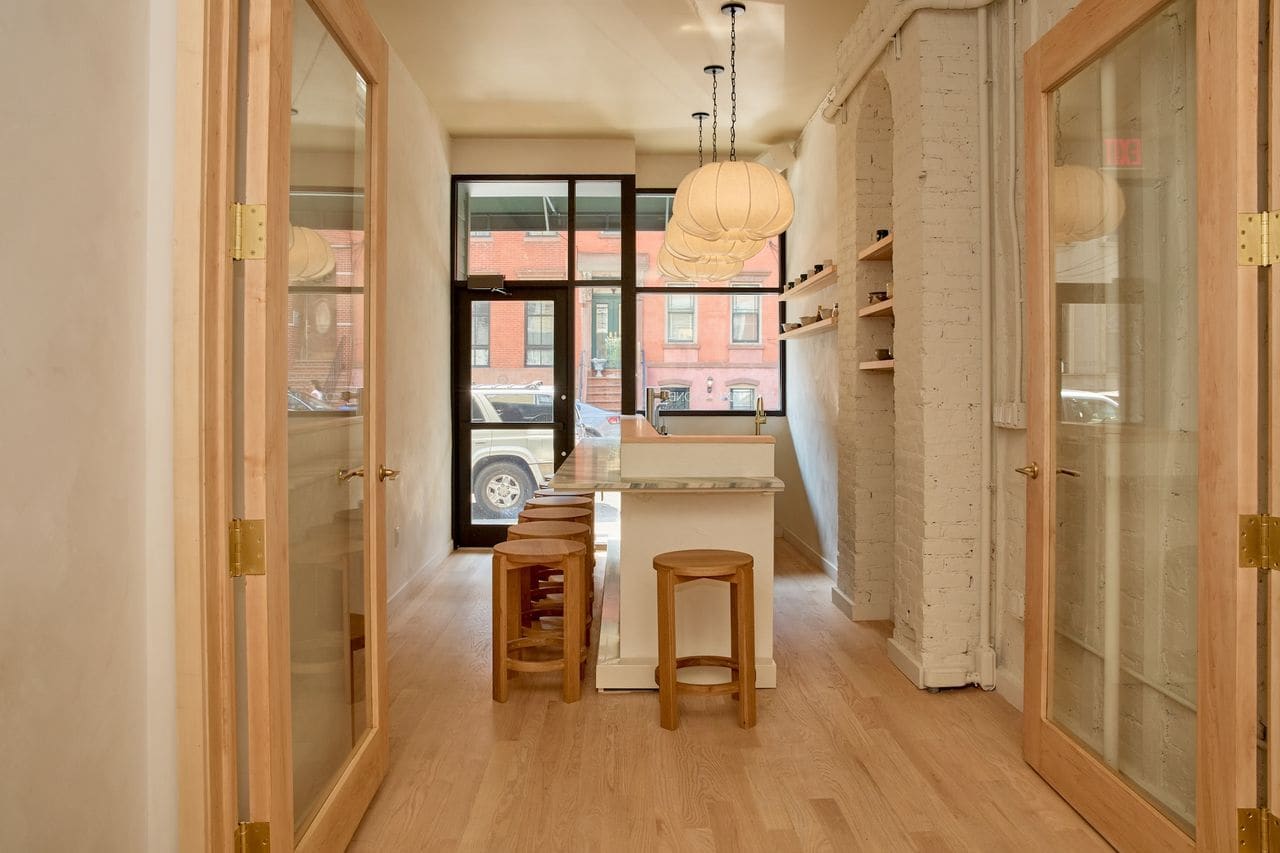
There is a particular kind of quiet that descends when hot water meets powdered tea. Not silence, exactly, but a softening of the edges, a slowing of breath. In Williamsburg, tucked inside Matchaful's recently expanded café, a small room holds space for that quiet. Eight seats. Paper lanterns casting honeyed light. Walls finished in limewash that drinks up the city's hum and gives back only calm.
This is the Ritual Bar, a new addition to the café that opened its original doors in 2024. Where the main space serves matcha to customers on the move, this intimate enclave asks guests to stay awhile. To learn. To watch. To participate in the unhurried choreography of Japanese tea preparation. Hannah Habes, who founded Matchaful, saw an absence in the way most people encountered tea in America: speed without story, consumption without context. The Ritual Bar is her answer.
At Global Chic Voyage, we've watched the fine-dining world embrace omakase, kaiseki, and other ritualised Japanese experiences. But tea, despite its central role in Japanese aesthetics and philosophy, has remained oddly marginalised in the luxury travel conversation. Matchaful's expansion suggests that may be changing.
The Architecture of Slowness
Brooklyn-based firm Now or Never Studio handled the design, weaving the new Ritual Bar seamlessly into the existing café. Founder Jamie McGlinchey approached the project with a philosophy of subtraction rather than addition. Minimal decoration. Natural materials left honest. Maple and oak wood in custom bar stools and floating shelves. A counter hewn from Cipollino Verde marble, its green veining a quiet nod to the tea itself.
The design vocabulary here is wabi-sabi, that Japanese aesthetic that finds beauty in imperfection, impermanence, and incompleteness. Limewash walls bear the marks of application. Wood reveals its grain. Paper pendant lights by Troy Lighting glow softly, their warmth measured rather than bright. McGlinchey speaks of creating space "for the guest to notice" not objects, but qualities: the way daylight shifts across a surface, the texture of shadow, the deliberate movements of hands preparing tea.
It is architecture as backdrop, as frame. The experience, the ritual, remains central.
Learning by Doing
Walk-ins are welcome when classes are not in session, but the Ritual Bar truly comes alive during its reservation-based experiences. Here, a tea educator guides small groups through tastings that trace the geography and cultivation of Japanese tea. Participants learn to whisk matcha themselves, feeling the resistance of powder against water, the gradual transformation into foam.
Habes describes these sessions as storytelling as much as instruction. Where does this particular tea come from? How was it grown, harvested, processed? What role does terroir play in flavour? The questions mirror those asked in wine education, but the sensory experience is softer, more meditative. There is no swirl and spit. Only sip, pause, consider.
The seasonal menu adapts to what is available and appropriate, a recognition that tea, like produce, moves through cycles. This is not commodity matcha sourced from industrial farms but small-lot teas chosen for character and provenance. The care in sourcing, Habes suggests, should be matched by care in preparation and consumption.
Beyond the Bar
The expansion extends outdoors as well. A landscaped patio now offers seating during warmer months, a rare luxury in dense Brooklyn. Later this year, Matchaful will open a matcha grinding room visible through a glass window, where customers can observe the traditional stone-milling technique that transforms tencha leaves into the fine powder used in tea ceremonies.
This transparency, this invitation to witness process, aligns with a broader shift in luxury hospitality. Guests no longer want to be shielded from the kitchen or the workshop. They want to see, to understand, to feel connected to the hands and traditions that shape what they consume. At the Ritual Bar, that connection is not incidental but central to the design.
The ceramics on display come from local artisans, their irregular glazes and hand-thrown forms echoing the wabi-sabi aesthetic. Nothing here is mass-produced. Nothing is rushed.
The Broader Context
Matchaful operates several locations across New York, but the Ritual Bar represents a new direction: slower, deeper, more educational. In an era when even specialty coffee has become a grab-and-go commodity, creating space for ritual feels almost radical. It asks something of the guest, a willingness to disengage from the scroll and the schedule, to be present for the length of a tea service.
This is not a new idea in Japan, where tea ceremony has been refined over centuries into a highly codified art form. But translating that tradition into a contemporary American context requires sensitivity. The risk is either sterile imitation or careless appropriation. Matchaful navigates this by focusing on education and authenticity in sourcing, by making the ritual accessible without stripping it of meaning.
We see parallels in the way certain luxury hotels have begun incorporating tea ceremonies into their programming, particularly properties in Asia where the tradition is indigenous. But in Brooklyn, where the pace is relentless and the aesthetic often industrial, a space like this feels especially necessary. A small rebellion against speed.
What Remains
Habes speaks of wanting guests to "leave feeling more connected," a phrase that could easily slide into wellness cliché but here feels earned. Connection to the tea, yes. To its origins and preparation. But also to the moment itself, to the act of sitting still, to the people across the bar learning the same motions with their own whisks.
The limewash walls will age. The wood will darken. The ceramics may chip. This, too, is part of the philosophy. Beauty that acknowledges time, that does not resist change but incorporates it. In a city that constantly rebuilds, constantly reinvents, there is something quietly subversive about designing for patina, for the slow accumulation of use and memory.
The Ritual Bar is small. Eight seats. But its ambitions are larger: to reframe how we encounter tea in the West, to create space for attention in a culture of distraction, to honour tradition while making it newly relevant. Whether it succeeds will depend not on the design alone but on whether guests are willing to slow down long enough to meet it halfway.
For now, the lanterns glow. The water boils. The whisk moves in practiced circles. And for a few minutes, Brooklyn feels very far away.