The Forgotten Art of the Generous Table
A new volume from Konfekt traces the rituals, courage, and quiet poetry behind inviting people into your home.
The Memory of Welcome
There is a particular kind of warmth that lingers long after the meal has ended. It is not the food itself, though that matters, but the gesture of invitation, the threshold crossed, the moment when a stranger or friend is folded into the intimacy of a home. In Yerevan, a family once served soup with the solemnity of a sacrament, explaining that Armenian tradition demands you offer your last crust to a guest. In Iznik, at a Turkish tile factory, bottles of citrus cologne were passed around before and after lunch, a ritual bookending yogurt and sautéed courgettes. These are the encounters that reveal more than any interview or observation from the outside.
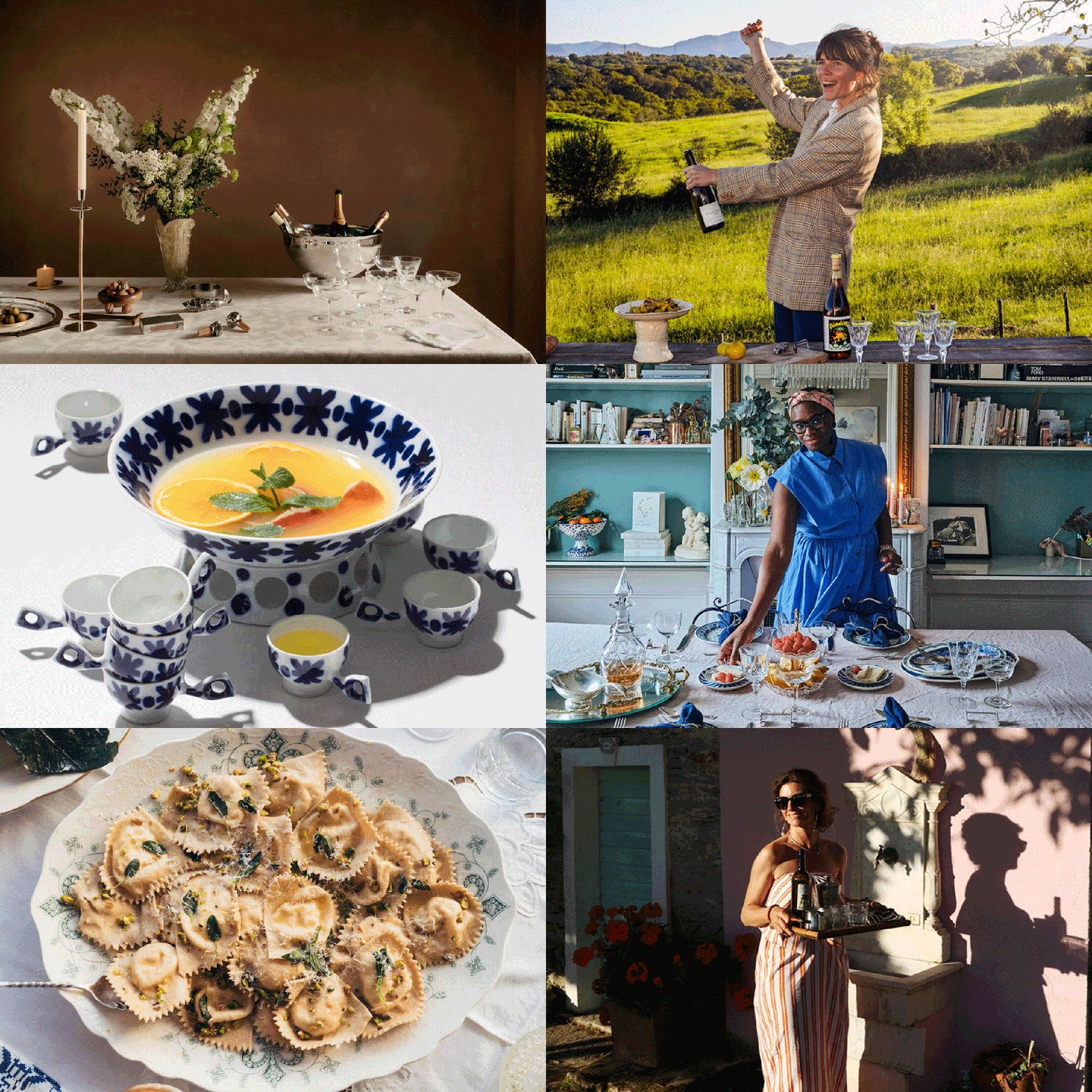
Konfekt has published its first book, a volume dedicated to the practice of hosting. "Konfekt: A Guide to Generous Hosting" is not a manual in the conventional sense, but rather a meditation on what it means to create space for others, to orchestrate an evening or an afternoon where conversation flows and the world outside recedes. The book arrives at a moment when many have forgotten how to gather, or perhaps have never learned, deterred by the unspoken pressure to perform effortlessness.
The Hosts Who Shaped the Form
Hospitality has always been an art practiced by those unafraid to be seen. Joan Didion kept daybooks that catalogued her Easter and Thanksgiving gatherings with the precision of a war correspondent: menus, silverware inventories, recipes for risotto and Sichuan duck. Her guest lists read like a literary who's who, from Nora Ephron to Jacqueline Kennedy Onassis. The table was her stage, and the performance was one of careful orchestration made to look spontaneous.
Photographer Lee Miller approached her Sussex farmhouse dinners with the same surrealist sensibility she brought to her work. She served golden meatloaf shaped like fish and dyed spaghetti blue. In 1974, she devised an entirely white meal to celebrate Man Ray's New York exhibition: salt cod, veal with cauliflower and white rice, vanilla ice cream with lychees. It was a tribute to the white ball she had worked on with Man Ray in Paris in 1930, where images were projected onto dancing guests. These were not dinners but conceptual happenings, food as medium and metaphor.
The tradition of hosting as performance, as philosophy, as a way to distill a moment, runs deep. It creates a forum for ideas or an escape hatch from the quotidian. A friend takes to the piano at the end of the night and plays Nina Simone. Children perform a scene from A Midsummer Night's Dream in a garden crowded with guests on the summer solstice. These are the brief, flickering episodes when the ordinary dissolves and something less tangible takes its place.
The Anxiety and the Invitation
To invite someone into your home is to make yourself vulnerable. There is the fear that they will judge your record collection, notice the dust on the mantel, rifle through the bathroom cabinet. You are laid bare. The expectation, often self-imposed, is that it must all appear effortless, a breezy nonchalance that betrays no effort. This pressure, more than any practical obstacle, deters people from hosting at all.
Yet the act is reciprocal. To invite is to ask for someone's time and trust, a leap of faith that extends in both directions. The best hosts combine an eye for detail with a light touch. They possess resilience, a kind of sang-froid in the face of a blackened tart or curdled custard. They lay a careful scene and then dive in to enjoy it themselves, signaling that however meticulous their preparation, it is the people who matter most.
The book argues that some of the old formalities, the protocols that governed dinner parties and tea ceremonies, are not entirely obsolete. In a fast-paced world dominated by screens and fractured attention, there is something radical about the deliberate act of sitting down together, turning off phones, and engaging in unguarded conversation. Modern manners, the volume suggests, are not about rigid adherence to etiquette but about creating an atmosphere where people feel seen and safe.
The Table as Theater and Refuge
When humans break bread, they are at their most honest. The dining table is where diplomacy unfolds, where opponents strike deals, where resolutions are made and ideas hatched. It is also where friendships deepen, where snatched conversations propped up on kitchen counters or around tables with dripping candles reveal an unvarnished version of yourself.
The book transports readers through a series of gatherings: languid lunches, soirées, picnics, tea ceremonies, and the ritual of the well-mixed Martini. It lingers on the poetry of an elegantly set table, the collective joy of a room alive with energy, and even the pathos of tidying up afterward. There is a recognition that hosting is not about perfection but about generosity, the willingness to open your door and rustle up an omelette for a neighbor or throw a party that spills into the early hours.
Konfekt's guide is a tribute to those who preside over a hot pan while asking about love, life, loss, and the news. These are the hosts who envelop you as soon as you step through the door, who make you feel soothed and inspired not just by their company but by the care they take in creating a moment worth remembering.
The Courage to Convene
There is a memory of childhood gatherings: Sunday lunches with an ensemble of astrophysicists, poets, and professors, peanuts and white wine, Dire Straits playing across flokati rugs. The murmur of dinner parties as a backdrop to sleep, the pile of coats in the corner. These images shape how we understand hospitality, as something both aspirational and deeply personal.
The book is designed to urge the hesitant host to dive in, to embrace the chaos and the beauty of gathering people in one space. It is a recognition that hosting distills a moment, that it creates a version of home and a sense of belonging. The rituals may have changed, the formalities loosened, but the human urge to convene, converse, and care for others remains constant.
In a world that often feels fragmented and hurried, the act of setting a table and lighting candles is a small rebellion. It is an insistence that there is still time, still space, for the kind of connection that happens when you invite someone in and close the door behind them. Konfekt's volume is less a manual than a manifesto, a call to rediscover the forgotten art of the generous table.