Five Designers Reimagine the Art of Living at Sea
Numarine's new Atelier collection proves that yacht interiors can be as distinct as the architects behind them.
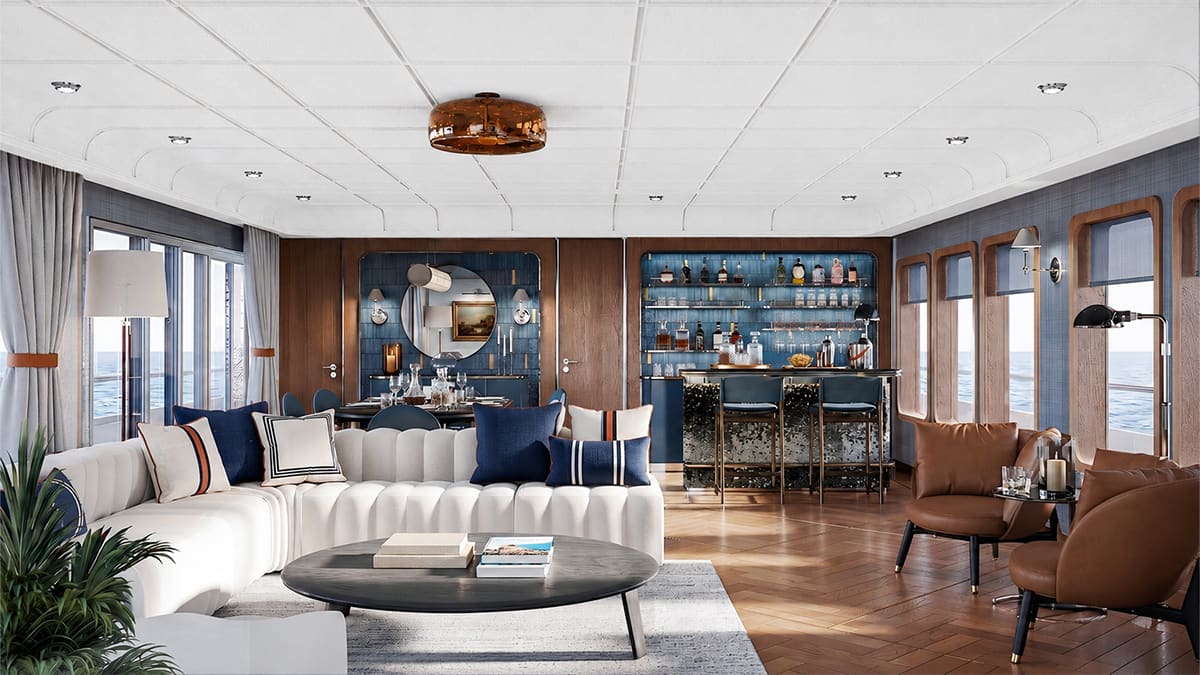
A Canvas for Creative Vision
There is a moment, aboard any well-designed vessel, when the boundaries between architecture and voyage dissolve. Light shifts across polished stone. A curve in the joinery suggests movement even at anchor. The space feels less like a room and more like a proposition: that life at sea might be as varied, as personal, as the cities and studios left behind on land.
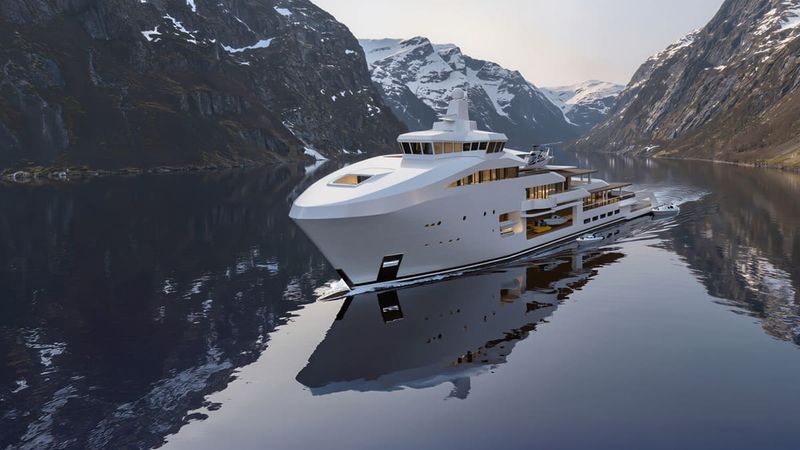
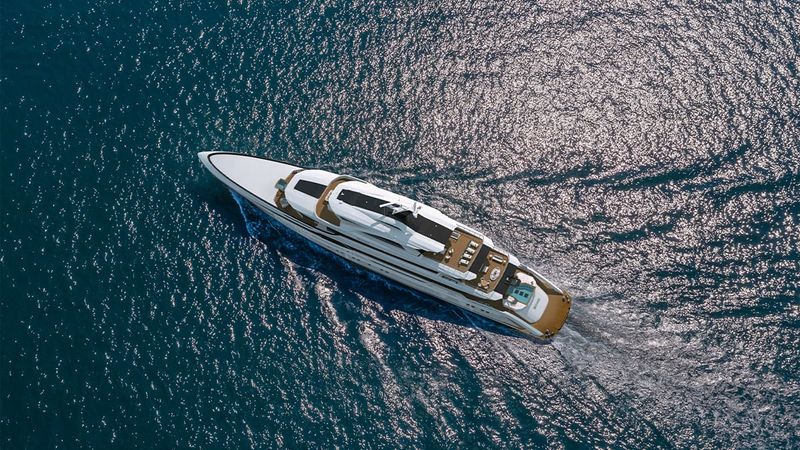
Numarine has invited five designers to explore that proposition through Atelier, a new initiative within its Classic superyacht range. Each studio was given the same hull, the same structural parameters, and asked to translate their sensibilities into interiors that would carry owners across oceans. The results, unveiled this year, read less like variations on a theme and more like five distinct philosophies of luxury, materiality, and repose.
Ofist: Geometry and Restraint
Istanbul-based Ofist approaches the brief with an architect's eye for volume and a sculptor's attention to edge. The main salon is composed in layers: pale oak panels frame darker accents, and seating is arranged to emphasize sightlines rather than symmetry. In the master suite, the bed is flanked by low cabinetry that extends into the walls, creating an unbroken horizontal plane. The effect is calming without being austere, a balance that requires precision in both drawing and execution.
The bathroom continues this discipline. Stone slabs are book-matched and backlit, their veining highlighted but never overstated. Fixtures are minimal, almost invisible, allowing the material itself to anchor the space. It is a design language rooted in Istanbul's layered modernism, where Ottoman spatial traditions meet European restraint.
Sturge & Toth: Warmth Through Texture
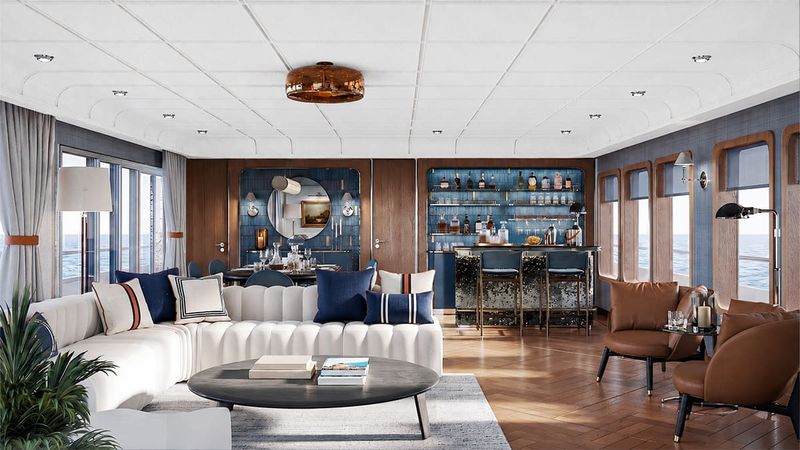
London duo Sturge & Toth take a softer approach, building their interiors around tactility and warmth. The main salon features curved seating upholstered in bouclé, paired with timber paneling in a honey tone that shifts with the light. Brass accents are used sparingly, more suggestion than statement, and the overall palette leans toward earth and sand.
In the bedroom, fabric becomes architecture. A padded headboard extends up and over the bed, creating a canopy effect without the structure. Linen drapery softens the edges of the space, and side tables are integrated into the wall panels, their surfaces wrapped in leather. The bathroom introduces darker stone, almost charcoal, contrasted with pale plaster and matte bronze fittings. It is a study in contrast handled with a light touch, proof that comfort need not announce itself loudly.
Carla Guilhem: Light and Linearity
Brazilian designer Carla Guilhem brings a distinct sense of geometry to the project, drawing on the clean lines and tonal discipline of São Paulo's modernist tradition. Her main salon is defined by vertical paneling in pale ash, punctuated by low-profile furniture and a restrained use of color. Seating is linear, almost architectural, and the space reads as a series of planes rather than discrete elements.
The bedroom continues this logic. The headboard is a single monolithic panel, flanked by recessed lighting that casts an even glow across the walls. Cabinetry is flush-mounted, handles eliminated in favor of push-to-open mechanisms. The bathroom is rendered in white marble with grey veining, the slabs arranged to create symmetry across the central axis. Guilhem's vision is one of clarity and light, interiors that feel expansive even within the confines of a hull.
Vallicelli Design: Romance and Detail
Milan-based Vallicelli Design takes a more ornamental approach, layering pattern, texture, and a richer palette into spaces that feel both intimate and theatrical. The main salon features curved sofas in deep teal, set against walls clad in figured walnut. A custom rug anchors the seating area, its abstract motif echoing the organic forms found in Italian Art Nouveau. Lighting is softer here, more diffused, casting the space in a warm, almost amber glow.
The bedroom is equally considered. The headboard is upholstered in quilted velvet, and the bed is dressed in layers of linen and silk. Side tables are inlaid with brass detailing, and the joinery incorporates subtle curves that soften the angularity of the cabin. In the bathroom, marble is paired with mirrored panels and antique brass fixtures, creating a space that feels both classic and contemporary. Vallicelli's interiors are unabashedly decorative, a reminder that luxury can be expressive without tipping into excess.
A Fifth Vision
The collection includes a fifth design, though its details remain less widely circulated. What is clear is that Numarine has positioned Atelier not as a fixed offering but as an evolving platform, one that allows prospective owners to engage with a range of aesthetic sensibilities before committing to a direction. This approach reflects a broader shift in the superyacht sector, where customization is no longer a premium add-on but an expectation built into the design process from the outset.
The Case for Pluralism
What distinguishes Atelier from other custom yacht programs is not the level of finish, which is consistently high across the industry, but the deliberate embrace of stylistic diversity. Rather than presenting a house style with minor variations, Numarine has ceded creative control to designers whose practices are rooted in different cities, different material cultures, and different ideas about what constitutes comfort at sea.
This pluralism matters. It signals a recognition that yacht ownership, at this level, is as much about self-expression as it is about engineering or seaworthiness. The choice between Ofist's restraint and Vallicelli's ornamentation is not a question of better or worse, but of alignment between owner and designer, between the life imagined and the space that will contain it.
What It Reveals
Atelier also offers a glimpse into how luxury is being redefined in the yacht world. The emphasis is less on opulence for its own sake and more on coherence, on the integrity of a design vision carried through from concept to execution. Materials are chosen not for their price but for their contribution to a larger narrative. Details are considered, not simply applied.
This shift is partly generational. Younger buyers, many of whom have made their fortunes in technology or finance, bring different expectations to the process. They are less impressed by gilt and more interested in provenance, in the story behind the stone or the timber, in the designer's philosophy and how it intersects with their own. Numarine's decision to work with a diverse roster of studios, each with a distinct voice, reflects this evolving sensibility.
Beyond the Renderings
Of course, renderings are one thing; built spaces are another. The true test of Atelier will come when these interiors are realized, when the materials specified in Istanbul, London, São Paulo, and Milan are sourced, fabricated, and installed within the constraints of a moving vessel. Yachts are unforgiving environments. Humidity, motion, and salt air demand precision in detailing and a deep understanding of how materials perform over time.
Yet the ambition behind Atelier is worth noting. It represents a commitment, on Numarine's part, to treat interior design not as an afterthought but as a central component of the yacht's identity. The success of the program will depend not only on the quality of the finished interiors but on the degree to which they remain true to the designers' original visions, even as they are adapted to the demands of life at sea.
For now, Atelier stands as a compelling proposition: that a yacht can be as personal, as considered, and as varied in its expression as the architecture we inhabit on land. And that the journey between ports might be as important as the destinations themselves.