Fitzrovia's Newest Omakase Trades Fish for Fire
At Wagyu Yakiniku Ushio, London learns that not all omakase comes from the sea, and not all wagyu arrives heavy with fat.
A Different Kind of Omakase
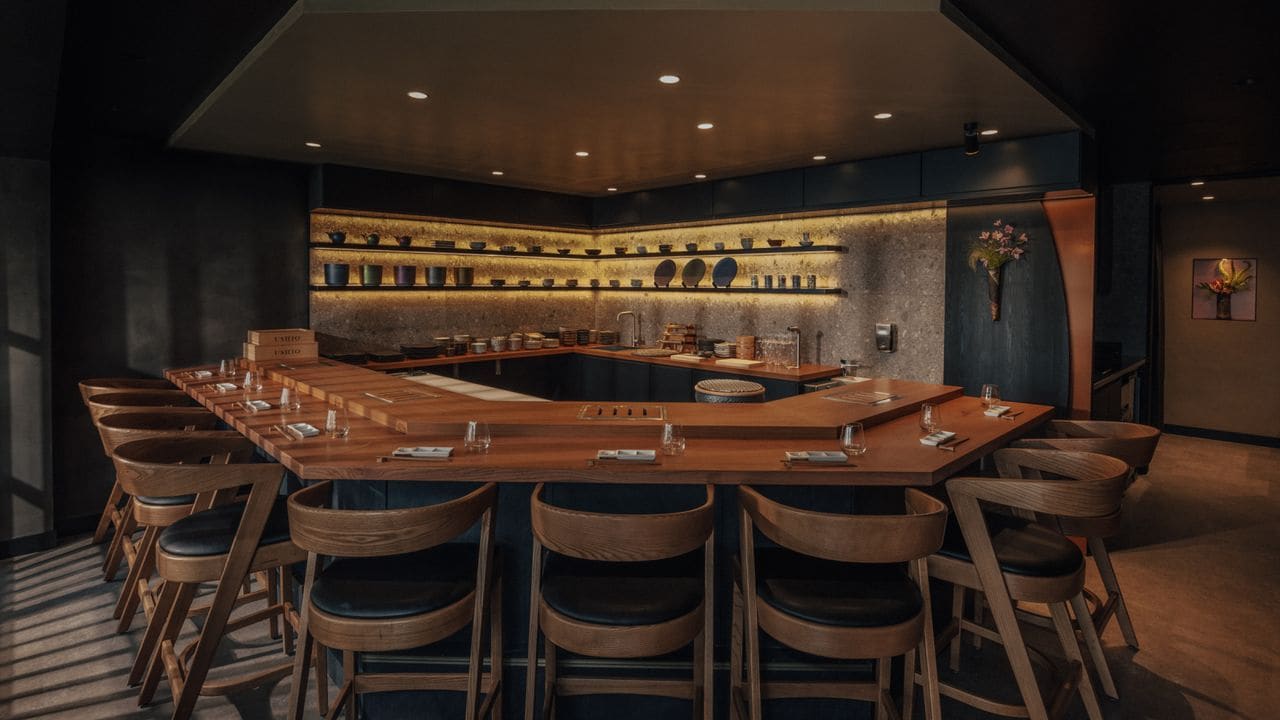
The counter stretches in an L, chefs moving behind it with the same studied economy you might find in a sushi bar. But there is no fish here. No toro, no uni, no delicate slices of hirame resting on vinegared rice. Instead, the grill hisses. Fat renders. Beef, cut thin and scored lightly, takes on colour in seconds before it is lifted, turned, and plated on ceramic that has travelled further than most of the diners.
Wagyu Yakiniku Ushio, which opened in Fitzrovia in early September, is London's introduction to a style of omakase that revolves entirely around beef. The restaurant is the first European location for Ushio Haruyoshi Bettei, a Fukuoka establishment on the island of Kyushu, and it arrives with a specific thesis: that wagyu need not mean the marbled, fatty cuts that have become shorthand for luxury. Here, the focus is akami, lean wagyu, higher in protein and lighter on the palate, a style that runs counter to much of what the city has come to expect from Japanese beef.
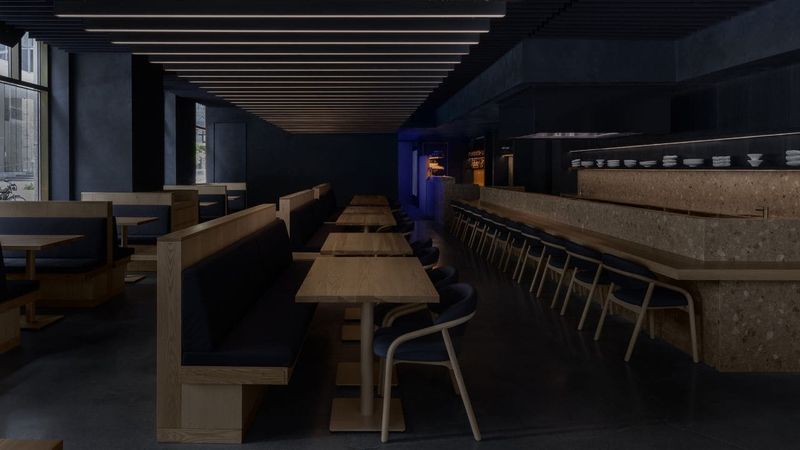
Chef-owner Hakusei Chin has replicated the Fukuoka original in materials and mood. Natural wood, stone, plaster. A backlit shelf behind the counter holds ceramics from Arita, the Kyushu town where Japan's first porcelain was fired four hundred years ago. Some pieces are Ko-Imari, the heavily decorated export ware that flooded European markets in the seventeenth century. Others come from Lin, a contemporary range glazed to a metallic sheen. Vases holding seasonal flowers are the work of ceramicist Taeko Kajihara, who builds each piece by hand rather than throwing it on a wheel.
The chefs, like the beef and the ceramics, have been brought from Japan. Conversation across the counter is minimal, though not unfriendly. The staff move with precision, and the sommeliers pour saké with the same quiet attentiveness. There is no signage on the exterior, nothing to announce the restaurant's presence to Charlotte Street. Inside, however, the space feels calm rather than cold, focused rather than austere.
The Ritual of Fire
Each course arrives with a small card, the relevant cut stamped onto an illustrated diagram of a cow. It is a practical gesture, but it also frames the meal as a study, a progression through anatomy. The first course is top blade, served raw in the style of sashimi. The meat is pale pink, lightly scored, faintly marbled. It looks almost like fatty tuna, garnished with a shiso leaf, but the flavour is unmistakably beef, rich with umami that lingers long after the bite.
The remaining cuts are cooked, though only just. The chefs sear each piece for seconds on the grill, flip it, and plate it immediately. One arrangement brings a trio of tongue, tenderloin, and kurimi, lean shoulder, seasoned simply with salt. Another features top blade brushed with tare, the glaze adding a faint sweetness that does not overpower the meat. The richest dish in the omakase is sirloin, seared with sukiyaki marinade and presented with an egg yolk and a small dome of steamed rice. It is the closest the meal comes to indulgence, though even here the cut remains lean, the fat rendering quickly in the heat.
This is not the wagyu that melts on the tongue, the kind that can feel cloying after a few bites. Ushio's beef is lighter, cleaner, and the result is a meal that does not leave you heavy. It may, however, leave you still hungry. The portions are restrained, as is common in omakase dining, and the lack of fat means the satiety that usually accompanies beef arrives more slowly, if at all.
For those still wanting more, there is a Fukuoka-style wagyu curry, made with slow-cooked beef tendon and served with a wooden spoon. The sauce is thick, gravy-like, and deeply comforting in a way the rest of the meal is not. It is unsophisticated by design, a contrast to the refinement that precedes it, and it works.
The Question of Distance
There is an argument to be made about air miles. The beef is flown from Japan. The chefs are flown from Japan. The ceramics, too. In an era when sustainability conversations have moved from fringe to mainstream, Ushio's model feels like a deliberate rejection of localism. The restaurant does not apologise for this. Instead, it leans into the idea of niche authenticity, the belief that certain experiences cannot be replicated without importing not just ingredients but context.
Whether that trade-off is worth it depends on what you value. The beef is exceptional, the skill evident, the ceramics beautiful. But the meal also raises questions about what it means to bring a dining experience across continents intact, and whether the integrity of a tradition justifies the carbon cost of its transport.
The Counter as Theatre
Omakase, whether centred on fish or beef, is as much about theatre as it is about food. The diner sits, watches, receives. The chef selects, prepares, presents. At Ushio, that dynamic is preserved, though the pace is different. Beef cooks faster than fish is sliced, and the rhythm of the meal feels quicker, more urgent. There is less time for contemplation between courses, less space for conversation.
The lack of dialogue between chef and diner is partly a language barrier, but it also seems intentional. Chin has said that the quality of the ingredients and the skill of the chef should speak for themselves, and the space has been designed to support that philosophy. The counter is the focal point, the act of cooking the centre of attention. Everything else, the ceramics, the lighting, the minimal décor, recedes.
It is a bold stance in a city where dining has become increasingly conversational, where chefs are expected to narrate their menus and engage with their guests. Ushio opts out of that expectation, and the result is a meal that feels more meditative, more interior. You are left to your own thoughts, your own observations, your own conclusions about what you are tasting.
What London Learns
London has spent the past decade absorbing Japanese dining culture in waves. First ramen, then izakaya, then high-end sushi. Each wave has brought its own vocabulary, its own rituals, its own hierarchies of quality. Ushio represents another chapter in that education, one that asks diners to reconsider their assumptions about wagyu, about omakase, about what a meal at a counter should feel like.
The restaurant will not be for everyone. The portions are small, the prices are high, and the experience is quiet in a way that can feel either serene or distant, depending on your mood. But for those willing to meet it on its own terms, Ushio offers something London has not had before: a chance to taste wagyu the way Fukuoka does, lean and clean and cooked over fire, in a space that privileges focus over spectacle and precision over conversation.