A Trail Through Emilia-Romagna's Ancient Cheese Houses
In northern Italy's dairy heartland, Parmigiano Reggiano is more than a cheese - it's a living manuscript of place, patience, and craft passed down through centuries.
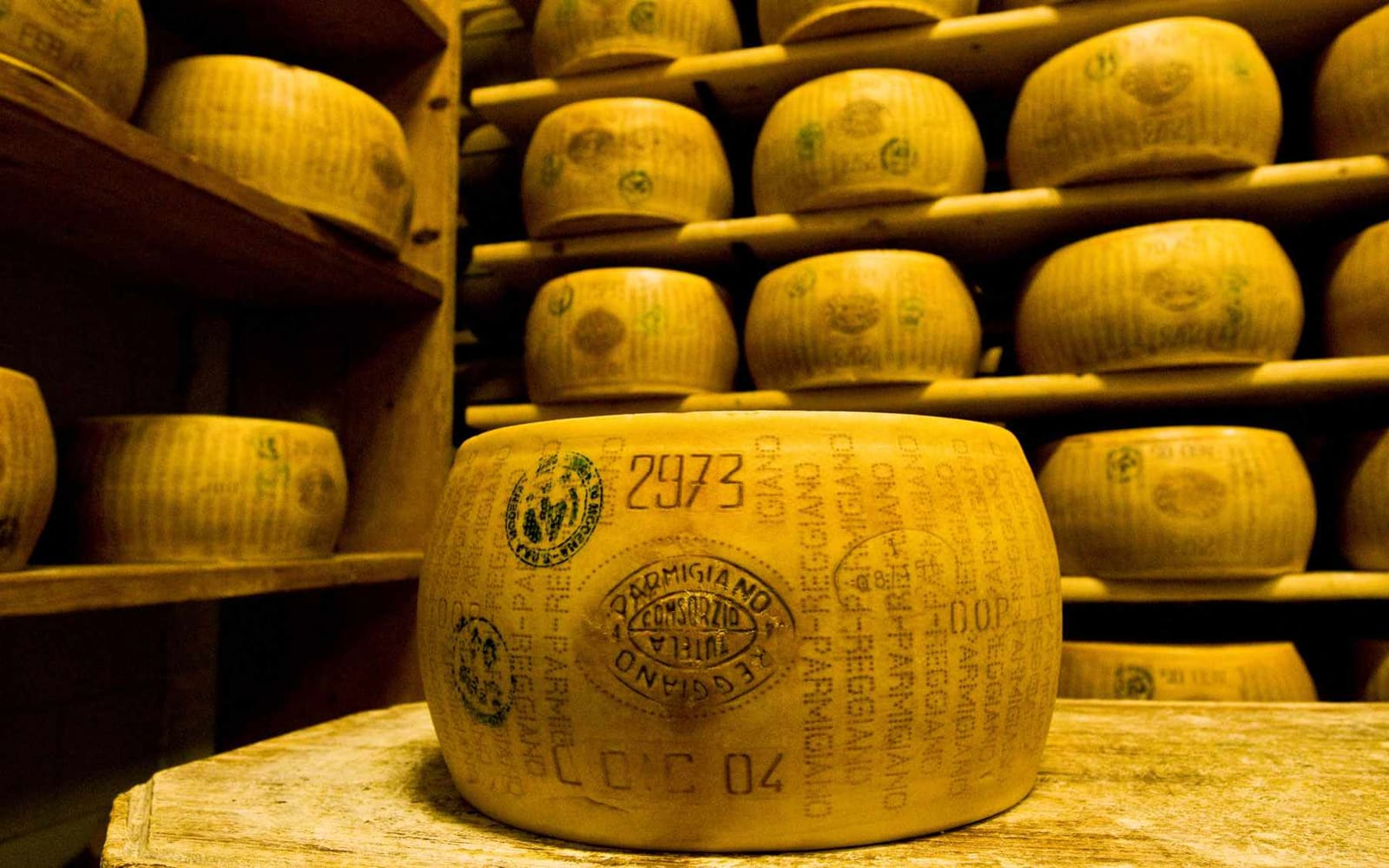
A Cathedral of Wheels
The air in the aging room smells faintly of hay and time. Rows of Parmigiano Reggiano wheels, each stamped with the month and year of its birth, rest on wooden shelves that climb toward vaulted ceilings. In the half-light filtering through high windows, the space feels less like a warehouse and more like a library - one where knowledge is stored not in books but in the slow crystallization of milk into something that tastes, unmistakably, of this particular valley, this particular season, this particular herd.
At Global Chic Voyage, we've long believed that the most revelatory journeys are those that follow a single thread deep into a landscape. In Emilia-Romagna, that thread is often edible. The region that gave the world balsamic vinegar, prosciutto di Parma, and mortadella also cradles the production zone for Parmigiano Reggiano, a cheese governed by rules so strict they make French appellation law look casual. To travel the Parmigiano trail is to step into a system where medieval practice meets contemporary rigor, where every wheel tells a story of terroir as clearly as any Barolo.
The Geography of Flavor
Parmigiano Reggiano can only be made in five provinces: Parma, Reggio Emilia, Modena, and parts of Bologna and Mantua. The boundaries are not arbitrary. They trace the contours of a microclimate, a particular geology, a tradition of dairy farming that stretches back to Benedictine monks in the twelfth century. The cows - mostly Italian Friesians, with some Red Reggiana and Modenese breeds - graze on grasses and legumes specific to the Po River plain. Their milk, rich in casein and low in water, is uniquely suited to the long aging that defines the cheese.
What strikes you, traveling from caseificio to caseificio, is how little has changed. The production method remains almost identical to the one codified nine hundred years ago: raw milk from two milkings, natural whey starter, copper cauldrons heated over open flame, wheels formed by hand and submerged in brine for weeks before being moved to the aging rooms. No additives, no shortcuts, no compromises. The Consorzio del Formaggio Parmigiano Reggiano, the consortium that protects the designation, inspects every wheel at twelve months. Those that fail the tap test - a trained ear can hear structural flaws in the sound - are stripped of their marks and sold as generic grana.
The Rhythm of the Dairy
Most dairies welcome visitors, though the experience is far removed from the polished tasting rooms of Napa or Bordeaux. You arrive early, often before dawn, because cheesemaking begins when the night milk is combined with the morning's yield. The casaro, the master cheesemaker, works with a certainty that comes from repetition. He knows by touch when the curd is ready to break, by sight when it has cooked long enough in the whey. Two wheels emerge from each cauldron - together they represent roughly 550 liters of milk and will weigh about 40 kilograms each once aged.
The dairies we return to are often small, family-run operations where three generations work side by side. In these places, the connection between land and product is visceral. The same family that milks the cows also makes the cheese, ages it, and often sells it from a small shop attached to the dairy. You taste the difference. A wheel aged twenty-four months from a single-herd dairy in the Apennine foothills has a complexity - notes of dried fruit, grass, a faint nuttiness - that mass-produced versions, however good, cannot replicate.
Beyond the Wheel
The Parmigiano trail is also a journey through one of Italy's most quietly elegant regions. Between dairy visits, the route unfolds through landscapes that shift from the flatlands around Parma to the gentle hills near Reggio Emilia, where medieval castles overlook patchwork fields. The towns themselves - Scandiano, Castelvetro, Carpi - are hardly on the grand tour, but they hold their own rewards: frescoed churches, Renaissance loggias, piazzas where the evening passeggiata still dictates the rhythm of life.
Food, inevitably, becomes the organizing principle. Lunch might be a platter of culatello and a wedge of forty-month Parmigiano at a trattoria in Langhirano. Dinner could be tortelli di zucca - pumpkin-filled pasta - finished with a shower of grated cheese and butter that has been browned to the edge of caramel. In Emilia-Romagna, Parmigiano is not a garnish but a foundational ingredient, the umami backbone of dishes that define the regional table.
The agriturismi scattered through the production zone offer another layer of immersion. These working farms, many of which produce Parmigiano themselves, provide lodging that places you inside the agricultural calendar. You wake to the sound of milking, breakfast on ricotta made from the previous day's whey, and fall asleep in rooms that smell faintly of wood smoke and grass. It is hospitality rooted in function, not performance - a kind of luxury that has nothing to do with thread count and everything to do with proximity to the source.
The Language of Aging
Time is the variable that most profoundly shapes Parmigiano. A wheel aged twelve months is creamy, mild, approachable. At twenty-four months, it develops structure - a granular texture, a deeper savory note. Thirty-six months brings complexity: crystalline pockets of concentrated flavor, a balance of sweet and umami that lingers. Wheels aged beyond forty months become something else entirely - drier, more intense, shot through with crunchy tyrosine crystals that pop on the tongue.
To taste a vertical flight of Parmigiano from the same dairy, each wheel separated by a year or more of aging, is to understand cheese as a temporal art. The wheels are genetically identical, made by the same hands from the same herd's milk, yet they diverge as they age, each developing its own personality within the constraints of tradition. It is a reminder that great food is rarely the result of innovation alone; more often, it emerges from patient adherence to a set of principles refined over centuries.
A Living Tradition
What keeps the Parmigiano system alive is not nostalgia but economic and cultural will. The consortium enforces standards that protect both quality and market value. The designation is fiercely defended - counterfeits labeled "parmesan" flood global markets, but true Parmigiano Reggiano, with its fire-branded rind and dotted lettering, remains distinct. For the dairies, especially the smaller ones, the Protected Designation of Origin status is both a badge of honor and a survival strategy in an era of industrial food production.
Yet the challenges are real. Younger generations are less inclined to take up the demanding, early-morning work of cheesemaking. Climate shifts affect the grasses the cows graze, subtly altering milk composition. The export market, while lucrative, exerts pressure to scale up in ways that can compromise artisanal methods. Walking through the aging rooms, listening to the casari talk about their work, you sense both pride and a quiet anxiety about the future.
Still, for now, the trail endures. The dairies continue their daily alchemy, transforming milk into wheels that will be cracked open years hence, in kitchens and restaurants far from the Po Valley. And for travelers willing to slow down, to follow the scent of whey and brine into the heart of Emilia-Romagna, the reward is a kind of knowledge that cannot be gleaned from a wedge purchased at a market, no matter how fine. It is the knowledge of origin - of how a landscape, a history, and a community conspire to create something singular, something that tastes, unmistakably, of here.