The Domestic All-Inclusive Resort Is Finally Coming Into Its Own
From Gilded Age lodges in the Adirondacks to working cattle ranches in Montana, the American take on flat-rate hospitality looks nothing like its Caribbean counterpart
A Different Kind of Calculation
There is a particular relief in knowing, before you've even unpacked, exactly what your week will cost. No mental arithmetic over the second glass of wine at dinner. No surprise resort fees that materialize at checkout like unwelcome houseguests. The all-inclusive model, for all its associations with poolside mediocrity, offers something increasingly rare in luxury travel: the freedom to stop counting.
At Global Chic Voyage, we've watched the format evolve over the past decade, particularly on American soil. Where the Caribbean built its reputation on sun-and-sand sameness, a handful of properties across the United States have quietly been writing a different script. These are places where the flat rate buys you access not to a generic tropical fantasy but to something rooted in geography, season, and culture. A Victorian castle perched above a glacial lake in the Hudson Valley. A former Rockefeller hunting lodge where black-tie dinners still happen on Saturdays. A working cattle ranch where your morning involves moving livestock and your evening ends in a canvas tent under Montana stars.
The distinction matters. Because when the all-inclusive model is done well, it stops being about value engineering and starts being about immersion. You're not budgeting your way through an itinerary. You're living, for a few days, inside a particular vision of American landscape and hospitality.
When the Castle Includes Breakfast
Mohonk Mountain House sits on the edge of a private lake in New York's Shawangunk Mountains, and it has been receiving guests since 1869. The silhouette is pure Victoriana: turrets, gables, and stone walls that look like they were lifted from a Romantic painting of the Alps. Inside, the aesthetic leans Arts and Crafts, all dark wood and stained glass, with rooms that feature working fireplaces and claw-foot tubs positioned to frame views of forested ridgelines.
The property includes three meals daily, and the breakfast buffet alone justifies the drive from New York City. Belgian waffles with caramelized bananas. Afternoon tea with cookies delivered on tiered trays. The rate also covers 85 miles of hiking trails, a nine-hole golf course, an indoor pool, and access to boats on the lake. What it does not include is alcohol or spa treatments, which keeps the atmosphere family-friendly without tipping into rowdiness.
What makes Mohonk compelling is not the breadth of its offerings but the coherence of its vision. This is not a resort attempting to be all things. It is a 19th-century mountain retreat that has simply continued being itself, with enough self-assurance to skip the overhaul.
The Adults-Only Answer to the Keys
Bungalows Key Largo opened in 2019, burned three months later, and reopened with the kind of resolve that suggests the owners understood exactly what they were building. The property occupies 12 waterfront acres on the bay side of the Overseas Highway, and every one of its bungalows comes with a private outdoor soaking tub and unobstructed water views.
The adults-only policy is enforced not out of snobbery but out of design philosophy. This is a place for couples who want to paddleboard at dawn, nap at noon, and drink mezcal at sunset without navigating the emotional weather of other people's children. The all-inclusive rate covers meals at multiple restaurants, premium spirits, non-motorized watersports, daily yoga, and use of the fitness center.
It is, in many ways, the domestic stand-in for a Caribbean escape. The difference is that you can drive here from Miami in an hour, and the aesthetic skews more coastal bohemian than resort generic. Teak furniture, linen upholstery, and a color palette pulled from the surrounding mangroves and sky.
The Adirondacks, Still in Black Tie
The Point was built in the early 1930s by William Avery Rockefeller II as a private hunting lodge, and it remains one of the last surviving Great Camps still operating as a hotel. The property has 11 rooms, 75 private acres on the shores of Upper Saranac Lake, and a dress code that requires black tie on Wednesday and Saturday evenings.
This is not performative nostalgia. The Point simply continues to operate as though the Gilded Age never ended, which means communal dining in a great hall with a stone hearth, vintage Hacker-Craft boats for summer cruises, and staff who will deliver a to-go mug of your preferred coffee blend when your car is brought around for departure.
The all-inclusive rate covers gourmet meals, afternoon tea, wine and spirits, and use of all sports equipment, from kayaks to tennis rackets to ice skates. In winter, guests have been known to go inner-tubing down snowbanks in evening wear, which tells you most of what you need to know about the prevailing attitude toward decorum.
There is almost no Wi-Fi. Guests tend to become friends. And the kitchen will make you a grilled cheese at midnight if you wander in and ask.
Vermont, With a Side of Jasper Johns
Twin Farms occupies an 18th-century farmhouse in southern Vermont that once belonged to Sinclair Lewis, and it has since expanded to include 28 accommodations scattered across 300 acres of maple and pine forest. The property is adults-only, Relais & Chateaux accredited, and functions less like a hotel than like a private estate you've been invited to borrow.
Every stay is customized. Your room is selected based on your aesthetic preferences. The art on the walls, which includes pieces by David Hockney and Jasper Johns, is curated to match. Your food preferences are noted in advance, and the chef adjusts menus accordingly, drawing from Vermont produce, meats, and dairy.
The all-inclusive rate covers all meals, including forest picnics, as well as fine wine, spirits, cocktails, and activities that range from downhill skiing on the property's own trails to canoeing on Copper Pond. There is a guide available for walks through the woods, a chauffeur for local outings, and someone who will bring you milk and cookies at any hour.
What Twin Farms understands is that true luxury is not about abundance. It is about specificity. The ability to anticipate preference before it becomes request.
Montana, Without the Dude Ranch Clichés
Paws Up occupies 37,000 acres in the Blackfoot River Valley, and it is still a working cattle ranch. Guests can spend the morning moving livestock down the valley and the afternoon soaking in a private hot tub outside a glamping tent that comes with heated floors, king beds, and views that stretch to the horizon.
The property attracts multigenerational families and couples looking for an active retreat, and the all-inclusive rate covers three daily meals, beer and wine with lunch and dinner, round-trip airport transfers from Missoula, gratuities, and a long list of activities that includes tennis, pickleball, mountain biking, snowshoeing, and pony rides.
What sets Paws Up apart is its refusal to soften the landscape. This is not a sanitized version of the West. It is the actual thing, complete with wildlife sightings, unpredictable weather, and the kind of silence that takes a few days to adjust to if you've been living in a city.
The dining is refined without being fussy. Local ingredients, preparations that respect the region's ranching heritage, and enough flexibility to accommodate dietary preferences without making a production of it.
Sedona, in Pursuit of Transformation
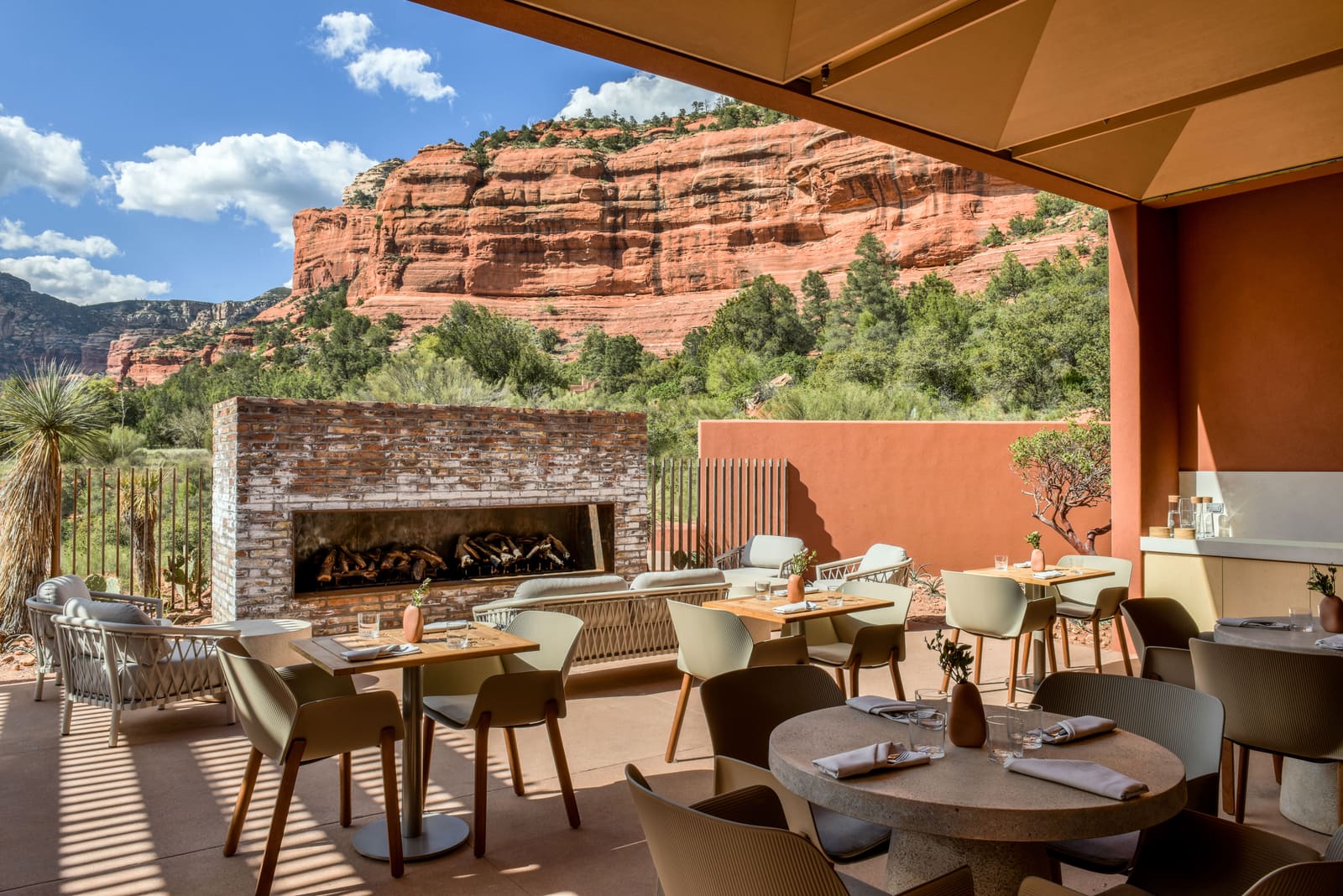
Mii Amo sits within Boynton Canyon, a site long associated with spiritual and healing energy, and the property leans into that reputation without veering into New Age parody. The recently revamped sanctuary features 23 rooms and suites, a two-story movement and fitness studio, a culinary garden that supplies the on-site restaurant, and a refreshed outdoor pool.
The minimum age is 16. The vibe is serene to the point of enforced quiet. And the all-inclusive rate covers accommodations, three daily meals (alcohol excluded), a daily spa credit or treatments, fitness and movement classes, and access to more than 100 weekly activities and workshops that range from guided meditation to canyon hikes.
What Mii Amo offers is not relaxation in the passive sense but transformation in the active one. You are expected to show up, participate, and leave slightly different than you arrived. The red rock landscape does most of the heavy lifting, but the programming provides structure for those who need it.
Why the Model Works Here
The American all-inclusive succeeds when it stops trying to replicate the Caribbean template and starts building from the ground up. What these properties share is not a formula but a commitment to place. They are expensive, yes. But the cost buys you more than convenience. It buys you immersion in a particular landscape, a particular history, and a particular way of moving through the world, even if only for a few days.
At Global Chic Voyage, we've noticed that the travelers drawn to these properties are not the ones chasing the best deal. They are the ones willing to pay for coherence. For the assurance that every detail, from the art on the walls to the vegetables on the plate, has been considered. That the experience will not be interrupted by nickel-and-dime charges or the nagging sense that they should be somewhere else, doing something else, spending differently.
The domestic all-inclusive, when done right, offers something increasingly hard to find in travel: the permission to stay put. To stop optimizing. To let the days unfold without a spreadsheet in the back of your mind. And that, more than any amenity or activity, is worth the splurge.