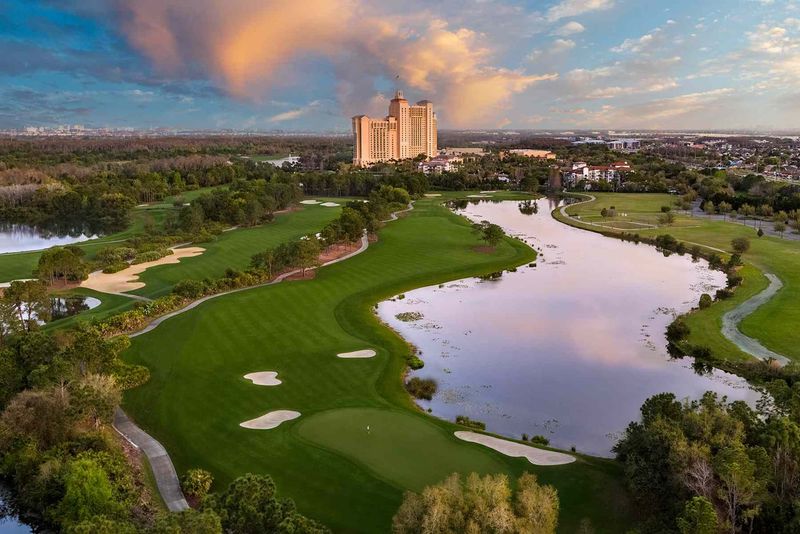
Where the Fairways Meet the Horizon: America's Most Compelling Golf Retreats
From volcanic slopes to barrier islands, the courses we return to blend championship design with a deeper sense of place.
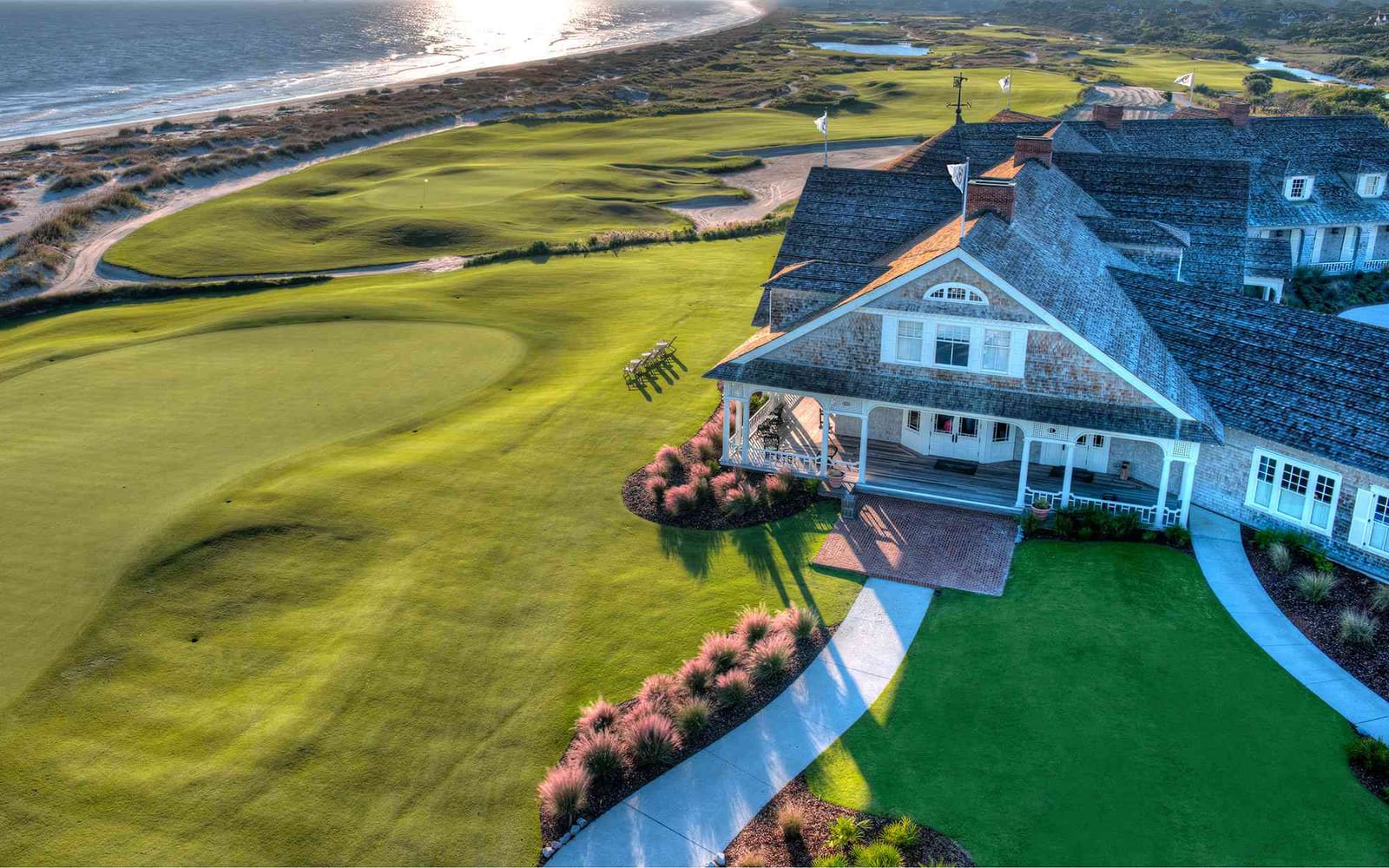
The Sound of a Well-Struck Iron
There is a particular quiet that settles over a links-style fairway in the minutes before sunrise, when the grass is still damp and the light has not yet burned through the marine layer. At Global Chic Voyage, we've learned to recognize that quiet as a kind of luxury in itself: the unhurried cadence of a round played not for competition but for the pleasure of being somewhere singular, somewhere that rewards both the game and the gaze.
The resorts we return to year after year understand this duality. They are places where the architecture of the course converges with the architecture of the landscape, where a well-placed bunker is as much about sightlines as strategy, and where the clubhouse feels less like a trophy case and more like a considered extension of the region it inhabits. What follows is not an exhaustive inventory but a curated selection: fifteen properties across the United States that have earned their place through a combination of design integrity, environmental context, and an attention to the rituals that make golf travel memorable.
The Pacific Arc: Volcanic Slopes and Coastal Drama
Hawaii's golf resorts benefit from a geological theatre few other destinations can match. Courses carved into lava fields or perched above the Pacific deliver a kind of drama that feels both ancient and immediate. The challenge here is not merely technical but perceptual: how to concentrate on a delicate approach shot when the horizon stretches unbroken to the west, or when a green is framed by the dark geometry of cooled basalt.
The best Hawaiian properties balance this spectacle with restraint. Fairways follow natural contours rather than imposing grids. Native plantings soften cart paths. Clubhouses adopt materials and proportions that defer to the landscape rather than dominate it. In our experience, the courses that endure are those that treat the volcanic canvas as a collaborator, not a backdrop.
The Southern Corridor: Pine, Sand, and Architectural Legacy
The American South has long been the crucible of golf resort culture, and for good reason. The coastal plains of Georgia and the Carolinas offer sandy soils that drain quickly, temperate climates that permit year-round play, and a depth of design history that includes some of the discipline's most influential architects. Here, the conversation is as much about lineage as it is about layout: which courses bear the imprint of Donald Ross, which have been sensitively restored, which have resisted the urge to lengthen and toughen in favor of strategic subtlety.
Southern golf resorts also tend to excel at the adjacencies: the quality of light in the grill room, the cadence of service that feels attentive without being intrusive, the small gestures that signal an understanding of tradition without calcifying into formula. We've found that the properties worth returning to are those that honor their design heritage while evolving their hospitality to meet contemporary expectations of comfort and craft.
Desert Geometry: Precision Amid Arid Beauty
The desert resorts of Arizona and Southern California present a different proposition entirely. Here, the course becomes a study in contrast: emerald fairways against ochre stone, the geometric precision of irrigation against the chaotic beauty of saguaro and cholla. Water, always a consideration in golf, takes on moral as well as aesthetic weight. The resorts that navigate this tension most successfully are transparent about their environmental practices, employing reclaimed water, drought-tolerant grasses, and design strategies that minimize turf in favor of native desert floor.
What we admire in these properties is their willingness to let the desert be the desert. The best courses do not attempt to cosplay as Augusta in the Sonoran. They embrace firm, fast conditions. They route holes through arroyos and around outcroppings. They build clubhouses that shade and ventilate rather than air-condition into submission. The result is a golf experience that feels site-specific, even radical, in its refusal to homogenize.
Mountain Enclaves: Elevation and Intimacy
Golf at altitude introduces variables that flatter long hitters and humble those accustomed to sea-level yardages. But the mountain resorts of Colorado, Montana, and the Pacific Northwest offer compensations beyond carry distance. Courses here tend to occupy valleys or plateaus that feel removed from the churn of daily life. The air is thinner, yes, but also clearer. The social rhythms are slower. The après-golf culture borrows as much from ski lodges as from traditional country clubs.
We've observed that mountain golf resorts often attract a clientele less interested in bragging rights than in immersion: families who return annually, groups who value the quality of conversation as much as the quality of the greens. The properties that thrive in these settings are those that understand hospitality as stewardship, that invest in trails and fly-fishing and farm-to-table dining as integral to the experience as the tee sheet.
The Midwest and Beyond: Hidden Depth
It would be a mistake to overlook the interior. The Great Lakes region, the upper Midwest, and even the plains states harbor resorts that punch well above their weight in terms of design ambition and hospitality polish. These are properties that often benefit from a kind of regional humility, a lack of pretense that translates into warm service and courses that prioritize playability over punishment.
What distinguishes the best of these resorts is a commitment to craft. Greens complexes are thoughtfully contoured. Bunkering is strategic rather than penal. Routing takes advantage of natural topography without requiring heroic earthmoving. And because these properties are less burdened by the mythology of coastal golf, they are often freer to innovate, to experiment with maintenance practices, to engage with their local communities in ways that feel genuine rather than performative.
The Calculus of Return
At Global Chic Voyage, we've come to think of golf travel not as a series of bucket-list checkmarks but as a practice of return. The courses we recommend are those we would play again, not because they demand to be conquered but because they reward repeated attention. Each round reveals new layers: a subtlety of green contouring that only becomes apparent after multiple visits, a strategic option that opens up as one's understanding of the wind patterns deepens, a view that shifts with the seasons and the quality of light.
The resorts that anchor these experiences understand that luxury in golf is not about gilding but about coherence: the alignment of course design, environmental setting, culinary program, and service culture into a unified whole. It is the difference between a collection of amenities and an actual point of view. The properties that earn our loyalty are those that possess the latter, that articulate a clear vision of what golf travel can be when it is pursued with intention and care.
An Invitation to Slow Down
Perhaps the greatest gift of a well-conceived golf resort is permission to decelerate. The game itself imposes a rhythm that resists compression: you cannot hurry a round without diminishing it. The best properties amplify this temporal quality, creating environments where the hours between rounds matter as much as the rounds themselves. A morning spent on the practice range, not in frantic preparation but in quiet experimentation. An afternoon in a hammock with a book. An evening that unfolds over multiple courses and good wine, with no agenda beyond the pleasure of the table.
This is the hospitality we seek and, increasingly, the hospitality we find at the resorts that understand golf not as a sport to be optimized but as a lens through which to experience landscape, craft, and the company of others. The fifteen properties that have earned our recommendation this year embody that understanding. They are places where the fairways meet the horizon, and where the journey matters as much as the destination.