Amangati's Caribbean Season Brings Aman's Quiet Luxury to the Antilles
The hospitality group's first ocean-going vessel will trace the arc of the Lesser and Greater Antilles across nineteen voyages beginning late 2027.
The Ship That Floats Like a Ryokan
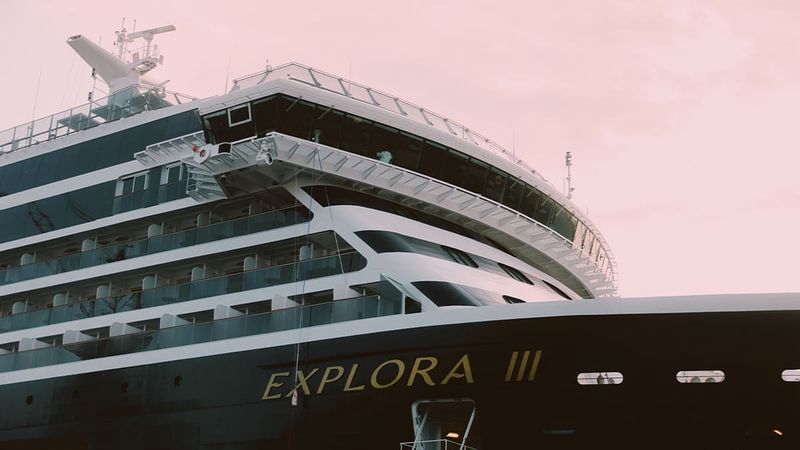
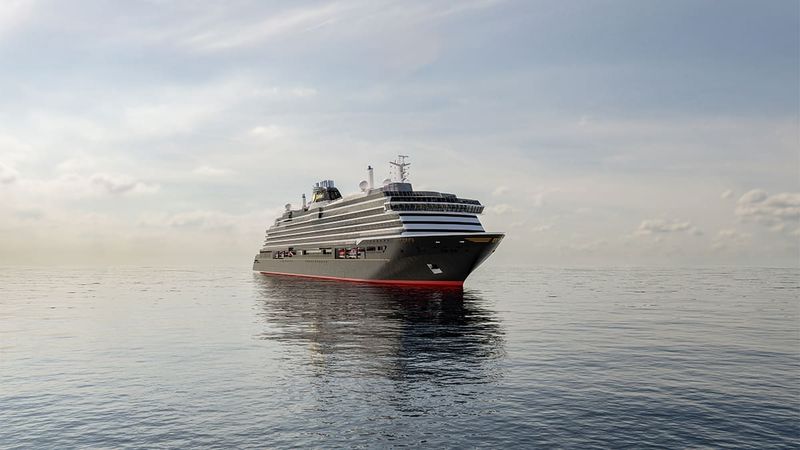
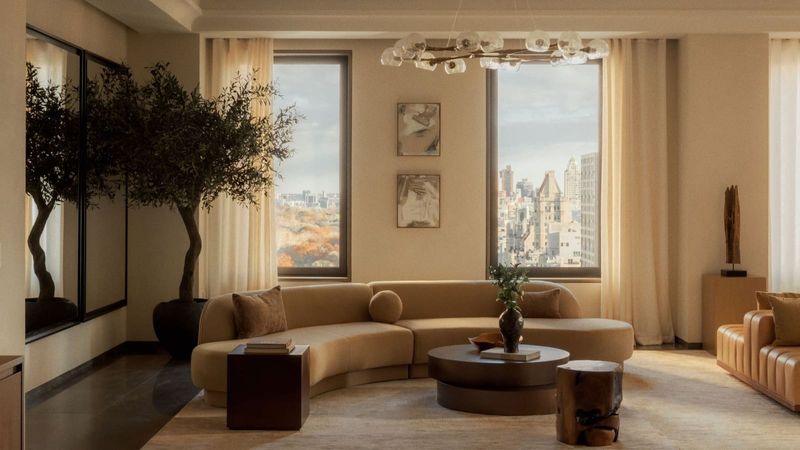
There is a particular quality to silence aboard a vessel - not the absence of sound, but the presence of space. Aman Resorts has built a reputation on that distinction across five continents, and now it is carrying that ethos onto the water. The group's first ocean-going project, Amangati, is a 183-metre, nine-deck vessel currently taking shape at the T. Mariotti shipyard in Genoa. Where most cruise ships multiply amenities, Amangati subtracts. Forty-seven suites, ranging from 68 to 354 square metres, will occupy the hull. Each suite opens onto floor-to-ceiling glass and private balconies wide enough to warrant their own furniture. The design language borrows from ryokans - Japanese inns where spatial economy meets material restraint - and the result is an interior that reads more like a private residence than a floating resort.
Aman at Sea, the venture overseeing the ship, recently announced the vessel's Caribbean programming. Following a maiden Mediterranean season beginning in May 2027, Amangati will cross the Atlantic and anchor its winter itinerary in the Caribbean, running nineteen voyages from 21 November 2027 through 20 March 2028. The season is divided into three regional movements - the Leeward Islands, the Windward Islands, and the Dutch Caribbean - before extending westward into the Greater Antilles for the winter months. Every voyage spans five to eight nights, and each departs from or terminates in Saint John's, the vessel's Caribbean base.
Tracing the Arc of the Antilles
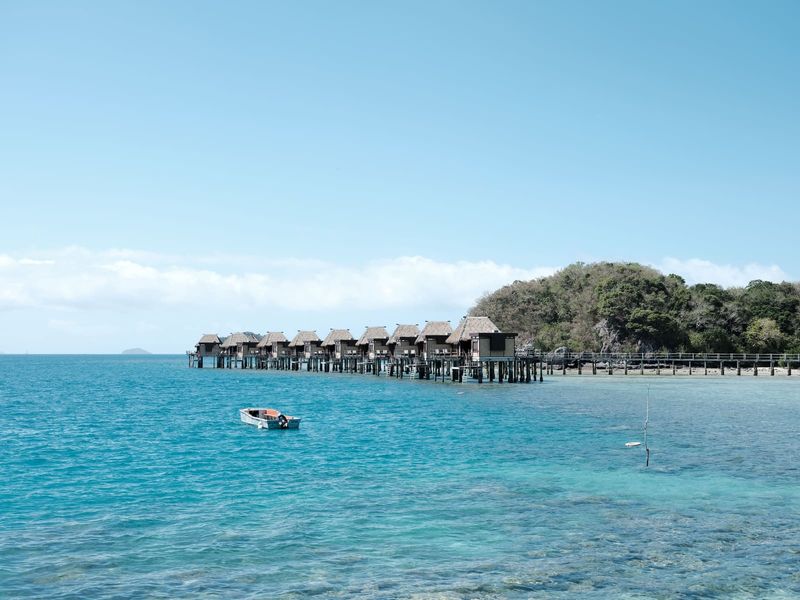
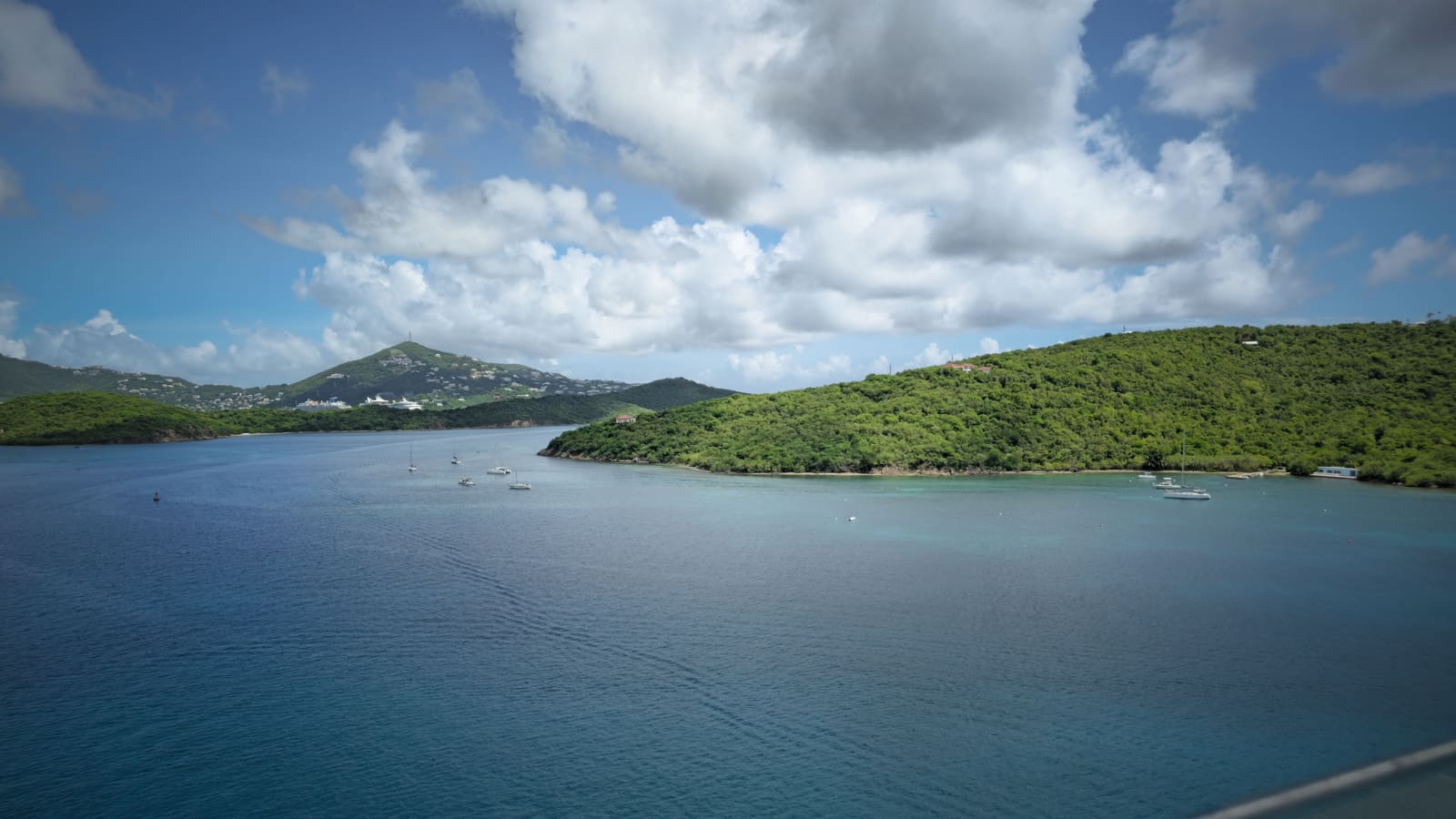
The Leeward Islands itineraries thread the northern curve of the Lesser Antilles, where volcanic peaks give way to low coral formations and the sea shifts from cobalt to turquoise within a single afternoon. Anguilla's beaches, famously undeveloped, appear as crescents of white sand framed by scrub and saltwater. Further south, the Tobago Cays - a cluster of five uninhabited islets in the Grenadines - offer anchorage in protected lagoons where hawksbill turtles drift between coral heads. These are not destinations engineered for crowds. They reward patience and a willingness to arrive by tender rather than gangway.
The Windward Islands segment moves through territories where French and Creole influences layer over older Indigenous geographies. Saint-Pierre in Martinique sits beneath the volcanic slopes of Mount Pelée, a town rebuilt after the 1902 eruption that buried its predecessor. The landscape here is lush to the point of excess - rainforest spills down ridgelines, and the air carries the scent of overripe fruit and wet stone. Guadeloupe's twin-island topography offers a similar contrast: Basse-Terre's jungle interior versus Grande-Terre's limestone plateaus and cane fields.
The Dutch Caribbean leg includes Bonaire, where the coral gardens off Kralendijk remain some of the healthiest in the region. The island's marine park regulations have preserved reef systems that elsewhere have succumbed to warming waters and tourism pressure. Divers descend into forests of elkhorn coral and schooling parrotfish, ecosystems that function as both attraction and argument for restraint.
A Festive Crossing and Westward Reach
Select sailings during the holiday season incorporate private events at partner properties. One seven-night voyage, departing Bridgetown and concluding in Saint John's, includes an intimate New Year's celebration at a resort in Nevis. The island's colonial-era sugar estates, now repurposed as boutique hotels, provide a setting where formality and tropical informality coexist. The appeal lies in scale - celebrations measured in dozens, not hundreds.
From January through March 2028, Amangati extends its range into the Greater Antilles, making inaugural calls in the Dominican Republic and revisiting Martinique, Guadeloupe, and the Grenadines. The Dominican Republic's Cap Cana region, on the eastern tip of Hispaniola, combines jungle-clad headlands with sheltered bays. The area has been developed carefully, with golf courses and marinas tucked into natural contours rather than imposed upon them. The pace here is slower than Punta Cana to the south, and the architecture favours low-slung villas over high-rise blocks.
Bespoke Itineraries and Onboard Infrastructure
Each voyage includes curated cultural experiences - guided hikes through rainforest reserves, visits to working plantations, tastings of agricole rum distilled from fresh cane juice - but the ship's concierge service allows guests to deviate from the set programme. A dedicated suite host is assigned to each guest, a model borrowed from Aman's land-based properties where staff-to-guest ratios often exceed one-to-one. The ship carries two helipads and six tenders, infrastructure that facilitates arrivals and departures without the bottlenecks common to larger vessels. Guests can disembark for a morning hike and return for lunch, or skip a port call entirely and remain aboard.
Amangati's onboard amenities include four restaurants serving cuisines calibrated to the regions the ship traverses, a jazz club, a cinema, a beach club, and an Aman Spa. The aft swimming pool is proportioned for laps rather than crowds, another signal of the ship's priorities. There is no casino, no Broadway-style theatre, no multi-storey atrium. What remains is space - physical and temporal - for guests to move through the Caribbean at a rhythm that privileges observation over itinerary.
The Calculus of Scale
The Caribbean has long been a laboratory for cruise tourism, with ships growing larger and itineraries growing denser as operators chase efficiency. Amangati represents a different calculus. With fewer than fifty suites, the vessel can anchor in bays where larger ships cannot, and its tenders can deliver guests to beaches and harbours that remain outside the conventional cruise circuit. The trade-off is price - Aman has never positioned itself as accessible - but the value proposition rests on exclusivity of experience rather than accumulation of amenities.
The ship's design and routing suggest a broader shift within luxury travel: a move away from the superlative and toward the specific. The Caribbean's appeal has always been geographic - hundreds of islands scattered across a sea warm enough to swim in year-round - but that diversity is often flattened by itineraries that prioritise volume over nuance. Amangati's programming, with its attention to volcanic slopes, coral gardens, and uninhabited cays, acknowledges that the region's value lies not in what can be built upon it, but in what has been preserved within it.
The ship is scheduled to launch its Mediterranean season in May 2027, and by November of that year it will have crossed the Atlantic to begin its Caribbean chapter. The Antilles, with their layered histories and varied topographies, will serve as the testing ground for Aman's hypothesis: that luxury at sea is less about what a ship contains and more about what it allows you to see.