Above the Turbulence: What It Takes to Fly Private in an Age of Disruption
While geopolitical headwinds rattle commercial carriers, one aircraft operator reveals the quiet discipline behind keeping business jets - and their passengers - on course.
A Different Kind of Altitude
There is a particular stillness inside the cabin of an ultra-long-range business jet at 41,000 feet - a hush that feels earned rather than engineered. While commercial aviation wrestles with airspace closures, fuel surcharges, and the logistical knots of a fractured geopolitical map, a parallel world of private flight continues its quiet trajectory. The passengers here are not counting delays or scrambling for connections. They are resting before a boardroom negotiation in Singapore, or crossing time zones with the kind of calm that only comes when every variable has been anticipated, every contingency mapped. At Global Chic Voyage, we have long observed that luxury, at its most refined, is not about excess but about the elimination of friction. And in 2026, as the first half of the year closes with conflict in the Gulf, supply-chain strain, and fuel prices that climb like altimeters, the discipline required to deliver that frictionlessness has never been more exacting.
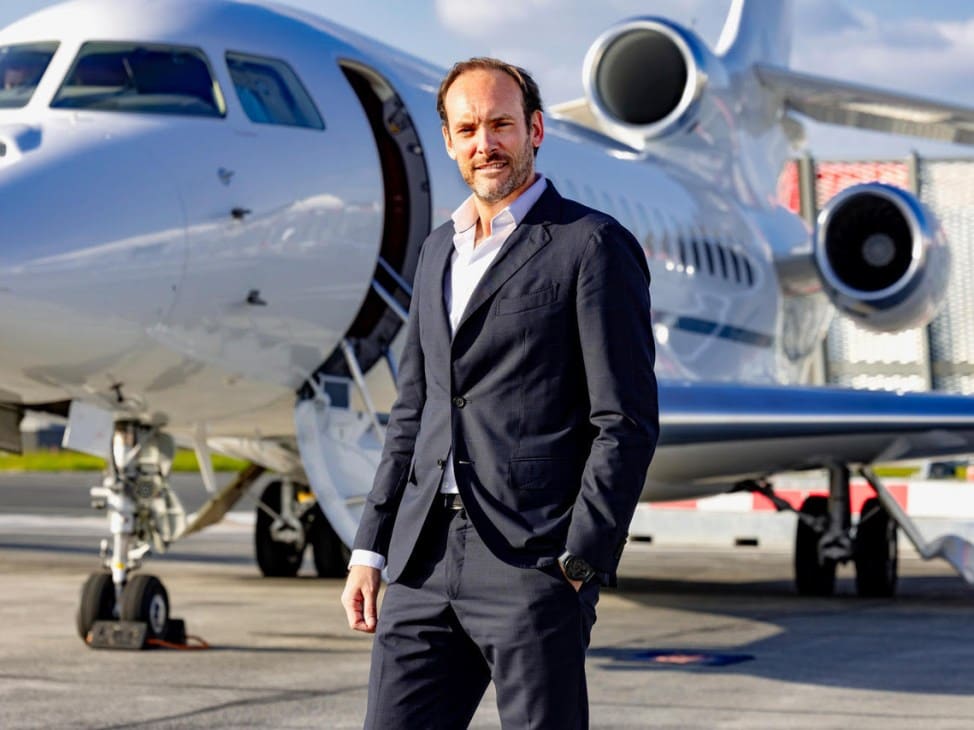
Olivier Perdriel understands this better than most. He launched his Paris-based aircraft management firm with a single Bombardier Learjet in the wake of the 2008 financial crisis - a moment when others were grounding fleets and trimming payrolls. Eighteen years on, his company oversees a portfolio of Dassault Falcon 7Xs and 8Xs, alongside Bombardier Global Express models, shuttling business leaders across continents. The order books at major manufacturers stretch two years out, he notes, and flight activity in the United States is not merely steady but booming. Yet beneath that veneer of resilience lies a lattice of complexity: insurance clauses that shift within hours, landing permits that vanish overnight, flight paths that must be redrawn around zones where diplomacy has failed.
The Geometry of Uncertainty
Managing a private jet in 2026 is less about luxury and more about geometry. Routes that once arced smoothly across the Middle East now require creative detours. Fuel stops that were routine now demand advance coordination with ground handlers who may or may not have clearance when the wheels touch down. Perdriel's team monitors these variables in real time, adjusting itineraries with the same attentiveness a chef applies to a reduction sauce - constant vigilance, minute corrections, an understanding that timing is everything.
This is not the kind of disruption that announces itself in headlines. It is granular, operational, the sort of challenge that reveals itself only when you are responsible for landing a $60 million aircraft in a jurisdiction where the rules changed while you were over the Atlantic. The operators who thrive in this environment are those who build systems around anticipation rather than reaction. They do not wait for a problem to declare itself; they map the terrain of risk days before the passenger even boards.
What strikes us about this approach is its kinship with other disciplines we have covered - haute cuisine, bespoke tailoring, the quiet orchestration of a five-star hotel. In each case, the guest or diner or client experiences only the outcome, never the architecture of effort that produced it. A seamless overnight flight to Tokyo, a perfectly pressed collar, a dish that arrives at the table at the precise moment of readiness - all of these are the result of invisible labor, calibrated to the point where it ceases to feel like labor at all.
The Fleet as Portfolio
The aircraft themselves are a study in differentiation. Dassault's Falcon series, with its French lineage and emphasis on cabin refinement, appeals to a particular sensibility - executives who value aesthetics alongside performance, who notice the grain of the wood veneer or the quality of the leather. Bombardier's Global Express line, by contrast, leans into North American pragmatism: range, reliability, the ability to connect New York and Hong Kong without a fuel stop. Gulfstream, the third pillar in Perdriel's fleet, occupies its own space, a blend of corporate gravitas and technological ambition.
Operating all three brands is not merely a business strategy; it is a form of cultural fluency. The relationship an operator builds with Dassault Aviation in Paris is not the same as the one forged with Bombardier in Montreal. The former is steeped in a tradition of artisanal engineering, the latter in a more industrial ethos. These differences matter when a maintenance issue arises at 3 a.m. in Dubai, or when a client needs a specific cabin configuration for a trans-Pacific crossing. The operators who succeed are those who speak multiple dialects - technical, cultural, logistical - and know which one to deploy in any given moment.
The Human Variable
Yet for all the emphasis on machinery and logistics, the heart of private aviation remains stubbornly human. Perdriel returns to this point repeatedly: the importance of picking up the phone, of speaking directly rather than relying on automated systems or email chains. In an industry where clients are accustomed to control, the ability to reach a person who knows the aircraft, the route, and the passenger's preferences is not a luxury - it is the baseline.
This human touch extends to the crew as well. The pilots who fly these routes are not merely technicians but custodians of continuity. They remember that a particular CEO prefers the cabin temperature set to 68 degrees Fahrenheit, that another needs the forward cabin configured for confidential calls, that a third likes to deplane quickly and despises lingering on the tarmac. These details are not codified in manuals; they are transmitted through institutional memory, through the kind of attention that comes from working with the same clients over years rather than flights.
We have noticed a parallel in the hotels we return to year after year - the places where the concierge remembers your name, where the housekeeping staff knows you prefer the curtains drawn in the afternoon, where the bartender has your aperitif ready before you sit down. It is this continuity, this quiet accretion of knowledge, that transforms a transaction into a relationship. In private aviation, where the stakes are higher and the margin for error thinner, that continuity is not merely pleasant; it is essential.
Resilience as Discipline
The question that lingers, as we consider the state of private aviation in 2026, is not whether the market will endure - the order books and flight data suggest it will - but what kind of discipline that endurance requires. Perdriel's answer is instructive: stay steady, anticipate problems, remain responsive. It is a philosophy rooted not in optimism but in pragmatism, a recognition that the world will continue to present obstacles and that the only viable response is a kind of relentless attentiveness.
This is not the language of disruption or innovation, those overused terms that dominate so much business discourse. It is the language of craft, of incremental mastery, of doing the same thing over and over with increasing precision. In an era when so much of travel feels fragmented and chaotic, there is something quietly radical about an industry that insists on consistency, that treats each flight as an opportunity to refine rather than reinvent.
At Global Chic Voyage, we have always believed that the most meaningful journeys are those where the infrastructure of travel recedes, allowing the traveler to arrive not merely at a destination but in a state of readiness. Whether that journey unfolds in the cabin of a Falcon 8X or the aisle seat of a commercial carrier, the principle remains the same: the best travel is the kind you barely notice, the kind that delivers you to the threshold of experience without exhausting you in the process. In 2026, as the world grows more complicated, that simple ambition has never been harder to achieve - or more worth pursuing.