
Where Old Shanghai Lives On Inside a Modern Tower
In Xujiahui's newest vertical neighbourhood, Andaz Shanghai ITC weaves lane-house nostalgia into a 267-room sanctuary that honours the city's working-class past.
SI
2 Jul 2026 · 5 MIN READ · UPDATED 17 AUG 2026
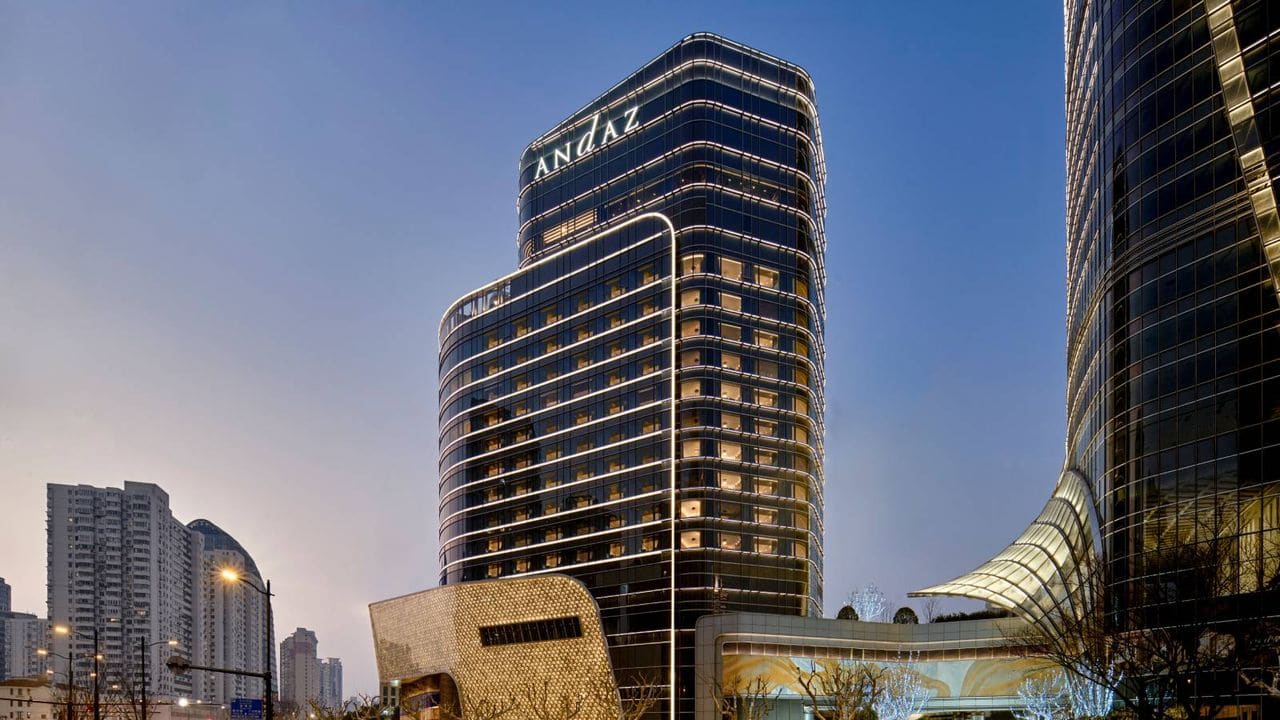
A Different Kind of Shanghai Memory
The elevators open not onto marble and chrome, but onto something quieter: alley-like corridors lit by turquoise chandeliers, grey brick that recalls courtyard walls, a grand clock that chimes at half-past five to mark the city's shift from daylight to neon. At Global Chic Voyage, we've watched Shanghai hotels chase spectacle, but the Andaz Shanghai ITC inside the new International Trade Centre complex pursues a different thread. It reaches back to the shikumen, those lane houses with arched gateways and shared courtyards that once defined neighbourhoods across the Former French Concession, and asks what luxury might look like if it remembered the rhythms of communal life.
Xujiahui, or Xuhui as locals call it, sits slightly off the well-trodden tourist routes. Wide boulevards run fast here, but the side streets slow down, revealing art deco apartment blocks and the occasional modernist civic building tucked behind plane trees. The district still holds fragments of its pre-war character, shikumen repurposed into cafés and boutiques, their brick facades and stone lintels speaking to an era when Chinese and European architectural languages blended without self-consciousness. The hotel rises within walking distance of Xujiahui Library, St. Ignatius Cathedral, and the Shanghai Film Museum, a ten-minute radius that holds more cultural weight than many larger swaths of the city.
Architecture as Vertical Neighbourhood
The International Trade Centre, designed by Hong Kong's P&T Group, bills itself as a vertical neighbourhood. The designation is more than marketing. Condos, offices, retail corridors, and the Andaz itself share a single streamlined infrastructure, capped by Tower 2, which at seventy storeys and three hundred seventy metres becomes the tallest structure in Puxi, the river's western bank. The hotel occupies a portion of this ecosystem, 267 rooms distributed across floors that HBA designed to mirror the spatial logic of lane houses rather than the anonymity typical of high-rise hospitality.
Matthew Liu, leading the HBA interiors, explained that the communal spaces drew inspiration from historic rowing clubs along the Huangpu River, while the dining rooms on the fourteenth floor replicate the proportions and scale of traditional residential typologies. The result feels less like a lobby and more like a series of interconnected courtyards, each with its own character but all sharing a vocabulary of grey brick, colourful light fixtures, and textiles that invite touch. Brick appears throughout, reinterpreted in multiple materials to define texture and spatial identity, a thread that ties the wellness floor to the rooftop bar to the guest corridors.
Five Creative Professions, Five Room Types
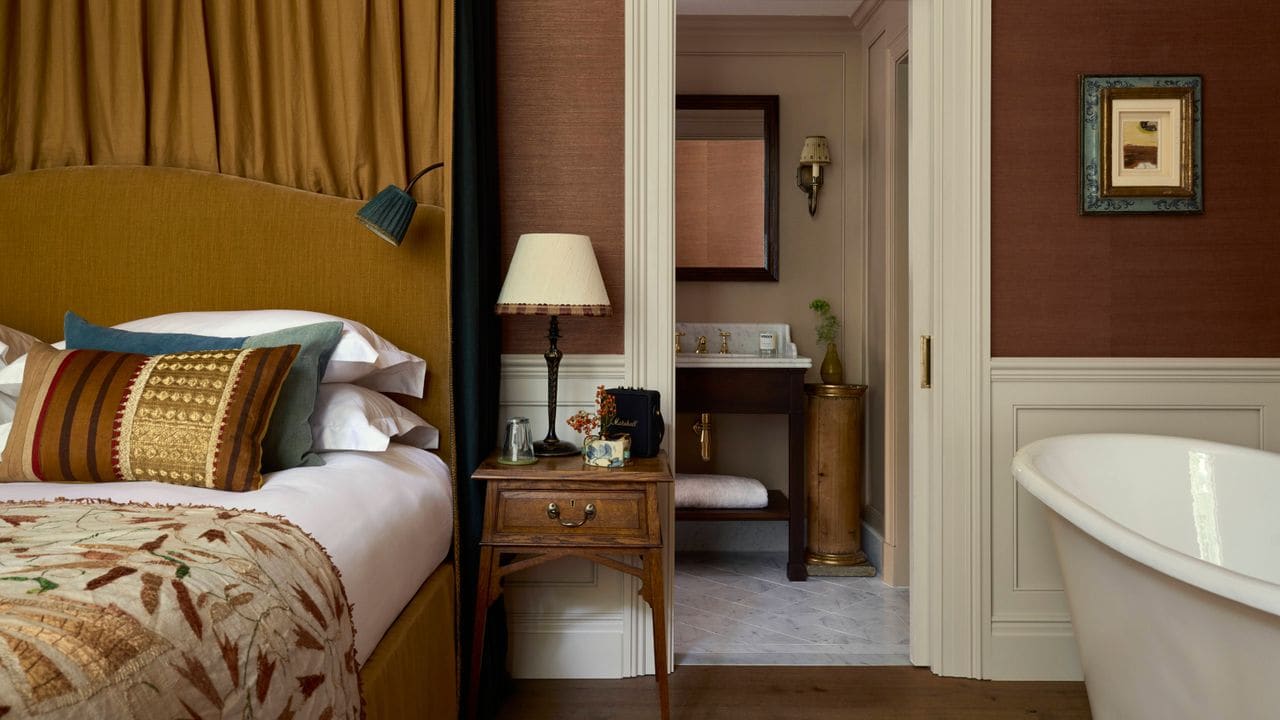
Each of the hotel's five room categories adopts the persona of a creative professional. King rooms imagine the home of a fashion designer, twins belong to a visual artist, Andaz suites house a photographer, premier suites are the florist's domain, and the executive suite channels a jewellery designer's aesthetic. The concept could veer into gimmick, but the execution remains grounded. In the Andaz suite, a three-room corner arrangement, vintage cameras line the walls alongside used film reels and photography monographs. The details commit to the theme without overwhelming the space. A deep sofa and a generous bathtub anchor the suite, both calibrated for the kind of fatigue that comes from walking Shanghai's miles of pavement.
Voss water bottles appear in abundance. The minibar holds cans of Heineken and Coca-Cola, bottles of soda water, Absolut vodka, and twelve-year-old Singleton single malt. The standout is a bottle of Peddlers Gin Co, a Shanghai craft distillery that infuses its spirit with lotus, cardamom, Sichuan pepper, Chinese cassia, and liquorice. TWG tea bags and Nespresso pods round out the in-room provisions. The selection skews local without sacrificing the international baseline that business travellers expect.
Dining Spaces That Reference Lane-House Scale
The fourteenth floor holds three dining venues: the East Wing, the West Wing, and the Rooftop Bar. Executive Chef Jesse Chen, born and raised in Shanghai, spent years working in Europe before returning home. Her menu in the East Wing leans into the sweet-savoury balance characteristic of Shanghainese cooking, the kind her mother and grandmother practiced. Braised pork belly, slow-cooked lotus root, marinated river prawns, dim sum, and bao appear on a roster that privileges richness and layered sauces over the austere plating that sometimes dominates contemporary hotel dining.
The West Wing takes a different approach, multicultural in the way Shanghai itself has always been. A deli-style counter serves Spanish tapas and Italian small plates, the kind of grazing that suits the jet-lagged or the indecisive. After dinner, the Rooftop Bar offers tea-based cocktails mixed by Van Li, whose Pomelo Oolong combines pineapple, Japanese yuzu, and ten-year-old Laphroaig into something smoky and layered. By day, the bar serves afternoon tea. By night, DJs and board games take over, a programming choice that nods to the communal leisure practices of old Shanghai neighbourhoods.
Vivid turquoise chandeliers hang in the East Wing. The Rooftop Bar clusters bright globes and mirror balls overhead, a design flourish that catches light and movement. Elsewhere, a triathlon mosaic by SONITE decorates the wellness floor, Debut Studio contributes installations to the dining spaces, and Lu Jian Xin's large wall piece titled City Coordinates anchors one corridor, all chosen to echo the dynamism of the streets below.
Nostalgia Without Kitsch
Shanghai has a reputation as China's capital of nostalgia, but glimpses of the city's early twentieth-century character often prove elusive beyond The Bund. The relentless pace of development favours the futuristic over the historical, and what remains of the past frequently gets polished into theme-park simplicity. Andaz Shanghai ITC manages a different calibration. It elevates working-class culture, the communal courtyards and everyday flavours and children's games, without flattening them into decoration. The hotel's interiors reference shikumen architecture not as a backdrop but as a spatial philosophy, one that values shared thresholds and gradual transitions between public and private.
The ease with which the hotel functions, from check-in to turndown, reflects the Andaz brand's commitment to understated luxury. But here, that seamlessness feels particularly necessary, a counterweight to the city's intensity. The fourteenth-floor lobby's grand clock performs its daily ritual at five-thirty in the evening, a small ceremony that marks the shift from day to night. It's the kind of gesture that could read as twee, but in a city that rarely pauses, the moment offers a rare permission to slow down.
What Andaz Gets Right About Place
At Global Chic Voyage, we've returned to hotels that understand their location not as a setting but as a collaborator. Andaz Shanghai ITC succeeds because it doesn't impose a foreign aesthetic onto Xujiahui. Instead, it listens to the district's architectural memory, the way shikumen organised domestic life around courtyards, the way lane houses created semi-public thresholds where neighbours might linger. The hotel translates those spatial patterns into a high-rise context, proving that nostalgia can be more than ornament when it's rooted in how people actually moved through space.
The wellness floor evokes rowing clubs not through literal oars or vintage photographs, but through proportions and materials that recall those riverside institutions. The dining rooms mirror lane-house dimensions, creating intimacy within a tower that could easily feel anonymous. Even the guest corridors, often the most generic part of any hotel, adopt the narrow, slightly winding character of alleyways, a choice that slows movement and encourages noticing.
The hotel's location within the International Trade Centre complex positions it as part of a larger urban experiment, one that tries to layer residential, commercial, and hospitality functions into a single vertical structure. Whether that model proves sustainable or simply replicates the isolation of gated communities in tower form remains to be seen. But for now, the Andaz offers a version of Shanghai that honours its lane-house past while occupying its skyscraper present, a balancing act that feels increasingly rare in a city that too often chooses one era at the expense of all others.
Image credit: Courtesy of Hyatt
Spot something wrong? Email editors@globalchicvoyage.com. We log every correction publicly.
RELATED
SEE ALL →
1 Jun 2026 / 5 min
30 Jul 2026 / 5 min
31 Jul 2026 / 5 min
28 Jul 2026 / 5 min