
The PuLi Group Taps Swire Hotels Veteran to Steer Shanghai Relaunch and Regional Expansion
Dean Winter, architect of The Upper House's considered luxury ethos, will helm the independent group as it repositions its flagship and charts a path beyond China's first-tier cities.
AM
1 Jun 2026 · 5 MIN READ · UPDATED 17 AUG 2026
A Quiet Succession in the Language of Independent Luxury
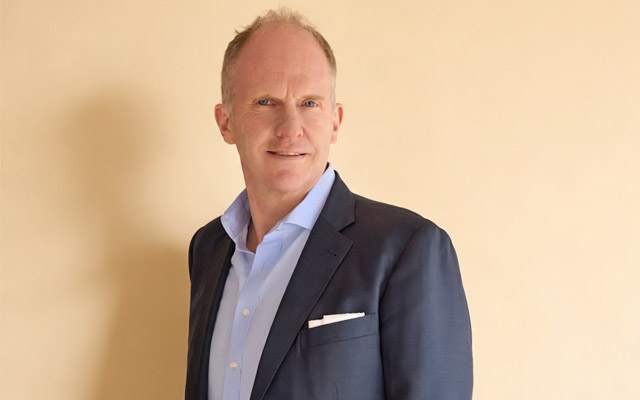
There are appointments that announce themselves with fanfare, and then there are the ones that whisper—a changing of hands so deliberate you sense the strategy before the press release lands. The PuLi Group's naming of Dean Winter as chief executive, effective June 1, belongs to the latter category. Winter arrives from Swire Hotels, where he served as managing director and shaped the operational DNA of The Upper House Hong Kong, a property that has become shorthand for a certain kind of restrained, material-focused luxury. His mandate at PuLi: to steer the group's next chapter as it relaunches The PuLi Shanghai and maps expansion across Asia—territory that demands both institutional memory and a willingness to leave the script behind.
At Global Chic Voyage, we've watched independent hotel groups navigate the tension between scale and singularity, and Winter's move suggests PuLi is betting on the latter. The group operates outside the franchise machinery of the major chains, and in a market increasingly skeptical of cookie-cutter luxury, that independence becomes both asset and challenge. Winter's three decades in the industry—much of it spent building brands that prize spatial restraint over spectacle—position him as a custodian rather than a disruptor, which may be exactly what PuLi needs as it reopens a flagship that has long occupied a peculiar place in Shanghai's hospitality landscape.
The Shanghai Flagship and the Question of Reinvention
The PuLi Shanghai, when it opened in 2009, was an anomaly: a 229-room property in Jing'an that borrowed from both urban-resort typology and the emerging language of design hotels. Its interiors, by Jaya Ibrahim, leaned into dark woods, water features, and a kind of tropical modernism that felt ambitious if occasionally unmoored from its context. The hotel became a reference point for a generation of travelers who wanted neither the formality of heritage properties nor the minimalism of the boutique wave that followed. But by the early 2020s, The PuLi had grown quieter—not irrelevant, but no longer defining the conversation.
The relaunch, still unfolding in specifics, will test whether PuLi can recalibrate without erasing what made the property compelling in the first place. Winter's background suggests an inclination toward material honesty and spatial generosity—qualities that align with the original vision but could benefit from sharper editing. The challenge is not to reinvent the wheel but to ask what independent luxury looks like in a Shanghai that has seen the rise of Capella, Bulgari, and Edition properties, each staking a claim to different facets of the same affluent traveler.
Portfolio Growth and the Geography of Expansion
Beyond Shanghai, Winter's brief includes steering portfolio growth across Asia, and here the terrain becomes more speculative. The PuLi Group has remained small by design, but the appointment of a CEO with Winter's institutional experience hints at a willingness to scale—selectively. The question is where. China's first-tier cities are saturated; the second- and third-tier markets offer volume but require a different calculus around brand positioning and operational infrastructure. Southeast Asia, meanwhile, presents both opportunity and crowding, with independent groups like Aman, Belmond, and newer entrants like Capella already staking claims in the region's resort corridors.
Winter's tenure at Swire offers a potential blueprint: slow, considered growth anchored in destination specificity rather than market saturation. The Upper House model—high design, high service, low room count—doesn't translate everywhere, but it does suggest a philosophy that privileges place over pace. If PuLi follows that logic, expect announcements in markets where the group can operate as a tastemaker rather than a volume player: perhaps secondary Chinese cities with emerging cultural infrastructure, or resort destinations in Southeast Asia where independent luxury still has room to define itself against the chains.
Why It Matters: Independence as Strategy, Not Nostalgia
The broader shift here is not Winter's résumé but what his appointment signals about the viability of independent luxury groups in an era of consolidation. The major chains have spent the past decade absorbing soft brands and boutique portfolios, betting that travelers want the security of loyalty programs and the convenience of global reach. PuLi's move suggests a counter-thesis: that a segment of the market still values singularity, and that independence—when executed with discipline—can be a competitive advantage rather than a liability.
This matters because Asia's luxury hospitality landscape is at an inflection point. The region's ultra-high-net-worth population is growing faster than anywhere else, and their expectations are shaped less by Western luxury paradigms and more by regional aesthetics, service philosophies, and spatial sensibilities. Independent groups like PuLi have the flexibility to respond to those shifts in real time, without waiting for brand guidelines to catch up. Winter's challenge will be to translate that flexibility into a coherent growth strategy—one that resists both the temptation to scale too quickly and the risk of remaining too niche to matter.
The Long Game of Considered Expansion
Winter's appointment arrives at a moment when the luxury hospitality conversation has shifted from openings to operations, from spectacle to substance. The travelers we encounter at Global Chic Voyage increasingly ask not how many properties a group operates, but whether each one feels essential to its place. That's a standard independent groups are uniquely positioned to meet, but only if they resist the urge to grow for growth's sake. If Winter brings the same measured ambition to PuLi that he brought to Swire, the group may find itself not just reopening a flagship but redefining what independent luxury can mean in Asia's next decade—one property, one city, one deliberate decision at a time.
Spot something wrong? Email editors@globalchicvoyage.com. We log every correction publicly.
RELATED
SEE ALL →
2 Jul 2026 / 5 min
8 Aug 2026 / 5 min
7 Aug 2026 / 5 min
28 Jul 2026 / 5 min