
Where Mornings Move Slowly: Sanur's Quiet Cafe Culture
In Bali's most unhurried neighbourhood, breakfast is still a ritual - not a race.
SI
8 Jul 2026 · 5 MIN READ · UPDATED 17 AUG 2026
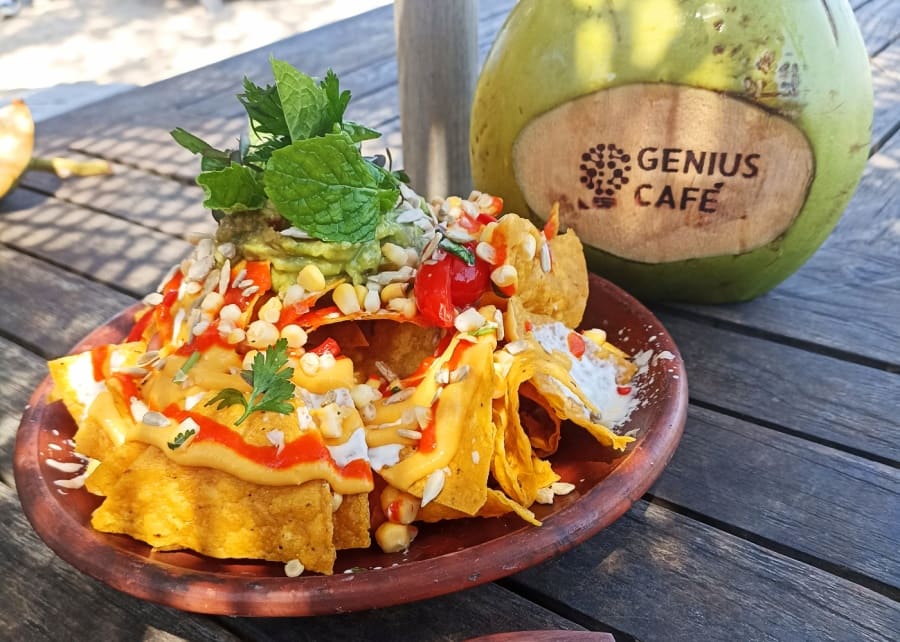
A Different Kind of Morning
There is a particular quality to morning light in Sanur that refuses to be rushed. It filters through frangipani branches and settles on wooden tables facing the sea, gilding the rim of a coffee cup, softening the edges of conversation. While Canggu chases the next wellness trend and Seminyak queues for its Instagrammable matcha, Sanur does what it has always done: it lingers.
At Global Chic Voyage, we have watched Bali's cafe scene evolve - sometimes beautifully, sometimes breathlessly - but Sanur remains an outlier. This is not a neighbourhood designed for cafe-hopping or quick aesthetic hits. Breakfast here is still a ritual. You arrive early, claim a table near the water, and you stay. The menu may list smoothie bowls and avocado toast, but what you are really ordering is time.
The Geography of Calm
Sanur's cafe culture concentrates along the eastern shoreline, a narrow strip where the Indian Ocean meets a promenade shaded by old trees. Unlike the sprawling, landlocked venues that dominate other parts of the island, many of Sanur's best cafes open directly onto sand. The architecture is low-slung, the interiors airy. There is a deliberate modesty to the design, as if the cafes understand they are merely frames for the view beyond.
This proximity to water shapes everything. Menus skew lighter - tropical fruits, fresh juices, grilled fish - and the pace of service adjusts to the rhythm of waves rather than the urgency of a kitchen timer. Families arrive with children and dogs. Digital nomads settle in for hours, laptops open, feet bare. No one is performing. No one is counting likes.
The French Exception
Amid the acai bowls and turmeric lattes, one establishment insists on a different tradition entirely. A French bakery tucked along the main road offers croissants that shatter at the first bite, their layers built using techniques honed in Parisian boulangeries. The founders trained in France for years before relocating to Bali, and their commitment to authenticity is evident in every viennoiserie.
This is not fusion. This is not "French-inspired." It is the real thing, transplanted. On certain mornings, when the humidity lifts and the air feels almost temperate, you could close your eyes and believe you are on a side street in the Marais. The coffee is strong and dark. The crème brûlée croissant - a recent invention that somehow respects tradition while bending it - has developed a quiet cult following among residents who know to arrive before the first batch sells out.
Where Wellness Meets Weight Plates
Sanur has long attracted a particular kind of traveler: older, quieter, less interested in nightlife than in sunrise walks and afternoon swims. But in recent years, a younger, fitness-focused community has taken root. This shift is most visible in a handful of cafes that double as training hubs, where the menu lists not just ingredients but macronutrient breakdowns.
One such venue pairs a fully equipped gym with a cafe designed for post-workout refueling. The aesthetic is clean, energetic, almost clinical - a stark contrast to the bohemian beach shacks a few streets over. Here, smoothie bowls are portioned for protein content. Burgers come with calorie counts. It is possible to order a meal plan for the week, calibrated to your fitness goals, and pick it up daily.
This is not everyone's version of a Bali breakfast. But it speaks to Sanur's quiet pragmatism, its willingness to accommodate different rhythms and routines without demanding that they conform to a single aesthetic. The surfers and the CrossFit enthusiasts, the retirees and the remote workers - they all find their corner.
Indonesian Foundations
For all the international influences - French pastry, Australian brunch culture, Californian wellness - the best cafes in Sanur remain rooted in place. Several menus feature rendang-spiced breakfast plates, nasi goreng reimagined with organic eggs, jamu-inspired juices that taste of turmeric and tamarind. These are not token gestures toward local flavor. They are central offerings, often the most popular items on the menu.
One newer cafe, set in a garden between the main road and the beach, has built its identity around this balance. The space feels unmistakably Indonesian - natural wood, woven textiles, open-air pavilions - but the kitchen moves fluidly between traditions. A Japanese-style scrambled salmon sits beside a classic eggs Benedict. Sweet matcha bowls share the menu with tropical fruit platters. The coffee, sourced from Kintamani in Bali's highlands, is brewed with the precision of a Melbourne specialty shop.
This hybridity is Sanur's strength. It does not try to be authentically Balinese in the way a village warung might be, nor does it chase the cosmopolitan polish of Seminyak. It simply reflects the neighborhood as it is: a place where long-term expats, Indonesian families, and discerning travelers overlap, each bringing their own expectations and appetites.
The Beachfront Advantage
If there is a defining characteristic of Sanur's cafe culture, it is proximity to the ocean. Several venues sit directly on the sand, their tables arranged so that every seat offers at least a partial view of the water. This is not a luxury reserved for high-end resorts. These are casual, accessible cafes where a cappuccino and a smoothie bowl might cost less than a cocktail in Seminyak.
The experience of breakfast on the beach is fundamentally different from breakfast in a garden or on a rooftop. The light is stronger, the air saltier. Conversations compete with the sound of waves and the occasional call of a fishing boat heading out. Children wander to the shore between bites of pancake. Dogs stretch out in the shade. Time expands.
One beachfront cafe, a long-standing favorite among locals, has built its reputation on this sense of ease. The menu is straightforward - eggs, pancakes, fritters, a few Indonesian staples - but the setting does the work. At sunrise, the place fills with early risers and yoga practitioners. By mid-morning, families have claimed the larger tables. In the afternoon, it transitions seamlessly into a bar, the same tables now holding cold beer instead of coffee.
This fluidity - breakfast bleeding into lunch, lunch into happy hour - is characteristic of Sanur. There is no hard segmentation of the day, no pressure to vacate a table after an hour. You order when you are ready. You leave when you are ready. The staff never hovers.
Design Without Drama
The interiors of Sanur's cafes tend toward a certain restrained tropicality. Rattan chairs, potted palms, whitewashed wood, the occasional pop of color in a cushion or mural. There is little of the maximalist eclecticism that defines Ubud's cafe scene, none of the industrial minimalism popular in Canggu. Instead, the aesthetic feels calibrated for comfort rather than spectacle.
One cafe with bright, almost candy-colored exteriors and a bohemian interior filled with mismatched textiles and vintage furniture might be the exception. The design is playful, verging on whimsical, but it never tips into kitsch. The space feels lived-in, as if it has been collecting objects and stories for decades rather than styled in a single sweep.
Another venue, opened with community support during the uncertain early months of the pandemic, has grown into one of Sanur's most reliable all-day dining spots. The interiors are polished but unpretentious, with ample seating for families and enough quiet corners for solo workers. The design does not announce itself. It simply works.
The Digital Nomad Question
Sanur is not Canggu. It does not market itself as a coworking destination, and its cafes do not bristle with the competitive energy of twenty laptops vying for the best table. But remote workers do find their way here, drawn by the slower pace, the reliable Wi-Fi, and the absence of performative hustle.
Several cafes have become informal hubs for this demographic, offering long tables, ample power outlets, and a tacit understanding that a single coffee can anchor a four-hour work session. The atmosphere is collegial rather than cutthroat. People chat between Zoom calls. Collaborations form over shared tables.
This is work, but it is work cushioned by palm trees and ocean breeze, by the option to close the laptop at noon and walk ten meters to the water. It is a version of the digital nomad dream that feels less like a lifestyle brand and more like an actual life.
Why It Lasts
Sanur's cafe culture endures because it is not trying to be anything other than itself. It does not chase trends or reinvent its identity with each season. The same cafes that were serving breakfast a decade ago are still serving breakfast today, often to the same customers. Menus evolve gradually, incorporating new dietary preferences without abandoning the classics. Service remains warm, unhurried, genuinely hospitable.
There is a lesson here for other destinations that have watched their cafe scenes become casualties of their own success - overcrowded, overpriced, optimized for social media rather than genuine experience. Sanur has resisted that trajectory, not through any grand strategy but through a kind of structural modesty. The neighborhood simply does not attract the crowds that would force cafes to prioritize turnover over atmosphere.
At Global Chic Voyage, we return to Sanur when we need to remember what breakfast used to feel like before it became content. The cafes here are not perfect. The coffee is sometimes inconsistent. The service can be slow. But they offer something increasingly rare: the space to sit, to think, to watch the light change on the water, to have a conversation that lasts longer than the meal.
In a Bali that grows louder and faster by the year, Sanur remains a pocket of resistance. Its cafes are the physical embodiment of that resistance - places where mornings still move slowly, where no one is rushing you to finish, where the best thing on the menu might simply be time.
Photo: Honeycombers
Spot something wrong? Email editors@globalchicvoyage.com. We log every correction publicly.
RELATED
SEE ALL →
29 Jul 2026 / 5 min
23 Jul 2026 / 5 min
21 Jul 2026 / 5 min
15 Jul 2026 / 5 min