
When the Clock Betrayed the Sun: Spain's Wartime Hour and the Birth of Late Dining
A single decree in 1940 shifted an entire nation's rhythm, and decades later, Spaniards still gather at tables long after sunset
SI
8 Aug 2026 · 5 MIN READ · UPDATED 17 AUG 2026
The Theater of Ten O'Clock
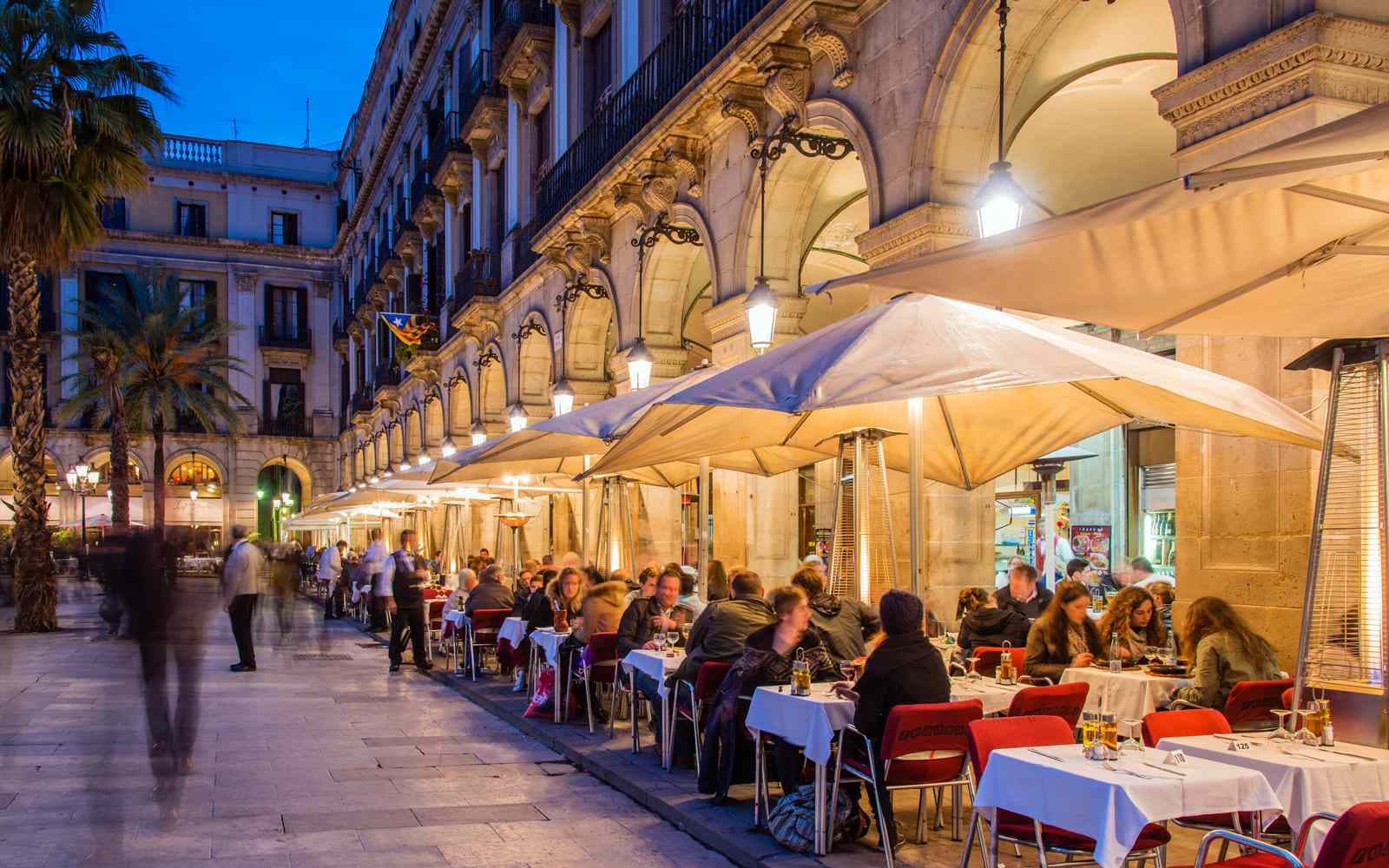
Walk through Madrid's Malasaña quarter at nine in the evening and you'll find restaurant dining rooms still half-empty, waiters folding napkins with unhurried hands. Return an hour later and the same spaces hum with conversation, wine glasses catching candlelight, plates of jamón and pulpo arriving in steady procession. For first-time visitors, the question arrives with the jetlag: why does an entire country eat dinner when much of Europe is already thinking of bed?
At Global Chic Voyage, we've watched travelers recalibrate their internal clocks in Spanish cities, learning to embrace the stretched-out evenings that feel, at first, like a delightful rebellion against time itself. But Spain's late dining tradition is not a cultural eccentricity born of temperament or climate alone. It is, in large part, the legacy of a wartime decision that severed the relationship between geography and timekeeping.
A Dictator's Alignment
In 1940, Spain occupied the same longitudinal band as Britain, Portugal, and Morocco. By rights of solar position, the country belonged to Greenwich Mean Time. But Francisco Franco, seeking symbolic alignment with Nazi Germany and Fascist Italy, moved Spain's clocks forward by one hour. The decree placed the Iberian Peninsula in Central European Time, a zone that runs through Berlin and Rome but leaves Spain geographically out of step.
The sun did not adjust. Noon by the clock became one in the afternoon by the sun's reckoning. Sunset, which might occur at seven in a neighboring time zone, now registered at eight or later on Spanish watches. The entire day shifted, and with it, the rhythms of work, rest, and meals.
The Long Shadow of Misalignment
Spaniards adapted. Breakfast remained early, but lunch, traditionally the day's main meal, crept toward two or three in the afternoon. Dinner, once a lighter evening affair, migrated to ten o'clock or later. The famous siesta, often romanticized as a Mediterranean luxury, became for many a practical necessity in a schedule that no longer matched the body's circadian expectations.
Decades passed. Franco died. Democracy returned. Spain joined the European Union. Yet the clocks stayed where they were, and the dining hour remained fixed in its late-night slot. What began as political theater became cultural identity.
Geography Versus Habit
The misalignment persists in subtle, pervasive ways. In summer, Spanish children play in parks under full daylight at ten in the evening. Office workers leave their desks at seven or eight, when the sun still hangs above the horizon. Television prime time starts at ten-thirty. The entire architecture of the day rests on a foundation one hour removed from solar truth.
Other European nations in the same time zone experience earlier sunsets because they sit farther east. A Berliner's nine o'clock dusk aligns reasonably with the clock. In Madrid, at the same hour by the watch, the sky may still hold the last gold of day. The disconnect creates a country perpetually living slightly ahead of its own light.
The Rituals That Grew From Disruption
Spain's culinary culture absorbed the shift and made it ceremonial. Tapas, those small plates that punctuate the evening, became a bridge between the late afternoon and the even later dinner. Bars fill at seven or eight with clusters of people sharing patatas bravas and aceitunas, not as appetizers but as a distinct eating occasion, a way to carry hunger gracefully across the gap until the proper meal.
At Global Chic Voyage, we've come to see this elongated evening as one of Spain's great gifts to the traveler willing to surrender the rigid meal schedule imported from home. There is a particular pleasure in the long, unrushed passage from daylight to dinner, the way a city's social life unfolds in waves rather than all at once.
The Question of Return
Periodic debates arise about moving Spain back to Greenwich Mean Time. Health researchers point to sleep deficits and misalignment with natural light cycles. Economists note the inefficiencies of a workday that stretches late because it begins late. In 2019, a parliamentary commission recommended the change, citing the country's chronic sleep deprivation and the benefits of aligning with solar time.
Yet the prospect of shifting the clocks back meets resistance not only from habit but from identity. To eat dinner at eight instead of ten would require reconfiguring not just restaurants but the entire social choreography that defines Spanish evenings. The late meal is no longer merely a consequence of the 1940 decree; it has become part of the national story, a marker of difference in a continent of increasing homogeneity.
Light, Time, and Memory
Stand in a Barcelona plaza at nine-thirty on a June evening and the light feels stolen from another hour, borrowed and stretched. Families gather, children weave between tables, and the first dinner orders arrive. The scene carries a temporal vertigo, a sense that you have stepped into a pocket of time that operates by its own logic.
Spain's late dining tradition is a reminder that culture can grow from the most arbitrary of causes, a bureaucratic decision calcifying into ritual. What Franco imposed for political symbolism became, over decades, a rhythm so deeply embedded that it feels almost natural, as if Spaniards have always eaten this way, as if the sun itself agreed to the arrangement.
The Inheritance of a Single Hour
Travel reveals the invisible structures that organize daily life, the taken-for-granted rhythms that vary across borders. Spain's relationship with time and food is one of the most vivid examples, a case study in how a nation can live productively, joyfully, slightly out of sync with its own geography.
For the traveler, the lesson is one of adaptation and openness. The late Spanish dinner is not a hurdle to overcome but an invitation to inhabit time differently, to let the evening expand, to discover that hunger and satisfaction operate on a more flexible schedule than we imagine. The clocks may never move back. The tradition, born of war and politics, has become something else entirely: a way of being in the world, a nightly gathering that begins when the rest of Europe is already quiet, a table set under stars that arrive late because the sun refused to leave on time.
Credit: Stefano Politi Markovina / Getty Images
Spot something wrong? Email editors@globalchicvoyage.com. We log every correction publicly.
RELATED
SEE ALL →
7 Aug 2026 / 5 min
31 Jul 2026 / 5 min
27 Jul 2026 / 5 min
22 Jul 2026 / 5 min