
When Renovation Becomes Erasure: The Quiet Disappearance of Character Hotels
At Global Chic Voyage, we've watched too many beloved properties chase modernity only to lose the very soul that kept guests returning for decades.
VJ
27 Jul 2026 · 5 MIN READ · UPDATED 17 AUG 2026

The Dreaded Welcome
There exists a particular phrase that sends a chill through the seasoned traveler's spine. Not the news that your room isn't ready after a thirteen-hour flight. Not even the revelation that the beloved lobby bar has been gutted to create an "open living space" concept. It is this: "You'll be the first to stay in one of our newly renovated suites."
The word renovated arrives with the promise of improvement, yet increasingly, it delivers something else entirely. A bathroom with a porthole window into the bedroom. Lighting controlled by an app with mood settings that correspond to no human emotion. The conspicuous absence of a television because, as management insists, everyone travels with their own screens these days.
At Global Chic Voyage, we've returned to properties we've loved for years only to find them transformed into spaces we no longer recognize. A landmark Hong Kong hotel recently unveiled rooms that resembled a collision between a Parisian patisserie, a Swiss dental clinic, and the opening credits of a prestige television drama. The old dark woods, the mature palette, the sense of place had vanished, replaced by a design language seemingly calibrated for a narrow demographic that rarely constitutes the actual guest base.
The Innovation Trap
The impulse to innovate is not inherently misguided. In technology, in fashion, even in cuisine, evolution can be essential. Stagnation invites irrelevance. But hospitality operates under different physics. A hotel that thrives often does so precisely because it offers continuity, because it does not surprise but comforts, because the lighting fixtures hung a century ago still cast the right glow.
The question hoteliers rarely ask: should we? Should century-old linens be replaced with polycotton blends to trim operational costs? Should a restaurant menu that has anchored a property for three decades be overhauled to reflect global trends rather than local tradition?
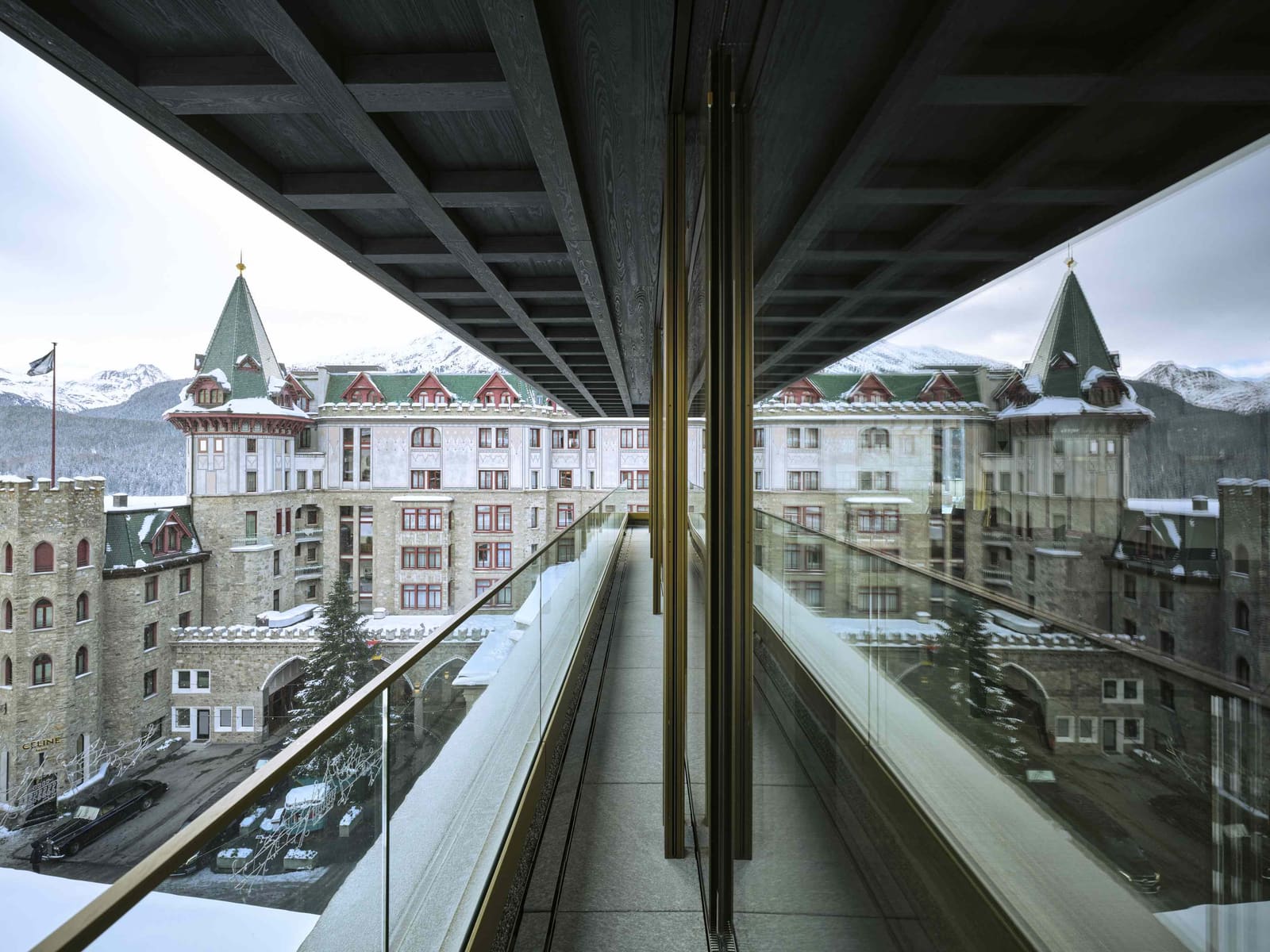
The answer, we'd argue, depends entirely on what the property was built to be. A design hotel in a cosmopolitan capital might thrive on reinvention. But a mountain retreat in the Swiss Alps, a colonial-era property in Southeast Asia, a family-run pension on the Amalfi Coast - these places exist in a different temporal register. Their value lies not in their ability to surprise but in their refusal to change.
A Lunch in the Alps
Consider a recent experience. A restaurant in St. Moritz, cherished for nearly three decades, had long been the kind of place where you didn't need to open the menu. You knew the steak tartare would arrive with medium spice, the rösti with salmon would be exactly as your memory promised, the French dressing would taste the way it always had.
Then came the renovation. The menu, once a document of alpine tradition, had been replaced with something unrecognizable. The tartare had given way to beef carpaccio with raspberry. The rösti had disappeared, replaced by a potato waffle. Chopsticks appeared alongside soup courses. The dishes could have been lifted from a lobby restaurant in Jakarta or Boston - competent, contemporary, utterly placeless.
The dining room was filled with guests well into their seventies and eighties. They murmured among themselves, navigating a menu that seemed designed for someone else entirely. Perhaps management had calculated that this demographic wouldn't be with them much longer, that the future demanded a younger clientele. But in chasing that future, they had severed the thread that connected the restaurant to its geography, its history, its reason for being.
The Globalized Aesthetic
What we are witnessing is not simply renovation but homogenization. A creeping sameness that erodes regional identity in favor of a globalized design language. The boutique hotel in Bali begins to resemble the one in Tulum. The heritage property in Kyoto adopts the same minimalist palette as the one in Copenhagen. The particularity that once defined luxury travel - the sense that place mattered, that architecture and design could be expressions of culture - gives way to an aesthetic that could exist anywhere and therefore belongs nowhere.
This is not an argument against change. Properties must maintain themselves, must update infrastructure, must respond to evolving expectations around sustainability and accessibility. But there is a difference between preservation and fossilization, between thoughtful evolution and wholesale erasure.
The hotels we return to year after year are rarely the ones that chase trends. They are the ones that understand their own identity deeply enough to know what should never change. The grand dame property that still serves afternoon tea in the same salon where it was served in 1923. The family-run inn that refuses to replace its antique armoires with built-in closets. The mountain lodge that keeps its dining room menu rooted in the foodways of the region, even as culinary fashions shift elsewhere.
What Gets Lost
When a hotel renovates without restraint, what disappears is not simply a design scheme or a menu. It is the archive of memory that guests have built over years, sometimes decades. The corner table where you always sat. The particular quality of light in the late afternoon. The dish you ordered on your first visit and have ordered on every visit since.
These details may seem trivial to a management team focused on occupancy rates and competitive positioning. But they constitute the emotional infrastructure of loyalty. They are the reason a guest chooses to return to the same property rather than sample a new one. They are, in a very real sense, the product the hotel is selling.
We wonder, often, why properties undergoing renovation do not reserve a floor or a wing for guests who prefer things as they were. Why not maintain a section of the dining room with the old menu, the old furnishings, the old sense of continuity? The cost would be negligible. The goodwill, immeasurable.
A Modest Proposal
If you are a general manager considering a renovation, we offer this: pause. Survey your actual guest base, not the one you aspire to attract. Ask yourself whether the changes you are contemplating will enhance the experience of the people who already love your property, or whether they are designed to appeal to a hypothetical demographic that may never materialize.
Consider the possibility that your competitive advantage lies not in innovation but in consistency. That in an industry increasingly defined by sameness, your refusal to change might be the most radical position of all.
And if you must renovate, if the infrastructure demands it or the ownership insists, do so with surgical precision. Preserve what makes your property irreplaceable. Resist the consultant who insists that dark wood is dated, that regional cuisine is limiting, that your guests want to feel as though they could be anywhere.
Because the truth is, they don't. They want to feel as though they could only be here, in this place, at this moment. That is what hospitality, at its finest, has always offered. Not the thrill of the new, but the comfort of the enduring. Not reinvention, but recognition. Not surprise, but return.
The hotels that understand this - that resist the siren call of renovation for renovation's sake - are the ones that will still be standing, still beloved, a generation from now. The rest will have chased modernity into irrelevance, one misguided makeover at a time.
Credit: GBP
Spot something wrong? Email editors@globalchicvoyage.com. We log every correction publicly.
RELATED
SEE ALL →
7 Aug 2026 / 5 min
22 Jul 2026 / 5 min
10 Jun 2026 / 5 min
27 Jul 2026 / 5 min