
How a Century-Old Tokyo Landmark Is Quietly Entering the Global Luxury Conversation
Hotel Gajoen Tokyo's transition into Hilton's LXR portfolio signals a shift in how heritage properties are being woven into international luxury ecosystems — without losing their cultural thread.
SI
10 Jun 2026 · 5 MIN READ · UPDATED 17 AUG 2026
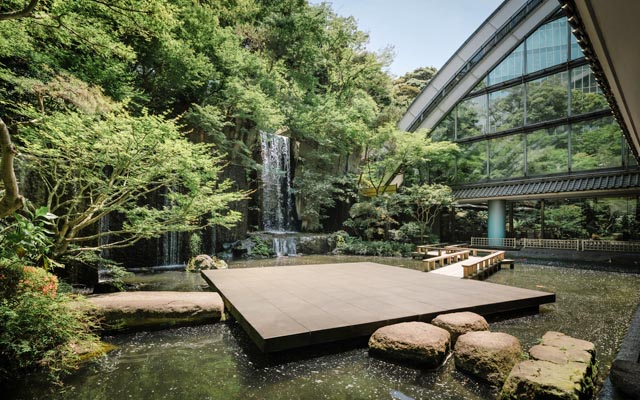
The Hundred-Step Staircase
There is a wooden staircase in Meguro — Hyakudan Kaidan, the Hundred-Step Staircase — that has survived nearly a century of earthquakes, war, and the relentless churn of Tokyo's built environment. It is the only remaining original wooden structure at Hotel Gajoen Tokyo, a property that has long occupied a curious position in the city's hospitality landscape: deeply rooted in Japanese craft and cultural heritage, yet never quite part of the global luxury conversation. That is about to change. In 2027, following a phased enhancement programme, the property will join Hilton's LXR Hotels & Resorts collection — a soft-branded luxury portfolio designed to house independently spirited hotels under a global umbrella. It is the first LXR property in Tokyo, the second in Japan after Roku Kyoto, and part of a broader Hilton luxury push that includes forthcoming projects in Hiroshima and Niseko.
At Global Chic Voyage, we've watched this dynamic play out across Asia for years: heritage hotels with deep local roots entering international systems, navigating the tension between preservation and participation in a globalised luxury economy. The question is never whether they can join — most can. The question is whether they can do so without flattening the very idiosyncrasies that made them worth joining in the first place.
What LXR Means — and Why It Matters Here
LXR Hotels & Resorts is not a traditional brand in the Hilton sense. It does not impose design templates or operational playbooks. Instead, it functions as a curatorial framework: properties retain their individuality, their names, their narratives, while gaining access to Hilton's distribution network and loyalty ecosystem. For travellers, it is a signal of quality and a portal to points-based redemption; for owners, it is a pathway to demand without uniformity.
Hotel Gajoen Tokyo, owned by Brookfield and managed by Hilton, fits this model neatly. The property will reopen in stages beginning mid-2026, with guestrooms and restaurants coming back online first. The phased approach allows the hotel to remain operational during enhancements — a pragmatic choice in a city where demand for luxury accommodation is climbing and where extended closures mean lost revenue and lost relevance.
What makes this particular transition compelling is the property's existing identity. Hotel Gajoen Tokyo has never been a generic luxury box. It is steeped in Japanese aesthetic traditions — artwork, architecture, spatial composition — and its location near Meguro Station, close to the Meguro River with its 800 cherry trees, has long made it a quiet favourite during hanami season. The Hundred-Step Staircase, designated a Tangible Cultural Property by the Tokyo Metropolitan Government, is not just a design feature; it is a narrative anchor, a physical reminder of continuity in a city that rebuilds itself every generation.
The challenge for Hilton and Brookfield is to enhance the property without erasing that anchor. Sixty guestrooms, including suites exceeding 100 square metres, five dining venues, a spa, fitness centre, and approximately 5,700 square metres of meeting and event space — these are the operational bones. But the soul of the property, the reason it commands attention beyond its square metreage, lies in its cultural layering. That is harder to preserve, and harder still to communicate to an international audience unfamiliar with the property's history.
The Luxury Expansion Context in Japan
Hilton's move is not happening in isolation. Japan has become one of the most contested luxury hospitality markets in Asia, driven by a post-pandemic surge in inbound tourism, a weakening yen that has made the country more accessible to international travellers, and a domestic appetite for elevated experiences. According to Hilton, demand for luxury brands in Japan continues to grow, and the company is responding with a multi-property push that includes not just Tokyo but also secondary cities like Hiroshima and resort destinations like Niseko in Hokkaido.
This is a shift from the early 2010s, when luxury development in Japan was concentrated in Tokyo and Kyoto and largely driven by domestic operators or regional players. Now, global platforms like Hilton, Marriott, and Hyatt are embedding themselves deeper into the market, often through soft-branded collections that allow them to scale without homogenising. LXR, in particular, has become a vehicle for this kind of expansion — a way to absorb distinctive properties that would never fit into a traditional branded box.
What this means for travellers is a broadening of options. Tokyo's luxury hotel landscape has long been dominated by a handful of names — The Peninsula, Aman Tokyo, The Ritz-Carlton, Mandarin Oriental. The addition of Hotel Gajoen Tokyo under the LXR banner introduces a different kind of luxury proposition: one rooted in heritage rather than modernity, in cultural specificity rather than global design language. It is not a competitor to Aman or Mandarin Oriental; it is an alternative narrative, a different entry point into the city.
Why Heritage Properties Are Entering Global Systems Now
The timing of this transition reflects a broader realignment in how heritage properties are positioned within the luxury ecosystem. For decades, many of these hotels operated independently, relying on local recognition and word-of-mouth. But as distribution channels have consolidated — OTAs, loyalty programmes, metasearch — independence has become a liability. Travellers increasingly book through platforms that reward scale, and properties that sit outside those platforms risk invisibility.
Soft-branded collections like LXR offer a middle path. They provide the infrastructure of a global system — central reservations, marketing reach, operational support — without requiring the property to surrender its identity. For a hotel like Gajoen Tokyo, which has spent nearly a century building a reputation rooted in Japanese craft and cultural continuity, that balance is essential. The property does not need to become a Hilton hotel; it needs to become a Hilton-affiliated hotel, a distinction that matters enormously in execution.
The risk, of course, is that the enhancements required to meet international luxury expectations — upgraded bathrooms, reconfigured layouts, modernised F&B concepts — will dilute the very characteristics that made the property distinctive. This is the central tension in every heritage rebrand: how much can you change before you are no longer preserving, but replacing?
What This Means for Tokyo's Luxury Landscape
For Tokyo, the arrival of Hotel Gajoen Tokyo under the LXR banner is both a validation and a provocation. It validates the city's position as a top-tier luxury market, one that can support a diverse range of high-end properties beyond the usual suspects. But it also provokes a question: as more heritage properties enter global systems, what happens to the local hospitality culture that made them worth entering in the first place?
We have seen this dynamic play out across Asia — in Bangkok, where historic hotels have been absorbed into international portfolios; in Hanoi, where colonial-era properties have been rebranded and repositioned; in Kyoto, where machiya townhouses have been converted into boutique stays with global distribution. The pattern is consistent: local heritage becomes global product, and the challenge is to ensure that the translation does not become a flattening.
Hotel Gajoen Tokyo will be a test case. If the property can retain its cultural specificity — the artwork, the architecture, the spatial narratives that have defined it for nearly a century — while integrating into Hilton's global platform, it will offer a model for how heritage and scale can coexist. If it cannot, it will become another cautionary tale about the cost of participation in the global luxury economy.
The Long View
The phased reopening in 2026, followed by the official LXR transition in 2027, gives the property time to navigate this balance. It also gives travellers — and the industry — time to watch how the transition unfolds. Will the Hundred-Step Staircase remain the narrative centre of the property, or will it become a design flourish in a marketing deck? Will the dining venues reflect the property's Japanese roots, or will they be reconfigured to meet international tastes? Will the enhancements deepen the property's identity, or smooth it into something more generic?
These are not rhetorical questions. They are the questions that define the future of heritage hospitality in Asia, and they will be answered, one phased reopening at a time, in a century-old hotel in Meguro, near a river lined with cherry trees, where a wooden staircase still stands.
Spot something wrong? Email editors@globalchicvoyage.com. We log every correction publicly.
RELATED
SEE ALL →
27 Jul 2026 / 5 min
23 Jun 2026 / 5 min
22 Jun 2026 / 5 min

27 Jul 2026 / 5 min