
When Chicken Becomes an Art Form: Inside Seoul's Alternative Barbecue
At Song Gye Ok, gizzards and hearts take center stage in a charcoal ritual that asks diners to rethink what belongs on the grill.
YN
30 Jul 2026 · 5 MIN READ · UPDATED 17 AUG 2026
A Different Kind of Luxury
The smoke rises slowly from the charcoal grill, carrying with it something unexpected. Not the familiar char of beef short rib or the caramelizing fat of pork belly, but the delicate, almost sweet scent of chicken skin crisping over live flame. At Global Chic Voyage, we've watched the luxury dining conversation shift from what's rare to what's real, and few places embody that transition quite like Song Gye Ok, a Seoul-founded restaurant that has quietly opened its doors in Singapore's Telok Ayer district.
Here, chicken is not a weeknight fallback or a health-conscious compromise. It is the entire philosophy, broken down into six specialty cuts that most Western diners would never think to order, let alone celebrate. Heart. Gizzards. Neck fillet. Soft bone. Each piece arrives at the table with its own story, its own texture, its own recommended condiment. A chef stands at every grill, guiding the ritual with the precision of an omakase sushi master, only the medium is poultry and the theater is fire.
The Hanok Experience, Reimagined
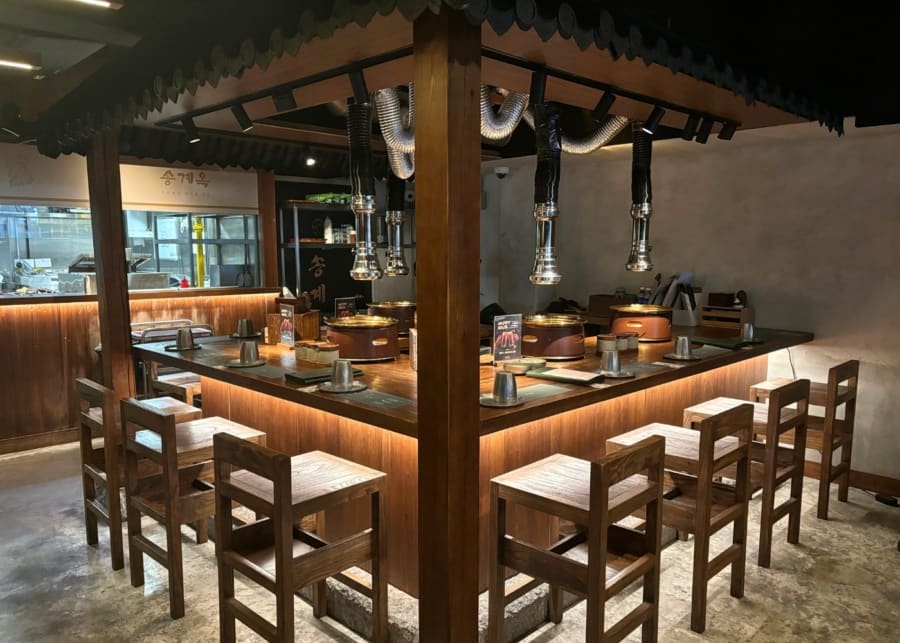
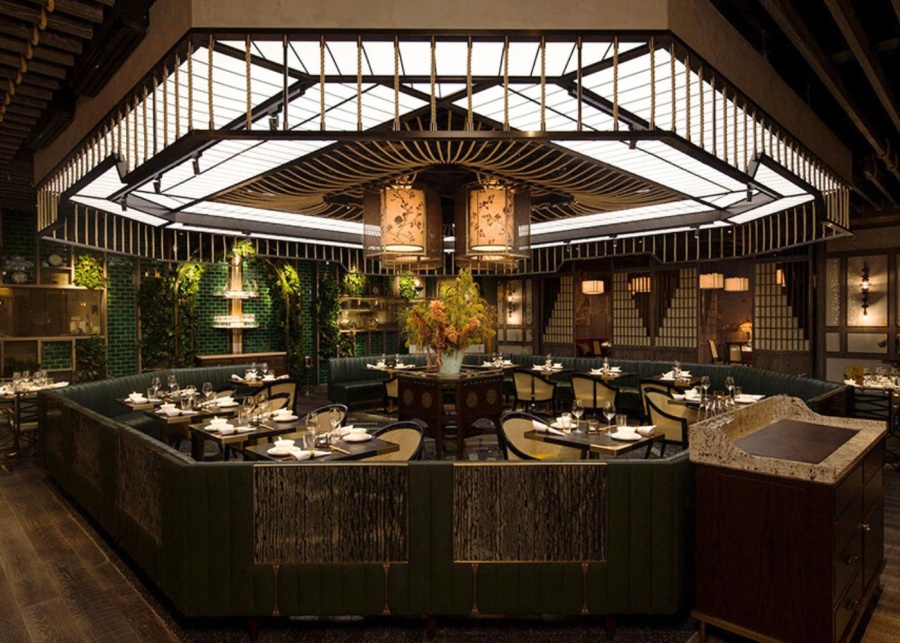
Step inside and the architecture does much of the talking. Song Gye Ok has recreated the hanok aesthetic of Korea's Joseon dynasty, wrapping diners in warm wood tones, lattice screens, and the kind of rustic eave lines that suggest centuries of tradition. Each grilling station is designed as a semi-private nook, a small world unto itself where the boundaries between kitchen and table dissolve.
We've seen this design language before in other Korean imports, but Song Gye Ok deploys it with restraint. There is no overwrought drama, no neon signage competing for attention. Instead, the space feels contemplative, almost monastic in its focus on the grill. The low tables invite a slower pace, a posture that encourages lingering. If you're dining here, claim one of these nooks. The alternative seating lacks the intimacy that makes the experience cohesive.
Six Cuts, One Bird
The signature grill platter presents all six specialty cuts in sequence, each one prepared and plated by a dedicated chef who explains not just how to eat it, but why it matters. The heart arrives first, small and dense, recommended with a pinch of salt. It carries a faint metallic note, the kind that reminds you this was once a working muscle. The gizzards follow, paired with minced garlic to soften their intensity. Both cuts demand a certain openness from the diner, a willingness to engage with textures and flavors that sit outside the usual comfort zone.
For those less inclined toward offal, the soft bone offers a gentler entry point. Grilled until crunchy, it pairs beautifully with sancho soya sauce, a sweet-umami combination that turns the cut into something almost addictive. But the revelation of the meal is the neck fillet, an unassuming piece that delivers surprising complexity. The exterior crisps to a golden shell, while the interior remains tender and juicy. It is the kind of cut that rewards curiosity, the kind that makes you wonder why it has been overlooked for so long.
The platter also includes thigh and tenders, both executed with precision. The meat is juicy, the skin rendered to a satisfying crackle. These are the familiar anchors, the cuts that reassure even as the gizzards and hearts challenge. For diners who prefer to skip the more adventurous offerings, Song Gye Ok offers a special grill platter that focuses on thigh, tenders, soft bone, and marinated cuts, along with seasonal vegetables.
Beyond the Grill
While the barbecue commands attention, the supporting cast of shareable dishes deserves recognition. The cheongguk doenjang stew is a study in fermented depth, using fermented soybeans instead of the standard soybean paste. The result is a broth that is richer, more pungent, and intensely umami. It is the kind of dish that divides a table, beloved by those who crave bold, funky flavors and approached cautiously by everyone else.
The Uiseong garlic fried rice arrives as a textural playground: egg yolk pooling in the center, cheese melting into the grains, crispy garlic chips adding crunch. It is indulgent without apology, a dish that embraces richness rather than dancing around it. For a lighter counterpoint, the bibim noodles offer cold, tangy relief, their vegetarian profile a welcome contrast to the meat-forward menu.
The Omakase Analogy
Song Gye Ok's decision to frame its chicken service as omakase-style is not mere marketing. The structure borrows from Japanese kaiseki traditions: a curated progression, each course timed and presented with intention, a chef present to explain and adjust. But the ingredients and techniques are unmistakably Korean, rooted in charcoal grilling and the nose-to-tail philosophy that has long defined Korean home cooking.
This hybrid approach reflects a broader trend we've observed across Asia's dining capitals. Chefs are increasingly borrowing the formal language of Japanese fine dining, applying its rigor and ceremony to regional ingredients and techniques that have historically been considered rustic or provincial. The result is a kind of culinary code-switching, where the structure elevates the ingredients without erasing their cultural context.
What It Signals
Song Gye Ok's arrival in Singapore is part of a larger shift in how Asian cities are importing and adapting Korean dining culture. For years, Korean barbecue in Southeast Asia meant beef and pork, soju and beer, tableside grills crowded with banchan. Song Gye Ok asks diners to slow down, to consider the bird as more than a budget protein, to engage with cuts that require explanation and, in some cases, courage.
It is not a revolutionary concept in Korea, where chicken barbecue restaurants have long occupied a distinct niche. But in Singapore, where Korean dining has traditionally skewed toward the familiar and the Instagrammable, Song Gye Ok represents a bet that diners are ready for something more challenging, more specific, more rooted in a particular culinary tradition.
The Verdict from the Table
The experience at Song Gye Ok is not for everyone. Those who approach offal with skepticism will find the heart and gizzards difficult to embrace, no matter how skillfully they are grilled or how thoughtfully they are seasoned. But for diners willing to trust the process, the meal offers moments of genuine discovery. The neck fillet alone justifies a visit, a cut that deserves to be far better known.
The hanok setting provides the right frame, intimate without feeling cramped, theatrical without tipping into spectacle. The chefs are attentive without hovering, knowledgeable without condescending. And the supporting dishes, particularly the fermented soybean stew and garlic fried rice, prove that Song Gye Ok's ambitions extend beyond the grill.
In a dining landscape increasingly crowded with Korean imports, Song Gye Ok distinguishes itself not by being louder or flashier, but by being more specific. It knows exactly what it is, and it executes that vision with clarity and confidence. For travelers and locals alike who have grown tired of the samgyeopsal script, it offers a compelling alternative, one bird at a time.
Credit: Yuki Ling
Spot something wrong? Email editors@globalchicvoyage.com. We log every correction publicly.
RELATED
SEE ALL →
28 Jul 2026 / 5 min
24 Jul 2026 / 5 min
30 Jun 2026 / 5 min
13 Jun 2026 / 5 min