
When Aristocracy Meets Quiet Luxury in Lisbon's Garden District
A 19th-century mansion that once echoed with decadent soirées now offers something more elusive: restraint, hand-painted ceilings, and the curious presence of Indian runner ducks.
SI
7 Jul 2026 · 5 MIN READ · UPDATED 17 AUG 2026
A Palace Built for Newspaper Fortunes
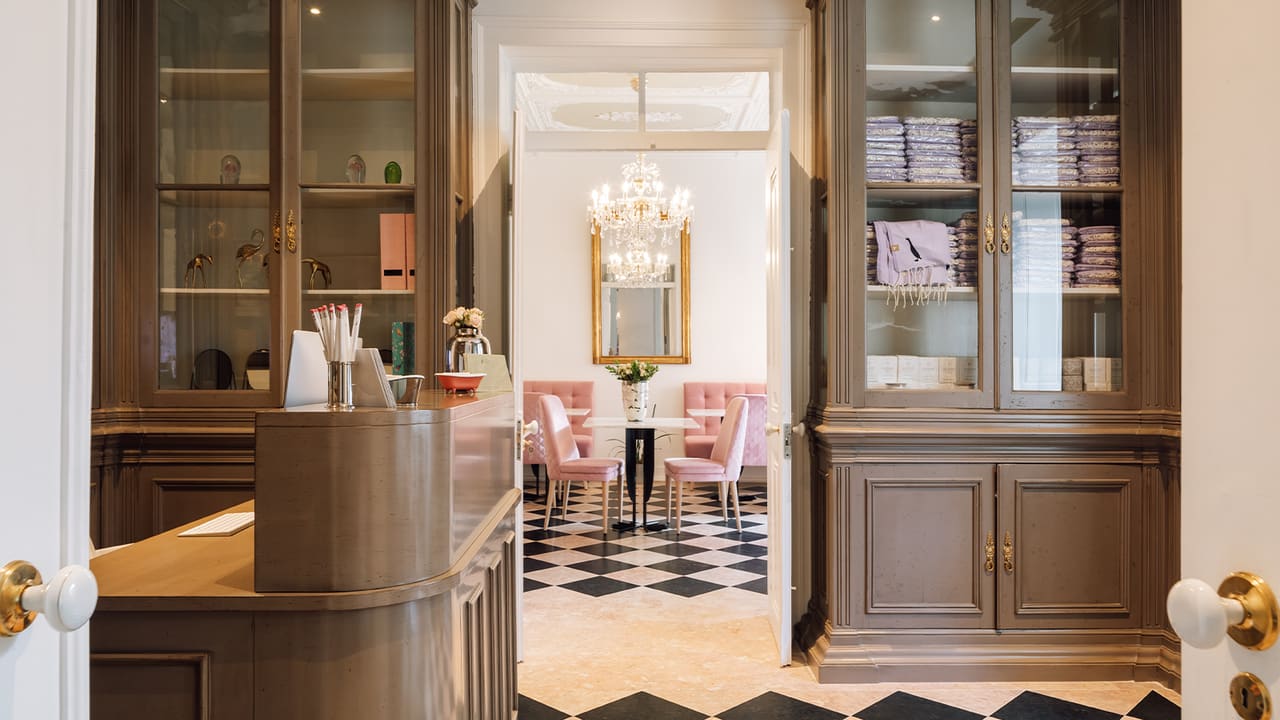
There are buildings in Lisbon that seem to hold entire centuries within their walls, and the structure that stands at the edge of Príncipe Real is one of them. Built in 1877 for a co-founder of the city's influential press, the mansion was never meant to be humble. Its original patron understood that architecture could serve as both residence and statement, a place where ornate stucco and hand-painted arabesque ceilings declared one's position in the capital's social hierarchy.
By the time the Teixeira da Mota family acquired the property, Lisbon's aristocracy had already claimed the surrounding neighbourhood as their own. The mid-19th century had seen Príncipe Real emerge as a leafy enclave, named to honour King Dom Pedro V, who ruled briefly between 1853 and 1861. Here, away from the commercial bustle of lower Lisbon, families of means built estates framed by jacaranda trees and wisteria, their gardens offering respite from the city's summer heat.
For more than a century, the Teixeira da Mota family made the mansion a centrepiece of that world. The ballroom hosted parties that became part of Lisbon lore, events where champagne flowed and the city's elite gathered beneath chandeliers. At Global Chic Voyage, we've long observed how certain properties become stages for their eras, and this palazzo was precisely that: a venue where pre-revolutionary Portugal performed its final, extravagant acts.
The Slow Decline and an Unlikely Discovery
When the family departed in 1980, the building began its quiet surrender to time. Plaster cracked, tiles loosened, and the rooms that had once hummed with conversation fell silent. For decades, the mansion sat in disrepair, a ghost of Lisbon's gilded past visible to anyone walking the neighbourhood's cobblestoned streets.
Then, in 2015, two retired Britons named Miles and Gail Curley encountered the derelict structure. They had owned a small ecological farm in Mallorca years earlier, a detail that would later manifest in unexpected ways throughout their restoration. What they saw in the abandoned mansion was not ruin but potential, the kind of project that demands equal parts capital, patience, and a willingness to honour what came before.
Working alongside FAT (Future Architecture Thinking), a British design firm, the Curleys embarked on a restoration that prioritized authenticity over reinvention. Classical architecture was preserved, ornate stucco meticulously repaired, and the original Portuguese azulejos restored tile by tile. The arabesque ceilings, once obscured by decades of neglect, were painstakingly brought back to their original hand-painted glory.
The result is a boutique hotel that has earned industry recognition not for flashy innovation but for its careful stewardship of historical craft. The property now holds 25 rooms and suites, each occupying spaces that once served very different functions. You might sleep in what was the family ballroom, or bathe in a Drummonds roll-top tub positioned to frame views of a jacaranda in full bloom.
The Recurring Motif of an Unusual Bird
Amid the classical grandeur, visitors encounter an unexpected leitmotif: the Indian runner duck. The bird appears throughout the hotel in various forms, a playful counterpoint to all the aristocratic gravitas. The choice stems from the Curleys' farming days in Mallorca, when a friend gifted them two Indian runner ducks that became unlikely sources of fascination.
It's the kind of personal touch that luxury hospitality often lacks, a reminder that even the most polished properties are shaped by individual quirks and memories. The ducks serve no practical purpose, of course. They simply exist as a thread connecting the owners' past to the mansion's present, a private joke made public.
Light, Stone, and the Architecture of Ascent
At the building's core rises a cascading stairway, the kind of architectural feature that functions as both circulation and spectacle. A skylight floods the space with natural light, illuminating walls painted in soft pink tones. It's a study in how colour and illumination can transform vertical movement into something contemplative, each step upward accompanied by shifting patterns of sun and shadow.
The hotel's 1,400-square-metre garden extends the mansion's footprint into the outdoors, creating what amounts to a private oasis within the city. Wisteria climbs an exterior staircase, while bougainvillea in deep pink cascades down stone walls. Jasmine and lemon blossom add fragrance to the air, and a swimming pool offers a cool counterpoint to Lisbon's summer intensity.
These are the details that distinguish thoughtful hospitality from mere accommodation. At Global Chic Voyage, we've noticed that the properties we return to year after year are rarely the ones with the most amenities. They're the ones where design choices feel inevitable, where gardens bloom not because a landscape architect mandated them but because someone genuinely loves the way jasmine smells at dusk.
From Gatsby-Esque Grandeur to Restrained Elegance
The transformation from private mansion to boutique hotel has necessarily shifted the building's character. Where once there were wild parties and champagne-soaked evenings, there is now a more measured elegance. The ballroom still exists, but its current incarnation invites daydreaming rather than dancing.
This is luxury calibrated for a different era, one less interested in spectacle and more attuned to subtlety. You can sip rosé in the garden, explore the neighbourhood's shops along hilly streets that demand comfortable footwear, or simply sit beneath a jacaranda and imagine the voices that once filled these rooms.
The Príncipe Real neighbourhood itself has evolved alongside the mansion. The area remains residential and leafy, but it now attracts a mix of locals and visitors drawn to independent boutiques, galleries, and cafés. It's the kind of district that rewards slow exploration, where cobblestoned streets wind upward and each turn reveals another facade worth studying.
The Quiet Luxury of Historical Memory
What the Curleys have created is not a museum piece but a living property that acknowledges its past without being trapped by it. The mansion's history as a centre of aristocratic life is present in every restored ceiling and preserved tile, but the current iteration offers something that extravagant parties never could: calm.
This is the paradox of certain luxury properties. They succeed not by erasing history but by allowing it to coexist with contemporary needs. The hand-painted ceilings remain, but so do modern comforts. The ballroom endures, but it no longer demands performance from its guests.
At Global Chic Voyage, we've watched luxury travel increasingly favour properties that offer narrative depth over novelty. Travellers want to stay in places that feel connected to their location, where architecture and design reflect genuine engagement with local craft and history. This Lisbon mansion delivers precisely that, a retreat where 19th-century opulence has been tempered into something more sustainable: a boutique hotel that whispers its stories rather than shouting them.
The Indian runner ducks, scattered throughout in ceramic and paint, serve as a final reminder that even the most serious restoration projects benefit from a sense of humour. They're a small rebellion against the tyranny of good taste, a signal that luxury need not always take itself so seriously.
For those seeking respite in Lisbon, the mansion offers an alternative to the city's busier hotel districts. Here, in a neighbourhood once reserved for royalty and their retinue, you can experience what it means to occupy a space that has been shaped by both grandeur and restraint, where history is honoured but not ossified, and where the only parties now are the quiet ones you host for yourself beneath the jacaranda trees.
Image credit: Palácio Príncipe Real
Spot something wrong? Email editors@globalchicvoyage.com. We log every correction publicly.
RELATED
SEE ALL →
25 Jul 2026 / 5 min
31 Jul 2026 / 5 min
28 Jul 2026 / 5 min
28 Jul 2026 / 5 min