
Where Portland, Maine Found Its Soul in Hospitality
A decade ago, the city's lodging landscape was a desert of chain properties and nautical clichés. Today, historic forts, industrial conversions, and island enclaves tell a very different story.
CG
28 Jul 2026 · 5 MIN READ · UPDATED 17 AUG 2026
The Turning Point
There is a particular moment that arrives in every city's evolution, when its reputation finally catches up with reality. For Portland, Maine, that moment came quietly, without fanfare, sometime in the last decade. The city had already established itself as an unlikely stronghold of culinary excellence and craft brewing, a place where chefs and artists gravitated despite the brutal winters and geographic isolation. Yet the hospitality infrastructure lagged painfully behind, a landscape of perfunctory chains and bed-and-breakfasts adorned in the kind of nautical kitsch that made discerning travelers wince.
At Global Chic Voyage, we've watched this transformation unfold with the kind of fascination usually reserved for long-dormant volcanoes suddenly stirring to life. What emerged was not simply a collection of new hotels, but rather a complete reimagining of what lodging could mean in a small coastal city with outsized ambitions. The properties that have opened in recent years do not merely accommodate visitors; they interpret Portland's identity through architecture, service philosophy, and a deep engagement with place.
Islands as Time Capsules
A ten-minute boat ride from the mainland deposits you on House Island, where Fort Scammel has stood since 1808. Built of granite and reinforced during the Civil War, it remains the only military installation in Casco Bay to have seen actual combat. The tunnels and fortifications are testament to a era when these waters held strategic importance, when the nation's young borders required constant vigilance.
Today, Fortland has transformed this sixteen-acre private island into something that defies easy categorization. Seven yurts and cabins occupy the grounds, each appointed with Scandinavian-inspired textiles against hardwood floors, sleeping two to four guests. Some feature private decks that frame sunrise views over the harbor, lighthouse silhouettes, and the city skyline rendered small by distance. The design aesthetic borrows from Northern Europe rather than New England, a deliberate choice that allows the island's natural drama to provide all the coastal context necessary.
This is glamping elevated to a level that makes the term itself feel inadequate. All linens and towels are provided, and the eco-conscious approach extends to every operational detail. What strikes us most profoundly is how the property honors its military heritage without becoming a theme park, how it offers luxury without severing the connection to the raw landscape that surrounds it.
From Barracks to Leisure
Great Diamond Island holds its own historical weight. Before it became part of America's coastal defense network in the nineteenth century, artists sought refuge here. Henry Wadsworth Longfellow and Harriet Beecher Stowe understood what the island offered long before Fort McKinley was constructed to guard Portland's harbor approaches.
The Inn at Diamond Cove now occupies those former military barracks, a sprawling conversion that has retained the bones of institutional architecture while layering in contemporary resort amenities. The car-free island allows for a particular kind of decompression. Guests arrive via ferry from the Maine State Pier or private boat, greeted by golf carts that shuttle them to the property. From there, the days unfold around private beaches, duckpin bowling, a game room filled with vintage arcade machines and pool tables, tennis courts, an outdoor pool, and fire pits that become gathering points as the sun drops toward the horizon.
There is a yoga studio. A basketball court. A twenty-four-hour fitness center. Free bicycles for exploring the island's limited but lovely roads. What the inn offers, fundamentally, is permission to slow down in a culture that has largely forgotten how. The military precision of the original buildings now serves a different kind of order, one measured in unhurried meals and long afternoons with nothing particular to accomplish.
The Old Port Renaissance
Back on the mainland, Old Port represents Portland's commercial and maritime heart. The working waterfront here is among the last of its kind in New England, a rarity in an era when most harbors have been sanitized into tourist attractions disconnected from actual industry. The Evalina Hotel plants itself directly in this energetic convergence, occupying a nineteenth-century building that has witnessed the harbor's evolution.
The nineteen suites here embrace the building's history through restored architectural details and collaborations with local artisans. Full kitchens, separate bedrooms, and luxuriously outfitted bathrooms give each unit the feel of a private apartment. Soundproofing and keyless entry create a sense of seclusion despite the property's location in one of Maine's most trafficked districts. What the Evalina lacks in traditional hotel services, it compensates for through proximity. World-class restaurants, cocktail bars, art galleries, and boutiques are steps away. The property functions less as a destination unto itself and more as a beautifully appointed base camp for urban exploration.
The Docent's Collection takes a similar philosophy and amplifies it. The name itself signals intent: a docent guides and educates, offering context without imposing structure. Three nineteenth-century buildings have been meticulously restored, their interiors finished with original local art and contemporary luxury. Multi-bedroom suites come equipped with high-end kitchens and bathrooms stocked with premium amenities, yet there is no restaurant, no room service, no spa or fitness center on site.
Mobile check-in and an on-call staff replace the traditional front desk. The approach may initially puzzle guests accustomed to grand hotel conventions, but it reflects a sophisticated understanding of how certain travelers actually want to experience a city. Portland is small enough to navigate intuitively, rich enough in independent establishments to reward exploration. The Docent's Collection positions itself as curator rather than provider, pointing guests toward partner gyms, spas, and restaurants while offering the kind of residential comfort that makes returning at the end of a long day feel like coming home.
Balancing Act
The Portland Harbor Hotel exemplifies a particular kind of equilibrium that defines the city's contemporary identity. Coastal without kitsch. Small but worldly. High quality yet unpretentious. Recent renovations have only sharpened the property's focus on personal service and thoughtful detail. The design walks a careful line, mixing traditional nautical elements with abstract installations that suggest marine life without literalizing it.
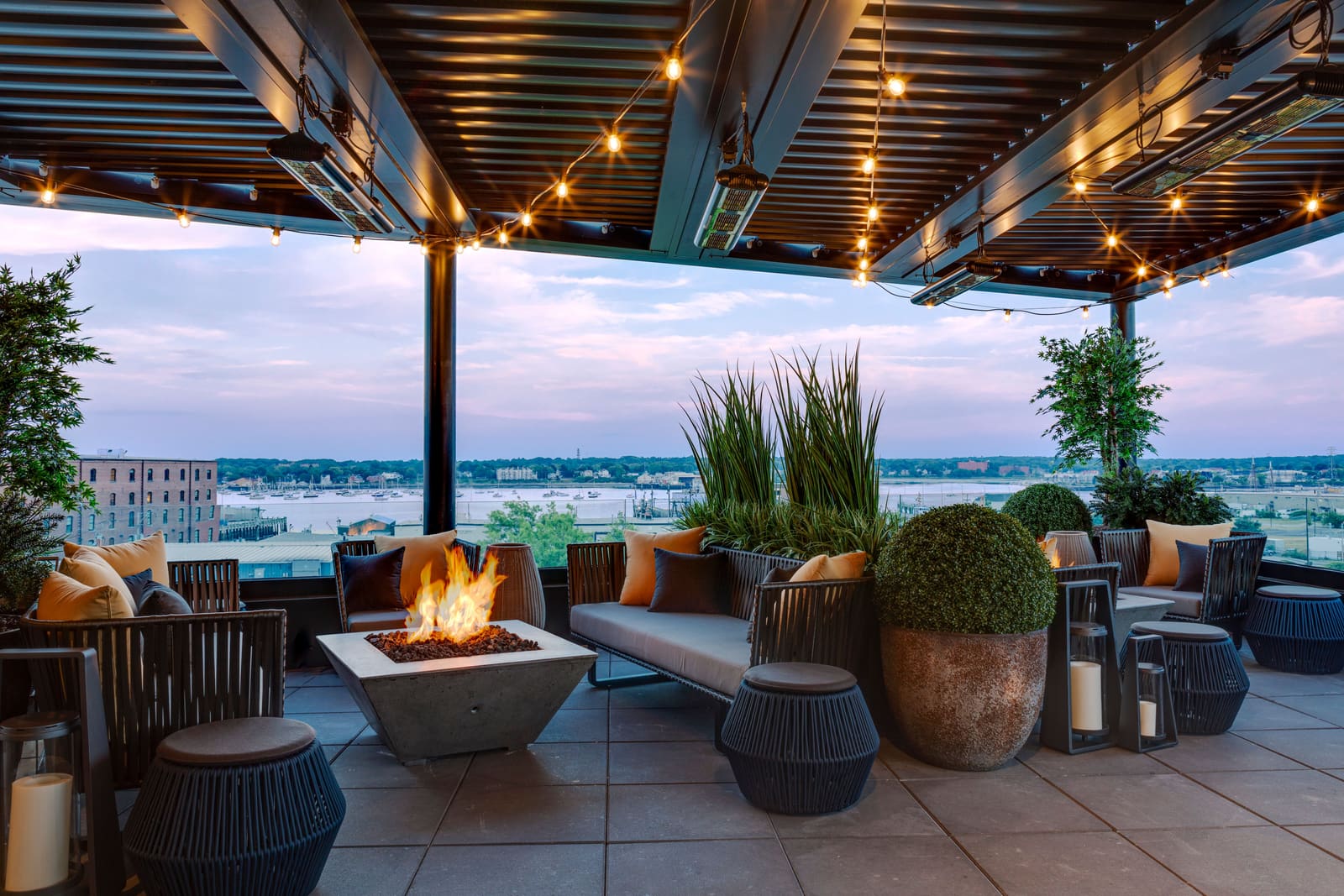
Harbor Bistro & Terrace has become a draw that transcends the hotel itself. The outdoor space, in particular, functions as a gathering point where hotel guests and Portland residents mingle over weekend brunch, evening cocktails, and occasional live music. Twinkling lights, garden seating, and a menu that takes local ingredients seriously create the kind of scene that feels effortless but requires tremendous care to maintain.
The Weldon Hotel, also situated in Old Port within sight of the fish pier, offers a different kind of balance. There is no bar, no restaurant, no public lounge. What it provides instead is apartment-style lodging that appeals to two distinct constituencies: families seeking the ease of home while accessing urban amenities, and business travelers who value seamless technology and co-working spaces over concierge hand-holding. The property attracts regular visitors who have moved past needing introduction to the city and simply want a well-appointed, frictionless place to stay. Pets are welcome, high-speed internet is reliable, and the surrounding cobblestoned streets provide all the atmosphere anyone could require.
The West End's Quiet Grandeur
If Old Port pulses with commercial energy, the West End offers something closer to repose. The neighborhood's Victorian mansions line streets that feel residential even as they accommodate visitors. The Longfellow Hotel occupies this territory with a confidence that comes from understanding scale. Its sweeping lobby functions as the neighborhood's unofficial living room, with enormous windows overlooking Congress Street, locally sourced furniture, comfortable banquettes, and a lobby bar that draws residents and travelers in equal measure.
The forty-eight rooms here present a pared-back interpretation of Maine aesthetics. Off-white walls and high ceilings create light-filled spaces where carefully selected furniture, including exceptionally comfortable velvet chaise lounges, can make their presence felt. The city beckons just outside, full of sites and experiences, yet the rooms themselves encourage lingering. This tension between urban exploration and private retreat is not accidental; it reflects the dual nature of Portland itself, a place that rewards both engagement and withdrawal.
The West End Inn takes the neighborhood's historic character even further, occupying two beautifully restored buildings a block apart. Twelve-foot ceilings adorned with anthemia medallions, fireplaces in common areas, and an atmosphere of easygoing elegance make the property particularly appealing to couples marking anniversaries or honeymoons. Afternoons here unfold slowly, with tea by the fire after walks along the nearby Western Promenade, a parkland that overlooks the harbor and mountains beyond.
What Changed, and Why It Matters
The hotels that have emerged in Portland over the past decade are not simply responses to increased tourism, though visitor numbers have certainly grown. They represent something more fundamental: a city's decision to take itself seriously, to invest in the kind of infrastructure that matches its cultural and culinary ambitions.
What we find most compelling is the diversity of approaches. Island retreats that honor military history while pursuing environmental responsibility. Urban properties that prioritize residential comfort over traditional hotel services. Boutique establishments that function as neighborhood anchors. Historic conversions that respect their architectural past while embracing contemporary luxury. No single model dominates; instead, the city has cultivated a hospitality landscape as varied as its restaurant scene, each property carving out distinct territory while contributing to a larger narrative.
The old nautical kitsch has not disappeared entirely, but it has been refined into something more artisan, more considered. You will still find maritime references throughout these properties, but they arrive in the form of abstract art, thoughtful design choices, and architectural nods rather than literal anchors and life preservers mounted on walls. The difference is the difference between decoration and interpretation, between theme and theme.
The View from Here
Portland's transformation from hospitality desert to destination did not happen by accident. It required capital, certainly, but also vision. Developers and hoteliers willing to take risks on a small city that most Americans still could not locate on a map. A community that had built something worth visiting, then created places worthy of housing those visitors.
At Global Chic Voyage, we measure a destination's maturity not by the number of hotel rooms it offers but by the range of experiences those rooms enable. By this measure, Portland has arrived. Whether you seek eco-conscious escape on a private island, apartment-style independence in a working harbor district, or Victorian elegance in a residential neighborhood, the options now exist. The city that once offered only chains and clichés now provides genuine choice, and with it, the possibility of finding accommodation that aligns with your particular vision of what travel should be.
The question is no longer where to stay in Portland. The question is which version of Portland you want to experience, and which property can best facilitate that particular encounter. That this question now has multiple compelling answers is itself the story, the transformation that turned a regional culinary destination into a place where the lodging is as thoughtfully conceived as the meals.
Credit: Greg Premru
Spot something wrong? Email editors@globalchicvoyage.com. We log every correction publicly.
RELATED
SEE ALL →
31 Jul 2026 / 5 min
28 Jul 2026 / 5 min
27 Jul 2026 / 5 min
14 Jul 2026 / 5 min