
The Unspoken Language of Courtesy Between Guests and Housekeepers
Small gestures of consideration transform the invisible choreography that keeps luxury hotels running - and reveal what true hospitality looks like from both sides of the door.
CG
18 Jul 2026 · 5 MIN READ · UPDATED 17 AUG 2026
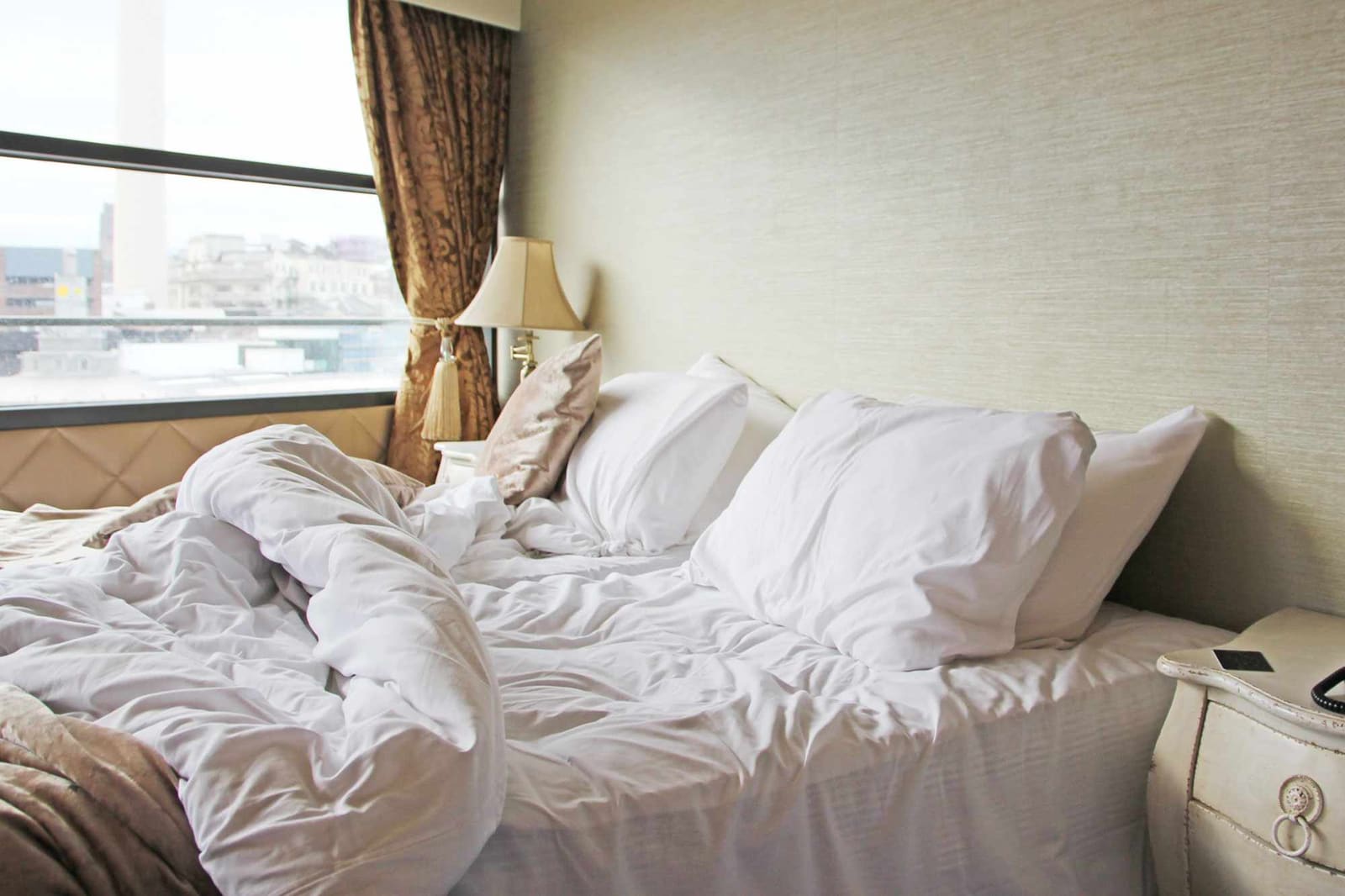
The Threshold Between Public and Private
There is a particular quality of silence in a hotel corridor at ten in the morning. Somewhere behind one door, a guest is still asleep. Behind another, a housekeeper moves through the practiced rhythm of remaking a room - smoothing sheets into hospital corners, aligning remote controls at precise angles, ensuring the bathroom mirror reflects nothing but clarity. The two rarely meet, yet the quality of one's stay depends almost entirely on the invisible work of the other.
At Global Chic Voyage, we've watched this relationship evolve across properties from Kyoto to Marrakech, and what strikes us most is how little most travelers understand about the people who shape their experience of luxury. Not the architects who designed the soaring lobby, not the chefs who plate breakfast at dawn, but the individuals who enter your most private space and restore it to a state of grace.
The disconnect is not born of malice but of invisibility. Housekeeping operates in the margins - arriving after you leave, departing before you return. Yet the quality of that work, and the conditions under which it happens, are shaped profoundly by guest behavior. A few small shifts in how travelers occupy hotel space can mean the difference between a sustainable, dignified work environment and one that extracts a quiet toll.
The Geography of Consideration
Consider the simple act of decluttering before stepping out for the day. Wet towels gathered in the tub rather than scattered across upholstery. Personal items consolidated on a desk rather than dispersed across every surface. Valuables secured in a safe rather than left in ambiguous piles that force a housekeeper to navigate the anxiety of what to touch, what to avoid, whether moving a laptop three inches to wipe down a table might later be construed as intrusion.
These are not requests born of fastidiousness but of efficiency and respect. A room that requires archaeological interpretation before it can be cleaned is a room that takes twice as long to service. In properties where housekeepers are responsible for fifteen or more rooms per shift, those extra minutes compound. The result is either rushed work - corners cut, details missed - or physical strain that accumulates over years into chronic injury.
We have spoken with housekeeping managers across Asia and Europe who describe the same phenomenon: guests who treat hotel rooms as if they exist in a state of perpetual reset, unmoored from the labor required to maintain that illusion. Minibar bottles abandoned in bathroom cabinets. Bedding stripped and piled in ways that make sorting linens for laundering a guessing game. Trash dispersed across multiple bins, or none at all.
The remedy is not performative tidiness but simple consolidation. Grouping used glasses on a tray. Leaving the Do Not Disturb sign on the door only when genuinely needed, rather than as a default setting that forces housekeeping to compress an entire day's work into a narrow afternoon window. Recognizing that luxury is not the absence of effort but the presence of labor rendered so seamless it seems effortless.
The Economics of Generosity
Tipping culture in hotels remains one of the most inconsistent practices in global travel. In North America, a daily gratuity left on the pillow or desk is standard etiquette. In Japan, it can cause confusion or even offense. Across Europe, the practice varies wildly by country, by property, by the whims of individual travelers who may tip lavishly at restaurants yet never consider the person who scrubbed their bathtub.
What remains consistent is that housekeeping is among the most physically demanding and least visible roles in hospitality. Wages often hover near minimum thresholds, and turnover rates are high. A modest daily tip - left each morning rather than in a lump sum at checkout, since different staff may service a room across a multi-night stay - acknowledges not just the work but the worker.
Yet financial generosity is only one currency. Verbal acknowledgment matters too. A brief greeting in the hallway. A note of thanks left alongside that tip. In cultures where service workers are trained to be unobtrusive to the point of invisibility, these small recognitions of humanity can carry disproportionate weight.
At properties where we have returned year after year, the most memorable service has come not from Michelin-starred restaurants or infinity pools but from housekeepers who remember how you take your coffee, who leave an extra blanket without being asked, who somehow intuit the difference between a room that should be refreshed and one that should be left undisturbed. That level of care is not algorithmic. It is relational. And relationships require reciprocity.
The Rituals of Departure
Checkout procedures vary, but one principle applies universally: leave the room in a state that communicates respect for the person who will enter it next. This does not mean stripping the bed - linens must be sorted and sanitized regardless - but it does mean not leaving behind the detritus of a stay as if the room were a festival campground.
Dispose of perishable food. Consolidate trash. If a spill has occurred, a brief note alerting housekeeping prevents a surprise that might complicate their work. If hotel-provided items have been damaged - a broken glass, a stained towel - mention it at the desk rather than concealing it in a drawer. These are not confessions of wrongdoing but acts of transparency that allow staff to address issues efficiently rather than discovering them mid-shift.
We have also observed, across dozens of properties, that guests who engage thoughtfully with housekeeping staff often receive a level of service that transcends the transactional. A request for extra pillows becomes an opportunity for a housekeeper to suggest the best walking route to a nearby temple. A casual conversation in a hallway yields a recommendation for a family-run restaurant that appears in no guidebook. Hospitality, at its best, is a two-way exchange. But it requires guests to see the people providing it.
The Architecture of Mutual Respect
Hotels invest heavily in training staff to anticipate guest needs, to move through spaces without disruption, to render service invisible. What receives less attention is training guests to inhabit hotels as shared spaces - temporary homes maintained by real people working under real constraints.
The result is a curious asymmetry. Travelers who would never leave a friend's apartment in disarray think nothing of abandoning a hotel room in chaos. Those who tip generously at dinner may never consider the person who will scrub that same plate in a basement kitchen. The five-star rating system encourages guests to evaluate service with clinical detachment, as if hotels were machines rather than ecosystems of human labor.
At Global Chic Voyage, we return often to the idea that luxury travel should elevate everyone it touches - not just the traveler but the communities and individuals who make that travel possible. This is not about performative ethics or virtue signaling. It is about recognizing that the quality of your stay is inextricably linked to the quality of the work environment for those who serve you.
A housekeeper who is not racing against impossible quotas, who is not navigating rooms left in disarray, who is acknowledged and compensated fairly, is a housekeeper who can deliver the kind of intuitive, attentive service that defines truly memorable hospitality. The inverse is also true. Rushed work, high turnover, and burnout manifest in small ways - a missed detail, a brusque interaction, a sense that the invisible machinery of the hotel is grinding rather than humming.
What Thoughtfulness Looks Like in Practice
The specifics will vary by property and culture, but a few principles apply broadly. Communicate your preferences clearly - whether you want daily housekeeping, fresh towels, or prefer to be left undisturbed. Use the Do Not Disturb sign judiciously rather than leaving it up for days on end, which compresses housekeeping schedules and can create hygiene issues in rooms that go unserviced too long.
If you are staying multiple nights, a brief reset each morning - consolidating toiletries, hanging towels you intend to reuse, clearing surfaces of personal items - makes the housekeeper's job faster and less intrusive. If you are checking out, a final walkthrough to ensure nothing is left behind and no mess requires special attention is a small courtesy that ripples through the rest of the staff's day.
And perhaps most importantly, resist the urge to treat hotel rooms as spaces where normal social contracts do not apply. The fact that you are paying for a service does not erase the humanity of the person providing it. Thoughtfulness costs nothing. Its absence, however, extracts a price that compounds over time - in staff morale, in the quality of work, in the culture of an entire property.
The Quiet Reciprocity of Care
In the end, the relationship between guest and housekeeper is one of the most intimate in travel. These are the people who see the private geography of your stay - the books left open on nightstands, the clothes draped over chairs, the small rituals of how you inhabit a room. They know whether you are tidy or chaotic, whether you drink the minibar dry or leave it untouched, whether you are traveling alone or with someone whose presence is evident only in the arrangement of pillows.
That intimacy, even when it never involves direct interaction, deserves acknowledgment. A little thoughtfulness - expressed through consideration, communication, and the occasional gesture of gratitude - transforms the invisible choreography of housekeeping into something closer to mutual respect. And in that transformation, the hotel becomes not just a place to sleep but a space where everyone, guest and worker alike, is seen.
Photo: Emma Gibbs / Getty Images
Spot something wrong? Email editors@globalchicvoyage.com. We log every correction publicly.
RELATED
SEE ALL →
22 Jun 2026 / 5 min

21 Jul 2026 / 5 min

27 Jun 2026 / 5 min

18 Jun 2026 / 5 min