
The Invisible Half of Every Great Stay
True hospitality is built on exchange, not delivery - and the guest's presence matters as much as the hotel's polish.
SI
14 Jul 2026 · 5 MIN READ · UPDATED 17 AUG 2026
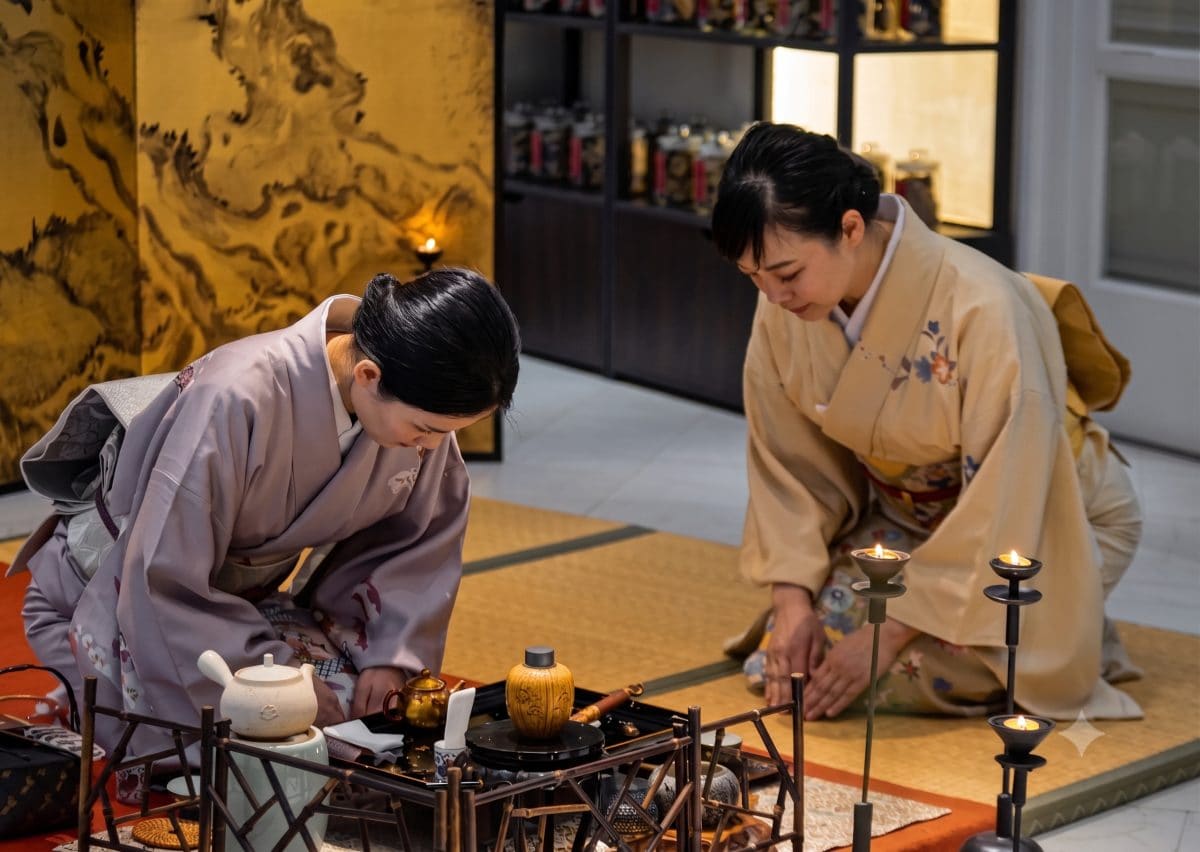
The Termite Mound and the Lion
In South Africa's Sabi Sands, a guide worth remembering does not simply drive toward large mammals. They are watching the angle of light on ancient termite mounds, listening for the alarm cry of a francolin hidden in scrub, noticing the particular quality of silence that settles over the veld when something significant is near. By the time the leopard appears in the golden grass, the experience has already unfolded through dozens of small observations, each one deepening the guest's connection to the landscape.
Yet the entire exchange depends on one thing the guide cannot control: whether the guest is willing to participate. The traveler who waits impatiently for the sighting, phone poised for the Instagram frame, will likely see the leopard. The one who asks about the mound, who learns to read the bush through borrowed eyes, walks away with something closer to transformation. One leaves with content. The other leaves with sight.
At Global Chic Voyage, we have watched this dynamic play out not just in game reserves but in hotel lobbies, at tasting menus, during walking tours led by architects and historians. The failure point is rarely the service. It is the absence of reciprocity.
What Hospitality Cannot Do Alone
We have become extraordinarily skilled at measuring hospitality's delivery side. Thread count, response times, the choreography of check-in, the provenance of olive oil, the number of Michelin stars in the restaurant. These elements matter, and they require real investment. But they represent only one half of the equation, and it is the half the industry can actually control.
The other half belongs to the guest, and it cannot be designed, purchased, or delivered by even the most accomplished property. Attention. Curiosity. The willingness to step into an experience rather than wait for it to arrive fully formed. These are not luxuries a hotel can provide, no matter how thoughtfully it curates its art collection or trains its concierge team.
We have stayed in properties where every detail was impeccable and left feeling oddly unmoved. We have also stayed in simpler places where a conversation with a bartender about regional wine, or a walk through a market suggested by the front desk, became the axis around which the entire trip turned. The difference was not in what was offered. It was in what we were willing to receive.
The Design That Goes Unnoticed
There is a particular irony in luxury hospitality's increasing emphasis on design. Properties commission renowned architects, install museum-quality art, obsess over the grain of wood paneling and the weight of door handles. Then guests arrive, glance around, and retire to their rooms to scroll. The Instagram post tags the hotel. The design itself barely registers in memory.
This is not an argument against beautiful spaces. Architecture and craft create the container within which experience becomes possible. But when design is expected to perform the entire job of creating meaning, it is being asked to do something it was never meant to do alone. A Tadao Ando chapel is moving because the visitor arrives ready to be moved, willing to sit in silence, open to the play of light on concrete. The same space means nothing to someone checking their phone in the doorway.
Luxury properties have begun to recognize this, though often indirectly. The rise of programming - guided hikes, foraging expeditions, artist residencies, cooking classes with local chefs - is an attempt to create frameworks for engagement. These offerings work when they invite participation, when they provide structure without over-scripting, when they trust the guest to meet the experience halfway.
They fail when they become another form of passive consumption, another box to check, another amenity delivered without requiring anything in return.
What the Best Guides Already Know
The safari guide, the sommelier, the museum docent - these roles have always understood what much of hospitality is only now beginning to articulate. Their job is not to narrate a fixed script but to create the conditions under which someone else's curiosity can unfold. They offer context, ask questions, create space for observation. But they cannot force anyone to care.
We have met guides who can make a single tree fascinating and others who lead groups past extraordinary things without sparking any real interest. The difference is rarely knowledge. It is the ability to sense where a guest's attention lives and to gently redirect it toward something worth noticing. This is a form of hospitality that assumes partnership. It requires the guest to signal their interests, to ask questions, to be present enough to follow a thread of conversation or observation wherever it leads.
Hotels are beginning to adopt some of these instincts. A few properties now offer what they call "cultural concierges" or "experience curators," roles that go beyond restaurant reservations to help guests shape their time in a city or region. The best of these do not simply hand over a list. They listen, ask questions, and offer possibilities that feel tailored not to a demographic but to the specific person in front of them.
But even this depends on the guest showing up to the conversation, articulating their interests, trusting that the exchange will yield something better than a Google search.
The Limits of Effortlessness
For years, hospitality has chased the ideal of effortlessness. The guest should never have to think, ask, or wait. Every need should be anticipated, every friction smoothed away. This vision has produced some genuinely elegant service, but it has also created a strange passivity. If the goal is for the guest to do nothing, then the guest will do nothing - and the experience, no matter how polished, will remain inert.
There is a difference between ease and disengagement. Ease means the guest is free to focus on what matters, unburdened by logistical hassle. Disengagement means the guest never focuses on anything at all, drifting through a beautifully appointed blur.
The most memorable stays we have had were not the most effortless. They were the ones where someone on staff asked a question that required us to think, suggested something that required us to choose, or created a moment that required us to be fully present. A bartender in Kyoto who insisted we try a sake we had never heard of, then explained its history while we tasted it. A housekeeper in Puglia who noticed we were interested in local ceramics and sketched a map to a workshop in the hills. These were not grand gestures. They were small acts of engagement that assumed we were capable of meeting them.
Toward a Hospitality of Participation
If the future of luxury hospitality is to move beyond the flawless delivery of amenities, it will need to find ways to invite guests into a different kind of relationship. Not as passive recipients but as active participants. Not as consumers of experience but as co-creators of it.
This does not mean burdening guests with labor or making travel more complicated. It means signaling, from the first interaction, that curiosity is welcome, that questions are encouraged, that the property is not simply a stage set but a living place with stories, people, and possibilities that unfold only through engagement.
Some of this can be designed into the experience. Pre-arrival questionnaires that ask not just about dietary restrictions but about interests, passions, and what the guest hopes to learn. Spaces within the property that encourage lingering and conversation rather than quick passage. Staff trained not just to deliver but to listen, to notice, to respond to the particular person in front of them.
But much of it cannot be designed at all. It requires a shift in expectation, a quiet understanding that the best hospitality is not a one-way transaction. It is a duet, and both parties have to play their part.
What We Bring to the Table
At the end of the day, the question is not whether a hotel can create a perfect experience. The question is whether we, as guests, are willing to show up for the experience being offered. To put down the phone. To ask the question. To follow the guide's gaze toward the termite mound instead of waiting impatiently for the lion.
The properties we return to are not always the most polished. They are the ones where we felt seen, where our curiosity was met with knowledge and generosity, where the exchange felt real. And that exchange required something from us: attention, openness, a willingness to step into the unfamiliar and let it reshape us, even slightly.
Hospitality can build the stage, but it cannot force anyone to walk onto it. That step, the one that turns service into experience and experience into memory, belongs to the guest. It always has.
Photo: Teddy Yang / Pexels
Spot something wrong? Email editors@globalchicvoyage.com. We log every correction publicly.
RELATED
SEE ALL →
18 Jul 2026 / 5 min
9 Jul 2026 / 5 min
12 Jun 2026 / 5 min
13 Jul 2026 / 5 min