
In Search of London's Most Essential Afternoon Tea: A Year of Scones, Silver, and Ceremony
From Claridge's storied Foyer to The Ritz's gilded Palm Court, our editors spent twelve months chasing the perfect three-tiered stand — and found that the city's tea ritual remains as vital, and as varied, as ever.
CG
12 Jun 2026 · 5 MIN READ · UPDATED 17 AUG 2026
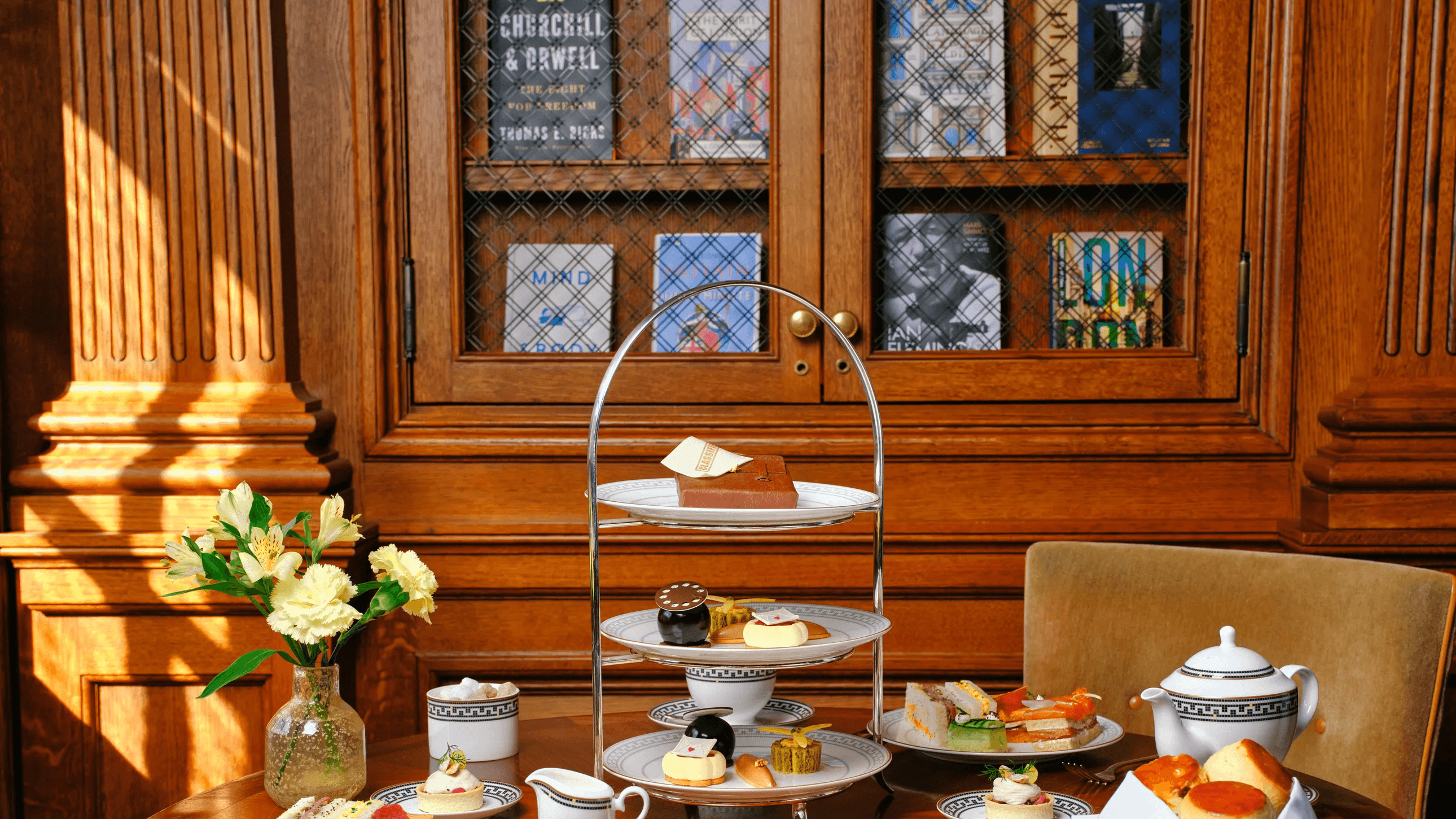
The Ritual Endures
It's mid-afternoon in Mayfair, and the pianist at Claridge's has just begun a Cole Porter standard. Sunlight filters through the Dale Chihuly chandelier — that gravity-defying sculpture of amber and topaz glass — and falls across tables set with bone china and triple-tiered stands. A waiter in tails refills a Darjeeling pot without being asked. Across the room, a couple photographs their scones before applying clotted cream in careful, ritualistic layers. This is afternoon tea in London in 2026: part performance, part pilgrimage, entirely sincere.
At Global Chic Voyage, we've watched the city's tea culture navigate waves of reinvention — themed collaborations, Instagram-optimized pastries, wellness-forward menus — yet the core ritual remains remarkably intact. The architecture of the experience hasn't changed: finger sandwiches, warm scones, a procession of sweets, pots of loose-leaf tea. What has changed is the context. In an era of hurried brunches and algorithmic dining recommendations, the deliberate slowness of afternoon tea feels almost subversive. It demands two hours minimum. It requires you to sit, converse, linger. It is, in short, a luxury of time.
We spent a year moving through London's tea salons — some over a century old, others newly minted — searching not for a definitive "best," but for what the ritual reveals about the city now. What we found was a practice still capable of surprise, still evolving within its Victorian framework, still offering something the rest of hospitality often forgets: permission to do nothing but savor.
The Heritage Standard: Claridge's and The Ritz
Claridge's approach to afternoon tea is instructive. The hotel could easily coast on reputation — it is, after all, one of Mayfair's most storied addresses — but instead treats each service as if its legacy depends on it. The Foyer, with its art deco flourishes and live music, sets a tone of mid-century glamour without tipping into kitsch. Staff move with practiced ease, anticipating needs before they're voiced. When our Earl Grey ran low, a fresh pot appeared without request. When the first round of sandwiches disappeared, a second materialized.
The tea itself — a Tregothnan Earl Grey, sourced from a Cornish estate cultivating tea since the 14th century — exemplifies the kind of quiet excellence Claridge's traffics in. It's bergamot-forward but not overpowering, robust enough to stand up to cream and sugar but refined enough to drink plain. The scones, served warm, achieve that elusive balance of crisp exterior and tender, nearly molten center. Clotted cream arrives in quantities that defy moderation. The jam, house-made, tastes more of fruit than sugar.
What Claridge's understands, and what separates it from imitators, is that afternoon tea is as much about atmosphere as sustenance. The playlist — 1920s standards performed live — never intrudes. The pacing allows for conversation. The staff, while attentive, never hover. It's an exercise in calibrated hospitality, and it works because it doesn't try too hard.
The Ritz, by contrast, leans into formality. Gentlemen must wear jackets and ties; the dress code is enforced without exception. The Palm Court, where tea is served, swims in gold leaf and mirrors, a maximalist interpretation of Edwardian opulence. A live harpist or pianist performs at every sitting. The effect is unabashedly theatrical, and the hotel makes no apologies for it.
What's remarkable is how well the operation runs beneath the gilt. Staff trained in Sri Lankan tea estates guide guests through a menu of twenty varieties, explaining provenance and preparation with genuine enthusiasm. Sandwiches arrive crustless and perfectly portioned, the cucumber slices thin as paper. Scones are enormous, warm, and accompanied by Cornish clotted cream thick enough to hold a spoon upright. Pastries and tarts occupy the top tier, each one a small architectural achievement. Whatever you can't finish is boxed to take home, along with a personalized cake if the occasion merits it.
The Ritz's afternoon tea is not subtle. It is grand, unapologetically so, and that grandeur is precisely the point. In a city increasingly dominated by pared-down Scandi minimalism, there's something refreshing about a space that commits fully to excess. It's a reminder that luxury, at its best, can be playful.
The Contemporary Turn: Themed Experiences and Seasonal Menus
London's newer tea offerings take a different approach, one rooted less in tradition than in collaboration and spectacle. The Lanesborough's Bridgerton-themed afternoon tea, now in its second iteration, exemplifies this shift. Timed to coincide with the show's fourth season, the menu features pastries conceptualized around plot points: Benedict's Masquerade, a chocolate and tonka mousse topped with a delicate chocolate mask; cakes referencing the masked ball and English garden scenes.
It's easy to dismiss such offerings as gimmicky, but that would be reductive. What The Lanesborough has done, effectively, is use a cultural touchstone to make afternoon tea accessible to a generation that might otherwise find the ritual intimidating. The setting — a light-flooded dining room beneath a domed glass roof — strikes a balance between opulence and approachability. The food, crafted by head pastry chef Jolan Thiry, is genuinely accomplished, not just decorative. Finger sandwiches filled with spicy harissa chicken and basil, or Westcombe cheddar with spring onion, show ambition beyond the traditional cucumber-and-cream-cheese repertoire.
The Savoy's Gallery takes a similar tack, blending heritage with contemporary sensibility. Head pastry chef Nicolas Houchet's creations — a chocolate-hazelnut cake layered with caramel ganache, a delicate Blue Lady Earl Grey and blackberry confection — read as modern patisserie, not Victorian throwbacks. The sandwich selection includes Coronation chicken, that curry-spiked classic, alongside chickpea alternatives for vegetarians. Scones arrive warm, their centers steaming, accompanied by lemon curd alongside the expected strawberry jam and clotted cream.
What's notable about The Savoy's approach is how it honors the past without being constrained by it. The Gallery's interiors reference the hotel's 1889 origins — Britain's first purpose-built luxury property — but the peach-hued palette and contemporary art feel distinctly of this moment. The tea menu, featuring over thirty varieties, includes The Savoy Afternoon Tea blend, a malty, fruity mix sourced from India and Sri Lanka. It's a small detail, but it speaks to the kind of considered curation that elevates an experience from pleasant to memorable.
The Democratization of Ritual
What's striking about London's afternoon tea landscape in 2026 is not just the range of offerings, but what that range represents. Afternoon tea, once the exclusive province of the Victorian elite, has become — within limits — more accessible. Mid-tier hotels and independent tearooms now offer competent, if less lavish, versions of the ritual. Pop-ups and collaborations introduce the format to audiences who might never set foot in The Ritz.
This democratization hasn't diluted the ritual so much as expanded its possibilities. A themed tea at The Lanesborough can coexist with Claridge's restrained elegance. A modern patisserie-focused service at The Savoy can share the stage with The Ritz's gilded traditionalism. What unites them is the underlying structure: the three-tiered stand, the progression from savory to sweet, the insistence on taking time.
At Global Chic Voyage, we're inclined to see this not as fragmentation, but as vitality. A tradition that can accommodate both reverent preservation and playful reinvention is a tradition with staying power. And in a city as relentlessly forward-looking as London, that's no small achievement.
Why the Ritual Still Matters
There's a tendency, in travel writing, to treat afternoon tea as charming anachronism — a quaint holdover from empire, more performance than substance. That reading misses something essential. The ritual endures not because Londoners are nostalgic, but because it offers something contemporary life increasingly lacks: structured leisure. The world outside moves at algorithmic speed. Inside these dining rooms, time slows. Conversation happens. Phones stay in pockets, mostly.
This is particularly resonant in 2026, as the hospitality industry grapples with what luxury means in an era of hyper-efficiency. Fast-casual chains optimize for speed. Ghost kitchens eliminate the dining room entirely. Against that backdrop, afternoon tea's insistence on slowness feels almost radical. It's a meal that cannot be rushed, a social ritual that resists optimization.
The best tea services understand this implicitly. They don't just serve scones; they create conditions for lingering. The live music at Claridge's and The Ritz isn't background noise; it's a signal that this is a space apart, governed by different rhythms. The multiple courses aren't indulgence for its own sake; they're a mechanism for pacing, for ensuring the experience unfolds gradually.
What We Learned
A year of afternoon teas taught us that the ritual's strength lies in its flexibility. There is no single "correct" version. Claridge's restrained sophistication is no more authentic than The Ritz's unabashed glamour, or The Lanesborough's pop-culture playfulness. What matters is intentionality — the sense that every element, from tea selection to sandwich filling to the timing of scone service, has been considered.
We also learned that afternoon tea remains, at its core, a social experience. The best services facilitate conversation without demanding it, create intimacy without intrusion. The architecture of the meal — its stages, its pacing — provides a natural rhythm for dialogue. In an era of solo dining and communal tables, there's something to be said for a ritual designed explicitly for two or more.
Finally, we were reminded that luxury, done well, is about more than expense. The most memorable teas weren't necessarily the most expensive. They were the ones where staff expertise was evident, where ingredients spoke of careful sourcing, where the experience felt cohesive rather than assembled. A perfectly warm scone, clotted cream applied with abandon, a pot of tea that actually tastes like something — these details matter more than gilt and chandeliers, though those have their place too.
London's afternoon tea culture in 2026 is both preserved and evolving, traditional and experimental, exclusive and increasingly accessible. The ritual that began with a peckish Victorian duchess has become something larger: a pause, a pleasure, a small resistance against the tyranny of efficiency. In a city that rarely stops moving, that might be the greatest luxury of all.
Spot something wrong? Email editors@globalchicvoyage.com. We log every correction publicly.
RELATED
SEE ALL →
18 Jul 2026 / 5 min
9 Jul 2026 / 5 min
14 Jul 2026 / 5 min
8 Aug 2026 / 5 min