
Singapore Homeport Strategy: When Three Ships Signal a Shift in Regional Cruise Dynamics
A three-year deployment signals more than capacity growth—it's a bet on long-haul immersion and fly-cruise maturity in Southeast Asia's most connected city.
SI
9 Jun 2026 · 5 MIN READ · UPDATED 17 AUG 2026
The Morning a City Becomes a Fleet's Anchor
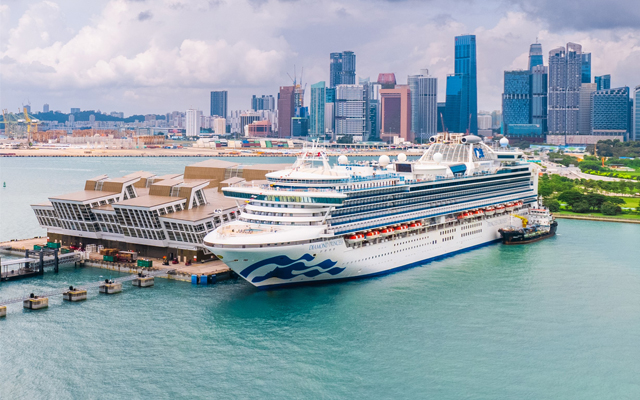
There's a particular quality to the light at Marina Bay just after sunrise—a pale gold that catches the hulls of vessels berthed at the cruise terminal, turning steel into something almost ceremonial. In recent seasons, that light has illuminated an increasing parade of ships, but the announcement that three vessels will call Singapore home simultaneously between 2027 and 2030 marks a shift not just in scale, but in strategic intent. At Global Chic Voyage, we've watched homeporting evolve from a logistical convenience into a statement of commitment, and this deployment—spanning Diamond Princess, Sapphire Princess, and Grand Princess—reads as both.
The partnership between Princess Cruises and the Singapore Tourism Board formalizes what industry observers have long anticipated: that Singapore's combination of air connectivity, regulatory sophistication, and experiential depth would eventually anchor multi-season, multi-ship operations. By 2030, sailings are projected to double from current levels, bringing over 150,000 passengers through the city-state and underwriting not just berth occupancy but the broader tourism and maritime ecosystem that depends on pre- and post-cruise stays.
Why Homeporting Matters Beyond the Berth Count
Homeporting is not merely a departure point—it's an economic multiplier. Passengers arriving by air for embarkation spend an average of two to three nights in the city, patronizing hotels, restaurants, and cultural sites. Crew changeovers generate provisioning demand. Maintenance and refueling contracts feed local maritime services. The Singapore Tourism Board's Cruise Development Fund, which supports this deployment, recognizes that the value of a homeport extends well beyond the gangway.
What distinguishes this partnership is its duration and the caliber of itineraries it enables. The 2027-28 season will feature voyages ranging from 10 to 28 days, covering 29 destinations across nine countries in Southeast Asia, with extensions into Japan and South Korea. These are not the compressed, port-intensive loops that characterize short-haul cruising; they are slower, more regionally textured journeys designed for travelers who measure trips in weeks, not long weekends.
For Singapore, the strategy aligns with its Tourism 2040 vision, which prioritizes quality over volume—a recalibration we've seen echoed in hotel development, culinary programming, and cultural infrastructure. The city-state is not chasing mass-market arrivals; it is curating a visitor profile that values depth, spends accordingly, and returns.
The Fly-Cruise Segment and the Geography of Demand
The deployment is explicitly oriented toward the fly-cruise segment, targeting travelers from Australia, the United Kingdom, and the United States—markets where multi-week voyages are normalized and where Singapore's aviation network offers unmatched connectivity. Changi Airport's status as a global hub means that passengers from Sydney, London, or Los Angeles can reach Singapore with minimal friction, often with same-day connections. That frictionlessness is critical when the alternative is a positioning cruise or a domestic departure port with limited international service.
According to Princess Cruises, demand for longer, more immersive itineraries has grown markedly in recent years, a trend accelerated by shifting traveler expectations post-pandemic. There is less appetite for surface-level sampling and more interest in extended stays, repeat port calls, and itineraries that allow for overland excursions. A 28-day voyage from Singapore might include two nights in Hoi An, a day in Koh Samui, three ports in Japan, and a final stretch through the Korean peninsula—a rhythm that privileges discovery over checklist completion.
This is where Singapore's own tourism infrastructure becomes an asset. The city-state is not merely a gateway; it is a destination in its own right, with sufficient cultural, culinary, and architectural density to justify multi-day pre- or post-cruise extensions. Passengers who might otherwise view embarkation as a logistical necessity are increasingly treating it as an integral component of the journey.
Three Ships, Staggered Seasons, and the Mechanics of Scale
The phased deployment begins modestly. During the 2026-27 season, Diamond Princess and Sapphire Princess will homeport simultaneously in Singapore between November 2026 and February 2027—a test run, in effect, for the expanded program. By 2027-28, Grand Princess joins the rotation, and the sailings double. The staggered approach allows both the cruise line and local infrastructure to adapt incrementally, refining logistics, provisioning chains, and guest services before peak capacity is reached.
From an operational perspective, homeporting three ships requires more than berth availability. It demands coordinated turnaround logistics, sufficient provisioning capacity, reliable crew transportation, and the ability to handle overlapping embarkation and disembarkation schedules. Singapore's maritime services sector, already among the most advanced globally, is well-positioned to absorb this complexity, but the partnership also signals confidence in the city's ability to scale without compromising service quality.
For Princess Cruises, the decision to concentrate resources in a single Asian homeport reflects a broader regional strategy. Rather than dispersing ships across multiple secondary ports with variable infrastructure, the line is consolidating operations in a city that offers both operational efficiency and market appeal. It's a model that mirrors what premium cruise lines have done in the Mediterranean, where Barcelona and Civitavecchia serve as anchors for extended regional itineraries.
Why It Matters: The Longer Game of Premium Positioning
This deployment is not about filling cabins—it's about establishing a structural presence in a region where cruise penetration remains low relative to potential. Southeast Asia's middle class is expanding, but the immediate growth opportunity lies in attracting fly-cruise passengers from mature markets who are willing to travel long distances for itineraries they cannot access closer to home.
The emphasis on longer voyages is particularly telling. While the broader cruise industry has leaned into short-haul, high-turnover itineraries, premium and luxury lines are moving in the opposite direction, betting that a segment of travelers will pay a premium for depth, curation, and slower pacing. A 28-day voyage is not a commodity product; it is a considered purchase, often planned months in advance, and it attracts a demographic that values onboard experience as much as port programming.
For Singapore, the partnership reinforces its positioning as the region's most credible homeport—a city with the infrastructure, connectivity, and experiential depth to anchor multi-week itineraries. As other Southeast Asian ports compete for transit calls, Singapore is focusing on a different metric: the percentage of passengers who begin and end their journey there, and the economic activity that surrounds those bookends.
The Itinerary as Argument
Ultimately, the success of this deployment will be measured not just in passenger numbers but in the quality of the itineraries it enables. The 2027-28 program's reach—29 destinations across nine countries—suggests a level of regional integration that goes beyond the typical Southeast Asian loop. It implies partnerships with local port authorities, coordination with national tourism boards, and the development of shore excursions that reflect the slower, more textured pacing the voyages promise.
At Global Chic Voyage, we've long argued that the future of premium cruising lies not in bigger ships but in better itineraries—routes that allow for genuine immersion, that respect the rhythms of the places they visit, and that treat passengers as travelers rather than tourists. A three-year, multi-ship commitment to Singapore suggests that Princess Cruises shares that view, and that the city-state is prepared to invest in the infrastructure and partnerships required to deliver on it.
The light at Marina Bay will continue to catch those hulls each morning, but the presence they signal is no longer transient. It is deliberate, sustained, and designed to anchor a regional strategy that sees Southeast Asia not as a seasonal detour but as a core market—one worth three ships, three years, and the kind of long-term investment that reshapes how a region is experienced from the sea.
Spot something wrong? Email editors@globalchicvoyage.com. We log every correction publicly.
RELATED
SEE ALL →
31 Jul 2026 / 5 min
22 Jul 2026 / 5 min

9 May 2026 / 5 min

28 Jul 2026 / 5 min