
Canvas and Wilderness: Inside the New Safari Camp on Kenya's Rhino Reserve
JW Marriott's first East African tented property bridges luxury hospitality and conservation in a 45,000-acre conservancy beneath Mount Kenya.
SI
15 Jul 2026 · 5 MIN READ · UPDATED 17 AUG 2026
A New Kind of Arrival
There is something about approaching a camp rather than a hotel. The word itself carries a different weight: temporary, close to the ground, permeable. At the new JW Marriott Mount Kenya Rhino Reserve Safari Camp, that permeability is the point. Canvas walls, open views, the near-constant rustle of wind through acacia. This is not a property that insulates you from the landscape; it places you inside it, gently, with a bed that happens to be very comfortable and a private pool that overlooks the kind of terrain where rhinos still move freely.
The camp sits within a 45,000-acre private conservancy on the slopes of Mount Kenya, a setting that has long attracted naturalists, adventurers, and those seeking something rawer than the manicured safaris of southern Africa. JW Marriott opened the property in mid-2026, marking the brand's first tented safari offering in East Africa. It is, in many ways, an exercise in restraint: low-slung structures, muted tones, an architecture that defers to the savannahs and waterholes beyond.
At Global Chic Voyage, we have watched safari hospitality evolve over the past decade, from the colonial nostalgia of the early luxury camps to today's more ecologically integrated models. This property feels like part of that shift, a recognition that the infrastructure of travel must now answer to the ecosystems it inhabits.
The Geography of Conservation
The conservancy itself is the story here. Spanning tens of thousands of acres, it functions as a buffer zone between Mount Kenya National Park and the agricultural lands to the south. Black rhinos, elephants, and a host of predators move through the reserve, their movements tracked by rangers and researchers working in partnership with local communities.
JW Marriott's decision to build here is not incidental. The brand has committed to supporting anti-poaching efforts and habitat restoration as part of the property's operational model. Guest fees contribute directly to these initiatives, a structure that has become increasingly common in high-end African safari properties but remains far from universal in the broader hospitality industry.
What distinguishes this approach is the visibility of the work. Guests can join rangers on tracking patrols, visit the reserve's rhino monitoring stations, and participate in reforestation projects that aim to restore native vegetation along the conservancy's waterways. These are not token gestures; they are integrated into the rhythm of a stay, offered alongside the traditional game drives and sundowner rituals.
Tented Suites That Breathe
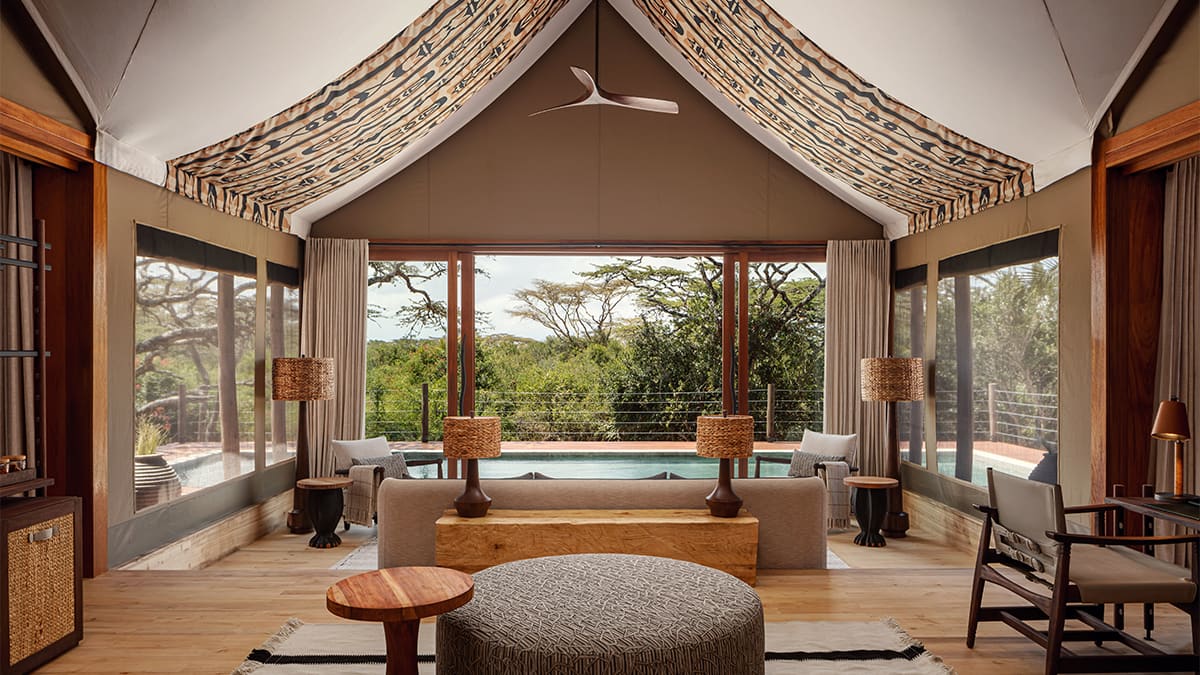
The accommodations here are tented suites, a term that can mean many things in safari hospitality. In this case, it means canvas-sided structures with solid wooden platforms, floor-to-ceiling windows that roll open, and private decks extending into the bush. Each suite includes a bedroom, a seating area, an outdoor shower, and a plunge pool positioned to capture views of the surrounding grasslands.
The interiors draw on East African craft traditions: woven textiles, carved wooden furniture, ceramic vessels sourced from Kenyan artisans. The palette is earth-toned, rust and ochre and charcoal, colors that echo the soil and the light at different times of day. There is a deliberate quietness to the design, a sense that the space should not compete with what lies beyond its edges.
We appreciate the restraint here. Too many safari properties lean into maximalism, piling on animal prints and colonial-era props until the effect becomes pastiche. This camp opts for simplicity, allowing the landscape to do the work of spectacle.
Mavuno and the Question of Sourcing
The property's main restaurant, Mavuno, takes its name from the Swahili word for harvest. The menu reflects the conservancy's agricultural partnerships, with vegetables and grains sourced from farms on the reserve's periphery. The kitchen works with seasonal availability, a necessity in a region where supply chains are shaped by rainfall and road conditions.
Breakfast might include mandazi, the lightly sweetened fried dough common across East Africa, served alongside tropical fruit and Kenyan coffee. Dinner leans toward grilled meats and stews, dishes that nod to both local culinary traditions and the expectations of an international clientele. There is also a commitment to reducing food waste, with composting systems and a kitchen garden that supplies herbs and greens.
The Ember bar and lounge occupies a separate pavilion, its design centered on a large firepit that becomes the gathering point after dark. The drinks menu includes Kenyan gins and rums, spirits that have gained traction in recent years as the country's craft distilling scene has matured.
The Rhythms of a Stay
A typical day at the camp follows the cadence of wildlife activity: early-morning game drives when predators are still active, midday rest during the heat, late-afternoon excursions as the light softens and animals emerge to drink. This structure has been standard in safari hospitality for decades, but the camp's location within a private conservancy allows for more flexibility. Night drives, walking safaris, and off-road tracking are all possible here, experiences that would be restricted in national parks.
We have found that the quality of a safari property often hinges not on the luxury of its suites but on the knowledge of its guides. The camp employs local rangers and naturalists, many of whom have worked on the reserve for years and bring an intimacy with the land that cannot be taught in a training program. Their insights, the ability to read animal behavior and landscape patterns, shape the experience more than any amenity.
A Broader Context
The opening of this camp arrives at a moment when East African safari tourism is grappling with questions of sustainability, equity, and the distribution of economic benefits. Kenya has long been a flagship destination for wildlife tourism, but the industry has historically concentrated wealth in the hands of foreign operators and urban elites, with rural communities seeing limited returns.
The conservancy model represents one response to this imbalance. By structuring land use agreements that provide direct payments to landowners and employment to local residents, conservancies create financial incentives for wildlife protection that compete with livestock grazing and agriculture. It is not a perfect system, and tensions remain, but it has proven more durable than fortress conservation models that exclude human activity entirely.
JW Marriott's entry into this space signals that major hotel brands are beginning to see conservation-linked tourism not as a niche market but as a viable platform for expansion. Whether this trend will accelerate or remain confined to a handful of high-profile projects is still unclear, but the implications are significant. If large hospitality groups commit capital and operational expertise to conservation-based properties, the scale of impact could shift considerably.
The Light at Dusk
There is a particular quality to the light in this part of Kenya, especially in the hour before sunset when the savannah takes on a copper glow and the dust kicked up by passing herds becomes visible as a haze on the horizon. It is a cliché to say that Africa changes you, but the landscape does impose a kind of humility, a reminder of scale and time that feels increasingly rare in a world of curated experiences.
At the camp, this moment is often spent on the deck of your suite or around the communal firepit, a drink in hand, the sounds of the bush rising as the day cools. It is not a dramatic scene, not the stuff of adventure narratives, but it is the reason people return to places like this: the chance to sit quietly in the presence of something larger and older than the structures we build around ourselves.
The JW Marriott Mount Kenya Rhino Reserve Safari Camp is not reinventing safari hospitality, nor does it need to. What it offers is a thoughtfully executed example of how luxury travel can align itself, however imperfectly, with the imperatives of conservation and community engagement. That alignment is becoming less optional and more essential, a baseline expectation for properties that position themselves as stewards of the landscapes they occupy.
For travelers seeking that intersection of comfort, wilderness, and purpose, this camp provides a compelling answer beneath the long shadow of Mount Kenya.
Photo: JW Marriott
Spot something wrong? Email editors@globalchicvoyage.com. We log every correction publicly.
RELATED
SEE ALL →
8 Jul 2026 / 5 min
9 Jul 2026 / 5 min
15 Feb 2026 / 5 min
8 Aug 2026 / 5 min