
A Sky Garden Above the Mekong: Tui Suneo Plants Its Flag in Phnom Penh
As Cambodia's capital sheds its backpacker image, a new wave of mid-market brands is arriving—starting with a 168-room property that opens this September.
SI
1 Jun 2026 · 5 MIN READ · UPDATED 17 AUG 2026
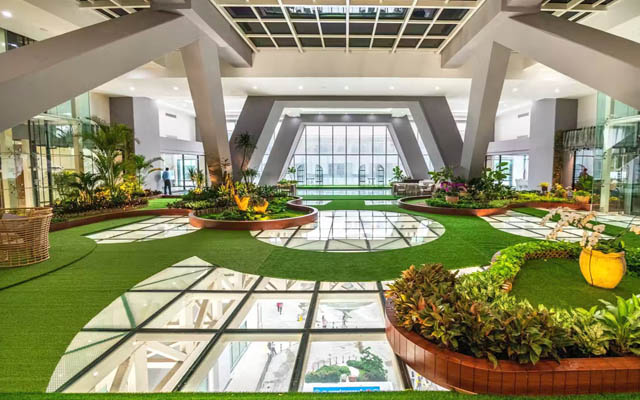
The View from the Sky Garden
Stand on the rooftop terrace of almost any new hotel rising along Phnom Penh's riverfront and you'll see the same tableau: the confluence of the Mekong and Tonlé Sap glinting bronze in late afternoon light, monks in saffron threading through motorbike traffic, and behind them—always—the glittering spires of the Royal Palace catching the sun. It is a view that has drawn travellers for decades, but the hotels offering it have changed. Where backpacker guesthouses and colonial-era relics once dominated, a quieter transformation is underway: mid-market international brands are arriving, targeting a new cohort of Asian travellers who want comfort, familiarity, and a location that delivers both culture and convenience.
This September, Tui Hotels & Resorts will open its fourth Asia-Pacific property under the Suneo banner—Tui Suneo Olympia Phnom Penh, a 168-room hotel in the heart of Cambodia's capital. It is a calculated move, one that signals not only Tui's expansion strategy but also the city's own shift from budget-traveller stopover to a fully fledged urban leisure destination.
City Leisure, Redefined
The Suneo brand—Tui's answer to the growing demand for informal, design-conscious hotels in secondary cities—has quietly built a footprint across Asia. Properties in Bangtao (Thailand), Shenzhen, and Da Nang have tested the concept: walkable locations, balconies on every room, a focus on communal spaces rather than sprawling resorts. Phnom Penh represents the next chapter.
According to Tui Hotels & Resorts, the new property will feature an all-day dining restaurant, bar, gym, spa, and flexible meeting spaces designed for both corporate gatherings and social events. But the real centrepiece is the sky garden—a landscaped outdoor space perched above the city, part event venue, part urban oasis. In a capital where green space is increasingly precious, it's a deliberate gesture: a nod to the tropical vernacular, reimagined for a generation more accustomed to rooftop bars than lobby lounges.
Each of the 168 guestrooms will include a private balcony and city views—a feature that speaks to a broader design philosophy. At Global Chic Voyage, we've watched this shift play out across Southeast Asia: the death of the windowless box, the rise of the room-as-lookout. Travellers, especially those from China, South Korea, and the Gulf, are paying for perspective—literal and metaphorical.
Why Phnom Penh, Why Now
The timing is not accidental. Phnom Penh has spent the past five years shedding its image as a budget backpacker hub and repositioning itself as a regional city break. Direct flights from Singapore, Bangkok, Kuala Lumpur, and a growing roster of Chinese cities have made it accessible; a wave of new museums, art galleries, and riverside dining precincts have made it worth staying. The National Museum of Cambodia, Wat Phnom, and the Royal Palace remain anchor attractions, but the real draw now is the texture of the city itself—the French-colonial shophouses being converted into boutique cafés, the riverside promenades filling with evening joggers, the sense that something is coalescing.
Artur Gerber, CEO of Tui Hotels & Resorts, framed the opening as part of a regional strategy: "Phnom Penh is an increasingly attractive city destination, combining cultural heritage, riverside charm, and a fast-developing urban lifestyle," he noted, emphasizing the brand's focus on "vibrant city leisure locations" across Asia-Pacific.
The phrase "city leisure" is worth unpacking. It represents a category that barely existed a decade ago—hotels designed not for business travellers rushing between meetings, nor for resort-goers seeking beach seclusion, but for a hybrid guest: the weekend urbanist, the cultural explorer, the bleisure traveller who wants a gym, a decent breakfast, and walking distance to a temple. Suneo's model—informal, mid-market, design-forward—fits that profile neatly.
The Competitive Landscape
Tui is not alone in this calculation. Accor, Minor Hotels, and a handful of regional operators have all opened or announced properties in Phnom Penh over the past 18 months, clustering around the riverside and Daun Penh districts. The supply surge reflects both optimism and risk: Cambodia's tourism sector is rebounding, but it remains heavily dependent on Chinese outbound travel, which has proven volatile. A hotel like Suneo Olympia—centrally located, competitively priced, part of a recognizable brand—is a hedge against that volatility. It appeals to group tours and independent travellers alike, to regional weekenders and long-haul stopover guests.
Yet the real test will be differentiation. Phnom Penh's hotel market is no longer starved for rooms; it is starved for personality. The properties that succeed will be those that understand the city's dual identity—part post-colonial Southeast Asian capital, part rapidly modernizing hub—and reflect that tension in design, programming, and service.
What It Signals
For Tui, Phnom Penh is both a market opportunity and a proof of concept. If Suneo can work in a capital city still finding its footing as a leisure destination, it can work almost anywhere in the region. The brand's expansion—four properties in three years—suggests a deliberate, methodical approach: test the model in established markets (Bangtao, Da Nang), then push into emerging ones (Phnom Penh, and likely others to come).
For Cambodia, the arrival of a European hospitality brand with regional ambitions is a vote of confidence. It signals that the country's tourism infrastructure is maturing, that international operators see long-term potential, and that the capital is no longer just a gateway to Angkor Wat but a destination in its own right.
At Global Chic Voyage, we're watching to see whether the sky garden becomes a genuine gathering space or merely a marketing amenity—whether the design feels responsive to Phnom Penh's climate and culture, or generic enough to be anywhere. The best city hotels are those that understand their context deeply; the mediocre ones simply import a formula. September will reveal which category this one occupies.
A Rooftop with a View
The Mekong doesn't care about hotel openings. It will continue to swell and recede with the monsoon, carrying silt and stories from the Tibetan plateau to the delta. But the view from the sky garden—whenever it finally opens—will tell a different story: one of a city in motion, a brand testing new ground, and a region that remains, for all its contradictions, endlessly worth watching.
Spot something wrong? Email editors@globalchicvoyage.com. We log every correction publicly.
RELATED
SEE ALL →
8 Aug 2026 / 5 min
8 Aug 2026 / 5 min
8 Aug 2026 / 5 min
7 Aug 2026 / 5 min