
A Quarter-Century of Place-Making: How Anantara Redrew the Map of Luxury Hospitality
From a single beachfront property in Hua Hin to more than fifty hotels across four continents, the Thai-born brand celebrates 25 years of culturally grounded travel—and a philosophy that refuses to stand still.
SI
30 May 2026 · 5 MIN READ · UPDATED 17 AUG 2026
A Single Resort, a Singular Idea
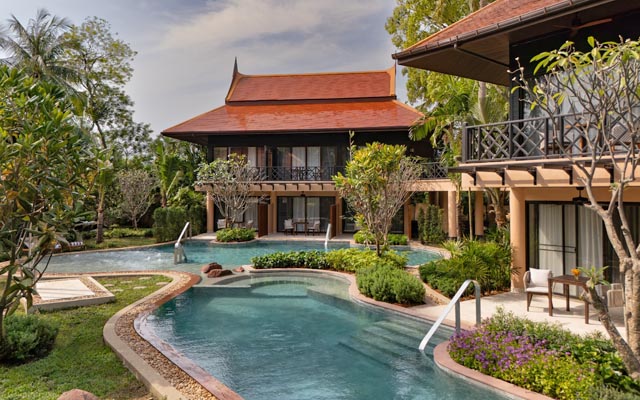
Twenty-five springs ago, on a stretch of Gulf of Thailand coastline where fishing villages still outnumbered resort enclaves, a new kind of luxury property opened its doors. Anantara Hua Hin Resort arrived in March 2001 with none of the fanfare that typically accompanies a five-star debut—no celebrity ribbon-cutting, no press junket promising "world-class amenities." What it offered instead was quieter and, in hindsight, more radical: an invitation to travel not as spectator but as participant, to luxury not as insulation but as immersion.
At Global Chic Voyage, we've watched luxury hospitality evolve from the marble-and-chandelier era of the 1990s into something more textured, more rooted in the specificities of place. Anantara, now marking its 25th anniversary, has been both witness and architect of that shift. Founded by William Heinecke under the Minor International umbrella, the brand began with a deceptively simple premise: that the best hotels don't merely occupy a destination—they interpret it, translate it, make it legible to the traveler who seeks more than comfort.
From Thailand to the World: Expansion as Editorial Process
What began as a single property has since grown into a portfolio of more than 50 hotels and resorts spanning 24 countries. The geography reads like a curated anthology: the Maldives and Rome, Amsterdam and Budapest, Vienna and Nice. Future chapters are being written in Australia, Japan, Egypt, Croatia, Argentina, Turks & Caicos, and the United States, according to Anantara. The brand will also introduce Anantara Tented Camps in 2026, beginning with a property in Zambia near Kafue National Park—a format that extends the luxury canvas into conservation territories where permanent structures would be intrusive.
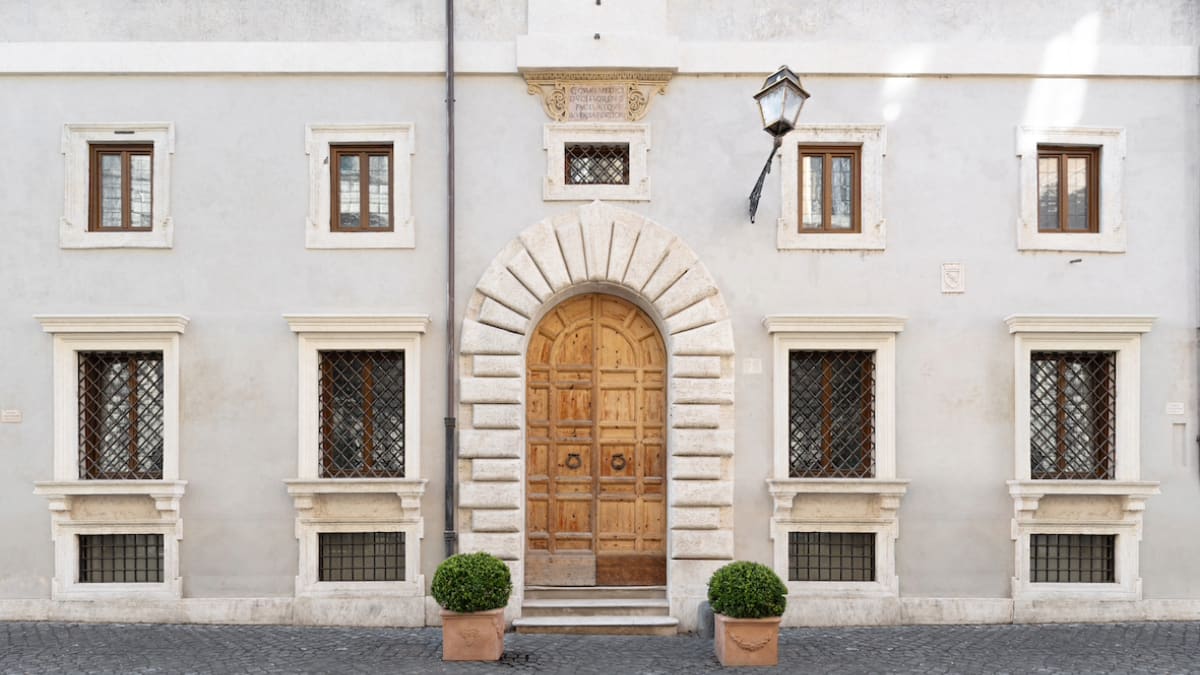
This is expansion as editorial process, not real-estate opportunism. Each property is expected to hold a conversation with its surroundings—architectural, culinary, ecological. In Rome, that means private boat journeys along the Tiber from Anantara Palazzo Naiadi; in the Maldives, stargazing experiences at Anantara Kihavah Villas that frame the Indian Ocean sky as theater; in northern Thailand, elephant encounters at Anantara Golden Triangle Elephant Camp & Resort that prioritize animal welfare over performative tourism.
The throughline is cultural immersion, a term that has been diluted by overuse but retains its power when executed with discipline. Anantara's model assumes that luxury travelers are curious, that they want context as much as they want thread count, that a hotel can be both sanctuary and portal.
The People Who Make Place
To mark the anniversary, Anantara has launched a People Who Inspire series spotlighting 25 employees across its global network—artisans, guides, conservationists, long-serving team members whose work shapes the guest experience in ways that never appear on a rate sheet. It's a gesture that acknowledges what the industry often forgets: that hospitality is a performing art, and the performers matter.
We've seen this philosophy play out in our own stays across the Anantara portfolio. The sommelier in Budapest who walks you through Tokaji terroir as though mapping a family tree. The marine biologist in the Maldives who turns a snorkel excursion into a masterclass in reef ecology. The spa therapist in Chiang Mai who explains the provenance of each herb in your treatment as though reciting poetry. These are not scripted interactions; they are the result of a brand culture that hires for depth and trains for storytelling.
Dillip Rajakarier, group CEO of Minor International, framed the milestone in terms that suggest restraint as much as ambition: "Our focus remains on thoughtful, disciplined expansion that stays true to Anantara's foundations." In an era when luxury conglomerates are racing to plant flags in every aspirational market, that language—thoughtful, disciplined—reads as counterintuitive. It also reads as strategic. The risk of rapid expansion is homogenization, the flattening of brand identity into a set of exportable formulas. Anantara's bet is that slower, more considered growth preserves the very thing that makes the brand legible: its commitment to place.
Why This Milestone Matters Beyond the Brand
Anantara's 25-year arc offers a case study in how regional luxury brands can scale without sacrificing their founding ethos. The company was born in Thailand, a country whose hospitality culture has long been defined by grace, attention to detail, and a philosophy of service that predates the modern hotel industry by centuries. To export that sensibility beyond Southeast Asia—into Europe, the Middle East, Africa—requires translation, not replication. The challenge is to maintain a recognizable brand signature while allowing each property to speak in the vernacular of its location.
This is not a challenge unique to Anantara, but it is one the brand has navigated with unusual consistency. At a time when travelers are increasingly literate about the difference between luxury that extracts and luxury that contributes, Anantara's emphasis on cultural immersion, conservation partnerships, and experience-led programming feels both timely and foundational. The brand didn't pivot to sustainability or community engagement because it became fashionable; it embedded those principles early, when the luxury market was still largely indifferent to them.
The introduction of tented camps in 2026 signals another evolution: the willingness to work within the constraints of sensitive ecosystems, to design for impermanence where permanence would be inappropriate. It's a format that aligns with the slow-travel movement, with the growing appetite for lodging that feels less like infrastructure and more like intervention—temporary, considered, low-impact.
The Next Chapter: Expansion with Editorial Integrity
As Anantara enters its next quarter-century, the question is not whether the brand will continue to grow—it will—but whether it can maintain the editorial rigor that has defined its first 25 years. The pipeline of new properties suggests an appetite for geographic diversification: Japan, with its exacting standards of service and design; Argentina, where wine country and Patagonian wilderness offer new narrative terrain; Turks & Caicos, a Caribbean market long dominated by North American resort models.
Each of these destinations will test Anantara's ability to be both globally coherent and locally rooted. The brand's success will depend not on how many properties it opens, but on how well each one earns the right to be where it is—how convincingly it can argue that it belongs, that it adds rather than dilutes, that it offers something irreplaceable.
Heinecke's founding ambition—to create "memorable local experiences and adventures while providing luxurious accommodation"—remains the mandate. The risk, as with any maturing brand, is that growth becomes its own imperative, that expansion overtakes curation. But if the first 25 years are any indication, Anantara understands that in luxury hospitality, the most valuable real estate is not physical but perceptual: the space a brand occupies in the traveler's imagination, the associations it conjures, the promises it keeps.
Reflections on a Silver Anniversary
We return often to the idea that the best hotels are not destinations in themselves but thresholds—places that prepare you for the world beyond their gates, that sharpen rather than dull your appetite for encounter. Anantara, at its best, has always operated as threshold: a place to arrive, to acclimate, to learn the grammar of a place before venturing deeper.
Twenty-five years is long enough to establish a legacy, short enough to remain hungry. The brand's anniversary campaign—25 Years of Unforgettable Journeys—is less a victory lap than a recalibration, a moment to take stock of what has been built and what remains to be written. In an industry that often mistakes scale for significance, Anantara's milestone is a reminder that growth, when guided by principle rather than opportunism, can be both expansive and intimate, global and local, enduring and alive to change.
The next chapter will be written in tented camps and city palazzos, in conservation partnerships and employee stories, in the quiet discipline of saying no as often as yes. If the first 25 years taught us anything, it's that the most compelling luxury brands are the ones that remember where they came from—and refuse to forget it, no matter how far they go.
Spot something wrong? Email editors@globalchicvoyage.com. We log every correction publicly.
RELATED
SEE ALL →
30 Jul 2026 / 5 min
9 Jul 2026 / 5 min
7 Jul 2026 / 5 min
22 Jun 2026 / 5 min